


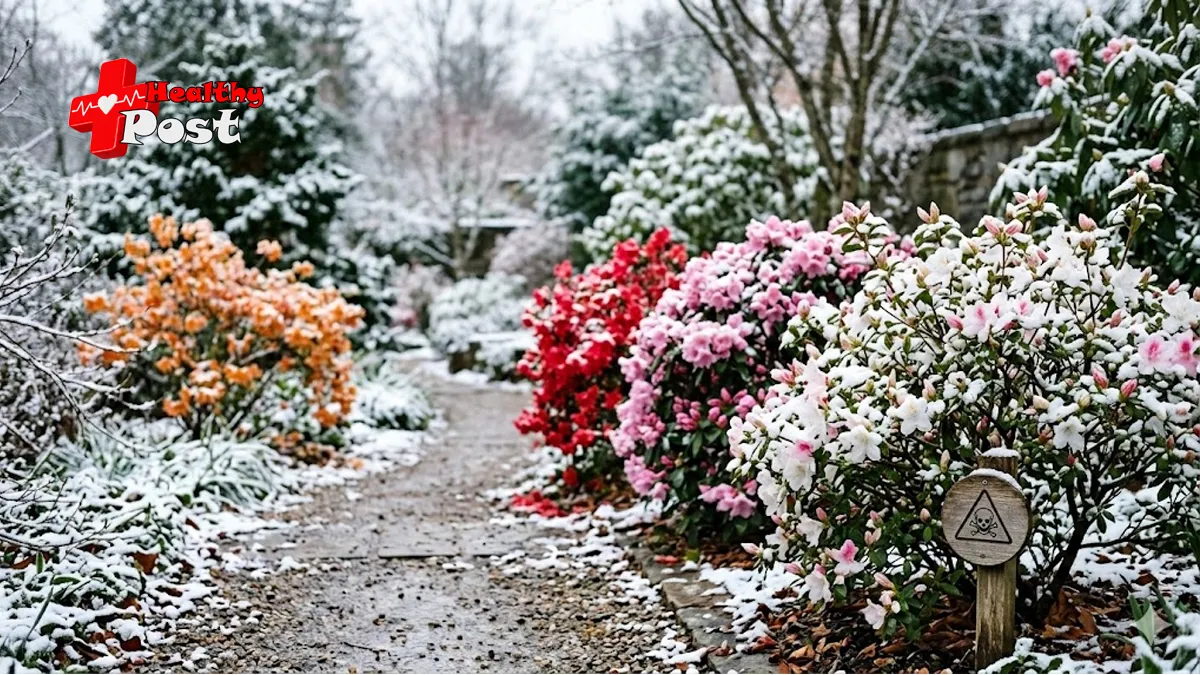
Bright blossoms against snow, glossy evergreen leaves, and that lovely woodland feel 🌿. It is easy to see why people love planting an azalea bush near their homes or using it in winter decorations.
Yet behind that beauty lies a serious safety concern, especially when plants are dormant and we lower our guard.
One particular species, the rusty-leaved rhododendron (Rhododendron ferrugineum), also called “azalea” or “snow rose,” is not just a pretty shrub. It is poisonous, its honey can be toxic, and its traditional medicinal use is not supported by modern evidence.
This guide walks you through 7 key facts about this plant and its close ornamental cousins. You will learn:
- Why any azalea bush in winter is still dangerous
- What conditions people once tried to treat with it
- How its toxins affect your heart and nerves
- Why experts rate it unsafe at any dose
- Safer ways to enjoy azaleas and manage pain without risking poisoning
Let’s start with what this plant actually is and why it looks so harmless.
1. Rusty-Leaved Rhododendron: The Toxic Beauty Behind the Azalea Bush Name
Rusty-leaved rhododendron is a low, dense, evergreen shrub that looks stunning in alpine and cool-climate gardens. In bloom, it can resemble a compact pink azalea bush with clusters of rosy flowers that stand out against dark foliage. 🌸
You may see or hear it called by several names:
- Azalea
- Rhododendron ferrugineum
- Snow Rose
- Rose des Alpes
- Rust-Red Rhododendron
- Laurier-Rose des Alpes
- Rosage, Rose du Diable, Rosebay
All of these names refer to the same poisonous plant.
Why gardeners love it
People value rusty-leaved rhododendron for:
- Evergreen leaves that give structure year-round
- Flowers that brighten rocky slopes and cold gardens
- Its ability to handle tough mountain conditions
In a mixed border, you might see it near other colorful shrubs, such as a white azalea bush, a red azalea bush, or even an orange azalea bush. Together they create a beautiful scene. Yet all of these rhododendron relatives share a key trait:
Most true rhododendrons and azaleas contain toxins called grayanotoxins. Eating any part can be dangerous.
So even when your garden looks picture-perfect, the risk is real—especially for children, curious guests, and pets.
2. Why Any Azalea Bush in Winter Is More Dangerous Than It Looks
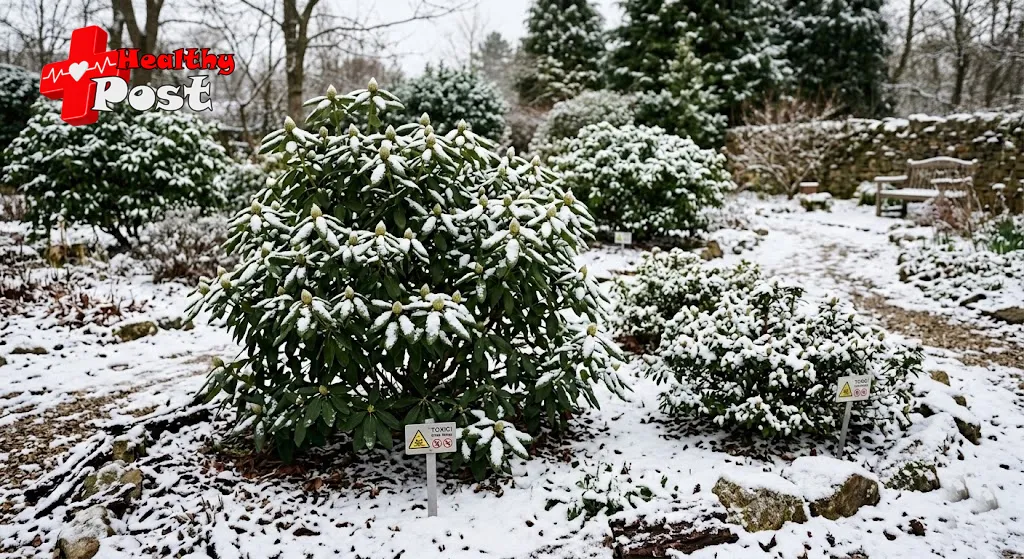
In spring, blossoms draw attention. In winter, shrubs fade into the background. That is exactly what makes an azalea bush in winter more hazardous than many people realize.
The plant is still toxic when:
- Leaves look tired or curled
- Flowers have dropped
- Branches are pruned and brought indoors
- It is included in wreaths or winter arrangements 🎄
The toxins do not “sleep” in winter
The chemical compounds in rusty-leaved rhododendron remain active in:
- Leaves (fresh or dried)
- Flowers
- Nectar and honey made from that nectar
- Possibly stems and other tissues
Children may chew leaves or flowers out of boredom. Adults may try homemade teas or tinctures based on old folk recipes. In some regions, people even seek out “mad honey,” a honey made from rhododendron nectar that can be intoxicating—and dangerous.
Common winter risk scenarios
Here are a few realistic examples:
- A child plays in the snow, breaks off a twig, and chews the leaves.
- Someone uses dried rusty-leaved rhododendron leaves in a winter “wellness” tea for joint pain.
- Decorative branches are placed on a table where a pet can reach them.
- A traveler buys a jar of local “mad honey” to help with blood pressure or headaches.
In each of these cases, the risk of poisoning is significant, even though the plant itself looks quiet and dormant.
3. Traditional Uses: Pain, Pressure, and “Weather Sensitivity” Claims
For centuries, people living in mountainous regions have used rusty-leaved rhododendron in traditional medicine. Practitioners often combined its leaves with other herbs.
They claimed it could help with many painful or inflammatory problems, including:
- Gout
- Rheumatism (muscle and joint pain)
- Neuralgia (nerve pain)
- Sciatica
- Trigeminal neuralgia (severe face pain)
- Migraines and headaches
- Rib pain
Other reported traditional uses include:
- Hypertonia (extreme muscle or artery tension)
- Joint disease and muscle hardening
- Weak connective tissue
- Sensitivity to weather changes
- Gallstones and kidney stones
- High blood pressure
- “Aging-related” complaints
This long list might sound appealing if you live with chronic pain. Yet there is a crucial point:
There is insufficient reliable evidence to show it works for any of these uses.
Modern clinical trials are lacking. Safety studies show clear risks, while benefits remain unproven.
Why people thought it helped
The plant contains chemicals that:
- Lower blood pressure
- Interfere with nerve electrical activity
At very low doses, this nerve effect might dull pain or cause a strange sense of calm. That could create the impression that the plant is “helping.”
But the difference between a “small” dose and a dangerous one is very narrow. What feels like mild relief can quickly turn into serious poisoning.
4. How Its Poisons Affect Your Heart, Nerves, and Blood Pressure
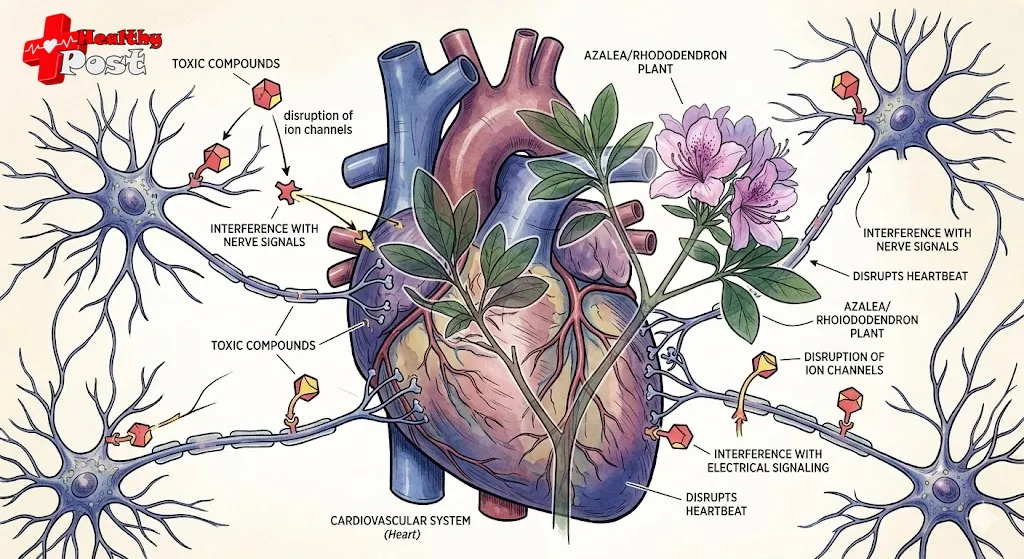
Rusty-leaved rhododendron contains toxic compounds known as grayanotoxins and related substances. These chemicals affect how cells in your heart and nervous system handle electricity.
What the toxins do in your body
Grayanotoxins:
- Lock certain channels in nerve and muscle cells in an “on” position
- Disrupt normal electrical signals
- Interfere with how your heart beats
- Cause blood vessels to widen, lowering blood pressure
At low exposure, you might notice:
- Light-headedness
- Tingling sensations
- Weakness
- Nausea
As exposure increases, the same mechanism can lead to:
- Very low blood pressure
- Slow or irregular heartbeat
- Confusion or fainting
- Seizures
- Cardiac and respiratory arrest
“Mad honey” and why it is so risky
Bees that collect nectar from rhododendrons can make “mad honey.” This honey contains the same toxins found in the plant. People have taken it to:
- Lower blood pressure
- Relieve pain
- Create a mild “high” or altered mental state
Yet case reports describe severe reactions even from small amounts. For example, toxicology researchers summarize dangerous effects of rhododendron-derived honey from this article.
Symptoms can appear within minutes to a few hours and may require emergency treatment.
The same compounds that might briefly numb pain can also stop your heart. That is why experts classify this plant as UNSAFE.
5. Side Effects and Poisoning Symptoms You Must Recognize Fast
Rusty-leaved rhododendron is not “mildly upsetting” to the stomach. It can cause serious poisoning. Even small amounts may trigger symptoms, depending on the person.
Early and “mild” side effects
These can still be very uncomfortable:
- Weakness or feeling unusually tired
- Dizziness or light-headedness
- Nausea
- Vomiting
- Blurred vision
- Sweating or chills
Worsening symptoms
As poisoning progresses, symptoms may include:
- Very low blood pressure
- Slow or irregular heartbeat
- Fainting or near-fainting
- Confusion or impaired consciousness
Severe poisoning and life-threatening signs
In the most serious cases, people may develop:
- Marked sweating followed by cold, clammy skin
- Stupor or near-unresponsiveness
- Seizures
- Shock
- Cardiac arrest
- Respiratory arrest
- Deep coma and possible death
These effects have been described in plant poisoning case reports and toxicology reviews, including analyses of life-threatening plant poisonings according to article.
What to do if you suspect poisoning
If someone has eaten any part of an azalea or rhododendron, or consumed suspicious “mad honey,” and has any of the above symptoms:
- Call emergency services immediately.
- If available in your region, contact a poison control center.
- Do not try to make the person vomit unless a professional tells you to.
- Do not give food, alcohol, or more herbs “to balance it out.”
Prompt medical care can be life-saving.
6. Why Experts Call It Unsafe for Everyone, at Any Dose
Herbal medicine often works with the idea that the “right dose” makes a plant helpful rather than harmful. With rusty-leaved rhododendron, that line is too thin to risk.
No safe dosage is known
There is:
- No agreed safe dose for leaves, flowers, or extracts
- No standardized preparation shown to be both effective and safe
- No clinical trials proving benefit for pain, blood pressure, or other conditions
Regulatory and evidence-based herbal references classify this plant as UNSAFE for human use.
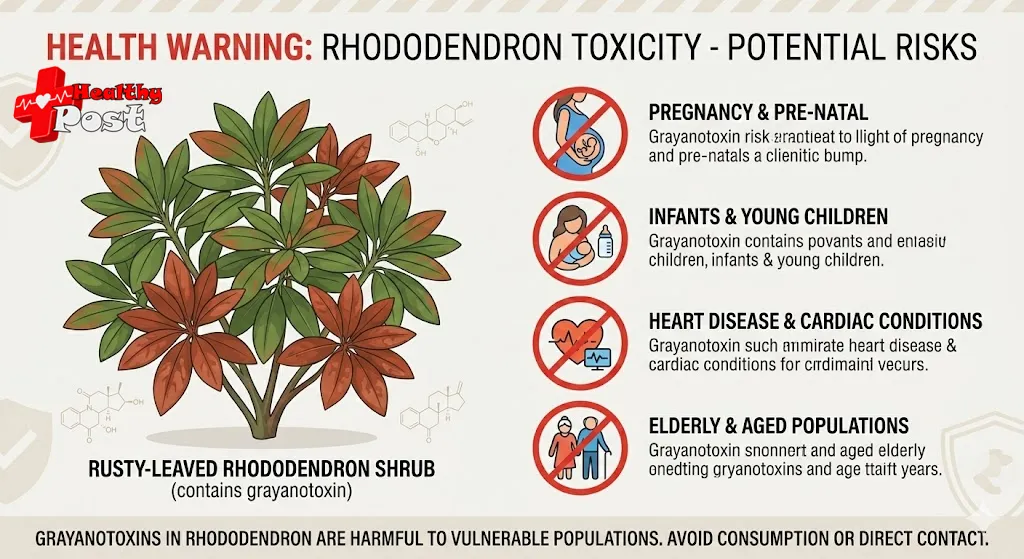
Special risk groups
Some people are at even higher risk, including:
- Pregnant people
- Those who are breastfeeding
- Children
- Older adults
- Anyone with heart disease or low blood pressure
- People taking heart medications or blood pressure medicines
For pregnancy and breastfeeding, rusty-leaved rhododendron is considered UNSAFE. The toxins can potentially affect both parent and baby.
How evidence-based resources rate it
The Natural Medicines Comprehensive Database uses a scale:
- Effective
- Likely Effective
- Possibly Effective
- Possibly Ineffective
- Likely Ineffective
- Insufficient Evidence to Rate
Rusty-leaved rhododendron falls under Insufficient Evidence to Rate for all claimed uses. That means:
- We lack quality research showing it works.
- We do have enough information to see the risks are significant.
When risk is clear and benefit is not, responsible experts recommend avoiding the plant entirely.
In simple terms: There is no medical reason to take this plant, and many reasons not to.
7. Safer Ways to Enjoy an Azalea Bush — Without Risking Your Health
You might be wondering: do you need to rip out every azalea from your garden? For most people, the answer is no, as long as you treat them like ornamental-only plants.
Enjoy the view, not the medicine
You can safely:
- Plant azaleas for seasonal color
- Combine a white azalea bush, pink azalea bush, and red azalea bush for contrast
- Use an orange azalea bush as a focal point in a warm corner of the garden
- Photograph flowers or use them as visual inspiration 🎨
You should not:
- Brew teas from any rhododendron or azalea leaves or flowers
- Use homemade tinctures for pain, blood pressure, or “weather sensitivity”
- Eat any part of the plant
- Encourage foraging of “wild azalea” by children or guests
Practical safety tips for homes and gardens
To reduce risk:
- Plant azaleas away from play areas and vegetable beds.
- Teach children that azaleas and rhododendrons are look-don’t-touch plants.
- Keep pets from chewing leaves or digging around their roots.
- Label potted azaleas clearly when gifted or brought indoors.
- Do not dry the leaves for teas or home remedies.
If safety feels overwhelming, consider replacing some shrubs near walkways or patios with non-toxic species recommended by local garden centers.
Safer herbal alternatives for pain and inflammation
If you were drawn to rusty-leaved rhododendron for pain or blood pressure, you do have safer options to discuss with a healthcare professional. These herbs also require care, but they have better evidence and wider safety margins when used appropriately.
Below is a simplified comparison:
Safer herbal alternatives vs. rusty-leaved rhododendron
| Herb / Plant | Traditional Uses | Evidence for Effectiveness* | Main Safety Concerns |
|---|---|---|---|
| Rusty-leaved rhododendron | Pain, blood pressure, “weather sensitivity” | Insufficient Evidence to Rate; no proven benefit | Highly toxic; risk of heart and nerve poisoning |
| Willow bark | Joint pain, headaches | Some evidence for mild pain relief (salicylates) | Can irritate stomach; avoid with aspirin allergy |
| Turmeric (curcumin) | Inflammation, joint pain | Moderate evidence for mild arthritis symptom relief | Can affect bleeding; interacts with some drugs |
| Ginger | Nausea, mild pain | Good evidence for nausea; some for pain | May affect bleeding; heartburn in high doses |
| Devil’s claw | Back and joint pain | Some clinical support for short-term pain relief | Stomach upset; avoid with ulcers |
| Arnica (topical only) | Bruises, muscle soreness | Some evidence for topical use | Toxic if swallowed; use on unbroken skin only |
*Evidence summaries are simplified and do not replace medical advice.
Before trying any herbal supplement, it is important to:
- Talk with your doctor or pharmacist
- Check for interactions with your medications
- Start with recommended doses and monitor for side effects
Pain and blood pressure are serious health issues. They are better handled with the help of qualified professionals than with risky home experiments.
FAQs About Azaleas, Rusty-Leaved Rhododendron, and Safety
1. Are all azaleas and rhododendrons poisonous?
Yes. All true azaleas and rhododendrons contain toxins and should never be eaten.
2. Is it safe to grow an azalea bush if I have kids or pets?
Yes, if you treat it as ornamental only and supervise children and pets.
3. Can I drink tea made from azalea or rhododendron leaves?
No. Teas from these plants are unsafe and can cause serious poisoning.
4. What exactly is “mad honey”?
Mad honey is honey made from rhododendron nectar; it can cause dangerous heart and nerve symptoms.
5. What should I do if someone eats azalea leaves or flowers?
Seek emergency medical help and contact poison control immediately.
6. Does cooking or drying the plant make it safe?
No. Drying or cooking does not reliably remove the toxins from azaleas or rhododendrons.
Conclusion: Treat Every Azalea Bush With Respect This Winter 🌨️
Azaleas and rhododendrons, including the rusty-leaved rhododendron, are undeniably beautiful. In winter, an azalea bush can brighten a garden edge, a snowy slope, or a holiday planter. Yet this same beauty hides a real and well-documented toxic risk.
You have learned that:
- Rusty-leaved rhododendron is poisonous and classified as unsafe.
- Its traditional uses for pain, blood pressure, and “aging” lack solid evidence.
- Toxins in the plant and in “mad honey” can cause dangerous heart and nerve problems.
- No safe dose is established, and poisoning can be life-threatening.
- Safer herbal and medical options exist for pain and other conditions.
You do not need to fear your garden, You only need to respect it.
Enjoy your azaleas as the stunning ornamental shrubs they are. Keep them out of the kitchen, away from home remedies, and always out of reach of curious mouths—especially in winter, when we tend to forget that “sleeping” plants are still very much chemically active.
If you are considering herbs for pain, high blood pressure, or other chronic problems, talk with a healthcare professional who understands both conventional and herbal medicine. Working together, you can find options that offer real benefit with far less risk than this dangerous “snow rose” ever could.