



Seeing two of everything can feel scary, frustrating, and exhausting. If you live with diplopia, you may struggle with simple tasks like reading, walking down stairs, or driving at night. It is not “all in your head,” and you are not alone. ❤️
This guide walks you through practical, proven treatments that eye specialists use every day. You will learn:
- What double vision really means
- Key differences between monocular diplopia and binocular diplopia
- Common diplopia causes
- Seven treatment paths that doctors often recommend
The goal is not to replace medical care. Instead, it helps you feel informed and confident when you talk with your eye doctor or neurologist.
Understanding Diplopia and Why It Happens
Diplopia is the medical term for double vision. You see one object as two, either side by side, on top of each other, or diagonal.
Some people have double vision in one eye only. Others see double only when both eyes are open. This difference matters a lot for diagnosis and treatment.
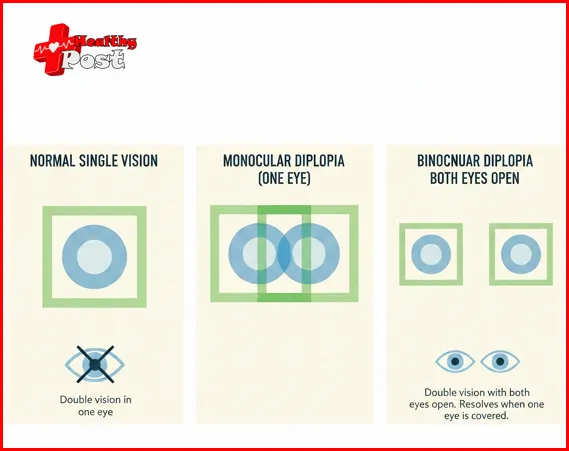
Monocular vs binocular double vision
- Monocular diplopia
- Double vision remains when only one eye is open
- The other eye alone may see normally
- Often linked to problems inside the eye
- Typical areas: cornea, lens, or tear film
- Binocular diplopia
- Double vision appears only when both eyes are open
- Each eye alone sees a single image
- Often due to eye misalignment or nerve issues
Here is a simple overview:
| Type of double vision | How it appears | Common source |
|---|---|---|
| Monocular diplopia | Double with one eye open | Cornea, lens, tear film, retina |
| Binocular diplopia | Double only with both eyes open | Eye muscles, nerves, brain alignment |
Both types can feel overwhelming. Many diplopia causes are treatable, especially when found early.
If you suddenly notice double vision, especially with headache, weakness, or trouble speaking, treat it as urgent. Seek emergency care right away. 🚑
1. Start with a Thorough Eye and Health Evaluation
The first and most important diplopia treatment step is an accurate diagnosis. Double vision is a symptom, not a disease. Your doctor must find the root problem.
What your doctor may check
During a detailed eye and health exam, your clinician may:
- Ask when the double vision started
- Ask if it is constant or comes and goes
- Check whether it happens with one eye or both
- Test eye movements in all directions
- Measure how the eyes line up together
- Examine the front and back of your eyes
- Review your medications and health history
You might also need:
- Blood tests (for thyroid, infection, autoimmune disease, diabetes)
- Imaging, like MRI or CT, if nerve or brain issues are possible
- Special tests for diseases like myasthenia gravis
Why this step matters
Many diplopia causes are serious but manageable. These include:
- Nerve palsies from diabetes or high blood pressure
- Thyroid eye disease
- Stroke or mini‑stroke
- Myasthenia gravis
- Brain tumors or aneurysms (less common, but important to rule out)
The right treatment depends entirely on the cause. Skipping this step and trying home fixes can delay vital care.
2. Correct Eye Alignment with Glasses and Prism Lenses
For many people with binocular diplopia, the main issue is eye misalignment. The eyes do not point at the same target, so the brain receives two images.
One of the easiest and least invasive tools for this is prism lenses.
How prisms help double vision
A prism is a special part of a glasses lens. It bends light so the images line up better. This lets your brain blend them into one clearer picture.
Prisms can:
- Reduce or remove double vision
- Ease eye strain and headaches
- Improve reading and computer comfort
You might see:
- Temporary press‑on prisms placed on your current glasses
- Permanent ground‑in prisms in a new prescription
Who prism glasses may help most
Prisms are often useful when:
- The misalignment is small to moderate
- The angle is fairly stable
- Double vision comes from nerve palsies that may recover
- There is long‑standing strabismus (eye turn) in adults
Your doctor may adjust prism strength over time as your eyes change or as nerves heal.
3. Use Patching or Occlusion for Short‑Term Relief
Sometimes you need fast relief, especially while waiting for other treatments to take effect. In these cases, temporary occlusion can help.
What occlusion means
Occlusion simply means blocking part of the visual input. It can be done by:
- Patching one eye
- Using frosted tape on one lens
- Applying a small spot of blur over part of the lens
This stops competing images from reaching the brain, so you no longer see double.
When patching is helpful
Occlusion is often used:
- Right after a sudden nerve palsy
- While waiting for prisms or surgery
- When double vision comes and goes
- For fatigue‑related worsening, like in myasthenia gravis
Patching is usually a short‑term tool. Over long periods, it can affect depth perception and eye teamwork. So it is usually a bridge while other diplopia treatment options are planned.
4. Treat Eye Muscle Problems with Surgery or Targeted Injections
When binocular diplopia comes from significant eye muscle imbalance, conservative options may not be enough. In these cases, surgery or injections can realign the eyes.
Eye muscle surgery
Eye muscle (strabismus) surgery changes how the eye muscles pull on the eyeball. The surgeon may:
- Weaken an overactive muscle
- Strengthen a weak muscle
- Reposition muscles for better balance
This can:
- Improve alignment in straight‑ahead and reading gaze
- Reduce or eliminate double vision
- Expand the area where you see a single image
Surgery is usually done as day‑care or same‑day surgery. Recovery time is often short, but results can take weeks to stabilize.
Botulinum toxin (Botox) injections
In some cases, small botulinum toxin injections into eye muscles can:
- Temporarily weaken a tight muscle
- Allow the eyes to move into a better position
- Help while a nerve palsy recovers
- Sometimes avoid or delay surgery
These injections are done by trained eye specialists. Effects usually last several months and may be repeated if helpful.
Who may benefit
These options are often considered for:
- Stable misalignment after nerve palsy
- Long‑standing strabismus with bothersome double vision
- Thyroid eye disease with fixed restrictive eye movements
Your surgeon will measure your eye alignment many times before recommending surgery or injections. This helps aim for the best result.
5. Address Monocular Diplopia with Eye Surface and Lens Care
Monocular diplopia usually points to a problem in the eye itself, rather than eye alignment. Many of these problems are treatable once found.
Common monocular diplopia causes
Monocular double vision may be related to:
- Dry eye or poor tear film
- Corneal irregularities, like scars or keratoconus
- Cataracts clouding the lens
- Irregular or poorly fitting contact lenses
- Some retinal issues
Each of these changes how light bends as it enters the eye. The result can be ghosting, shadows, or multiple images.
Treatment options for monocular double vision
Depending on the cause, treatment might include:
- Lubricating eye drops and dry eye therapy
- Special contact lenses that smooth the corneal surface
- Treating corneal disease or scarring
- Cataract surgery to replace a cloudy lens
- Adjusting or stopping certain medications
Your eye doctor may also use special imaging to map your cornea and lens. This helps fine‑tune the plan.
6. Use Vision Therapy and Exercises When Appropriate
Not every case of double vision responds well to eye exercises, but some do. Special vision therapy programs may help certain patients, especially with mild misalignment or focusing problems.
What vision therapy involves
Vision therapy is a structured program guided by an eye care professional. It may include:
- Guided eye movement drills
- Focusing exercises
- Activities that train depth perception
- Computer‑based vision tasks
The goal is to improve how the eyes and brain work together, rather than change the eye’s structure.
When vision therapy may help diplopia
Vision therapy might be considered when:
- There is convergence insufficiency (trouble turning eyes inward)
- You have intermittent double vision at near ranges
- There is lingering misalignment after other treatment
- The doctor believes your brain can adapt with training
Therapy requires regular visits and home practice. It is not a quick fix, but some people see meaningful gains in comfort and clarity. 💪

7. Support Your Recovery with Lifestyle Changes and Safety Strategies
No matter which diplopia treatment you use, daily habits can support your progress and keep you safe. Double vision affects more than eyesight; it touches work, driving, and emotional health.
Protect your safety
Double vision increases your risk of falls and accidents. Simple steps can lower risk:
- Avoid driving until your doctor says it is safe
- Use handrails on stairs at home and in public
- Add extra lighting in hallways and bathrooms
- Remove loose rugs and clear clutter from walkways
- Use non‑slip mats in the shower
If one‑eye patching helps, your depth perception is still reduced. Move more slowly, especially on uneven ground.
Support your overall health
Healthy habits can help treat some diplopia causes, especially when related to blood vessels or nerves. Try to:
- Manage blood pressure, cholesterol, and blood sugar
- Follow care plans for thyroid or autoimmune disease
- Stop smoking and limit alcohol
- Get regular sleep and manage stress
Working with your primary care doctor can protect both your vision and your general health.
Emotional support matters too
Living with double vision can bring anxiety, frustration, or isolation. Reach out for support:
- Talk openly with family and friends about your limits
- Ask your employer about temporary adjustments
- Consider counseling if mood changes or fear grow
- Look for support groups for people with visual changes
You deserve both clear information and emotional care while you heal. 🌱
Comparing Common Diplopia Treatments
Here is a summary of several main options, who they often help, and what to expect:
| Treatment option | Best suited for | Main goal | Typical time frame |
|---|---|---|---|
| Prism glasses | Mild to moderate binocular diplopia | Align images without surgery | Days to weeks for comfort |
| Patching / occlusion | Short‑term or fluctuating double vision | Immediate symptom relief | Hours to months (temporary) |
| Eye muscle surgery | Stable, significant misalignment | Restore alignment and single vision | Weeks to months for full effect |
| Botulinum toxin injections | Select nerve palsies, thyroid eye disease | Temporary muscle balance improvement | Weeks to several months |
| Dry eye and corneal treatment | Monocular diplopia from surface issues | Clear the visual pathway | Days to weeks |
| Cataract surgery | Monocular diplopia from lens opacity | Remove clouded lens, sharpen vision | Weeks for final clarity |
| Vision therapy | Mild misalignment, convergence issues | Train brain‑eye coordination | Several months of sessions |
Your exact plan may combine several of these. For example, you might start with patching, move to prisms, and later consider surgery if alignment remains unstable.
Frequently Asked Questions About Double Vision
1. Is all double vision an emergency?
Not always, but sudden double vision, especially with other symptoms, is an emergency. Seek urgent care if you notice:
- Sudden severe headache
- Weakness on one side of the body
- Trouble speaking or swallowing
- Loss of balance or coordination
Gradual double vision without other symptoms is less urgent, but still needs prompt eye care.
2. Can diplopia go away on its own?
Sometimes, yes. For example, certain nerve palsies from diabetes or infections can improve over weeks or months. However, you should never wait without evaluation. Your doctor must confirm the cause and monitor healing.
3. Is double vision the same as blurry vision?
No. Blurry vision is when things look out of focus. Double vision is seeing two separate images of the same object. Some people have both at the same time.
4. Can glasses alone fix my double vision?
Regular glasses may help if the problem is mainly refractive, like astigmatism. For many people, special prism glasses are needed. Some types of misalignment or eye disease require more than glasses.
5. Is surgery always needed for binocular diplopia?
No. Many people do well with prisms, patching, or treatment of underlying conditions. Surgery is considered when misalignment is stable, significant, and bothersome despite other options.
6. Can lifestyle changes really help double vision?
Lifestyle changes cannot replace medical treatment, but they can help control some diplopia causes. Managing blood sugar, blood pressure, thyroid disease, and autoimmune conditions supports nerve and eye health.

Conclusion: Moving Toward Clearer Sight and Confidence
Double vision can change every part of your day, from reading to driving to feeling safe on your feet. With the right evaluation and care, many people find that diplopia becomes easier to manage or even resolves.
Understanding whether your double vision is monocular or binocular, learning about likely diplopia causes, and exploring the seven treatment paths in this guide can help you make informed choices.
Work closely with your eye doctor, neurologist, or primary care physician. Ask questions. Bring notes. Consider a second opinion if you feel unsure about your plan.
There is no single diplopia treatment that fits everyone. Yet with patience, realistic expectations, and a supportive care team, you can move step by step toward clearer vision, greater safety, and a better quality of life. 🌟
1 Comment
Pingback: What Not to Do After Botox: Clinical Aftercare Guide