

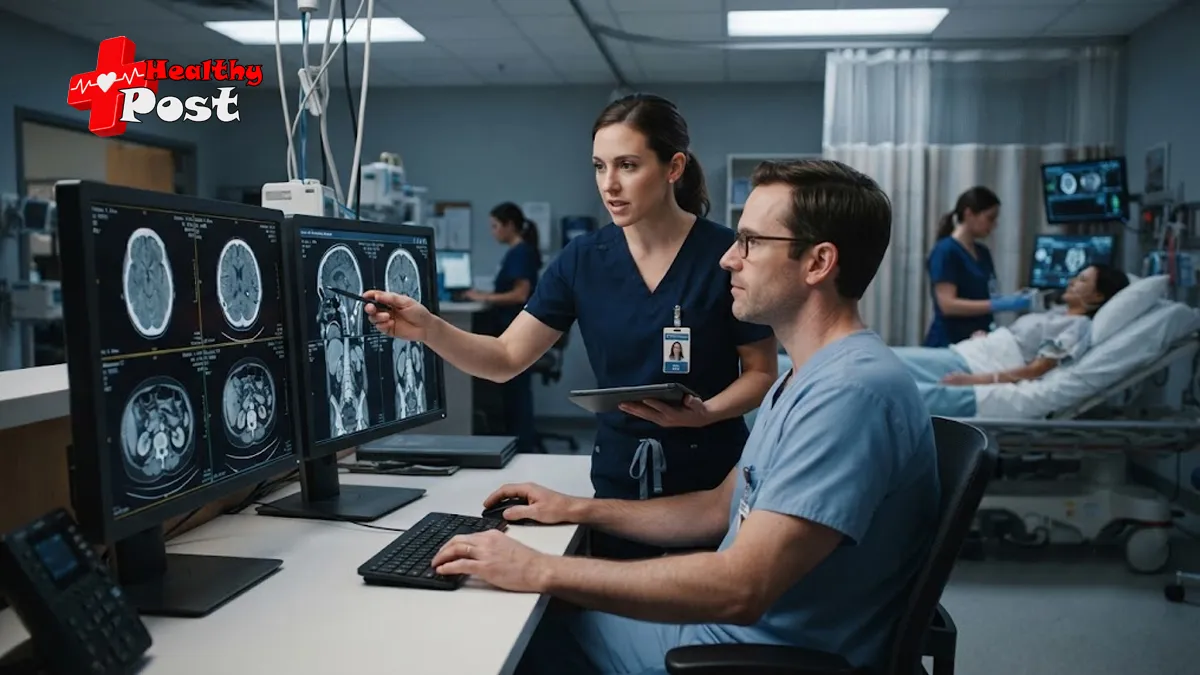
This article has been reviewed by Dr. Mohammad Kamruzzaman (Plastic & Reconstructive Surgeon, Dhaka Medical / Ibn Sina), bringing extensive hospital-based clinical and acute-care experience.
Medical Disclaimer: The information provided on Healthy Post regarding emergency department (ER) diagnostic procedures, CT scan workflows, and result turnaround times is for educational and informational purposes only and does not constitute formal medical or emergency advice. Hospital diagnostic timelines can vary widely depending on facility protocols, case urgency, and radiology staffing. Always consult qualified healthcare professionals or emergency medical staff for acute medical evaluations and specific diagnostic inquiries.

🏥 Medical Review Board Member
Dr. Mohammad Kamruzzaman, MBBS, FCPS
Plastic & Reconstructive Surgeon | Associate Professor, Dhaka Medical College & Hospital
Dr. Mohammad Kamruzzaman is a prominent plastic, reconstructive, and burn surgeon serving as an Associate Professor in the Department of Burn & Plastic Surgery at Dhaka Medical College & Hospital. With extensive clinical expertise and advanced surgical credentials, he is dedicated to providing evidence-based medical oversight and translating specialized clinical care into clear, reliable guidance. Dr. Kamruzzaman ensures that health and surgical content on Healthy Post meets the highest standards of medical accuracy, clinical integrity, and patient safety.
When patients ask us, “how soon do doctors receive ct scan results in er?” they are usually dealing with pain, fear, or uncertainty. That question matters. In emergency medicine, time shapes decisions. A CT scan can help identify a stroke, internal bleeding, appendicitis, a blood clot, or a head injury within minutes. But while the scan itself may be quick, the full emergency department process includes triage, image review, and clinical interpretation before your doctor gives you answers.
In our medical editorial practice, we see this concern often. Families assume the machine creates an instant diagnosis. In reality, the images are only one part of the emergency department triage process. The scan must be performed, sent to a radiologist, interpreted accurately, and then reviewed by the ER physician alongside your symptoms, physical exam, blood work, and medical history.
The reassuring part is this: in true emergencies, doctors often receive preliminary CT information within about 30 minutes to a few hours. Less urgent cases can take longer. Understanding that timeline can make the waiting feel less mysterious and help you know what is happening behind the scenes.
If you are navigating other treatment decisions at home, topics like Managing Chemotherapy Side Effects at Home or How Does Traumagel Work may also come up later in recovery. But in the ER, the immediate goal is simple: find and treat the most dangerous problem first.
1. The short answer: CT scan results in the ER often arrive fast
If you are wondering how soon do doctors receive ct scan results in er, the answer depends on urgency.
In many hospitals, the average pattern looks like this:
| Situation | Typical doctor access to preliminary results | Final report timing |
|---|---|---|
| Suspected stroke, major trauma, internal bleeding | 15-30 minutes to about 1 hour | Often within 1-2 hours |
| Moderate urgency, such as severe abdominal pain | 30 minutes to a few hours | A few hours |
| Lower-priority ER imaging | 2-6 hours | Same day or later |
| Non-urgent inpatient or outpatient imaging | Not usually an ER priority | 24-48 hours or longer |
This is why the average wait time for ER CT scan results can vary so much from one patient to another. A person with sudden weakness on one side of the body may be rushed ahead of someone with milder, stable symptoms. That is not neglect. It is prioritization based on medical risk.
In practical terms, ER doctors may receive:
- A verbal urgent alert from the radiologist for critical findings
- A preliminary read in the electronic record
- A finalized radiology report after a more complete review
Most studies and hospital workflows agree on one core point: life-threatening findings are typically escalated quickly.
For general patient education on the test itself, the NHS overview of CT scan explains how CT imaging works and why it is used.
2. Triage determines who gets answers first
The biggest driver of timing is urgency. That is the heart of understanding CT scan prioritization in ER settings.
Before the scan is even ordered, the patient goes through triage. A nurse assesses symptoms, vital signs, pain level, and red flags. A patient with chest trauma, confusion, or signs of stroke moves up the queue. Someone with a stable ankle injury or mild chronic pain may wait longer.
This is also central to how to understand emergency department diagnostic process in a realistic way. The ER is not first-come, first-served. It is risk-based.
Here is how it often unfolds:
- Triage identifies immediate danger.
- The ER clinician forms a working diagnosis.
- A CT scan is ordered if imaging can quickly answer a critical question.
- The images go to radiology.
- The doctor combines the CT findings with the full clinical picture.
A common real-world example: two patients arrive at the same time. One has a headache and normal vital signs. The other has a sudden severe headache, vomiting, and confusion. Both may need head imaging, but the second patient’s scan will be prioritized because bleeding in the brain must be ruled out urgently.
That is why how soon do doctors receive ct scan results in er cannot be answered by one universal clock. The medical context matters.
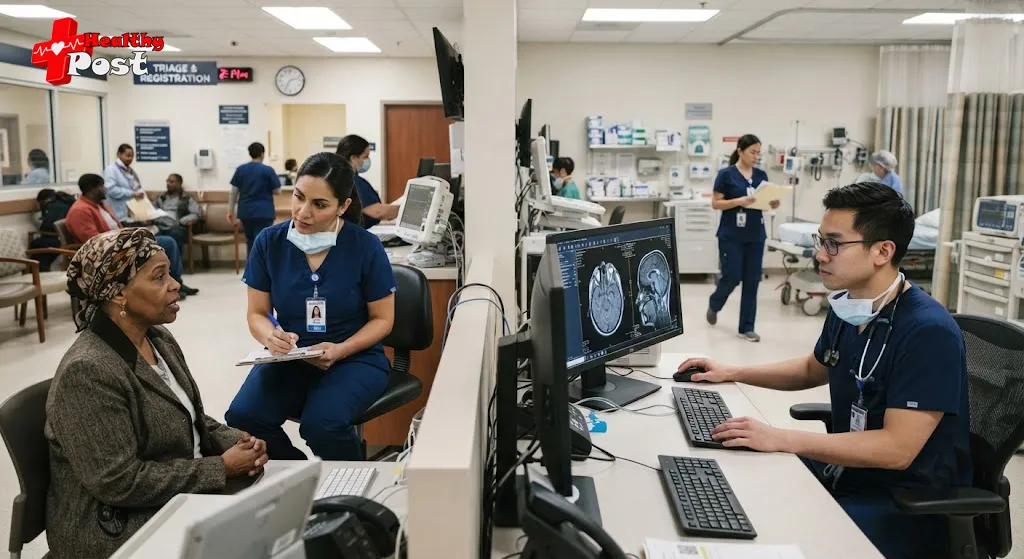
3. The scan itself is quick, but the full workflow takes longer
Many patients are surprised that the actual scanner time may only be a few minutes. What adds time is everything around it.
What happens during an emergency room CT scan
A CT scan in the ER may involve:
- Transport to the imaging suite
- Safety screening
- Positioning on the scanner table
- IV contrast preparation, if needed
- The image acquisition itself
- Uploading images to PACS, the hospital image system
- Radiologist review and report creation
Simple non-contrast scans can move quickly. More complex studies take longer. For example, a trauma CT covering the head, chest, abdomen, and pelvis generates far more images than a focused sinus scan.
Contrast can also affect timing. If a patient needs contrast dye, the team may need kidney function labs, IV access, or allergy review first. This does not always add a major delay, but it can.
So when families ask, “The scan is done. Why are we still waiting?” the answer is usually that interpretation is still in progress, or the ER physician is reviewing those results alongside other tests.
This is one reason diagnostic imaging turnaround times are not identical to “time spent inside the scanner.”
4. Radiologists do not just look fast. They look carefully.
A CT scan is not like glancing at a photo. It can contain hundreds, sometimes thousands, of image slices. Radiologists are trained physicians who interpret these studies in context and flag what matters now.
That is where the factors influencing radiology report turnaround become important.
Factors affecting radiology report speed
Several issues can change the pace:
- Case urgency and reading priority
- Number of scans waiting in the queue
- Time of day or weekend staffing
- Complexity of findings
- Need to compare with older imaging
- Technical issues with image transfer
- Whether a subspecialty radiologist is needed
A straightforward kidney stone CT may be faster to read than a scan showing possible bowel ischemia, subtle bleeding, or post-surgical anatomy.
In our experience reviewing patient education around radiology, the safest reports are not rushed reports. The goal is efficient accuracy. A few extra minutes spent confirming a finding can change treatment decisions.
Modern systems also use the hospital’s image network, often called PACS. If bandwidth is slow or the image archive is overloaded, that can add a hidden delay. This is one of the less visible factors influencing radiology report turnaround that patients rarely hear about.
5. Nights, weekends, and hospital resources make a difference
Another key part of how to understand emergency department diagnostic process is recognizing that not all hospitals operate with the same staffing model.
A large academic medical center may have on-site radiologists around the clock. A smaller community hospital may rely more heavily on overnight remote readers. Both can provide excellent care, but workflows differ.
How teleradiology improves hospital efficiency
Teleradiology means scans are interpreted remotely by licensed radiologists, often during nights or weekends. It helps maintain 24/7 coverage and may reduce bottlenecks when local staff are stretched.
Research on teleradiology has shown it can support emergency services, especially where on-site staffing is limited. It is now a standard part of many systems.
AI tools also increasingly support emergency workflow. These systems do not replace radiologists, but they may flag possible brain bleeds, lung clots, or other urgent findings for faster review. This growing AI role in emergency diagnostic workflows can help move critical studies to the top of the reading queue.
That said, technology is not magic. It supports clinicians. It does not eliminate the need for expert judgment.
If you have spent time reading about wound recovery or symptom relief after discharge, articles such as How Does Traumagel Work often make more sense once the immediate ER phase is over. In the emergency setting, though, the priority remains speed with accuracy.
6. Doctors may know the urgent answer before the final report is signed
This is one of the most important facts for patients and families.
Sometimes the ER physician gets a critical update before the official written report is complete. A radiologist may call directly and say there is a bleed, a fracture, a pulmonary embolism, or no sign of an immediate surgical emergency. That verbal communication can speed treatment.
So if you are asking how soon do doctors receive ct scan results in er, remember there are different kinds of “results”:
- Immediate life-threatening findings communicated urgently
- Preliminary interpretation documented early
- Final signed report completed after full review
This can explain why a doctor starts treatment before handing you a printed report. In medicine, action often begins with the preliminary answer if the finding is clear and urgent.
For broader context on hospital pathways, the NHS information on Emergency and urgent care services can help explain why emergency systems prioritize serious conditions first.
7. Why one patient waits longer than another
The average wait time for ER CT scan results becomes easier to understand when you picture the emergency department as a dynamic queue, not a fixed schedule.
A few common causes of delay include:
- Multiple critical traumas arriving at once
- Stroke alerts or cardiac emergencies taking precedence
- Need for repeat images because of movement
- Waiting for contrast prep or lab results
- High scan volume during evenings or flu season
- Complex findings requiring careful comparison
Here is a brief example. A stable patient with abdominal pain may complete a CT in 40 minutes, yet still wait two more hours for the care plan because the physician is handling several unstable patients and is waiting for lab work to match the imaging findings. That delay can feel frustrating, but it does not always mean something has gone wrong.
This is also why factors affecting radiology report speed are only part of the story. The doctor still has to interpret the report in the context of the person in front of them.
If your symptoms change while waiting, tell the care team right away. New pain, trouble breathing, weakness, worsening confusion, or vomiting can change your triage status.
8. What patients can do while waiting
You cannot control the queue, but you can avoid preventable slowdowns.
Helpful steps include:
- Tell staff if you have kidney disease, allergies, or prior reactions to contrast
- Confirm whether you should avoid eating or drinking
- Share old imaging history if done at another hospital
- Report any change in symptoms immediately
- Ask whether the scan is still waiting to be read or whether the doctor is reviewing the plan
This is also a good moment to keep perspective. The ER diagnostic process is designed to answer a few urgent questions first: Is there a bleed? A blockage? A rupture? A clot? A fracture needing immediate action? Once those dangers are addressed, more detailed follow-up can happen later.
Patients who later need home-based support may find Managing Chemotherapy Side Effects at Home useful in a very different clinical context, but while you are in the ER, the focus is stabilization and decision-making.
FAQs
1. How soon do doctors receive CT scan results in ER for stroke symptoms?
Often very quickly. In suspected stroke, a head CT is usually prioritized, and preliminary findings may reach the ER doctor within minutes to about an hour, depending on the hospital.
2. What is the average wait time for ER CT scan results?
The average wait time for ER CT scan results can range from about 30 minutes to a few hours for urgent cases. Lower-priority situations may take longer, especially during busy periods.
3. Can an ER doctor read my CT scan before the radiologist?
Some ER physicians may recognize obvious major findings, but the formal interpretation usually comes from a radiologist. Treatment may begin based on urgent clinical suspicion while that review is happening.
4. Do nights and weekends delay CT scan results?
Sometimes. Off-hours staffing may be leaner, but many hospitals use remote radiology support. This is one example of how teleradiology improves hospital efficiency.
5. Why did my scan finish quickly, but I still waited?
The scanner time is only one piece. Doctors may still be waiting on the radiology review, blood tests, specialist input, or a full care plan.
6. Should I ask for updates?
Yes, politely. It is reasonable to ask whether the scan has been completed, whether it has been read, and whether you should avoid food or drink while waiting.
Conclusion
So, how soon do doctors receive ct scan results in er? In most emergency situations, preliminary results are often available within 30 minutes to a few hours, with the fastest turnaround reserved for life-threatening concerns. The exact timing depends on triage level, scan complexity, staffing, hospital technology, and the broader emergency workload.
The best way to understand emergency department diagnostic process is to remember that CT imaging is part of a larger chain of care. The machine captures the pictures. The radiologist interprets them. The ER doctor connects those findings to your symptoms and next steps. That layered process is what protects patients.
If you are in the ER now, keep your care team updated about symptom changes and ask whether eating or drinking could delay testing. If you are recovering afterward, related guides like How Does Traumagel Work and Managing Chemotherapy Side Effects at Home may be useful next reads. In the moment, though, the key point is simple: urgent scans are prioritized, and waiting time usually reflects safety-driven decision-making, not indifference. 🙂
References
- NHS: CT scan
- NHS: Emergency and urgent care services
- PubMed: teleradiology