

Clinical Authorship & Verification
This article has been written by Dr. Kamlesh Verma (Surgical Oncology, Max Hospital ↗), specializing in oncological care, thoracic pathology, and tobacco-related malignancies.
Medical Disclaimer: The information provided on Healthy Post is for educational and informational purposes only and does not constitute formal medical advice, diagnosis, or treatment. Tobacco smoke causes severe, progressive damage to respiratory tissues and increases the risk of lung cancer. Always consult a qualified physician, pulmonologist, or healthcare professional for individualized medical evaluations, pulmonary assessments, or smoking cessation support.

🏥 Medical Review Board Member
Dr. Kamlesh Verma, MS, M.Ch
Director – Surgical Oncology | Max Super Speciality Hospital, Lucknow
Dr. Kamlesh Verma is a highly experienced Surgical Oncologist and Director of Surgical Oncology at Max Super Speciality Hospital, Lucknow. Trained at premier institutions including the Tata Memorial Centre in Mumbai and King George’s Medical University (KGMU), Dr. Verma specializes in advanced minimally invasive, robotic, and complex cancer surgeries. He is deeply committed to evidence-based oncology care, ensuring that every cancer-related publication he reviews meets the highest standards of medical accuracy, safety, and clinical integrity.
We all know that smoking is harmful to health. This is just an abstract description in language. So what effects does smoking have on the lungs?
Let’s look at a picture first
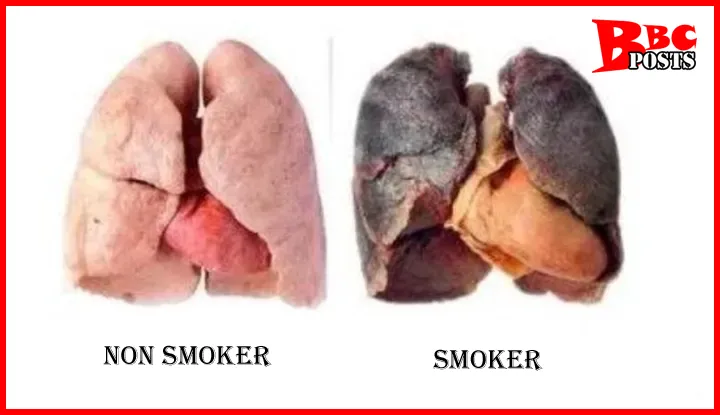
From this picture, we can clearly see that the lungs of non-smokers are red and spotless, while the lungs of smokers are like ink and dry like black carbon.
The smoke produced by burning cigarettes contains at least thousands of harmful components. The tar and other compounds in it work together on the lungs, eventually causing the smoker’s lungs to turn black.
It can be said that smoking is “a hundred harms without any benefit” to human beings. Tobacco has caused all kinds of negative effects on our bodies. Let me summarize the eight major harms:
1. Affects bone health
Studies have pointed out that if you smoke for a long time, bone density will decrease, and the longer you smoke, the more bone density will decrease, which will increase the chance of osteoporosis.
2. Affect skin health
If you smoke every day, your skin health will be greatly damaged, and the incidence of psoriasis will be much higher. Especially people who smoke more than one pack a day are more likely to suffer from psoriasis .
3. Affect sleep quality
During sleep, the brains of smokers are also more active than other people. They have difficulty falling asleep deeply and have poor sleep quality. Some smokers will get up until midnight to smoke a cigarette. This will undoubtedly affect their sleep and cause damage to their health. .
4. Affect lung health
Smoking will damage the capillaries in the lungs and weaken the immune function of the lungs. This makes smokers prone to lung diseases such as chronic bronchitis . People who smoke for a long time may also develop lung cancer.
5. Impact on sexual function
Smoking will have adverse effects on human blood circulation. As a result, the blood supply to male sexual organs will be reduced, which will easily affect sexual desire. Some men’s impotence is closely related to smoking.
6. Affect fertility
Sperm will react to the nicotine contained in cigarettes to a certain extent, and the fertilization ability of sperm will be weakened because men smoke. In this way, male reproductive function will be damaged.
7. Affect family harmony
Because smoking will cause family members to smoke second-hand and third-hand smoke, even if the family does not smoke, they will be harmed, especially if there are children at home. Smoking can easily cause family conflicts and affect family harmony.
8. Affect personal image
Having straight and whitened teeth can obviously improve your personal image. People who smoke often have their teeth turn yellow and black, and their personal image will be greatly damaged.
Tobacco smoke contains 69 known carcinogens. These carcinogens can cause key gene mutations in the body, disorder the normal growth control mechanism, and ultimately lead to cell canceration and malignant tumors. On this basis, smoking can cause respiratory diseases, damage vascular endothelial function, lead to cardiovascular disease, type 2 diabetes , and increase the risk of macrovascular and microvascular complications in diabetic patients.
It is worth noting that the above hazards are not only for smokers, non-smokers who have been polluted by second-hand and third-hand smoke for a long time will also have the same health risks.
However, once a smoker chooses to quit smoking, the damage caused to the blood, respiratory system, sense of smell, etc. will gradually be alleviated or even begin to recover within three months of quitting smoking. The longer the smoking cessation lasts, the higher the risk of previous heart disease and stroke. Risks are also significantly reduced.
Therefore, no matter from which perspective, quitting smoking will do “a hundred harms but no good” to yourself and the people around you.
So, the question is, after quitting smoking, can the lungs be clean again? If smokers quit smoking early, can the lungs be clean again and be healthy again?
First of all, unfortunately, although the lungs can recover their functions after quitting smoking, they cannot completely return to their original state.
However, after quitting smoking, the inflammation in the lungs will be reduced, and the lung cilia will start to work again, resume their cleaning function, and begin to repair themselves.
Seven days after quitting smoking, the cilia in the lungs can regenerate. Three months after quitting smoking, the cilia return to their normal state and can clean up necrotic cells and repair damaged tissues. One year after quitting smoking, lung function will gradually increase
Research from the American Lung Health Association shows that 10 years after quitting smoking, the risk of lung cancer for ex-smokers is 50% lower than for people who still smoke. So it is certain that quitting smoking can indeed restore normal lung function.
I will also publish an article in the future, specifically talking about the harm of smoking to our cardiovascular system, tips for quitting smoking, and how to save it. I am
Nonsense way of health, for the health of ourselves and those around us, please stay away from cigarettes from now on.
Frequently Asked Questions
How does cigarette smoke damage the lungs structurally?
Tobacco smoke contains thousands of toxic chemicals and carcinogens that paralyze and destroy cilia (the microscopic hair-like structures responsible for sweeping mucus and debris out of the airways). It also triggers chronic inflammation, destroys the delicate walls of the alveoli (air sacs) leading to conditions like emphysema, and leads to excessive mucus buildup.
What are the long-term respiratory risks associated with smoking?
Long-term smoking is the primary cause of chronic obstructive pulmonary disease (COPD), which includes chronic bronchitis and emphysema. It also drastically increases the risk of developing malignant tumors and lung cancer, along with rendering the respiratory tract more susceptible to frequent bacterial and viral infections.
Can the lungs heal or recover after quitting smoking?
Yes, the body begins the repair process almost immediately after quitting. Over time, cilia regenerate and regain normal function, reducing chronic coughing, improving airflow, and gradually lowering the overall risk of lung cancer and cardiovascular disease compared to continued smoking.
Why is smoking strongly linked to lung cancer?
Tar and other toxic compounds in tobacco smoke directly damage the DNA within lung cells. Over time, these genetic mutations cause cells to multiply uncontrollably, forming cancerous tumors in the lung tissue and respiratory passages.
When should I seek medical help regarding smoking-related respiratory symptoms?
You should consult a physician or pulmonologist promptly if you experience persistent coughing, chronic shortness of breath during light physical activity, recurrent chest infections, wheezing, or coughing up blood, as these can indicate advanced respiratory damage.

38 Comments
Pingback: How eosinophilic asthma differs from other asthmas
Pingback: What is esophageal reflux (GERD)? Symptoms and prevention
Pingback: cardiovascular disease, can do these 4 things, and blood vessels can stay young.
Pingback: For people who smoke regularly, what symptoms show their lungs
Pingback: Blood sugar test monitoring also has time points, and the six time periods have very different meanings!
Pingback: Non-Small Cell Lung Cancer ICD-10: The Ultimate Guide for 2024
Pingback: Why do you have bad breath but you can't smell it?
Pingback: 9 bad habits that seriously damage the brain, how close are you?
Pingback: skin cancer: symptoms, cause and prevented
Pingback: GERD ICD 10: A Comprehensive Guide to Diagnosis and Coding - Latest Posting
Pingback: Your Guide to the ICD 10 Code for COPD Exacerbation
Pingback: Chip Gaines Heart Attack: Separating Fact from Fiction
Pingback: Sex timing kaise badhaye: healthy tips by healthy post -
Pingback: Lumbar Disc Herniation ICD 10: Symptoms, Causes, Treatments
Pingback: Centrilobular Emphysema ICD 10: Causes, Symptoms, Diagnosis
Pingback: ICD 10 for Leukocytosis Explained: Symptoms, Causes, Coding
Pingback: Leukocytosis ICD 10: Causes, Symptoms, and Diagnosis Explained
Pingback: Spider Bite Piercing Guide 2025: Procedure, Cost & Care Tips
Pingback: Does Vaping Cause Acne? Surprising Link Between E-Cigarettes
Pingback: Nicotine Lozenges 4mg: A Smarter Way to Quit Smoking
Pingback: ICD-10 Code J96.01: Acute Hypoxic Respiratory Failure Guide
Pingback: Hidradenitis ICD 10 Codes Guide: Diagnosis & 2025 Updates
Pingback: High Blood Pressure in Children: Causes, Symptoms Prevention
Pingback: Osteopenia ICD 10: 10 Essential Facts Every Patient Must Know
Pingback: Endothelial Function Test: 7 Powerful Benefits You Can’t Ignore
Pingback: icd 10 code for high cholesterol: 7 Essential Facts You Can’t Ignore
Pingback: 7 Proven Ways to Prevent Proliferative Diabetic Retinopathy and Protect Your Vision
Pingback: 10 Powerful Foods That Reduce Phlegm Naturally for Better Breathing - Healthy Post
Pingback: Sinus Headache: 8 Positive Outcomes from Fast Natural Treatments
Pingback: Understanding CVA ICD 10: Stroke Classification Codes Explained
Pingback: The 10 most stomach-damaging mistakes you make every day!
Pingback: What Is Pneumothorax? Effective Treatment Explained
Pingback: 5 Powerful Ways to Remove Calculus Bridge and Restore Teeth
Pingback: family history of breast cancer icd 10
Pingback: Widowmaker Heart Attack: Symptoms, Causes, Survival Guide
Pingback: Is Gingivitis Contagious? Can Gum Disease Spread Through Kissing?
Pingback: How to Get Rid of Post Nasal Drip Fast: Effective Relief & Remedies
Pingback: Atrial Fibrillation ICD 10: Complete Code List & Updates