


This article, “How Can You Tell If Your Foot Is Swollen? 7 Signs to Look For,” was written by Dr. Sana Lodhi, MBBS, to provide general health information about the signs, possible causes, and symptoms of foot swelling.
The information is intended for educational purposes only and should not be considered a substitute for professional medical advice, diagnosis, or treatment. Foot swelling can have several underlying causes, and the information in this article cannot determine the cause of your symptoms.
If you experience sudden or unexplained swelling, pain, redness, or warmth in one foot or leg, seek prompt medical assessment. If swelling occurs with chest pain, sudden shortness of breath, fainting, or coughing up blood, seek emergency medical care. Always consult a qualified healthcare professional about personal health concerns.

✍️ HealthyPost Author
Dr. Sana Lodhi, MBBS
Medical Doctor & General Health Specialist
Dr. Sana Lodhi, MBBS, is a medical doctor with a background in general clinical medicine and healthcare education. At HealthyPost, she focuses on making complex healthcare topics easier to understand through clear, practical health information. Her contributions cover general health awareness, preventive healthcare, and patient wellness, helping readers develop a better understanding of their health and make informed decisions.
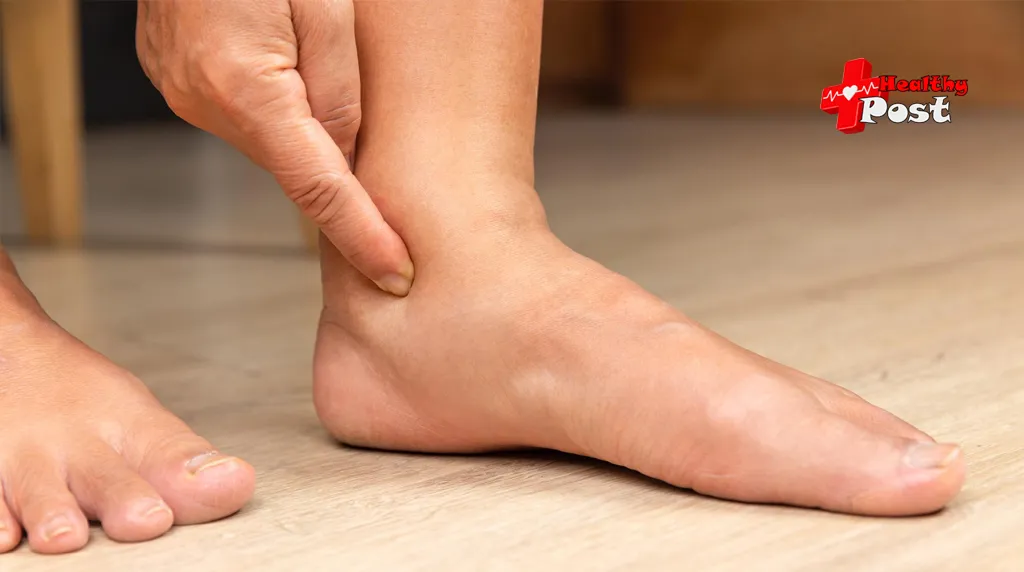
Most people notice a swollen foot in an ordinary moment: the shoe that fitted this morning feels tight by evening, or a sock leaves a deep groove around the ankle. So how can you tell if your foot is swollen? Look for a foot that appears puffier or larger than usual, skin that looks tight or shiny, shoes and socks that feel snug, and a small dent that lingers for a moment after you press the skin. Any one of these can be subtle, and swelling does not always hurt, which is exactly why it is so easy to dismiss.
This guide walks through the signs of a swollen foot in plain terms, shows how to check at home, explains why one foot can swell while the other stays normal, and sets out which symptoms mean you should stop waiting and get help.
What foot swelling actually is
Foot swelling happens when extra fluid collects in the tissues of the foot. The medical term is edema (spelled oedema in British English). It can affect the top of the foot, the toes, the area around the ankle, or the whole foot, and it can involve one foot or both.
One point is worth fixing in mind from the start: swelling is a physical finding, not a diagnosis. The cause may be harmless and temporary, such as a long day on your feet or a hot afternoon. It may also point to a problem with the veins, the lymphatic system, the heart, the kidneys or the liver. The NHS overview of swollen ankles, feet and legs notes that swelling often settles by itself, but that new symptoms or an unexplained cause call for medical advice.
7 signs of a swollen foot
Swelling rarely announces itself dramatically. These are the signs of a swollen foot that people most often notice, roughly in the order they tend to appear.
1. Visible puffiness or enlargement
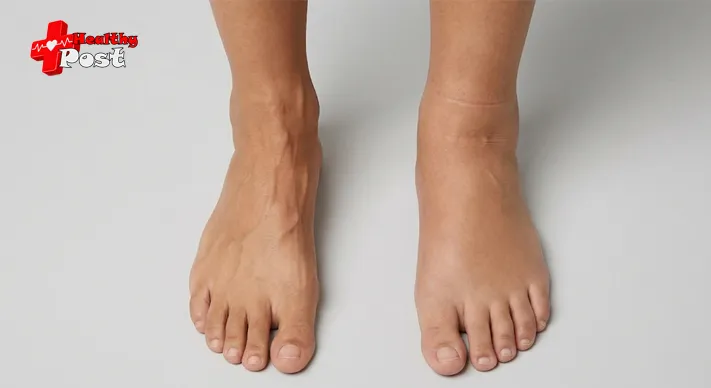
The simplest sign is that the foot looks bigger or fuller than it normally does. The top of the foot may seem rounded, the toes thicker, and the bony outline around the ankle less defined. One foot may look clearly larger than the other.
A caution here: most people have slight natural differences between their feet. What matters is a new change, not an asymmetry that has always been there.
2. Skin that looks stretched or shiny
As fluid builds up beneath the skin, the surface can look tight, smooth and glossy, and the usual creases over the foot and ankle fade. The skin may feel uncomfortable because of the pressure underneath. Stretched, shiny skin supports the idea of swelling but says nothing about what is causing it.
3. Shoes and socks feel tighter
For many people this is the first clue, appearing before anything is obvious in the mirror. Shoes that are normally comfortable begin to pinch, laces need loosening, or slipping them off at the end of the day takes effort. If the tightness fades after a night’s rest, that pattern is worth remembering, because it can help a clinician later.
4. Sock marks that stay
Everyone gets some sock marks. In a swollen foot, the impressions are often deeper and last longer after the socks are off, particularly around the ankle. The mark alone does not confirm edema, since a tight elastic band can do the same on a normal foot, but deep, persistent grooves combined with other signs on this list are meaningful.
5. A dent that stays after you press: pitting edema
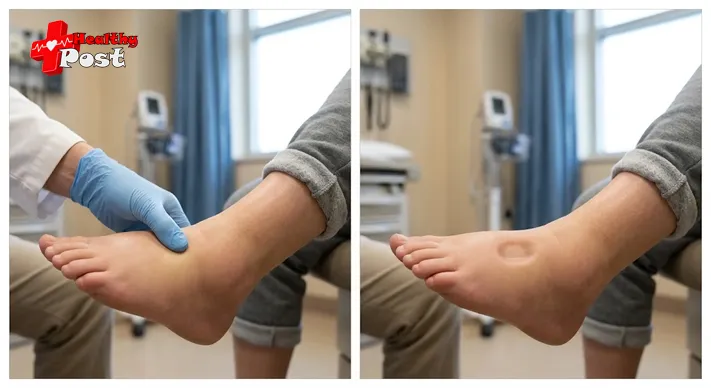
Pitting edema is swelling that holds the imprint of a finger. When pressure is applied to swollen tissue and then released, a shallow dent remains briefly before slowly filling back in. Clinicians press for several seconds over a bony area, such as the top of the foot or just above the ankle, and watch how deep the dent is and how quickly it recovers. This is one of the more informative signs of pitting edema in feet, but the grading and interpretation are best left to a professional.
Not all swelling pits. Lymphedema, which is swelling caused by poor lymph drainage, may pit in its early stages but often becomes firm and non-pitting as the tissue thickens over time. So a foot that does not leave a dent is not necessarily a foot without a problem.
6. Stiffness or less movement
Swelling can make the toes harder to bend and the ankle feel tight when you walk. Some people describe a heavy, thick-footed sensation, or find that normal footwear no longer works. Because stiffness and pain can also come from injury or arthritis, this sign carries the most weight when it appears together with the others.
7. Heaviness, tenderness or pain
A swollen foot may ache, feel tender to the touch, or become sore after long periods of standing. But pain is not a requirement. Some serious causes, including a blood clot in a deep vein, can produce swelling with little or no discomfort, so a painless swollen foot is not automatically a harmless one.
What does a swollen foot look like compared with a normal foot?
Pictures help, but so does a mental checklist. These are general observations rather than a diagnostic test, and swelling can be mild enough to show only one or two of them.
| Feature | Typical foot | Possibly swollen foot |
|---|---|---|
| Shape | Bones and tendons visible | Rounded, fuller, outline softened |
| Skin | Normal creases | Tight, smooth or shiny |
| Footwear | Fits as usual | Feels snug or leaves deep marks |
| Pressure test | Skin springs back at once | A dent lingers briefly |
| Comfort | Moves freely | Stiff, heavy or tender |
How to check whether your foot is swollen at home
If you are wondering how can you tell if your foot is swollen when nothing looks dramatic, a few calm minutes of observation usually answer the question. These checks are for noticing, not diagnosing.
- Compare both feet. Sit with your feet side by side and look at the toes, the top of each foot and the ankles. Note any new difference in size or shape.
- Look at the skin. Tightness, shine or a loss of normal creases are worth noting.
- Check your shoes. If the same pair suddenly feels smaller, that is useful information.
- Inspect sock marks. Deeper or longer-lasting grooves than usual are a clue.
- Press gently. Press a fingertip over the top of the foot or above the ankle for a few seconds and see whether a dent lingers. Do not press hard over areas that are painful, red or hot.
- Note the timing. Swelling that builds through the day and eases after a night with the feet raised often points in a different direction from swelling that is there on waking, or that appears suddenly.
Do not hold off seeking advice to finish these steps if the swelling came on quickly, is painful, or arrives with other symptoms described below.
One foot or both: why the pattern matters
Where the swelling sits is one of the most useful clues a doctor will ask about. A single swollen foot or leg often suggests a local problem; swelling in both feet is more likely to reflect something affecting the whole body. That is a tendency, not a rule.
When one foot swells
Unilateral foot swelling can have several explanations:
- Deep vein thrombosis (DVT). A blood clot in a deep leg vein can cause sudden swelling, tenderness in the calf, warmth and redness, though pain is sometimes absent. It matters because a clot can travel to the lungs.
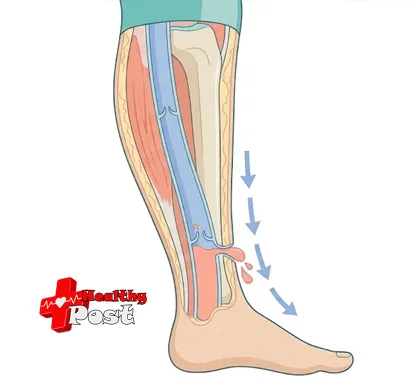
- Chronic venous insufficiency. Weakened vein valves let blood pool in the lower leg. Swelling tends to worsen after standing or sitting for long periods and ease overnight, and varicose veins or skin darkening may be present.
- Lymphedema. Fluid builds up because lymph drainage is impaired, producing persistent swelling and, over time, thickened skin.
- Injury. A sprain, strain or other soft-tissue injury usually brings bruising, tenderness and a clear story of what happened.
- Infection. Cellulitis causes a swollen, red, warm and tender area, sometimes with fever or chills. The signs overlap with what is described in this guide on how an infected blister looks, and any spreading redness warrants prompt assessment.
Less common causes include a Baker’s cyst behind the knee, a clot in a superficial vein, and pressure on veins or lymph vessels in the pelvis.
When both feet swell
Swelling in both feet and ankles, sometimes called lower extremity edema, can come from conditions that affect fluid balance throughout the body:
- Heart failure. When the heart cannot pump efficiently, fluid backs up and tends to collect in the feet and ankles. Related symptoms include breathlessness, difficulty breathing when lying flat, waking at night short of breath, tiredness and abdominal swelling. The British Heart Foundation advises urgent medical attention when swelling comes with breathlessness, fatigue or pain. Swollen feet alone do not mean heart failure.
- Kidney disease. Impaired kidneys may not clear enough salt and water, so fluid collects in the feet and sometimes around the eyes.
- Liver disease. Some liver conditions cause fluid to build up in the legs and abdomen.
- Pulmonary hypertension. High pressure in the lung vessels strains the right side of the heart and can contribute to fluid retention.
- Medication. Certain medicines, notably dihydropyridine calcium channel blockers used for high blood pressure, can cause ankle swelling. Anyone taking them should keep to their prescribed routine, and it may help to read about taking blood pressure medication correctly; never stop a prescribed medicine without speaking to your prescriber.
Heat, pregnancy and long periods of sitting or standing commonly cause temporary swelling in both feet as well.
| One foot | Both feet | |
|---|---|---|
| Usual pattern | Local problem in one limb | Whole-body or shared cause |
| Examples | DVT, venous disease, injury, infection, lymphedema | Heart, kidney, liver, medication, long sitting or standing |
| Key message | Sudden unexplained swelling needs urgent assessment | New or worsening swelling needs evaluation |
Systemic illness can occasionally cause uneven swelling, and vein problems can affect both legs, so treat this table as a guide to the questions your doctor may ask rather than an answer.
When should you worry about a swollen foot?
Most mild swelling is not an emergency, but some patterns should not be watched and waited on.
Get urgent medical assessment if:
- One foot or leg swells suddenly without an obvious cause
- The swelling comes with calf pain or tenderness
- The area is red, hot or increasingly painful
- Swelling follows a significant injury
- You have a fever, chills or other signs of infection
- You have diabetes and a swollen foot, ankle or leg
Sudden swelling on one side deserves particular attention because DVT has to be ruled out, and the NHS lists a swollen area that is red or hot, or a high temperature, among reasons to seek help the same day.
Call emergency services if swelling occurs alongside:
- Sudden shortness of breath or severe difficulty breathing
- Chest pain, especially when breathing in
- Coughing up blood
- Fainting or severe dizziness
These can signal a pulmonary embolism, where a clot has reached the lungs, or another serious heart or lung problem. Do not wait for the swelling to go down first.
How doctors find the cause
A clinician starts with questions: when the swelling began, whether it was sudden or gradual, which foot is affected, whether it worsens after standing, and whether there is pain, redness or warmth. They will also ask about heart, kidney, liver or vein conditions and any new medicines.
The examination looks at both feet and ankles, skin colour and temperature, tenderness, circulation, and whether the swelling pits. From there, tests depend on the suspected cause. A venous ultrasound is commonly used when DVT is a concern. Blood and urine tests can assess kidney and liver function and other markers. If heart failure is suspected, an echocardiogram, an electrocardiogram (ECG) and a blood test such as BNP or NT-proBNP may be arranged. More invasive heart tests are reserved for specific situations, not routine for everyone with swollen feet.
What can help mild swelling
For uncomplicated, short-lived swelling, a few simple habits often help, though none of them treats an underlying illness.
Raise your feet. Resting with the legs elevated above heart level when possible helps fluid drain away from the lower limbs.
Keep moving. Break up long stretches of sitting or standing with short walks or ankle circles, which use the calf muscles to push blood upward.
Give your feet room. Supportive shoes with space for swelling are more comfortable than tight ones.
Watch your salt. Excess sodium encourages the body to hold fluid, as the Mayo Clinic notes in its edema overview. People with heart or kidney disease should follow personalised advice rather than set their own limits; general heart-healthy eating principles can be a starting point for discussion with a clinician.
Review your medicines. If swelling began after starting a new tablet, ask your prescriber or pharmacist whether it could be responsible.
Compression stockings can help certain vein and lymphatic conditions, but they are not suitable for everyone, particularly people with poor arterial circulation, so have them fitted on professional advice. If swelling persists beyond a few days, keeps returning or worsens, it needs evaluation instead of more home remedies.
Frequently asked questions
Can a foot be swollen without hurting?
Yes. Many swollen feet are painless, and some serious causes, including DVT, can be too. Lack of pain is not reassurance when the swelling is sudden or one-sided.
Is pitting edema always serious?
No. It can follow a hot day or a long flight, and it also occurs in pregnancy. It becomes more worrying when it is new, persistent, worsening or accompanied by breathlessness, chest pain or other symptoms.
Why is my foot swollen in the evening but fine in the morning?
Gravity and prolonged standing or sitting let fluid pool in the feet during the day, and lying down overnight lets it redistribute. This pattern is common with mild venous problems, but a persistent pattern is still worth mentioning to a doctor.
Can a swollen foot just be from tight shoes?
It can contribute to discomfort and sock or shoe marks, but tight footwear does not explain swelling that appears alongside a stretched look, a lasting dent when pressed, or other symptoms.
How long is too long for a swollen foot?
Swelling that has not eased after a few days of home care, keeps returning, or is getting worse should be checked. Sudden swelling in one leg should be assessed the same day.
Should I massage a swollen foot?
Avoid massaging a swollen leg or foot if you cannot rule out a clot, since a DVT is a reason to seek urgent assessment instead. Gentle elevation and movement are safer starting points.
Conclusion
Knowing how can you tell if your foot is swollen comes down to noticing change: a fuller shape, tight or shiny skin, snug shoes, deeper sock marks, a dent that lingers, stiffness and heaviness. None of these alone proves anything, and swelling can be mild enough to show only one or two. What the pattern tells you is when to seek help: sudden swelling in one foot or leg, swelling with a red, warm or painful area, or any swelling alongside breathlessness or chest pain should be assessed promptly. For milder, slow-building swelling, elevate your feet, keep moving, and book a visit with your GP if it does not settle.
This article is for educational purposes and does not replace professional medical advice, diagnosis or treatment.
References
- NHS. Swollen ankles, feet and legs (oedema).
- British Heart Foundation. Swollen ankles (Heart Matters, Ask the experts).
- Mayo Clinic. Edema: symptoms and causes.