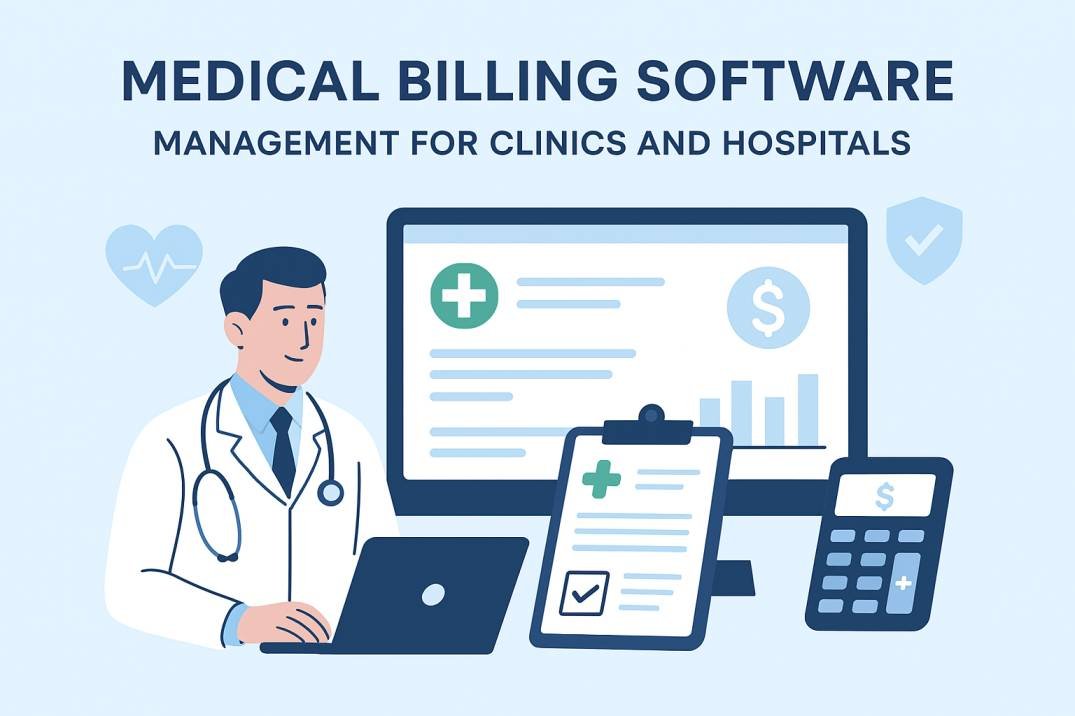
In today’s fast-evolving healthcare industry, accuracy and efficiency are no longer optional; they are essential. Managing billing, coding, and claims manually is not only time-consuming but also prone to errors that can impact revenue. This is where Medical Billing Software Management becomes a game-changer for clinics and hospitals. It simplifies complex billing workflows, minimizes administrative burdens, and ensures faster reimbursements.
Understanding Medical Billing Software Management
Medical Billing Software Management refers to the use of digital platforms that automate the billing cycle from patient registration to final claim submission. These systems handle critical tasks such as charge entry, claim creation, coding verification, and payment posting.
For clinics and hospitals, implementing billing software means transforming a manual process into a streamlined, data-driven system. It not only improves financial performance but also enhances compliance with healthcare regulations and payer requirements.
Key Benefits for Clinics and Hospitals
1. Streamlined Billing Processes
Traditional billing requires handling multiple paper forms, manual data entry, and cross-checking patient details. A medical billing management system automates these steps, allowing staff to focus more on patient care instead of administrative work.
2. Error Reduction and Compliance
Errors in coding and billing can lead to claim denials or delayed payments. Modern billing software integrates built-in compliance checks and coding accuracy tools, reducing the risk of costly mistakes. This ensures clinics and hospitals remain compliant with HIPAA and other regulatory standards.
3. Faster Reimbursements
By automating claim submissions and using real-time tracking, clinics and hospitals receive payments faster. The software flags potential issues before claims are submitted, helping prevent rejections and improving cash flow.
4. Enhanced Reporting and Analytics
Medical billing software provides detailed analytics on revenue trends, payment cycles, and denial rates. These insights help healthcare administrators make data-backed decisions to improve efficiency and profitability.
5. Improved Patient Experience
Patients today expect transparency in billing. With automated billing management, clinics can provide detailed, accurate invoices and offer multiple payment options—enhancing patient trust and satisfaction.
How It Works: Step-by-Step Overview
- Patient Registration and Verification
The process begins with collecting patient information and verifying insurance eligibility. The software validates coverage in real-time, reducing the chances of billing errors later.
- Charge Capture and Coding
Medical services are entered into the system and automatically linked with appropriate medical codes (ICD, CPT, HCPCS). This ensures every procedure is billed correctly.
- Claim Creation and Submission
Once charges and codes are reviewed, the system generates a claim ready for submission to insurance payers. Electronic submissions significantly reduce processing time compared to paper claims.
- Payment Posting and Reconciliation
Payments received from insurance companies and patients are automatically posted to accounts. The software reconciles these payments and flags any discrepancies for review.
- Denial Management
In cases where claims are denied, the system identifies the reasons and provides actionable insights for quick resubmission. This proactive approach prevents revenue loss.
Why Clinics and Hospitals Need a Centralized Billing Solution
In multi-department healthcare setups, different units often handle billing separately. This fragmented approach can cause duplication, inconsistencies, and delays. A centralized Medical Billing Software Management system integrates all billing operations under one platform.
This integration leads to:
- Uniform data across departments
- Centralized access to financial records
- Streamlined workflows between clinical and administrative teams
- Easier monitoring of key performance indicators (KPIs)
With cloud-based systems, even multiple locations can connect securely, ensuring seamless coordination and up-to-date records.
Integration with Electronic Health Records (EHRs)
Modern medical billing solutions are designed to integrate with Electronic Health Records (EHRs). This connection ensures that patient demographics, treatment details, and diagnostic codes automatically sync with billing data.
This eliminates redundant data entry and ensures that every billed service matches clinical documentation improving both accuracy and compliance.
Choosing the Right Medical Billing Software
Selecting the right system depends on the unique needs of your clinic or hospital. Here are a few key factors to consider:
- Scalability: Ensure the software can grow with your practice.
- User-Friendliness: The interface should be intuitive for both administrative and clinical staff.
- Integration Capabilities: Choose software that integrates smoothly with your EHR and practice management systems.
- Data Security: Confirm that the platform is HIPAA-compliant and uses encryption to protect sensitive patient data.
- Support and Training: Look for vendors offering ongoing support and staff training for optimal usage.
The Financial Impact of Effective Billing Management
A well-managed billing system directly influences financial health. Clinics and hospitals using automated billing solutions report fewer claim denials, improved collection rates, and more predictable cash flows.
Moreover, it reduces administrative costs by minimizing manual labor and paper-based tasks. In a healthcare landscape where margins are tight, efficient billing management can make a significant difference.
Future Trends in Medical Billing Software Management
The future of billing software lies in AI-driven automation, predictive analytics, and machine learning. These technologies can forecast claim outcomes, detect anomalies, and suggest corrective actions automatically.
Additionally, with telehealth becoming a mainstream service, billing systems are evolving to support virtual consultations and remote patient monitoring claims.
Conclusion
Efficient Medical Billing Software Management is no longer a luxury—it’s a necessity for modern healthcare institutions. For clinics and hospitals, it ensures operational efficiency, financial accuracy, and a better patient experience.
By automating billing workflows and integrating them with existing health record systems, healthcare providers can focus on what truly matters, delivering quality care while maintaining a healthy revenue cycle.