
What Does a Cavity Look Like? 7 Shocking Signs on Tooth, Molar & Early Stages
If you are staring in the mirror wondering “what does a cavity look like,” you are not alone.
Many people only notice tooth decay when pain starts, but visual signs appear much earlier.
Understanding how a cavity looks on a tooth, how it appears on a molar, and how it looks when it first starts can help you act sooner.
Earlier treatment usually means smaller fillings, less pain, and lower costs.
This guide walks you through seven eye‑opening signs of cavities.
You will learn what to watch for on front teeth, back molars, and in the earliest stages.
You will also see when home care is enough and when you should call the dentist quickly. 😊
1. Early “Chalky” or White Spots: The First Quiet Change
Many people expect a cavity to look like a dark hole.
In reality, the first stage often looks like a dull white spot.
What does a cavity look like when it first starts?
In early enamel decay, minerals are pulled out of the tooth surface.
This process is called demineralization.
The area may look:
- Chalky white instead of shiny
- Slightly rough or matte compared to nearby enamel
- Larger near the gumline or between teeth
You may not feel any pain at this point.
That is why this stage is easy to miss.
Example:
You notice a white, chalky streak near your gum on a front tooth that does not brush off.
It looks different from the rest of the tooth.
That may be the earliest stage of tooth decay.
This stage can sometimes be reversed with:
- Excellent brushing and flossing
- Fluoride toothpaste or fluoride treatments
- Professional advice from your dentist
If you are unsure what does a cavity look like when it first starts, take close‑up photos.
Show them to your dentist at your next visit for reassurance.
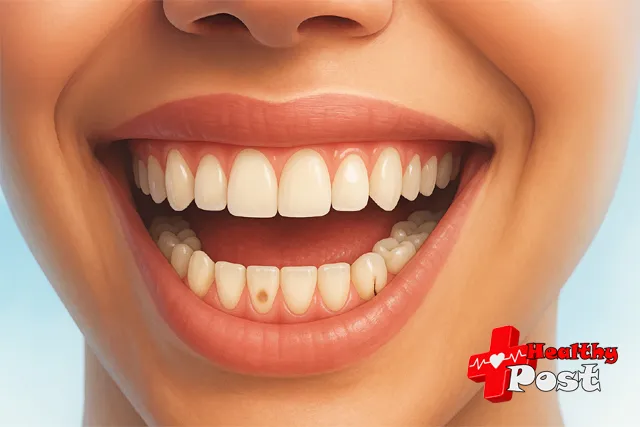
2. Brown, Tan, or Black Spots That Do Not Wipe Away 🕳️
As decay progresses, color changes become more obvious.
At this stage, you may see spots that are:
- Light brown or tan
- Dark brown
- Even black in deeper areas
These spots often appear in grooves, pits, or between teeth.
They do not disappear with brushing or whitening toothpaste.
What does a cavity look like on a tooth compared to a stain?
Stains often:
- Affect several teeth in similar patterns
- Come from coffee, tea, wine, or smoking
- Sit more on the surface of the enamel
Cavities often:
- Appear in one focused area
- Sit in grooves or tight spaces
- Combine color change with roughness or softening
A helpful question: Does your toothbrush “catch” in that area?
If the area feels sticky, rough, or soft, there may be decay.
The American Dental Association explains what does a cavity look like on a tooth with photos and diagrams:
what does a cavity look like on a tooth
3. Visible Holes or Pits: The Classic “Cavity Look”
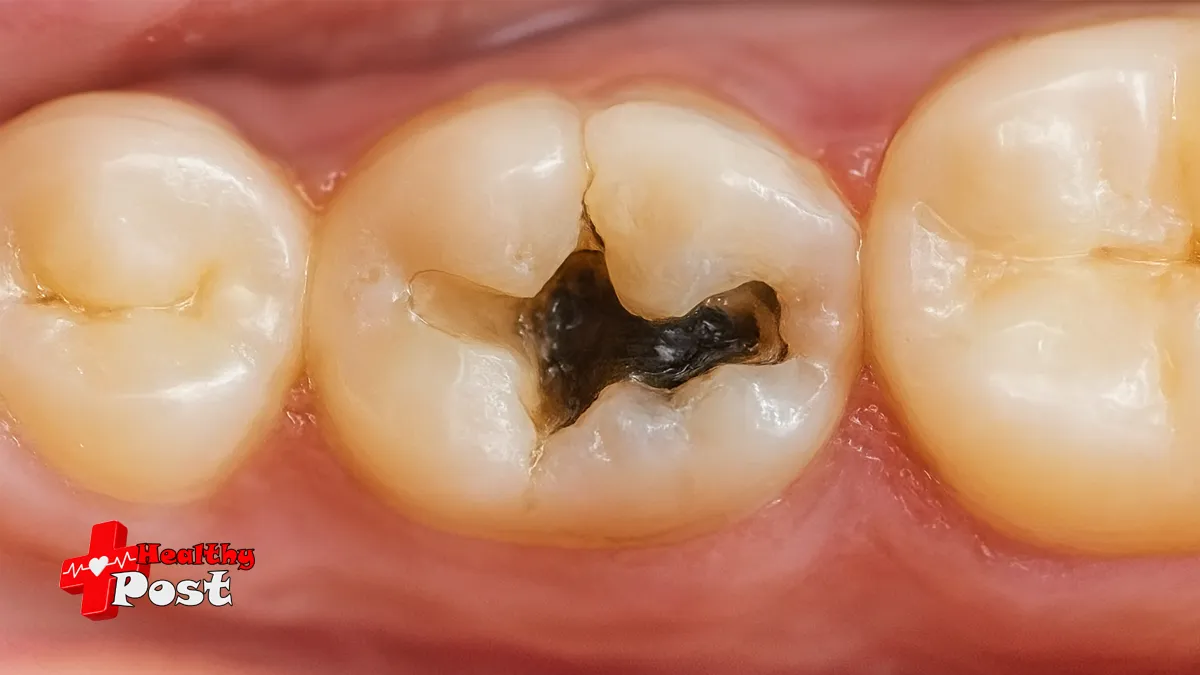
Eventually, decay can break through the enamel surface.
That is when a visible hole or pit may form.
This is what many people imagine when they think of a cavity.
What does a cavity look like on a molar?
Molars have deep grooves and valleys.
Plaque and food easily get trapped there.
Because of this, holes often appear:
- In the center of the chewing surface
- Along deep fissures
- Near old fillings or sealants
When a cavity reaches this stage, you might notice:
- A small hole you can feel with your tongue
- Food stuck in the same spot after every meal
- A dark shadow around the hole
Sometimes the hole is visible only under bright light or in a mirror.
Other times, your tongue finds it before your eyes do.
For more visual examples of what does a cavity look like on a molar and other teeth, the Mayo Clinic offers detailed tooth decay images:
what does a cavity look like on a molar
4. Dark Shadows and Lines Along the Gumline 😧
Not all cavities are obvious as neat little holes.
Some show up as shadows or dark lines.
Gumline and between‑teeth cavities
You may see:
- A thin brown line right at the gum edge
- A dark triangle between two teeth
- A shadow that seems “under” the enamel
These areas can be tricky to clean with a regular toothbrush.
Plaque tends to sit there for longer.
Example:
You smile in a bright bathroom mirror and notice a dark edge on one tooth near the gum.
It is not on every tooth, only one.
That kind of localized dark line can be a sign of decay.
If you are asking yourself what does a cavity look like on a tooth in those tight spaces, remember this rule.
Any new, persistent dark line or shadow that does not brush away deserves a dental check.
5. Changes in Texture: Rough, Sticky, or Crumbly Areas
Sight is not your only tool.
How a tooth feels can reveal decay too.
In a healthy tooth, enamel feels:
- Smooth
- Hard
- Glass‑like under your tongue
A decayed area may feel:
- Rough
- Sticky, like your tooth “grabs” dental floss
- Crumbly or flaky near the edge
Texture clues during flossing and brushing
Pay attention when you floss.
You might notice:
- Floss shredding in the same spot
- Floss catching on a rough edge
- A bad taste or odor from one area
These signs can appear before you see a big color change.
They show the tooth surface is breaking down.
Example:
Every time you floss between two molars, the floss frays.
Food also traps there often.
Those repeated signs suggest decay or a broken filling.
If you are unsure what does a cavity look like on a molar that is just starting to fail, your dentist can test it gently with instruments.
6. Sensitivity and Pain Connected to Visible Changes ⚠️
Pain alone does not always mean a cavity.
But pain plus a visible change is a strong clue.
Common sensitivity patterns with cavities
You may notice:
- Sharp pain with cold water on one tooth
- Zingy sensitivity when you eat sweets
- Dull ache when you bite on a specific spot
When you look closely, you may also see:
- A dark spot in that painful area
- A crack or chip near a filling
- A hole or pit you had not noticed before
Example:
Ice water hurts on one back tooth.
You shine a light and see a brown spot in the biting groove.
That combination strongly suggests active decay.
The Centers for Disease Control and Prevention offers an overview of tooth decay, including symptoms linked to visible changes:
7. Broken Edges, Chips, and Cavities Around Old Fillings
Cavities do not always appear on untouched enamel.
They also develop around older dental work.
Recurrent decay around fillings or crowns
Signs include:
- A dark rim around an old silver or white filling
- A gap where the tooth and filling no longer meet tightly
- A chip off the edge of a filling or crown
When bacteria slip into those tiny gaps, decay can form underneath.
From the surface, you may only see a color change or small break.
Example:
You notice a dark outline around a white filling in your front tooth.
The tooth also feels slightly rough near the edge.
This may mean the filling is leaking, and decay is forming below.
Cleveland Clinic provides helpful explanations of tooth decay and how it affects dental work over time:
dental cavities – https://my.clevelandclinic.org/health/diseases/10946-cavities
How Cavities Progress: From Early Spot to Larger Hole
Understanding the stages helps you interpret what you see.
Below is a simple overview of how cavities usually progress.
Stage / What you might see / What it may feel like / When to call dentist
Early enamel demineralization / Chalky white spot, often near gumline / Usually no pain or mild sensitivity / Mention at your next routine visit
Enamel cavity / Brown or dark spot, possible small pit / Occasional twinge with sweets or cold / Schedule a regular appointment soon
Dentin cavity (deeper) / Larger dark area or obvious hole / Frequent sensitivity or intermittent pain / See a dentist as soon as you can
Near‑nerve involvement / Dark cavity, possible swelling or fracture / Throbbing pain, night pain, hot sensitivity / Call urgently; you may need root canal or extraction
Abscess / Swelling, pus, or pimple on gum / Constant severe pain or pressure / Emergency dental visit needed
This table is a guide only.
Some cavities stay small but cause big pain.
Others grow quietly with little sensation.
If you are unsure what does a cavity look like when it first starts versus a stain, your dentist can confirm with exams and X‑rays.
Special Focus: What Cavities Look Like on Front Teeth vs Molars
Different teeth can show decay in different ways.
Knowing the patterns can make your self‑checks more effective.
Front teeth (incisors and canines) 🙂
On front teeth, cavities often appear as:
- White chalky streaks near the gums
- Brown spots between teeth, visible when you smile wide
- Dark areas behind the tooth, seen with a mirror and bright light
Front tooth cavities are often easier to see early.
But many people miss them near the gumline, especially if the gums are slightly puffy.
Back teeth (premolars and molars) 😬
Back teeth are harder to see.
They also have deeper grooves, so decay hides easily.
What does a cavity look like on a molar?
Common features include:
- Dark lines running along grooves
- Tiny pits that feel like “holes” with your tongue
- Food packing in the same deep area daily
Because these teeth do most chewing, they face more pressure.
Cracks and worn fillings often combine with decay there.
A detailed dental guide on what does a cavity look like when it first starts, including images of grooves and pits, is available from the Colgate Oral Care Center:
what does a cavity look like when it first starts
How to Check Your Own Teeth Safely at Home 🪥
Home checks do not replace dental exams.
Still, they can help you spot changes earlier.
Simple steps for a home cavity check
Use:
- A bright bathroom light or flashlight
- A small dental mirror, if you have one
- Clean, washed hands
Steps:
- Brush and floss gently first, then rinse.
- Look at each tooth surface in bright light.
- Check near the gums for white, brown, or black spots.
- Open wide and examine molars with a mirror.
- Gently feel surfaces with your tongue for roughness or holes.
Do not poke hard with sharp objects.
You could damage enamel or gums.
Make a note if you see:
- New spots that stay after brushing
- Holes, chips, or broken edges
- Food always packing in the same place
Share these notes with your dentist at your next appointment.
Photos on your phone can also be very helpful.
When to Worry and Call the Dentist 🩺
You do not need to panic with every spot.
However, certain signs deserve prompt attention.
Call a dentist soon if you notice:
- A visible hole or pit in any tooth
- A dark spot that grows or changes over weeks
- Sensitivity or pain tied to one clear location
- Floss that always shreds in the same area
- A broken edge on a tooth or filling
Seek urgent or emergency care if you have:
- Swelling in your face or jaw
- A pimple‑like bump on the gum near a decayed tooth
- Fever with dental pain
- Severe, throbbing toothache that does not ease with pain relief
Early action often means a smaller filling and faster recovery.
Waiting can lead to root canals, crowns, or extractions.
Can Early Cavities Be Reversed? 😀
In very early stages, before a hole forms, enamel can sometimes repair itself.
This is called remineralization.
You help this process when you:
- Brush twice daily with fluoride toothpaste
- Floss once daily to remove plaque between teeth
- Reduce frequent sugary snacks and drinks
- Use fluoridated water, if available in your area
Your dentist may also suggest:
- Prescription fluoride toothpaste
- Fluoride varnish treatments
- Sealants in deep molar grooves
But once a true hole forms in the enamel, it cannot heal on its own.
A filling or other treatment becomes necessary.
That is why recognizing what does a cavity look like when it first starts is valuable.
You may catch some spots in time to avoid drilling.
Frequently Asked Questions About How Cavities Look
1. Can a cavity be invisible to the eye?
Yes.
Cavities can start between teeth or under the surface, where you cannot see them.
Dentists use X‑rays and special tools to find these hidden areas.
2. Does every dark spot mean I have a cavity?
No.
Some dark spots are harmless stains or natural grooves.
However, any new, persistent dark spot that does not brush off deserves a professional check.
3. If my tooth does not hurt, can I still have a cavity?
Yes.
Many cavities cause no pain until they are deep.
You can have active decay with zero symptoms, especially in early stages.
4. How often should I check my teeth at home?
A quick glance daily while brushing is helpful.
A more careful check once a month is enough for most people.
Regular professional checkups every six months are still essential.
5. Are cavities on front teeth more serious than on molars?
Both matter.
Front tooth cavities affect appearance and can spread.
Molar cavities affect chewing and can grow large before you notice.
Both should be treated promptly.
6. Can whitening products hide cavities?
Whitening can lighten stains but does not fix decay.
It may even make sensitive areas more uncomfortable.
Always have suspicious spots checked before starting whitening.
Conclusion: Trust Your Eyes, Then Trust Your Dentist 🦷
Now you have a clearer picture of what does a cavity look like in real life.
From subtle white spots to obvious holes, your teeth often show warning signs.
Key things to remember:
- Early changes are often chalky or white, not just brown or black.
- Cavities on molars may hide in deep grooves or between teeth.
- Texture changes and sensitivity often appear alongside visual clues.
- Pain is not required for decay to be serious.
If you ever find yourself asking again “what does a cavity look like,” use this guide as a starting point.
Then schedule an exam so a dental professional can confirm what is happening and plan the right treatment.
You deserve a comfortable, confident smile.
By learning how cavities look in their early and later stages, you take a strong step toward protecting that smile for life. 😊


2 thoughts on “What Does a Cavity Look Like? 7 Shocking Signs on Tooth, Molar & Early Stages”