

This article has been reviewed by Dr. Mohammad Kamruzzaman (Plastic & Reconstructive Surgeon, Dhaka Medical / Ibn Sina), specializing in acute wound care, emergency hemostasis, and surgical trauma management.
Medical Disclaimer: The information provided on Healthy Post regarding Traumagel, hemostatic agents, and emergency bleeding control is for educational and informational purposes only and does not constitute formal medical, emergency, or surgical advice. Severe traumatic injuries require immediate professional medical intervention and emergency services. Always follow established first-aid protocols and consult qualified healthcare professionals or emergency medical personnel for trauma management.

🏥 Medical Review Board Member
Dr. Mohammad Kamruzzaman, MBBS, FCPS
Plastic & Reconstructive Surgeon | Associate Professor, Dhaka Medical College & Hospital
Dr. Mohammad Kamruzzaman is a prominent plastic, reconstructive, and burn surgeon serving as an Associate Professor in the Department of Burn & Plastic Surgery at Dhaka Medical College & Hospital. With extensive clinical expertise and advanced surgical credentials, he is dedicated to providing evidence-based medical oversight and translating specialized clinical care into clear, reliable guidance. Dr. Kamruzzaman ensures that health and surgical content on Healthy Post meets the highest standards of medical accuracy, clinical integrity, and patient safety.
Severe bleeding can turn critical in minutes. That is why many clinicians, first responders, and trauma teams are asking how does Traumagel work and where it fits into modern bleeding control. In our medical editorial review of current trauma-care practices, Traumagel stands out as a plant-based hemostatic gel for severe bleeding designed to create a fast physical barrier over a wound while supporting the body’s own clotting process. It is developed by Cresilon, a U.S. medical technology company, and has drawn attention as an FDA cleared medical device for external bleeding control.
For readers learning broader emergency care, this topic also connects with Common first aid knowledge, wound closure tools like What Is a Zip Stitch, and practical bleeding response basics used before hospital care begins.
This guide explains the science, the real-world use case, the key TRAUMA GEL Benefits, and the important distinction in traumagel vs combat gauze decisions. It is for education only and should not replace care from a licensed medical professional.
Why bleeding control matters so much
Uncontrolled hemorrhage remains one of the most urgent problems in trauma medicine. In both civilian and military settings, rapid blood loss can reduce oxygen delivery to organs, worsen shock, and narrow the window for survival.
Traditional options such as direct pressure, pressure dressings, and wound packing still matter. So do common tools like a hemostatic dressing. But irregular wounds, deep cavities, and hard-to-pack injuries can create real challenges. That is where a flowable anti bleeding gel may offer a practical advantage.
1. How does Traumagel work at the wound site?
The short answer: it forms a fast, adhesive barrier over the bleeding surface.
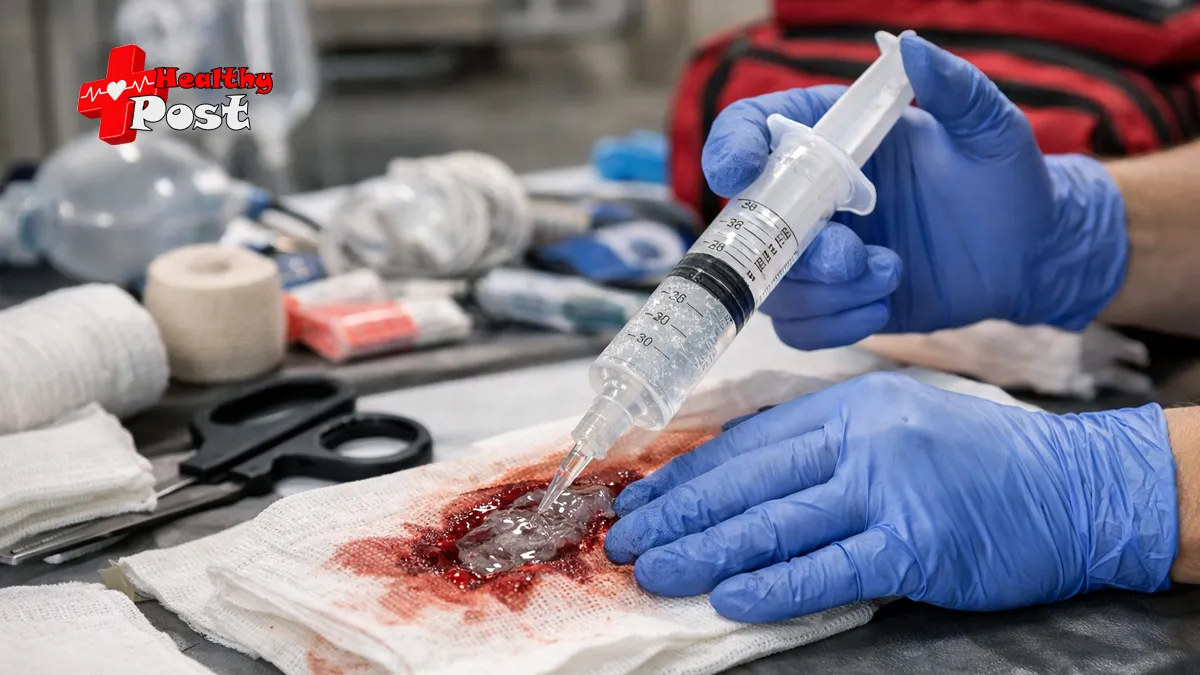
When people ask how does Traumagel work, the most useful explanation is mechanical rather than chemical. Traumagel is a plant-based hydrogel. Once applied into an external wound, it conforms to the wound shape and adheres to the bleeding tissue. This creates a seal-like barrier that helps slow or stop blood loss while concentrating clotting elements beneath the gel.
The key mechanisms
- Physical barrier formation: The gel fills the wound geometry and blocks active blood flow.
- Plant-based polysaccharide structure: Proprietary polysaccharides help create adhesion and integrity.
- Support for natural clotting: Rather than replacing clotting, the gel helps the body’s own hemostatic process work in a more protected environment.
- Rapid action: In emergency care, seconds matter. Products in this category are valued because they may help achieve hemostasis quickly.
Think of it less like stuffing a wound and more like placing a moldable shield directly where bleeding is happening.
This distinction matters. A standard gauze-based product often depends heavily on technique, compression, and packing depth. Traumagel, by contrast, is designed to flow into irregular spaces and settle against tissue surfaces.
2. It may control moderate to severe bleeding faster in complex wounds
One of the biggest TRAUMA GEL Benefits is speed in difficult wound patterns. In clinical review settings, we often see that not all external wounds are neat or easy to compress. Some are jagged. Some are deep. Some have unusual angles that make wound packing harder.
A bleeding control syringe format can be especially useful here. Traumagel is typically presented in a sterile, prefilled applicator, which may reduce setup time during urgent care.
Why this matters in real emergencies
A deep laceration from machinery, a road trauma injury, or a penetrating wound may bleed from surfaces that are difficult to reach evenly with plain gauze. In those situations, a flowable gel can spread through the wound cavity more uniformly.
Most experts would still emphasize the basics:
- Activate emergency services
- Use direct pressure when possible
- Follow device-specific instructions
- Transfer the patient for definitive care
Traumagel does not replace surgery, vascular repair, or trauma evaluation. It is a bridge. A potentially important one.
3. Traumagel application instructions are straightforward
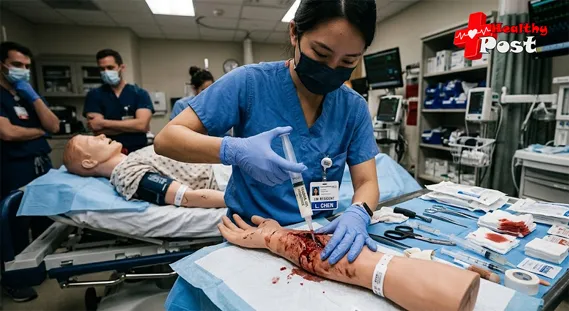
Another reason clinicians discuss this product is ease of use under pressure. Clear traumagel application instructions can reduce confusion during high-stress moments.
General traumagel application instructions
While users should always follow the official manufacturer labeling and facility protocol, the basic approach is commonly described like this:
- Open the sterile package.
- Expose the wound and identify the external bleeding source.
- Apply the gel directly into the wound cavity until the bleeding slows or stops.
- Allow the material to form a barrier. Do not treat it like standard gauze packing unless the official instructions say otherwise.
- Arrange prompt follow-up care and definitive wound management.
Removal matters too
An important point often missed in quick summaries: Traumagel is intended as a temporary bleeding-control tool. It is generally removed during later wound care, often with saline irrigation and gauze, by trained clinicians. That removal step matters because trauma care does not end once the blood flow slows.
In our editorial review, this ease-of-use profile is one of the more practical TRAUMA GEL Benefits for prehospital teams and emergency departments alike.
4. Traumagel vs Combat Gauze: what is the difference?
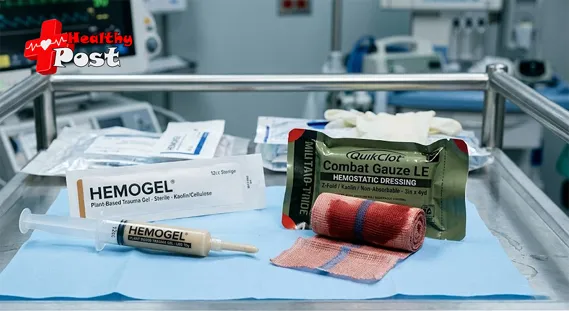
The traumagel vs combat gauze question comes up often because both products are used for bleeding control, but they do not work the same way.
Combat Gauze, widely associated with military and tactical medicine, is a gauze product coated with kaolin. Kaolin helps activate part of the clotting cascade. It still needs proper wound packing and pressure.
Traumagel works more by creating a conforming hydrogel barrier over the bleeding site.
Comparison table: Traumagel vs Combat Gauze
| Feature | Traumagel | Combat Gauze |
|---|---|---|
| Primary mechanism | Hydrogel barrier that supports natural clotting | Kaolin-coated gauze that promotes clotting activation |
| Format | Prefilled gel syringe | Roll of gauze |
| Application style | Gel applied directly into wound cavity | Manual wound packing required |
| Best for | Irregular wound shapes, complex cavities | Packable wounds, tactical and field protocols |
| Speed factors | Rapid barrier formation | Depends on correct packing and sustained pressure |
| Removal | Typically irrigated/removed during clinical wound care | Gauze removal may disrupt clot in some cases |
| Operator burden | Less forceful packing | More manual technique required |
There is no single winner in every situation. In trauma medicine, context decides. A well-trained medic may reach for one or the other based on wound type, environment, supply availability, and protocol.
If you are comparing first-aid technologies, this discussion also pairs well with Common first aid knowledge and closure options like What Is a Zip Stitch for less severe wounds after bleeding is controlled.
5. Cresilon Traumagel FDA approval adds important trust signals
Questions around cresilon traumagel fda approval are reasonable. In health content, regulatory status matters. It helps readers separate marketing language from evidence-based medical use.
As of current public reporting, Traumagel has been described as an FDA cleared medical device for external use in controlling moderate to severe bleeding. That matters because FDA clearance indicates the device has met specific regulatory standards for its intended use.
For readers who want to verify current regulatory details, review the FDA database and official product materials from Cresilon bleeding control.
Why FDA status matters
- It supports confidence in labeled use
- It clarifies intended application boundaries
- It helps hospitals and clinicians evaluate adoption
- It distinguishes regulated products from informal bleeding remedies
That said, cresilon traumagel fda approval should never be interpreted as a guarantee of outcome in every patient. Hemorrhage severity, wound location, anticoagulant use, and delay to advanced care all affect results.
6. The safety profile may reduce some drawbacks of packing-based methods
One of the less-discussed TRAUMA GEL Benefits is operator simplicity. Traditional wound packing can be technically demanding and physically forceful. In narrow or awkward wounds, it may be hard to know whether the material has reached the real bleeding source.
A flowable hemostatic gel for severe bleeding may help reduce those limitations by adapting to wound geometry rather than forcing the wound to adapt to the tool.
Potential practical advantages
- Less dependence on perfect packing technique
- Better access to uneven spaces
- May lower clot disruption risk during removal compared with tightly packed material
- Useful in emergency settings where time and dexterity are limited
Still, clinicians must balance benefits against limitations:
- External use only, unless labeled otherwise
- Temporary measure, not definitive treatment
- Requires follow-up wound assessment
- Cost and availability may differ from standard gauze products
7. It represents a shift in how bleeding control is delivered
The final answer to how does Traumagel work is also about system design. It reflects a broader shift in emergency medicine: faster deployment, simpler tools, and less technique-sensitive intervention.
This is why the product gets attention in trauma innovation circles. It combines:
- A plant-based material platform
- A ready-to-use syringe
- A mechanical hemostasis strategy
- Potential utility in civilian and military care
In plain language, it brings the logic of modern biomaterials into front-line bleeding control.
That does not mean every hospital, ambulance service, or first-aid kit will replace gauze. Nor should they. But it does suggest that cresilon bleeding control technology may become more prominent as trauma systems look for tools that are easy to learn and fast to apply.
Practical use cases: where Traumagel may fit best
Based on available descriptions and trauma-care logic, a hemostatic gel for severe bleeding may be especially valuable in:
- Deep lacerations with awkward wound contours
- Junctional injuries where packing is difficult
- Emergency departments during initial stabilization
- Tactical medicine and austere settings
- Industrial trauma before surgical repair
A small but important nuance: simple cuts often do not need advanced hemostatic products at all. Many can be managed with direct pressure, cleaning, and routine closure strategies. That is where Common first aid knowledge remains essential, and where readers may also explore What Is a Zip Stitch for selected low-bleeding skin wounds.
FAQs
How does Traumagel work in simple terms?
It forms a plant-based hydrogel barrier over an external wound, helping block blood flow and support the body’s natural clotting response.
Is Traumagel better than Combat Gauze?
Not universally. In traumagel vs combat gauze comparisons, each has strengths. Traumagel may suit irregular wound cavities, while Combat Gauze remains a trusted option for packable wounds.
What are the main TRAUMA GEL Benefits?
The main TRAUMA GEL Benefits include rapid application, no need for traditional packing, usefulness in complex wound shapes, and easier removal during later clinical care.
Are there official traumagel application instructions?
Yes. Users should follow the manufacturer’s labeled directions exactly. In general, the gel is applied directly into the external wound cavity and later removed during definitive medical care.
What does cresilon traumagel fda approval mean?
It refers to FDA regulatory clearance for the device’s intended use. Readers should confirm the latest status through the FDA and manufacturer sources because labeling and indications can evolve.
Can Traumagel treat internal bleeding?
No. It is discussed for external bleeding control. Suspected internal bleeding is a medical emergency that requires urgent professional care.
Final thoughts
So, how does Traumagel work? It works by forming a rapid plant-based barrier at the wound site, helping control external bleeding while supporting natural clot formation. That simple concept has meaningful implications in trauma care. Among the standout TRAUMA GEL Benefits are speed, adaptability, easier use in irregular wounds, and a cleaner alternative to aggressive packing in selected scenarios.
For clinicians and informed readers weighing traumagel vs combat gauze, the best choice depends on the injury, the setting, and the training of the responder. What matters most is fast recognition of uncontrolled hemorrhage, immediate action, and rapid escalation to emergency care.
If you are building your knowledge base, it also helps to review Common first aid knowledge, understand wound-closure alternatives like What Is a Zip Stitch, and learn when a hemostatic dressing or bleeding control syringe may be appropriate.
For further reading, trusted sources include:
1 Comment
Pingback: How Soon Do Doctors Receive CT Scan Results in ER? Medical Guide