


Written and Edited by: Dr. Mohanned Alghamdi | Published: August 2026
Medical Disclaimer: This article is for informational and educational purposes only and does not constitute professional medical advice, emergency triage, diagnosis, or treatment. A certified dental or medical evaluation is required for any health condition.
Emergency Warning: If you are experiencing severe pain, swelling, or a dental emergency, seek immediate professional medical attention or call your local emergency services immediately. Time is crucial—consult qualified healthcare professionals right away.

🏥 Medical Review Board Member
Dr. Mohanned A. Alghamdi, BDS, MS, CAGS, ABGD
Esthetic and Restorative Dentist & Medical Director | UniDents Clinic (Jeddah, Saudi Arabia)
Dr. Mohanned A. Alghamdi, BDS, MS, CAGS, ABGD, is an accomplished Esthetic and Restorative Dentist and the Medical Director at UniDents Clinic. With a strong academic foundation from Tufts University, Dr. Alghamdi brings extensive clinical expertise and a commitment to professional excellence to his practice. He currently oversees a large multidisciplinary team of dental specialists, ensuring the highest standards of patient care, diagnostic precision, and clinical safety.
If you’ve ever wondered will cavities cause bad breath, the short answer is yes. In clinical practice, we often see patients who brush regularly, use mouthwash, and still struggle with a persistent odor that won’t go away. One common hidden reason is tooth decay. A cavity creates a small damaged space in the tooth where bacteria, food debris, and plaque collect. Over time, that buildup can produce strong-smelling gases and lead to noticeable halitosis.
This matters more than most people realize. Bad breath is often blamed on coffee, dry mouth, or the stomach. But most cases actually begin inside the mouth. When decay deepens, the smell can become more intense, especially if there is pain, sensitivity, or a bitter taste. In many cases, treating the cavity is what finally solves the odor for good.
In this article, our medical editorial team explains the science behind the tooth decay and halitosis connection, what symptoms to watch for, and how to fix bad breath from a cavity before it becomes a larger dental problem.
1. Yes, cavities can directly cause bad breath
A cavity is not just a hole in the tooth. It is an active infection process driven by bacteria. These bacteria feed on sugars from food and drinks, then release acids that weaken enamel. At the same time, they produce foul-smelling compounds.
That is the core answer to the question: will cavities cause bad breath? Yes, because decayed areas trap bacteria and fermenting food particles in places your toothbrush may not fully reach.
Common odor-producing substances include:
- Volatile sulfur compounds, such as hydrogen sulfide
- Methyl mercaptan
- Putrescine
- Cadaverine
These names sound unpleasant because they are. They are associated with the rotten or sulfur-like smell many patients describe.
This also explains why do rotting teeth cause bad breath is such a common search. Teeth that are badly decayed often harbor anaerobic bacteria, which thrive in low-oxygen spaces and create stronger odors as the decay progresses.
2. How cavities create odor inside the mouth
The process is simple, but important.
Bacteria collect in the cavity
Once enamel is damaged, a cavity becomes a protected niche. Bacteria settle there, feed on sugars, and multiply.
Food gets trapped
Tiny food particles can lodge inside the decayed area. Instead of being washed away, they break down.
Gases are released
As bacteria digest these particles, they release sulfur-based gases. This is one reason halitosis from cavities can persist even after brushing.
Plaque makes it worse
The relationship between dental plaque and bad breath symptoms is strong. Plaque is a sticky film filled with bacteria. It contributes to both tooth decay and chronic mouth odor.
Put simply, cavity breath is not random. It has a biological source.
For readers trying to understand related warning signs, topics like What Does a Cavity Look Like can help you spot decay early, before smell becomes part of the problem.
3. The deeper the cavity, the stronger the smell
Many patients ask, can a deep cavity cause bad breath more than a small one? Usually, yes.
A deeper cavity creates:
- More room for bacterial growth
- More trapped food debris
- Greater risk of nerve involvement
- Higher likelihood of pulp inflammation or abscess
As decay moves from enamel into dentin and toward the pulp, symptoms often change. The smell may become more intense. Pain may appear. A bitter taste may linger. Some patients notice the odor most when flossing around the tooth or waking up in the morning.
Here’s a simple breakdown:
Stages of Tooth Decay & Breath Impact
This is why deep cavity symptoms should not be ignored. A stronger smell can signal that decay is no longer superficial.
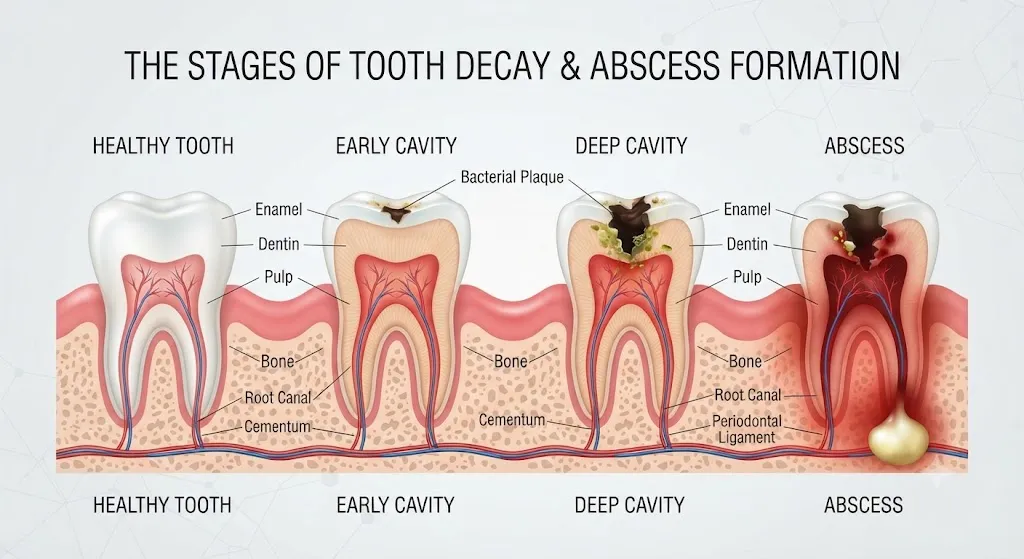
4. Tooth decay and halitosis often travel together
The tooth decay and halitosis connection is well supported by everyday dental practice and broader oral health guidance. Most studies and clinical references agree that bad breath usually comes from conditions inside the mouth, not the digestive system.
That includes:
- Cavities
- Gingivitis
- Periodontitis
- Tongue coating
- Dry mouth
- Poor oral hygiene
According to the Merck Manual halitosis, intraoral causes are responsible for the majority of persistent bad breath cases. The same pattern is echoed across dental care resources and public health guidance.
In practice, we often see this sequence:
- Plaque builds up.
- Decay begins.
- Bacteria increase.
- Odor becomes noticeable.
- Mouthwash masks it briefly, but the smell returns.
This is why oral hygiene and bad breath are closely linked, but also why hygiene alone may not fully solve the issue once a cavity has formed.
5. Do rotting teeth cause bad breath? Yes, and usually in a very specific way
The phrase sounds dramatic, but patients use it because the smell can be unmistakable. Do rotting teeth cause bad breath? Yes. Advanced tooth decay can create a sour, sulfur-like, or even fecal odor.
That happens because decayed teeth may contain:
- Dead organic material
- Bacterial byproducts
- Inflamed or infected pulp tissue
- Tartar and plaque around the gumline
A patient might say:
- “My breath smells bad no matter how much I brush.”
- “There’s a bad taste on one side of my mouth.”
- “When I floss near that tooth, it smells awful.”
Those are classic clues. They do not prove a cavity on their own, but they strongly suggest a local source that needs evaluation.
If you are also dealing with heavy tartar buildup, Remove a Calculus Bridge is another useful topic to explore, because hardened plaque can worsen both odor and decay risk.
6. Why mouthwash does not fix cavity breath
Many people try to manage the smell first. They brush more often. They chew gum. They rinse with strong mouthwash. These steps may reduce odor for an hour or two, but they do not remove the source.
A cavity is structural damage. As long as that damaged area remains open, bacteria will continue to grow inside it.
Temporary relief may come from:
- Brushing twice daily with fluoride toothpaste
- Cleaning between teeth with floss or interdental brushes
- Tongue cleaning
- Alcohol-free antimicrobial mouthwash
- Drinking more water
But if you are asking how to fix bad breath from a cavity, the lasting answer usually involves dental treatment.
That may include:
- A filling for small to moderate decay
- A crown if the tooth is weakened
- Root canal treatment if the pulp is infected
- Extraction if the tooth cannot be saved
For patients nervous about treatment timing, How Long Does It Take to Fill a Cavity can make the process feel less intimidating.
7. How to fix bad breath from a cavity
Let’s answer this directly. How to fix bad breath from a cavity depends on how advanced the decay is.
Step 1: Get a dental diagnosis
A dentist examines the tooth, may take X-rays, and checks whether the decay has reached deeper layers.
Step 2: Remove the infected or decayed tissue
This is the key step. Until the diseased area is cleaned out and restored, the odor source remains.
Step 3: Restore the tooth
A filling, crown, root canal, or extraction may be recommended depending on severity.
Step 4: Reduce bacterial load
Professional cleaning helps remove plaque and tartar that contribute to dental plaque bacteria and lingering halitosis.
Step 5: Improve home care
To reduce future tooth decay odor and cavity recurrence:
- Limit frequent sugary snacks and drinks
- Brush for two minutes twice daily
- Floss once a day
- Stay hydrated
- Avoid tobacco
- Keep regular dental visits
The key point: fixing cavity breath means treating the cavity itself, not just masking the smell.
8. When bad breath may signal a dental emergency
Sometimes odor is the least urgent symptom. Sometimes it is the earliest clue that something more serious is happening.
Seek prompt dental care if bad breath appears with:
- Severe or throbbing tooth pain
- Swelling in the gum or face
- Pus or discharge near a tooth
- Fever
- Pain when biting
- Persistent bad taste that does not go away
These signs can suggest pulpitis or an abscess. In that situation, the answer to can a deep cavity cause bad breath is not only yes, but possibly as part of a bigger infection.
The NHS tooth decay guidance also emphasizes that untreated decay can lead to pain, infection, and tooth loss. Delay raises the stakes.

9. Prevention matters at every age
Bad breath from cavities is treatable. It is also largely preventable.
We often remind families that cavity prevention starts early and continues across life stages. Habits built in childhood can affect oral health decades later.
Practical prevention steps include:
- Use fluoride toothpaste
- Reduce frequent sugar exposure
- Schedule routine checkups
- Treat sensitivity early
- Replace worn fillings when needed
- Clean the tongue as part of daily oral care
For broader prevention guidance, How to protect your teeth from childhood to adulthood is a useful companion topic, especially for families trying to build better long-term habits.
And remember: not every case of bad breath comes from decay. Gum disease, dry mouth, tonsil stones, and certain medical conditions can also contribute. But if the odor is persistent and accompanied by sensitivity or pain, a cavity should stay high on the list.
FAQs
1. Will cavities cause bad breath even if I brush every day?
Yes. Brushing helps reduce surface bacteria, but a cavity can hold bacteria and debris in areas a toothbrush cannot fully clean. That is why the smell may persist.
2. Do rotting teeth cause bad breath all the time?
Often, yes. Advanced decay may produce a constant odor, though some people notice it more after sleep, after eating, or when flossing near the tooth.
3. Can a deep cavity cause bad breath without pain?
Yes. Some deep cavities smell before they hurt. Pain is common, but not universal. That is one reason routine dental exams matter.
4. How to fix bad breath from a cavity at home?
Home care may reduce odor temporarily, but it will not cure the cavity. Lasting treatment usually requires a dentist to remove the decay and restore the tooth.
5. Is bad breath from a cavity different from gum disease breath?
It can overlap. Cavity-related odor is often linked to trapped food and localized decay, while gum disease breath may come with bleeding gums, inflammation, and deeper plaque buildup.
6. Could plaque be the real issue instead of the cavity?
Sometimes both are involved. Dental plaque and bad breath symptoms often go hand in hand. Plaque can cause odor on its own and also increase the risk of cavities.
Final thoughts
So, will cavities cause bad breath? In many cases, yes. The reason is straightforward: cavities create an ideal hiding place for bacteria, trapped food, and ongoing decay. That combination can lead to halitosis from cavities, a persistent rotting teeth smell, and worsening oral discomfort over time.
The most important message is this: bad breath that keeps coming back is worth investigating. Especially if it appears with sensitivity, food trapping, or pain. Mouthwash may cover the odor. It does not stop the decay. Proper dentist treatment for halitosis linked to cavities often means treating the tooth itself.
If you suspect decay, do not wait until the smell gets stronger. Early care is simpler, more comfortable, and more affordable than emergency treatment later. And if you are unsure whether what you are seeing is actually decay, What Does a Cavity Look Like can help you recognize the early signs before they become a bigger problem.
For general education, resources such as the CDC oral health and major clinical references consistently support the same conclusion: untreated cavities may contribute to bad breath, and professional treatment is the most reliable way to resolve the source.