

Clinical Authorship & Verification
This article has been written by Dr. Mohanned Alghamdi (Esthetic & Restorative, UniDents Clinic ↗), specializing in dental surgery, restorative dentistry, and implantology.
Medical Disclaimer: The information provided on Healthy Post is for educational and informational purposes only and does not constitute formal dental or surgical advice. Dental implant procedures require a comprehensive clinical evaluation of bone density and oral health. Always consult a qualified dental surgeon, periodontist, or restorative dentist for personalized treatment planning.

🏥 Medical Review Board Member
Dr. Mohanned A. Alghamdi, BDS, MS, CAGS, ABGD
Esthetic and Restorative Dentist & Medical Director | UniDents Clinic (Jeddah, Saudi Arabia)
Dr. Mohanned A. Alghamdi, BDS, MS, CAGS, ABGD, is an accomplished Esthetic and Restorative Dentist and the Medical Director at UniDents Clinic. With a strong academic foundation from Tufts University, Dr. Alghamdi brings extensive clinical expertise and a commitment to professional excellence to his practice. He currently oversees a large multidisciplinary team of dental specialists, ensuring the highest standards of patient care, diagnostic precision, and clinical safety.
If you have lost a tooth and are considering a long-term replacement, you may have come across the term endosteal implant. Despite the technical name, the concept is fairly straightforward: it is a dental implant placed directly into the jawbone to act as an artificial tooth root. After the implant heals and integrates with the surrounding bone, it can support a crown, bridge, or denture.
Endosteal implants are the most common type of dental implant used in conventional implant treatment. They can provide strong support without relying on neighboring natural teeth, but successful treatment depends on factors such as bone volume, gum health, overall health, surgical planning, and long-term maintenance.
Here is what the procedure involves, how long healing can take, who may be a suitable candidate, and what you can realistically expect from treatment.
What Is an Endosteal Implant?
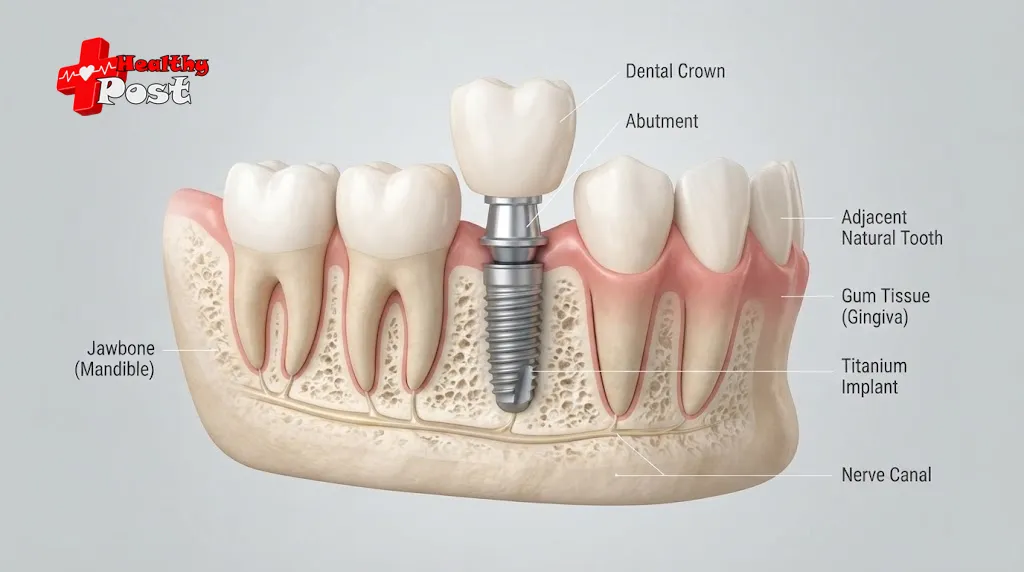
An endosteal implant is a dental implant surgically positioned within the jawbone. The term comes from endo, meaning within, and osteal, referring to bone.
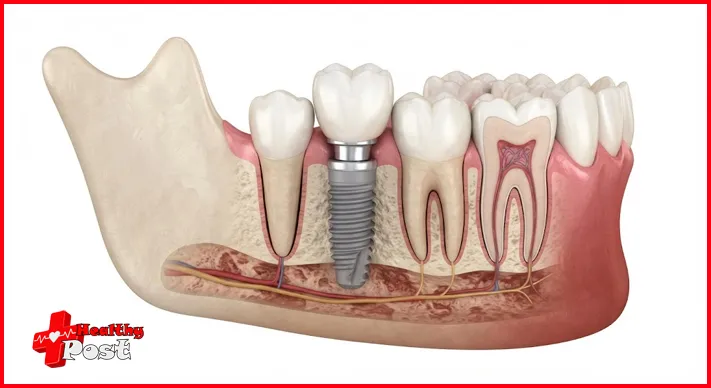
Most conventional implants are made from titanium or another biocompatible material and have a screw-like design. The implant replaces the root portion of a missing tooth. An abutment is then connected to the implant, and the visible restoration—such as a crown, bridge, or denture—is attached to the abutment.
You may also see the term endosseous dental implant in scientific literature. In this context, endosteal and endosseous generally describe an implant positioned within bone.
The key feature is its location. Unlike a conventional removable denture, an endosteal implant is anchored in the jaw rather than simply resting on the gums.
How Does an Endosteal Implant Work?
The principle is similar to replacing the root of a natural tooth.
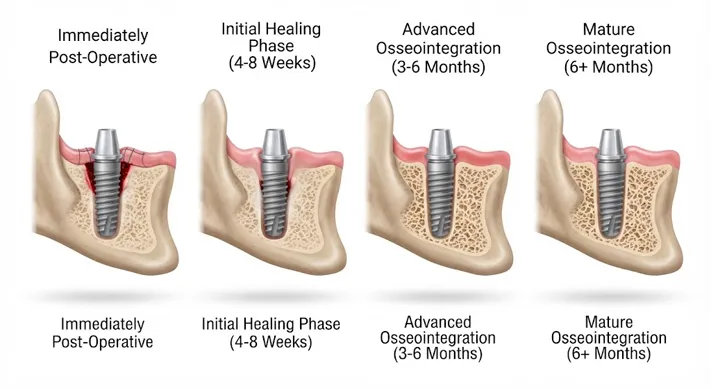
After placement, the bone surrounding the implant gradually establishes a close structural and functional connection with its surface. This biological process is called osseointegration. It is central to implant stability and is one reason implant treatment takes longer than simply placing a crown on an existing tooth.
The basic sequence is:
Missing tooth → implant placement → healing and osseointegration → abutment → crown, bridge, or denture
The implant itself is not the visible replacement tooth. Think of it as the foundation underneath a building. The implant provides the foundation; the abutment connects that foundation to the restoration above the gum.
Who Is a Good Candidate for an Endosteal Implant?
An implant may be considered for an adult who has lost one or more teeth and wants a fixed replacement option. However, candidacy is not determined by the missing tooth alone.
A dentist or implant specialist will generally assess:
- The amount and quality of available jawbone
- The health of the gums and supporting tissues
- The position of neighboring teeth
- Bite and chewing forces
- Oral hygiene
- General health and healing ability
- Smoking or tobacco use
- Any medications or medical conditions that could affect healing
Adequate bone and healthy gum tissues are important because the implant must become stable within the jaw and remain surrounded by healthy tissues.
Certain conditions can make treatment more complicated without automatically ruling it out. For example, poorly controlled systemic disease, active periodontal disease, tobacco use, or previous radiation involving the jaws may require additional evaluation or treatment before implant surgery.
If the jaw does not contain enough bone, that does not necessarily mean an implant is impossible. Bone augmentation or grafting may sometimes create enough support for implant placement.
For more background on this particular issue, see this guide to dental bone grafting, which explains why grafting may be considered in implant-related treatment.
Endosteal Dental Implant Procedure: Step by Step
The endosteal dental implant procedure can vary considerably from one patient to another. A straightforward single-tooth case may involve fewer stages than treatment requiring extraction, bone augmentation, or multiple implants.
1. Examination and treatment planning
The dentist first evaluates the missing-tooth area, gums, remaining teeth, bite, and jawbone.
Dental X-rays may be used, while three-dimensional CBCT imaging can provide more detailed information when it is clinically appropriate. The goal is to determine whether there is enough bone and to plan the implant’s position safely and accurately.
2. Tooth extraction or site preparation
If the tooth is still present but cannot be saved, it may need to be extracted.
In selected cases, an implant can be placed immediately after extraction. In other situations, the extraction site needs time to heal before implant placement. The choice depends on the condition of the socket, surrounding tissues, infection status, bone availability, and treatment plan.
3. Bone grafting when necessary
Insufficient bone may require a graft or another augmentation procedure before—or sometimes in conjunction with—implant placement.
Bone augmentation can make implant treatment possible in situations where there is not enough bone to achieve adequate support. However, grafting introduces another healing phase and can extend the overall treatment timeline.
4. Implant placement
During dental implant surgery, the dentist prepares a carefully planned site in the jawbone and places the implant.
Local anesthesia is commonly used. Depending on the procedure and patient’s needs, sedation or another form of anesthesia may also be considered.
The implant is then allowed to heal according to the treatment plan.
5. Osseointegration
This is the deeper biological healing stage.
Bone gradually develops a stable relationship with the implant surface. The process can take several months, and the implant generally needs to reach appropriate stability before it is used to support the final restoration.
6. Abutment placement
After sufficient healing, an abutment is connected to the implant.
The timing varies. Some treatment approaches involve an abutment during the initial procedure, while others use a later procedure after osseointegration.
7. Crown or final restoration
For a single missing tooth, the final restoration is usually a custom implant-supported crown.
When several teeth are missing, implants can support a bridge or denture. The restoration is designed according to the patient’s bite, appearance, function, and oral anatomy.
Endosteal Implant Healing Time and Recovery
One of the most common questions is how long the endosteal implant healing time will be.
There are actually two different healing periods to consider.
Initial surgical recovery involves the soft tissues. Soreness, swelling, tenderness, or mild bruising may occur after surgery and generally improve as the tissues recover.
Osseointegration is the deeper bone-healing process. The FDA notes that healing of the implant body can take several months or longer, while the American Dental Association explains that some patients may need to wait several months for complete integration before the replacement teeth are attached.
Many conventional treatment plans use roughly three to six months for implant integration, but this is not a universal deadline. Healing can be affected by implant location, bone quality, initial stability, whether grafting was performed, and the loading protocol selected by the dental team.
So, a patient may feel considerably better within days or weeks while the deeper bone-healing process is still continuing.
What recovery may feel like
During the first few days, patients may experience:
- Swelling around the surgical area
- Gum tenderness
- Mild to moderate discomfort
- Minor bleeding or bruising
- Temporary difficulty chewing near the implant site
Your dentist may recommend softer foods and specific oral-hygiene measures during the early recovery period.
Following the postoperative instructions provided by your dental team is more important than trying to follow a generic online recovery schedule.
For broader advice on maintaining healthy teeth and gums, you can also read how to protect your teeth.
Endosteal vs Subperiosteal Implants
The difference between endosteal vs subperiosteal implants mainly comes down to where the implant sits.
| Feature | Endosteal implant | Subperiosteal implant |
|---|---|---|
| Position | Within the jawbone | On top of the jawbone beneath the gum |
| Main support | Directly supported by jawbone | Custom framework positioned over the bone |
| Osseointegration | Yes | Not in the same manner as an endosteal implant |
| Bone requirements | Requires adequate bone or augmentation | May be considered when conventional bone support is inadequate |
| Typical design | Screw, cylinder, or similar implant form | Custom metal framework |
| Current role | Common conventional implant approach | Less commonly used, selected situations |
The American Academy of Periodontology describes endosteal implants as the most common type and subperiosteal implants as designs positioned on top of the jawbone. Subperiosteal implants may be considered for selected patients who lack adequate bone for conventional endosteal implants.
That does not mean one is automatically “better.” Treatment should be selected according to the patient’s anatomy, oral health, restoration needs, and clinical circumstances.
Benefits of Endosteal Implants
When treatment is appropriate, an endosteal implant can offer several advantages.
Strong stability: Because the implant is anchored in the jawbone, it provides a stable foundation for the restoration.
Natural-looking replacement: A carefully designed crown can be shaped and colored to resemble neighboring teeth.
Restored chewing function: Implant-supported restorations can provide greater stability than removable dentures.
No routine preparation of adjacent healthy teeth: A single implant does not normally require neighboring teeth to be cut down as supports, unlike a traditional tooth-supported bridge.
Support for bone preservation: Tooth loss can lead to changes in the surrounding alveolar bone. An implant placed in the area can help maintain bone around the implant site, although it does not prevent every form of bone remodeling.
Long-term potential: Contemporary dental implants have demonstrated strong long-term survival in clinical research, although survival is not the same as a guarantee that an implant will last forever.
Risks and Possible Complications
Dental implant treatment has a strong evidence base, but it is still a surgical procedure.
Possible complications include:
- Pain, swelling, or bleeding after surgery
- Infection
- Failure of osseointegration
- Nerve-related symptoms in certain locations
- Sinus complications involving selected upper-jaw implants
- Implant mobility or failure
- Peri-implant mucositis
- Peri-implantitis
- Bone loss
- Mechanical problems involving the implant, abutment, or restoration
Peri-implant diseases deserve particular attention. Peri-implant mucositis involves inflammation of the soft tissue around an implant without supporting bone loss, while peri-implantitis involves inflammation accompanied by deterioration of the bone supporting the implant.
Smoking, inadequate plaque control, previous periodontal disease, and some systemic conditions can increase the risk of peri-implant disease. Regular professional monitoring therefore remains important even after the implant has fully healed.
How Long Do Endosteal Implants Last?
So, how long do endosteal implants last?
There is no guaranteed expiration date. With appropriate treatment and maintenance, an implant can remain functional for decades, but individual outcomes vary.
A 2019 systematic review of contemporary dental implants reported a conventional 10-year implant-level survival estimate of 96.4%. When the researchers used a sensitivity analysis to account for missing follow-up data, the estimate was 93.2%.
More recent evidence is available as well. A 2026 systematic review and meta-analysis of prospective studies involving titanium endosseous implants followed for at least 20 years estimated a 93.0% 20-year implant survival rate. The researchers also emphasized variability between studies and rated the certainty of evidence as moderate.
These figures should not be interpreted as a personal prediction. Your risk can differ depending on bone and gum health, smoking, oral hygiene, bite forces, implant position, systemic health, and maintenance.
There is also an important distinction between the implant and the restoration. The titanium implant may remain stable for many years while the crown or another prosthetic component may eventually need repair or replacement.
How to Care for an Endosteal Implant
Once your implant has healed, it still needs routine care. An implant is not immune to plaque, inflammation, or mechanical problems.
Good long-term habits include:
- Brush thoroughly as directed by your dental professional.
- Clean between teeth and around the implant.
- Attend regular dental and implant-maintenance appointments.
- Follow professional recommendations for cleaning aids.
- Avoid smoking or tobacco use.
- Report persistent bleeding, swelling, discomfort, or implant looseness rather than waiting for symptoms to disappear.
The American Academy of Periodontology specifically recommends regular brushing, interdental cleaning, and professional checkups to help maintain implant health.
If you already have gum inflammation, it is worth addressing it rather than assuming an implant will solve the underlying problem. For related information, see what gum disease can mean for oral health.
Endosteal Implant vs Bridge vs Denture
An implant is only one way to replace a missing tooth.
| Treatment | Main support | Usually removable? | Implant surgery? |
|---|---|---|---|
| Endosteal implant | Jawbone | No | Yes |
| Traditional bridge | Neighboring teeth | Usually no | No |
| Conventional denture | Gums and remaining oral structures | Usually yes | No |
| Implant-supported denture | Dental implants | Depends on design | Yes |
A traditional bridge may be suitable when neighboring teeth can provide reliable support. Dentures may make sense when multiple teeth are missing or when surgery is unsuitable. An implant may be attractive when a patient wants a fixed restoration supported independently of adjacent teeth.
The best option depends on anatomy, oral health, cost, preferences, function, and the dentist’s assessment.
Frequently Asked Questions
What is an endosteal implant?
It is a dental implant placed inside the jawbone to replace the root portion of a missing tooth and support a crown, bridge, or denture.
Is an endosteal implant the same as a dental implant?
Endosteal implants are a major type of dental implant and are the conventional implant design most commonly used when sufficient bone is available.
How long is endosteal implant healing time?
Initial surgical recovery may take days to weeks, while osseointegration usually requires several months. The FDA notes that implant-body healing may take several months or longer.
Can you get an endosteal implant without enough bone?
Sometimes. Bone grafting or another augmentation procedure may increase the available bone and make conventional implant placement possible. Whether this is appropriate depends on the individual anatomy and treatment plan.
Are endosteal or subperiosteal implants better?
Neither is universally better. Endosteal implants are generally the conventional choice when adequate bone is available. Subperiosteal designs may be considered in selected cases where conventional bone support is inadequate.
Can an endosteal implant last a lifetime?
Some implants remain functional for decades, but lifetime survival cannot be guaranteed. Long-term studies show high survival rates, while maintenance, gum health, smoking, bone conditions, and other factors influence individual outcomes.
Final Takeaway
An endosteal implant is essentially an artificial tooth-root foundation placed inside the jawbone. Its stability comes from the biological healing process known as osseointegration, after which it can support a crown, bridge, or denture.
The treatment usually involves planning and imaging, implant placement, a healing period, restoration, and long-term maintenance. Healing can take several months, and patients who need bone grafting or other preparatory procedures may require a longer treatment timeline.
Long-term research is encouraging, with contemporary studies reporting high implant survival at 10 and 20 years. Still, an implant is not a maintenance-free replacement. Healthy gums, good oral hygiene, professional follow-up, and appropriate treatment planning all matter.
If you are considering an endosteal implant, the most useful next step is a dental evaluation with appropriate imaging. Your dentist or implant specialist can determine whether you have enough bone, whether grafting is needed, and which replacement option best fits your individual circumstances.
References
- U.S. Food and Drug Administration (FDA) — “Dental Implants: What You Should Know.” The FDA explains implant components, candidacy considerations, healing, smoking-related concerns, and postoperative care.
FDA: Dental Implants — What You Should Know - American Dental Association, MouthHealthy — “Implants.” Provides patient-focused information about implant placement, osseointegration, restorations, and candidacy.
American Dental Association: Implants - Lupi S.M. et al. — “Dental implant survival and marginal bone loss after a minimum of 20 years: systematic review and meta-analysis of prospective studies.” International Journal of Oral and Maxillofacial Surgery, 2026. This recent systematic review estimated 93.0% implant survival at 20 years among the included prospective studies.
PubMed: 20-Year Dental Implant Survival Systematic Review