


This article has been written by Dr. Kamlesh Verma (Surgical Oncology, Max Hospital ↗), specializing in surgical oncology, minimally invasive breast procedures, postoperative patient recovery, and surgical wound management.
Medical Disclaimer: The information provided regarding breast vacuum-assisted surgery aftercare, recovery timelines, home care tips, and postoperative warning signs is for educational and informational purposes only. Surgical recovery varies per individual and requires careful clinical monitoring. Always consult your operating surgeon, surgical oncologist, or qualified healthcare provider regarding post-procedure wound care, medication protocols, or unexpected symptoms.

🏥 Medical Review Board Member
Dr. Kamlesh Verma, MS, M.Ch
Director – Surgical Oncology | Max Super Speciality Hospital, Lucknow
Dr. Kamlesh Verma is a highly experienced Surgical Oncologist and Director of Surgical Oncology at Max Super Speciality Hospital, Lucknow. Trained at premier institutions including the Tata Memorial Centre in Mumbai and King George’s Medical University (KGMU), Dr. Verma specializes in advanced minimally invasive, robotic, and complex cancer surgeries. He is deeply committed to evidence-based oncology care, ensuring that every cancer-related publication he reviews meets the highest standards of medical accuracy, safety, and clinical integrity.
Recovering from a vacuum-assisted breast biopsy or vacuum-assisted excision is usually less demanding than recovering from a traditional open breast operation, but the small incision still needs time to heal. Good breast vacuum-assisted surgery aftercare can help protect the wound, limit unnecessary bleeding and bruising, and make it easier to recognize complications early.
The exact instructions depend on what was done, how much tissue was removed, where the lesion was located, and your individual bleeding risk. Some hospitals advise avoiding strenuous activity for 24–48 hours, while others recommend longer restrictions after a larger vacuum-assisted excision. For that reason, your treating breast team’s instructions should take priority over any general advice.
What happens after a vacuum-assisted breast procedure?
Vacuum-assisted breast biopsy (VAB) and vacuum-assisted excision (VAE) use a needle-like device and suction to remove multiple samples, or sometimes a larger amount of tissue, through a small skin opening. They may be performed under ultrasound or mammographic guidance.
Because the procedure creates a small wound and removes tissue from inside the breast, some soreness, bruising, swelling or a temporary lump can occur afterward. These effects do not automatically mean something has gone wrong.
For example, NHS patient information explains that bruising can sometimes spread over a relatively large area and may take several weeks to disappear. A temporary lump may also represent a collection of blood rather than the original breast lesion.
The important distinction is between expected postoperative changes and symptoms that are becoming progressively worse.
1. Follow your compression and dressing instructions
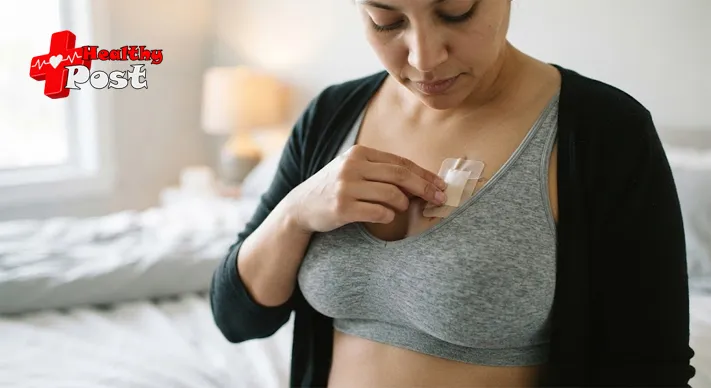
Immediately after the procedure, the breast team usually applies firm pressure to the treatment area to reduce bleeding and bruising. Depending on the procedure and local protocol, you may then have a pressure dressing, adhesive strips, gauze or another dressing.
Do not remove, loosen or replace a pressure dressing simply because it feels uncomfortable unless your clinical team has told you that you can.
The timing varies considerably between hospitals. For example, some NHS instructions advise leaving a waterproof dressing in place for 48 hours, while other vacuum-excision instructions use approximately 72 hours.
That difference is important: there is no single dressing schedule that applies to every vacuum-assisted procedure.
A comfortable, supportive non-wired bra may also be recommended for a short period. Some centres specifically suggest a firm or sports-style bra for 24–48 hours, while others advise supportive wear for longer if it improves comfort.
Why compression can matter
Compression helps limit movement and can provide gentle support while the small treatment site settles. It is particularly useful during the early period when bleeding or bruising can still develop.
However, compression should not mean excessive pressure, numbness, skin discoloration or significant pain. If the prescribed support feels excessively tight, contact your breast care team rather than modifying it yourself.
2. Protect the breast during the first few days
One of the simplest breast surgery recovery tips is to avoid treating the breast as though nothing happened immediately after the procedure.
Normal light activities are often possible relatively quickly. Several NHS centres state that many patients can return to their usual routine after vacuum-assisted procedures, but they still recommend temporarily avoiding strenuous exercise and heavy lifting.
During the early recovery period, avoid activities that cause repeated or forceful movement of the affected arm and chest, particularly if they increase discomfort.
Depending on your clinician’s instructions, this may include:
- Heavy lifting
- Vigorous exercise
- Running or jumping
- Heavy housework
- Repeated forceful arm movements
- Activities that place direct pressure on the breast
The restriction is usually temporary. The goal is not to keep the arm completely still, but to give the treated area an opportunity to settle without unnecessary mechanical stress.
How long should activity be restricted?
There is no universal number of days.
For a straightforward vacuum-assisted biopsy, some NHS guidance recommends avoiding excessive arm movement for about 24 hours, while other centres advise avoiding strenuous exercise or lifting for at least 48 hours. After a more extensive vacuum-assisted excision, the treating team may recommend longer restrictions.
This is one area where the procedure type matters. Follow your own discharge instructions rather than applying a fixed “two-week” or “four-week” rule to every patient.

3. Take care of the small wound
Although the incision is much smaller than that used for many traditional breast operations, it still needs basic breast wound care after surgery.
Keep the dressing and wound according to the instructions you received. Do not pick at adhesive strips, scabs or the healing skin.
When showering becomes permitted, avoid rubbing or scrubbing the wound. General surgical-wound guidance also recommends avoiding soaking a healing wound unless the treating clinician has specifically said it is safe.
That means you may need to temporarily avoid:
- Swimming
- Hot tubs
- Prolonged soaking in a bath
- Sauna or steam-room exposure
- Applying lotions, creams or cosmetics directly to the wound unless advised
The exact timing depends on the dressing and closure method. Some vacuum-assisted breast aftercare instructions allow showering while advising patients to keep the dressing dry, whereas others provide different dressing-removal schedules.
What drainage is normal?
A small amount of fluid around a healing wound does not necessarily mean infection. What matters is the amount, appearance and trend.
Increasing drainage, thick yellow or green material, an unpleasant smell, increasing redness, warmth or worsening pain should be assessed by a healthcare professional because these can be signs of infection.
4. Understand bruising, swelling and a temporary lump
Bruising is one of the more common effects after vacuum-assisted breast procedures.
You may notice:
- Blue, purple or yellow discoloration
- Tenderness around the treatment site
- Mild swelling
- A firm or lumpy area
- Discomfort when the breast is touched
These changes can look alarming, particularly when the procedure was performed to investigate an existing lump.
A small collection of blood under the skin or inside the breast is called a hematoma. Minor hematomas often resolve gradually, but a larger one can cause substantial swelling and pain.
This is why breast hematoma after surgery is more than a technical term patients may encounter in their discharge information. It describes bleeding into the surrounding tissue rather than bleeding only from the skin incision.
Most postoperative bruising is managed conservatively, but severe internal bleeding can occasionally require further medical treatment.
5. Know when breast swelling is not simply part of recovery
Mild postoperative breast swelling can be expected. The pattern matters.
A breast that is gradually becoming less uncomfortable is generally different from one that becomes rapidly larger, increasingly tense and significantly more painful.
Seek prompt medical assessment if you develop:
- Rapidly increasing breast swelling
- Severe or escalating pain
- A breast that becomes unusually tense or firm
- Bruising that is rapidly expanding
- Persistent or recurrent fresh bleeding
- Bleeding that does not stop with firm pressure
- Increasing redness or warmth
- Pus-like drainage
- Fever or chills
A large hematoma can sometimes produce substantial swelling and pain and may need intervention.
If the external wound begins bleeding after you return home, follow the specific instructions supplied by your breast unit. Several NHS protocols recommend applying firm direct pressure for a defined period and contacting the breast team or emergency service if bleeding continues.
Do not repeatedly remove the dressing to inspect a small bleeding point if doing so interferes with the pressure needed to stop the bleeding.
6. Medication deserves special attention
Pain after a vacuum-assisted procedure is often mild and temporary. Some hospitals recommend simple pain relief such as paracetamol/acetaminophen when appropriate. Advice about aspirin or anti-inflammatory medicines varies between centres, so patients should follow the instructions provided by their own team.
The more important issue is medication that affects blood clotting.
Tell your breast team if you take medicines such as:
- Warfarin
- Apixaban
- Rivaroxaban
- Dabigatran
- Aspirin
- Clopidogrel
- Other prescribed anticoagulants or antiplatelet medicines
These medicines can alter bleeding risk. The correct approach is individualized: some patients may need temporary adjustment, while others may need to continue their medicine because stopping it can create a different health risk.
Do not stop warfarin, aspirin or another prescribed blood-thinning medicine on your own. NHS guidance specifically advises patients taking anticoagulants to tell their healthcare professionals before an invasive procedure and to stop medication only on professional advice.
7. Food, hydration and daily habits
There is no special diet that can instantly accelerate healing after a breast procedure. A practical approach is to eat normally if you feel well enough, maintain adequate hydration and include protein-rich foods as part of a balanced diet.
Protein sources can include:
- Eggs
- Fish
- Poultry or lean meat
- Dairy products
- Beans and lentils
- Other protein-rich foods that suit your dietary needs
Adequate nutrition supports normal tissue repair, but supplements are not automatically necessary.
Be cautious about advice claiming that particular foods, herbal products or hormone-containing supplements will speed recovery. The evidence for many such products is limited, and some supplements can interact with medicines or affect bleeding.
Alcohol is also best avoided or limited according to your clinician’s advice, particularly while taking pain medicines or while the wound is still healing.
Most importantly, avoid repeatedly pressing, squeezing or massaging the treated breast unless your healthcare professional has specifically instructed you to do so.
8. Do not confuse normal healing with a new breast problem
One of the more difficult aspects of recovery after minimally invasive breast surgery is knowing what to make of a new lump.
A healing breast can feel different from the other breast. Bruising, swelling, a hematoma or scar-related changes can produce firmness around the treatment site.
That does not mean every postoperative lump is harmless.
If a lump becomes larger, increasingly painful, associated with substantial swelling, or persists in a way that concerns you, contact your breast team. They can decide whether examination or imaging is appropriate.
This is particularly important after a procedure performed to investigate or remove a breast lesion. The pathology result and follow-up plan remain separate from the wound-healing process.
9. Keep your follow-up appointments
Follow-up is not simply a formality.
Your breast team may schedule an early review to assess wound healing, bruising, bleeding or other postoperative changes. The exact timing varies by procedure and healthcare service.
The original source guidance behind this article recommends an early review around 7–10 days and a later breast ultrasound around three months. Those timings should not be treated as universal requirements, however. Current NHS patient information shows that follow-up and result appointments vary between vacuum-assisted biopsy and excision services.
A later breast ultrasound follow-up may be recommended when the clinician needs to evaluate the treated area, particularly if there is a residual palpable abnormality or postoperative change.
If your clinician schedules imaging, attend even if the wound looks completely healed. The skin healing normally does not necessarily tell you what is happening deeper inside the breast.
For additional context about abnormal breast biopsy findings, a related Healthy Post resource discusses atypical ductal hyperplasia after core needle biopsy. The topic is different from postoperative care, but it can help explain why pathology results sometimes lead to further assessment.
A practical recovery timeline
Because vacuum-assisted biopsy and vacuum-assisted excision are not identical procedures, think of the following as a general framework rather than a rigid schedule.
| Recovery period | What may be reasonable | What to watch for |
|---|---|---|
| First 24 hours | Rest, protect the dressing, follow compression instructions | Fresh bleeding, rapidly increasing swelling or severe pain |
| First 2–3 days | Gentle daily activity; avoid strenuous exercise and heavy lifting | Increasing redness, warmth, drainage or expanding bruising |
| First week | Gradual return to normal activity if comfortable and cleared by your team | Persistent or worsening pain, significant lump or swelling |
| Following weeks | Bruising and tenderness should gradually settle | Symptoms that are worsening rather than improving |
| Scheduled follow-up | Attend examination, pathology review or imaging as instructed | Do not skip follow-up because the wound looks healed |
There is no requirement to progress according to the calendar if your breast team has given different instructions.
10. What should you avoid during early recovery?
A few habits can make recovery more uncomfortable or potentially increase bleeding risk.
Try not to:
- Remove prescribed dressings early without permission
- Pick at Steri-Strips or scabs
- Rub or repeatedly press the treatment site
- Resume heavy exercise simply because you feel well
- Take additional medicines or supplements that may affect bleeding without checking first
- Stop prescribed anticoagulants or antiplatelet drugs independently
- Ignore rapidly worsening swelling or pain
The goal is not excessive restriction. It is sensible protection while the small wound and deeper breast tissue settle.
Frequently Asked Questions
How long does recovery take after a vacuum-assisted breast procedure?
Recovery varies according to whether you had a biopsy or a more extensive vacuum-assisted excision. Mild soreness and bruising commonly improve over days, while a larger bruise or hematoma can take several weeks to resolve.
Is bruising normal after vacuum-assisted breast surgery?
Yes. Bruising is a common effect and may spread beyond the immediate treatment site. It should generally settle gradually. Rapidly expanding bruising accompanied by increasing swelling or severe pain should be assessed promptly.
Can I exercise after a vacuum-assisted breast biopsy?
Usually, light everyday activity can resume relatively quickly, but strenuous exercise and heavy lifting should be avoided for the period specified by your breast team. Different centres recommend different timeframes, commonly at least 24–48 hours for uncomplicated procedures.
Is a lump normal after vacuum-assisted breast surgery?
A temporary lump can result from bruising, swelling or a hematoma. However, a lump that is rapidly enlarging, very painful or associated with substantial swelling should be assessed rather than assumed to be normal healing.
Should I stop aspirin or blood thinners after the procedure?
Do not make that decision yourself. Blood-thinning medicines can increase bleeding risk, but stopping them can also increase the risk of serious complications in some patients. Your prescribing clinician and breast team should decide whether any adjustment is necessary.
When should I contact my doctor about the wound?
Contact your healthcare team if redness, warmth, swelling, pain or drainage is increasing, particularly if there is pus, an unpleasant smell, fever or chills. Persistent bleeding also requires medical advice.
Conclusion
Good breast vacuum-assisted surgery aftercare is mostly about protecting the treated area, following the dressing and compression instructions you were given, limiting strenuous activity temporarily and paying attention to how symptoms change over time.
Some bruising, tenderness, swelling and a temporary lump can occur during normal healing. What deserves prompt attention is a different pattern: rapidly increasing swelling, severe pain, persistent bleeding, expanding bruising, fever, increasing redness or pus-like drainage.
Your procedure may have been minimally invasive, but the recovery instructions still matter. Keep your follow-up appointments, take medicines only as directed, and ask your breast care team before changing activity restrictions or prescribed medication.
Most importantly, do not judge recovery only by how the skin looks. The breast tissue underneath can take longer to settle, and your scheduled clinical review or imaging provides an opportunity to distinguish expected postoperative changes from complications that need further assessment.
Medical note: This article provides general educational information and is not a substitute for the instructions of the clinician who performed your procedure. Vacuum-assisted biopsy and vacuum-assisted excision differ in extent, and aftercare can vary according to the technique, lesion, bleeding risk, medicines and individual recovery.
References
- Frimley Health NHS Foundation Trust — Vacuum-Assisted Excision of the Breast (VAE).
- Princess Alexandra Hospital NHS Trust — Ultrasound-guided vacuum assisted excision (VAE) of a breast lesion: Patient information leaflet.
- NHS — Anticoagulant medicines: Considerations.