


💊 Medical Review Board Member
Dr. Mary Jacob
Registered Australian Pharmacist | Goulburn Valley Health
Dr. Mary Jacob is a registered Australian pharmacist with an extensive background in pharmaceutical care, medication safety, and patient health education. Dedicated to upholding the highest standards of healthcare communication, she specializes in translating complex pharmacological data and medication guidelines into clear, accurate, and actionable resources for everyday readers.
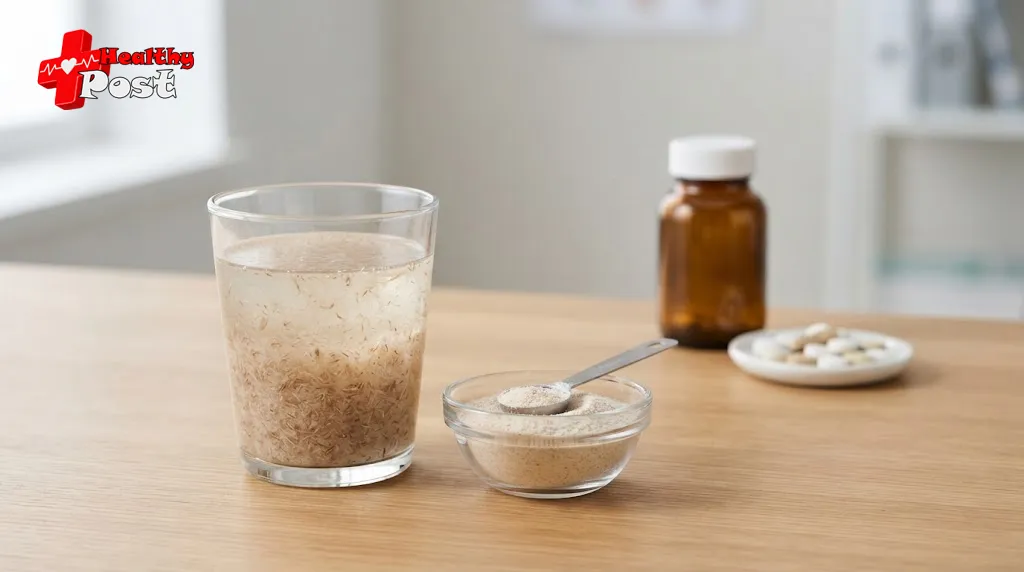
Mix psyllium husk into a full glass of water. Drink it straight away. Never swallow it dry. Keep it apart from your other medicines. Follow your label for timing.
Psyllium husk is a fiber from the seed coat of the Plantago ovata plant. It is also called ispaghula husk. It holds water in your bowel. That makes stool bulkier and softer. Doses and timing differ between products, so do not copy a dose from another brand. This guide uses NHS pages on Fybogel, a UK brand, and a US drug label. It points out where they differ.
How much psyllium husk to take
Doses vary by product and by the reason you take it. Check the label on your own product.
The NHS publishes the usual dose for Fybogel, a UK brand of ispaghula husk. Its page on how and when to take Fybogel says adults and children aged 12 and over take one sachet twice a day. Younger children have different doses. Children under 6 should only take it if a doctor recommends it. Check the label or ask a pharmacist before you give psyllium to a child.
Loose powder is harder to measure than sachets. For example, one US psyllium powder on DailyMed, the US drug label database, contains about 3.4 g of psyllium husk in each rounded tablespoon. The label lists this as 3.4 g in 12 g of powder. The rest is sugar and flavoring. So it is not a universal conversion, and other products differ. The label allows up to three doses a day. Check the serving size on your own product before you copy a dose from anywhere else.
If a doctor told you to take psyllium for another reason, such as high cholesterol, ask them which dose to use.
How to take it, step by step
- Measure the dose from your label.
- Put the dose in an empty glass. Add cold water. The NHS says at least 150 ml for a Fybogel sachet. The US label says a full glass of 8 ounces, which is about 240 ml. Use the amount on your own label.
- Stir well and drink it straight away. If the mix thickens, add more liquid and stir. The US label gives this advice.
- Try not to breathe in the powder as you pour it. The NHS says this can trigger a mild allergic reaction.
- Check your label for timing. The NHS says to take Fybogel after a meal or snack.
- Take your evening dose at least an hour before bed. The NHS says drinking Fybogel just before sleep can make it harder for your bowel to move stool along.
- Drink fluids through the day. While you take Fybogel, the NHS says adults should aim for more than 2 litres, or around 8 glasses, of fluid a day. Too little fluid can make constipation worse.
Psyllium does not work straight away. The NHS page About Fybogel says it usually takes 2 or 3 days. The US label says psyllium generally works within 12 to 72 hours.
Why you need enough water
Never take psyllium dry. The DailyMed label warns that psyllium taken without enough fluid may swell and block your throat or esophagus. This may cause choking. Using enough liquid and drinking the mix straight away lowers the risk. Always follow the liquid amount on your product label. If it feels stuck, or you have chest pain or trouble breathing, get emergency help.
Keep it apart from other medicines
Psyllium can change how some medicines, vitamins and supplements are absorbed. The sources give different gaps. The table shows each one.
| Source | Gap from other medicines |
|---|---|
| NHS, dosing page for Fybogel | At least 30 minutes before or after |
| NHS, page on other medicines and supplements | More than 1 hour before or after |
| US store brand label on DailyMed | At least 2 hours before or after a prescribed oral medicine |
Product instructions differ, so follow the label on your own product. If you take prescription medicines, ask a pharmacist which gap suits you.
The NHS page on taking Fybogel with other medicines and herbal supplements has a list. Tell a pharmacist or doctor before you start if you take any of these:
- Lithium
- Carbamazepine
- Digoxin
- Insulin or any other diabetes medicine
- Mesalazine
- Pain medicines that can cause constipation, such as codeine
That list is not complete. Tell them about vitamins and herbal remedies too.
Who should talk to a doctor or pharmacist first
The NHS says most adults can take Fybogel, including during pregnancy or breastfeeding. Its page on who can and cannot take Fybogel has a list. Talk to a doctor or pharmacist before you start if you have any of these:
- An allergic reaction to Fybogel or any other medicine in the past
- A change in your stool that is unusual for you and has lasted more than 2 weeks, including blood in it
- Tummy pain with nausea or vomiting, which can be a sign of a blocked bowel
- Weak bowel muscles, called colonic atony
- Difficulty swallowing or other throat problems
- Phenylketonuria, a rare genetic condition
Speak to a doctor if your constipation has not improved, or has got worse, after 3 days of taking it. Stool that keeps changing between hard and soft can have several causes. Our guide to hard stool followed by soft stool explains them and the warning signs.
Side effects, allergies and missed doses
The NHS page on side effects of Fybogel lists wind and bloating. It says they should get better after a few days. If they continue or worry you, talk to your doctor or pharmacist.
A mild allergic reaction is possible. Signs include itchy eyes, nose or skin. The NHS says you are more likely to react if you have reacted before, or if you are exposed to the powder often. Stop taking it and ask your pharmacist or doctor for advice.
A serious allergic reaction is rare. In the UK, call 999 straight away if your lips, mouth, throat or tongue suddenly swell. Do the same if you struggle to breathe or swallow. Elsewhere, call your local emergency number.
Taking more than the usual dose may cause wind and tummy pain, the NHS says. If you take an extra dose, drink plenty of water. If you have pain or symptoms that worry you, speak to your doctor or pharmacist. In the UK, you can also call NHS 111.
If you miss a dose, skip it. Take the next dose at the usual time. Never take two doses together to make up for it.
For another overview of what psyllium is used for, you can read this Healthpally article. This page covers safe use only.
Frequently Asked Questions About Psyllium Husk
1. Can you take psyllium husk every day?
You can take psyllium regularly when it is used according to the instructions for your specific product. Follow the recommended dose and mix it with enough liquid. If constipation continues or gets worse despite using it, speak with a doctor or pharmacist rather than continuing to increase the dose yourself.
2. How much water should you drink with psyllium husk?
Use the amount of liquid stated on your product label. For example, the NHS recommends at least 150 ml of water for a Fybogel sachet, while the US product discussed in this guide requires a full 8-ounce glass. Drink the mixture immediately after stirring it.
3. Can I take psyllium husk without water?
No. Do not swallow psyllium husk dry. Psyllium absorbs liquid and expands. Taking it without enough fluid can cause choking or a blockage in the throat or esophagus. Always mix it with the amount of liquid directed on your product label.
4. How long does psyllium husk take to work?
The time varies by product. Fybogel, an ispaghula husk product described by the NHS, usually takes 2 to 3 days to work. The US psyllium product discussed in this guide says it generally works within 12 to 72 hours.
5. What is the best time to take psyllium husk?
The best timing depends on the product. For Fybogel, the NHS recommends taking it after a meal or snack. If you take an evening dose, take it at least an hour before going to bed. Always follow the timing instructions for your own psyllium product.
6. How long should I wait between psyllium husk and other medicines?
There is no single interval for every psyllium product. The sources used in this guide give different instructions, ranging from at least 30 minutes to at least 2 hours. Follow your own product label, and ask a pharmacist if you take prescription medicines and are unsure about the appropriate gap.
7. Can psyllium husk cause bloating or gas?
Yes. Wind and bloating are common side effects when taking Fybogel and often improve after a few days. If these symptoms continue, become troublesome, or concern you, speak with a doctor or pharmacist.
8. Who should not take psyllium husk without medical advice?
Speak with a doctor or pharmacist before taking psyllium if you have difficulty swallowing, unusual changes in your bowel habits, blood in your stool, abdominal pain with nausea or vomiting, weak bowel muscles, or certain other medical conditions. People with a previous allergic reaction to the product should also seek advice before using it.
9. What happens if I take too much psyllium husk?
Taking more than the recommended amount may cause wind and abdominal discomfort. Do not take an extra dose to compensate for a missed dose. If you have taken too much and develop significant pain or other concerning symptoms, contact a doctor or pharmacist for advice.
10. Can you take psyllium husk before bed?
Check the instructions for your specific product. For Fybogel, the NHS recommends taking an evening dose at least an hour before bedtime because taking it immediately before sleep may make it harder for the bowel to move stool along.
11. Can you take psyllium husk with other medicines?
Psyllium can affect how some medicines, vitamins and supplements are absorbed. Medicines specifically listed by the NHS include lithium, carbamazepine, digoxin, diabetes medicines, mesalazine and some pain medicines such as codeine. Tell your doctor or pharmacist about all medicines, vitamins and herbal supplements you take.
12. When should you stop taking psyllium and seek medical help?
Seek urgent medical help if you develop difficulty breathing or swallowing, sudden swelling of the lips, mouth, throat or tongue, or symptoms suggesting that the psyllium mixture is stuck. Also speak with a doctor if constipation does not improve or becomes worse after the period specified on your product’s instructions.