



🏥 Medical Review Board Member
Dr. Himanshu Gupta
Orthopedic Specialist | Amicare Hospital (Ghaziabad, India)
Dr. Himanshu Gupta is a distinguished medical professional with over 20 years of expertise in orthopedics and joint replacement surgery. As the Chief Orthopedic and Director at Amicare Hospital, he specializes in advanced robotic-assisted procedures and sports injury management, dedicated to enhancing mobility and quality of life for his patients. Dr. Gupta is committed to bridging the gap between complex surgical clinical practice and accessible, evidence-based patient education. His rigorous approach to medical oversight ensures that every piece of content he reviews meets the highest standards of clinical accuracy, safety, and reliability.
Knee buckling happens when your knee suddenly feels weak, unstable, or unable to support your body normally. You may describe it as your knee gives out, your knees giving way, or your leg suddenly collapsing while walking, standing, climbing stairs, or changing direction. Sometimes the episode is brief and painless; in other cases, it occurs with pain, swelling, a popping sensation, or difficulty moving the joint.
The important point is that knee buckling is a symptom, not a diagnosis. Several different problems can produce the sensation, including ligament injuries, meniscus tears, kneecap instability, muscle weakness, arthritis, or a previous knee injury. Ligament injuries in particular can cause instability and the feeling that the knee is giving way.
The phrase “buckle kneed” is sometimes used in everyday conversation, but it does not describe one specific medical condition. Finding out why the knee is buckling requires looking at the symptoms, how the episode started, and the condition of the structures around the joint.
What Does Knee Buckling Feel Like?
People experience instability in different ways. You might notice that:
- The knee suddenly feels weak.
- Your leg briefly cannot support your weight.
- The knee unexpectedly bends or collapses.
- You feel unsteady while walking.
- It feels as though the knee is about to give way.
- There is pain, swelling, stiffness, clicking, or catching.
- You hear or feel a pop during an injury.
- The knee becomes difficult to bend or straighten.
The combination of symptoms matters more than buckling alone. For example, an ACL injury may cause a popping sensation followed by rapid swelling, pain, reduced movement, and instability.
Why Does My Knee Click But No Pain? 5 Harmless Causes and 4 Red Flags is also relevant if clicking or popping is occurring alongside your instability symptoms.
Knee Buckling Causes
There are several possible knee buckling causes, and the symptoms alone usually cannot identify one with certainty.
1. Ligament Injuries
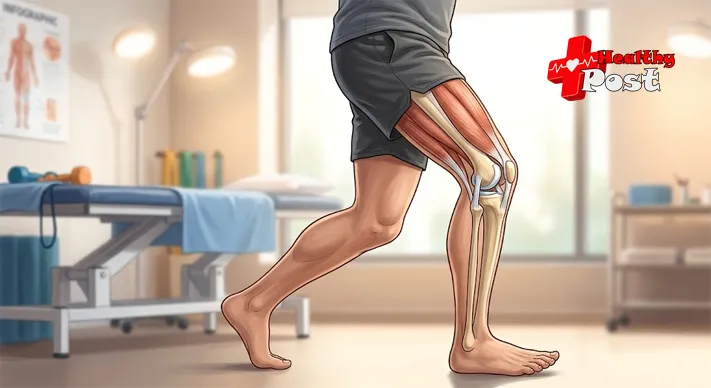
The knee contains four major ligaments that help keep the joint stable: the anterior cruciate ligament (ACL), posterior cruciate ligament (PCL), medial collateral ligament (MCL), and lateral collateral ligament (LCL).
When one of these structures is stretched or torn, the knee may feel unstable. ACL injuries are especially associated with episodes in which the knee gives way or shifts. They commonly occur during sudden stops, changes of direction, awkward landings, or collisions.
An ACL injury may involve:
- A pop or popping sensation
- Rapid swelling
- Pain
- Difficulty bearing weight
- Reduced range of motion
- A feeling that the knee is unstable or gives out
A buckling episode does not, however, automatically mean that the ACL is torn. Other structures can cause similar symptoms.
2. Meniscus Tears
The menisci are two crescent-shaped pieces of cartilage between the thighbone and shinbone. They help distribute loads and contribute to knee stability.
A meniscus can tear after twisting or rotating the knee, particularly during sports or a sudden change in direction. Degenerative changes can also make the meniscus more vulnerable with age. Symptoms may include pain, swelling, stiffness, clicking, catching, difficulty fully straightening the knee, or a feeling that the joint is giving way.
3. Patellar or Kneecap Instability
The kneecap, or patella, normally moves within a groove at the end of the thighbone. If it becomes unstable or moves abnormally, a person may feel that the knee is slipping, shifting, or buckling.
Patellar instability can be associated with:
- Pain around the kneecap
- Swelling
- Popping
- A sensation that the kneecap is moving
- Catching or instability
- Difficulty walking or straightening the knee
The cause may be an injury, an anatomical variation, or repeated instability.
4. Knee Arthritis
Osteoarthritis and inflammatory forms of arthritis can cause pain, stiffness, swelling, and reduced function. Over time, these symptoms can make the muscles around the knee less effective and may contribute to a feeling of instability.
That does not mean arthritis always causes buckling. The relationship depends on the person’s joint condition, pain, muscle strength, and overall function. Osteoarthritis commonly causes pain and stiffness, while other knee problems may contribute more directly to instability.
5. Muscle Weakness
The quadriceps, hamstrings, hip muscles, and other muscles surrounding the knee contribute to controlled movement and stability.
If these muscles become weak because of inactivity, pain, aging, or recovery from an injury, the knee may feel less secure. This is one reason rehabilitation programs often include progressive strengthening rather than focusing only on the joint itself.
6. Previous Knee Injury
A previous ligament, meniscus, or kneecap injury can leave someone with ongoing instability, particularly if the underlying problem was not fully rehabilitated.
Repeated episodes should not simply be ignored. Frequent giving way can interfere with normal movement and may increase the risk of further injury in some situations.
7. Hyperextension
A knee that is forced beyond its normal range of motion can injure surrounding tissues and temporarily or persistently affect stability. A hyperextended knee may become painful, swollen, or unsteady when weight is placed on it.
Why Does My Knee Buckle?
If you keep asking, “why does my knee buckle?”, the most useful answer is that something may be affecting the joint’s stability, strength, alignment, or normal movement.
For example, a ligament injury can allow abnormal movement between the bones. A meniscus problem may interfere with normal joint mechanics. Kneecap instability can change how the patella tracks during bending and straightening. Muscle weakness can make it harder to control the knee.
The same symptom can therefore come from very different problems.
That is why repeated knee buckling should not be treated as proof of a particular injury. A healthcare professional can assess the history and perform an examination to determine what needs further investigation.
Symptoms That Can Occur With Knee Buckling
Depending on the underlying problem, knee instability may occur with:
- Knee pain
- Swelling
- Stiffness
- Weakness
- A feeling of instability
- Popping or snapping
- Clicking
- Catching
- Locking
- Difficulty bearing weight
- Reduced range of motion
- Difficulty walking
- Pain when using stairs
- A sensation that the kneecap is slipping
A useful distinction is between clicking alone and clicking accompanied by symptoms such as swelling, pain, locking, or giving way. A painless click can be relatively benign, while mechanical symptoms or instability deserve greater attention.
When Is Knee Buckling Serious?
Not every episode requires emergency care. However, buckling after a significant injury deserves particular attention, especially when it occurs with severe pain, swelling, or inability to bear weight.
Seek urgent medical assessment if you have:
- Severe knee pain after an injury
- Sudden or major swelling
- An obvious deformity
- Inability to put weight on the leg
- Inability to move the knee normally
- A popping sound followed by significant instability
- A knee that becomes locked
- A hot, red, swollen knee accompanied by fever or feeling very unwell
NHS guidance specifically recommends urgent help when knee pain is severe, the knee cannot be moved or bear weight, it is badly swollen or deformed, or it locks or gives way. A hot, red knee with fever can also indicate infection.
Mayo Clinic similarly recommends urgent assessment after a major knee injury when there is severe pain, sudden swelling, inability to bear weight, deformity, or a popping sound.
How Is Knee Buckling Diagnosed?
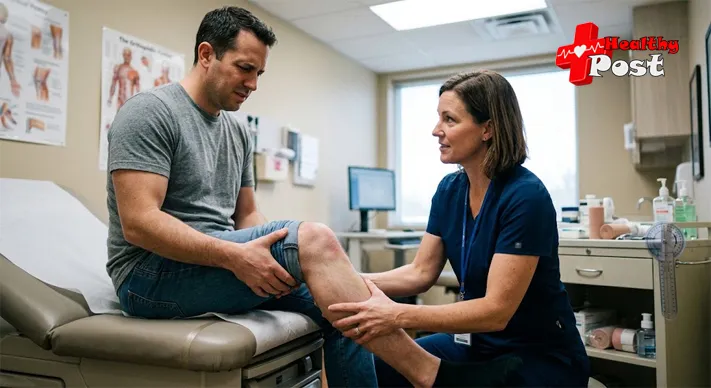
Diagnosis usually begins with a detailed history and physical examination.
A clinician may ask:
- When did the buckling first happen?
- How often does it occur?
- Did it start after an injury?
- Did you hear or feel a pop?
- Did the knee swell?
- Is there pain?
- Does the knee catch or lock?
- Does it happen when walking, turning, running, or climbing stairs?
- Have you injured the same knee before?
During the examination, the clinician may assess:
- Range of motion
- Joint stability
- Muscle strength
- Tenderness
- Swelling
- Kneecap movement
- The way the knee responds to specific stability tests
Imaging is not automatically required for every episode of knee instability. Depending on the suspected problem, an X-ray may be used to look for bone abnormalities, while MRI can provide detailed information about ligaments, menisci, cartilage, and other soft tissues. AAOS notes that MRI can help confirm ACL injury and identify associated injuries.
Knee Buckling Treatment
There is no single treatment for everyone whose knee buckles. Treatment depends on the underlying cause, severity of the problem, activity level, and whether another structure has been injured.
Conservative Treatment
Depending on the diagnosis, treatment may involve:
- Temporarily modifying activities that aggravate symptoms
- Ice for swelling
- Appropriate pain relief
- Physical therapy
- Progressive strengthening
- Flexibility and mobility work
- A knee brace in selected conditions
- Temporary use of crutches when medically appropriate
Physical therapy may focus on restoring strength, movement, balance, and functional control rather than simply reducing pain.
Treatment for Specific Injuries
Some ligament injuries can be managed with structured rehabilitation, while certain severe or persistent injuries may require surgery.
For ACL injuries, treatment decisions can depend on knee instability, activity demands, associated injuries, and individual circumstances. Some people are treated non-operatively, while others undergo reconstruction followed by rehabilitation.
Meniscus injuries also vary. Some can be managed without surgery, particularly when symptoms are limited and the knee is not locking or severely swollen. Other tears may require an orthopedic procedure.
The important principle is simple: treat the cause, not just the buckling sensation.
Exercises and Physical Therapy for Knee Buckling
Exercises can be useful when weakness or poor movement control contributes to instability, but they should be matched to the underlying condition.
A physical therapist may prescribe exercises involving:
- Quadriceps strengthening
- Hamstring strengthening
- Hip and glute strengthening
- Balance and proprioception work
- Controlled range-of-motion exercises
- Functional strengthening
For someone with an acute injury, however, starting an aggressive exercise routine without assessment may be inappropriate. A fracture, significant ligament tear, dislocation, or certain meniscus injuries may require a specific rehabilitation plan.
If arthritis is contributing to pain or weakness, you can also read HealthyPost’s guide to safe knee exercises for arthritis for related movement and strengthening information.
Can You Prevent Knee Buckling?
Not every episode can be prevented, particularly when it results from an unexpected injury or a structural condition. Still, several habits can support knee function:
- Maintain strength in the legs and hips.
- Increase exercise intensity gradually.
- Use appropriate technique during sports.
- Warm up before demanding activity.
- Follow rehabilitation after a knee injury.
- Address recurring instability rather than repeatedly working through it.
- Maintain a healthy body weight when appropriate for you.
- Use recommended protective equipment during higher-risk activities.
Prevention should not mean avoiding movement altogether. For many people, appropriate strengthening and gradual conditioning are part of maintaining useful knee function.
Knee Buckling vs. Knees Giving Way vs. Knee Gives Out
These phrases can sound like different medical problems, but they generally describe a similar experience.
| Phrase | What it usually means |
|---|---|
| Knee buckling | The knee suddenly feels unstable or cannot adequately support the body. |
| Knees giving way | A common description of repeated episodes of sudden knee instability. |
| Knee gives out | An everyday expression for the knee suddenly becoming unreliable or collapsing. |
| Buckle kneed | A less precise conversational phrase describing knees that buckle or appear unstable. |
None of these expressions identifies the underlying diagnosis by itself. The cause could involve a ligament, meniscus, kneecap, muscles, arthritis, or another problem.
When to See a Doctor for Knee Buckling
Arrange a medical assessment if buckling is recurring, particularly if it happens during ordinary walking rather than only during strenuous activity.
It is also worth being evaluated when you have:
- Persistent knee pain
- Recurrent swelling
- Locking or catching
- Difficulty fully bending or straightening the knee
- Increasing instability
- Symptoms that began after an injury
- Difficulty comfortably bearing weight
NHS guidance specifically lists a knee that locks, gives way, or has painful clicking as a reason to seek medical advice.
A recurring knee problem is worth investigating even when each individual episode seems brief. Identifying the cause can help determine whether strengthening, rehabilitation, activity modification, bracing, medication, or another treatment is appropriate.
Frequently Asked Questions
What is knee buckling?
Knee buckling is a sudden sensation of weakness or instability in which the knee temporarily cannot support the body normally. It is a symptom rather than a specific diagnosis and can have several causes.
Why does my knee buckle when I walk?
Your knee may buckle while walking because of muscle weakness, ligament instability, kneecap problems, meniscus injury, arthritis-related dysfunction, or another condition affecting normal joint control. Repeated episodes should be assessed rather than self-diagnosed.
Can a weak knee cause buckling?
Yes. Weakness in the quadriceps, hamstrings, hips, or other supporting muscles can reduce the control and stability of the leg. Physical therapy may help restore strength and movement control when weakness is part of the problem.
Can arthritis cause knee buckling?
Arthritis can contribute to pain, stiffness, weakness, and reduced function, which may make the knee feel less stable. However, buckling is not specific to arthritis, so another cause may need to be considered if instability is prominent.
Is knee buckling a sign of an ACL tear?
It can be one symptom of an ACL injury, particularly when buckling follows a twisting or pivoting injury and is accompanied by a pop, swelling, pain, or difficulty bearing weight. However, knee buckling does not prove that the ACL is torn.
Can a meniscus tear cause the knee to give out?
Yes. A meniscus tear may cause pain, swelling, clicking, catching, difficulty straightening the knee, or a sensation that the knee is giving way.
Final Takeaway
Knee buckling is best understood as a sign that something may be affecting the stability or control of the knee. It can occur after an injury or alongside problems such as ligament damage, meniscus tears, patellar instability, muscle weakness, or arthritis.
A single mild episode does not necessarily indicate a serious injury, but repeated buckling, especially when accompanied by pain, swelling, locking, or difficulty bearing weight, deserves medical assessment.
Most importantly, avoid assuming that every unstable knee has an ACL tear or that exercises alone will cure the problem. The appropriate treatment depends on the underlying cause. A proper examination can help determine what is happening and whether further testing or rehabilitation is needed.
References
- American Academy of Orthopaedic Surgeons (AAOS), OrthoInfo — ACL Injury / Anterior Cruciate Ligament Injury. AAOS describes knee giving way, popping, swelling, examination, MRI, and treatment considerations for ACL injuries.
AAOS OrthoInfo — ACL Injury Guidance - Mayo Clinic — Knee Pain: Symptoms and Causes. This source covers knee instability, giving way, swelling, injuries, arthritis, and circumstances requiring medical evaluation.
Mayo Clinic — Knee Pain Symptoms and Causes - NHS — Knee Pain. The NHS provides guidance on knee pain, giving way, locking, inability to bear weight, swelling, and urgent warning signs including a hot or red knee with fever.
NHS — Knee Pain Guidance