



🏥 Medical Review Board Member
Dr. Michelle Uzor, MD
Board-Certified Obstetrician-Gynecologist | Southern Crescent Women’s HealthCare
Dr. Michelle Uzor, MD, is a board-certified Obstetrician-Gynecologist with extensive clinical experience dedicated to comprehensive women’s healthcare, obstetrics, and reproductive medicine. Practicing with Southern Crescent Women’s HealthCare, she is committed to providing evidence-based patient guidance and clinical oversight. Dr. Uzor ensures that every piece of women’s health content she reviews meets the highest standards of medical accuracy, safety, and clinical integrity.
A claim keeps resurfacing on social media: women run on a 28-day hormonal cycle, while men run on a 24-hour one. It is usually offered as a tidy explanation for why women’s moods and energy supposedly shift while men’s stay steady. Each half contains a real observation, but placing them side by side is misleading. The female hormonal cycle is a reproductive cycle that plays out over several weeks. The daily rise and fall of testosterone in men is a circadian rhythm, a different kind of biological pattern that women have too.
This article explains what each pattern is, where the viral claim goes wrong, and what the evidence says about hormones, mood and productivity.
What is the female hormonal cycle?
The female hormonal cycle usually means the hormonal and reproductive changes of the menstrual cycle. The cycle is counted from the first day of one period to the day before the next. Throughout it, the brain and ovaries stay in close communication. The hypothalamus and pituitary gland send signals to the ovaries, and the ovaries send hormonal feedback back. Researchers call this loop the hypothalamic-pituitary-ovarian (HPO) axis.
Four hormones do most of the work in the menstrual cycle and hormones story:
- Follicle-stimulating hormone (FSH) prompts follicles in the ovary to develop.
- Estradiol, the main form of estrogen, rises as follicles grow and helps rebuild the uterine lining.
- Luteinizing hormone (LH) surges to trigger ovulation, the release of a mature egg.
- Progesterone is produced after ovulation and prepares the uterine lining for a possible pregnancy.
If pregnancy does not occur, estrogen and progesterone fall, the lining sheds, and a new cycle begins. The four phases (menstrual, follicular, ovulatory and luteal) are not separate systems. They are consecutive stages of one continuous process, and each hands off to the next through hormonal signals.
Is every menstrual cycle 28 days?
No. Twenty-eight days is a convenient teaching model, not a requirement for health. The U.S. Office on Women’s Health describes the typical cycle as 28 days but notes that a normal cycle lasts between 24 and 38 days. Cycle length can also differ from month to month, and it tends to be longer and more variable for the first few years after a first period and again in the years approaching menopause. womenshealth
So “a woman’s hormonal cycle is 28 days” is inaccurate. A better statement is that the menstrual cycle is often illustrated as 28 days, while healthy cycles vary considerably between people and between months.
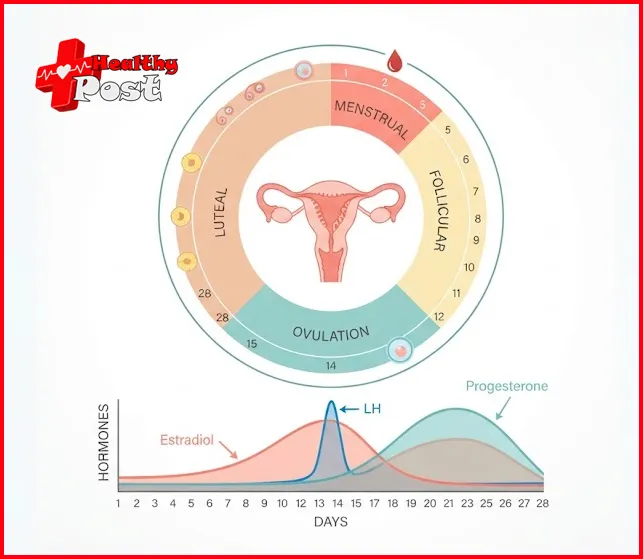
Hormonal changes during the menstrual cycle, phase by phase
Menstrual phase
Day 1 is the first day of bleeding. Estrogen and progesterone are at their lowest, and that withdrawal helps trigger the shedding of the uterine lining. Cramps, back discomfort, headaches, breast tenderness and low energy are common, but not universal. Some people carry on as normal, while others need extra rest, and there is no rule that menstruation demands complete rest. If you find yourself unusually drained, why periods can bring fatigue is a useful read on possible contributors and coping strategies.
Follicular phase
The follicular phase starts on the first day of the period and runs until ovulation. FSH stimulates several follicles, and as they mature, estradiol climbs and the uterine lining begins to rebuild. Eventually one dominant follicle is selected to release an egg.
This is the phase where social-media advice tends to overreach, with claims that rising estrogen makes every woman energetic, confident and productive. Estradiol does interact with brain chemistry, and some people notice improved mood or energy in the days before ovulation. But that is an individual pattern, not a rule. The follicular phase also varies the most in length between cycles, which is largely why a fixed 28-day schedule rarely holds.
Ovulation
Ovulation happens when the dominant follicle releases its egg. In the textbook 28-day cycle that falls around day 14, though the real timing can shift by days or even weeks. A rise in estradiol triggers the LH surge, and ovulation typically follows within roughly a day or two.
Signs vary. Some people notice clearer, more slippery cervical mucus, which is why changes in vaginal discharge across the month are normal. After ovulation, progesterone causes a small, sustained rise in resting body temperature, which is the basis of basal body temperature charting.
A few people feel a brief twinge on one side of the pelvis around mid-cycle. Mild lower abdominal pain is not always menstrual, and it is worth knowing which patterns are ordinary and which deserve a check-up.
The idea that confidence “peaks at ovulation” should be treated with caution. Researchers do study mood, sexual interest and social behavior around this window, but the findings are not consistent enough to call it a biological rule.
Luteal phase
After ovulation, the empty follicle becomes the corpus luteum, a temporary structure that produces progesterone. This phase is usually more consistent than the follicular one, commonly lasting about two weeks. If an egg is fertilized and implants, the pregnancy hormone hCG keeps the corpus luteum working. If not, it regresses, hormone levels fall, and menstruation begins. Light bleeding in early pregnancy is sometimes mistaken for a period, which is why people ask whether a true period can occur during pregnancy.
The days before a period are when premenstrual symptoms such as bloating, breast tenderness, irritability, sleep changes and appetite shifts tend to appear. Again, they are common, not universal.
Do hormonal changes during the menstrual cycle affect mood and energy?
They can, but not in the same predictable way for everyone. A 2026 clinical review from Oxford researchers describes the picture this way: for most people who menstruate, the cycle does not cause clinically significant disruption, but for a substantial minority it is linked to moderate or severe symptoms. The review emphasizes that hormone sensitivity differs from person to person. In conditions such as premenstrual dysphoric disorder (PMDD), the evidence points to heightened sensitivity to normal hormonal fluctuations rather than abnormal hormone levels.
That distinction matters. Two people with identical estrogen and progesterone curves can feel very different. Mood is also shaped by sleep, stress, physical health, social support, medications, hormonal contraception and mental health history. So the evidence supports “hormones can contribute to symptoms in some people,” not “hormones dictate how every woman feels on day 9 or day 23.”
What is men’s hormonal cycle, really?
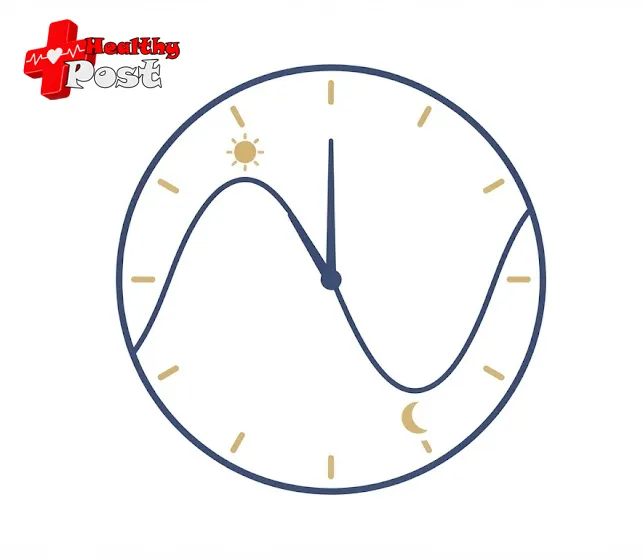
Men do not have a menstrual-type cycle. There is no monthly ovulation and no cyclical shedding of a uterine lining. When people talk about men’s hormonal cycle, they usually mean the daily pattern of testosterone, which follows a circadian rhythm.
A study of 66 men in Boston found that in men aged 30 to 40, testosterone levels were 20–25% lower at 4 p.m. than at 8 a.m. The same research found much smaller daily variation in LH, FSH and estradiol. This is why clinicians generally check testosterone in the morning, when levels are highest and most reliable. The daily swing also shrinks with age.
Calling this a “24-hour hormonal cycle” is where the viral claim slips. “Cycle” implies a coordinated reproductive sequence, whereas circadian rhythm describes roughly 24-hour timing driven by the body’s internal clock. And that clock runs in everyone. Women have daily rhythms in cortisol, melatonin, body temperature and reproductive hormones, layered on top of the monthly cycle.
Male reproductive biology also operates on longer timescales than a day. Sperm production is continuous, but each batch takes roughly two to three months to develop. Evidence for monthly or seasonal testosterone patterns in men, on the other hand, is limited and inconsistent. Testosterone is also affected by sleep, body weight, illness, medications and age, so no single timetable describes every man.
Female hormonal cycle vs men’s hormonal rhythm: side by side
| Feature | Female hormonal cycle | Men’s hormonal rhythm |
|---|---|---|
| Pattern | Menstrual (reproductive) cycle | Circadian (daily) rhythm |
| Typical timescale | Often about 28 days, but 24–38 days is normal | About 24 hours |
| Key hormones | Estradiol, progesterone, FSH, LH | Testosterone, plus others |
| Reproductive event | Monthly ovulation | Continuous sperm production |
| Daily variation too? | Yes | Yes, especially testosterone |
| Same for everyone? | No | No |
| Best label | Menstrual cycle | Circadian rhythm |
The table’s last two rows carry the main message. These are different phenomena operating on different clocks, and neither sex has a single fixed hormonal timetable.
Why the “28 days vs 24 hours” claim falls apart
The claim takes two accurate observations: menstruating women have cyclical reproductive hormone changes over weeks, and men have daily variation in testosterone. It then presents them as equivalent cycles, which they are not.
A menstrual cycle involves coordinated changes in the ovaries, uterine lining, pituitary hormones and ovarian hormones, ending in either pregnancy or menstruation. A circadian rhythm is a timing pattern driven by a biological clock. Women have it too, and men also have hormonal variation over longer periods, such as the sperm-production timeline above. The comparison works as a meme, but not as endocrinology.
Can you predict mood and productivity by cycle phase?
Productivity advice built on four fixed phases (a “creative” week, a “social” week and so on) looks tidy but outruns the evidence. Some people notice real patterns, such as lower energy during heavy bleeding or poorer sleep before a period. Others see nothing consistent. Sleep, stress, illness, diet, exercise, contraception, age and underlying conditions can all swamp any hormonal signal.
A more reliable approach is personal observation. Jot down the first day of each period, flow, pain, mood, sleep, energy, appetite and headaches over a few cycles. The Oxford review recommends prospective daily tracking across at least two cycles, since memory alone is unreliable. Cycle-tracking apps can help with logging, though they are better at recording patterns than at predicting ovulation, so treat their forecasts as estimates.
Myths versus facts
- Myth: every woman’s cycle is 28 days. Fact: 28 days is a common model, but cycles of 24 to 38 days are considered normal.
- Myth: confidence reliably peaks at ovulation. Fact: hormones around ovulation may be linked to changes in some people, but there is no universal peak.
- Myth: menstruation means complete rest. Fact: some people need extra rest, while many do not.
- Myth: men have a 24-hour hormonal cycle. Fact: men have circadian hormone rhythms, notably in testosterone, but this is not the equivalent of a menstrual cycle.
- Myth: hormones fully control women’s moods. Fact: hormones can contribute to symptoms in some people, alongside stress, sleep, health and social circumstances.
When menstrual symptoms need medical attention
Cycle-related symptoms are common, but some warrant a conversation with a doctor. Consider seeking advice if you have:
- very heavy bleeding or large clots
- severe pain that does not respond to usual measures
- cycles that are consistently shorter than 24 days or longer than 38 days, or that suddenly change
- mood symptoms that repeatedly appear before a period and disrupt work, school or relationships
- thoughts of self-harm at any point in your cycle, which needs urgent help
Severe period pain, in particular, is not something to simply tolerate. Conditions such as endometriosis are often under-recognized for years, and tracking your symptoms can help a clinician spot a pattern.
PMDD is a recognized condition involving severe cyclical emotional and physical symptoms. Estimates commonly cited in clinical literature put it at roughly 3–8% of people who menstruate. Diagnosis relies on tracking symptoms over time and should come from a healthcare professional, not from a checklist online.
What the evidence supports
Menstruating women experience a recurring reproductive cycle driven by changing ovarian and pituitary hormones. The female hormonal cycle is often illustrated as 28 days, but normal lengths vary. Men experience daily testosterone rhythms and other biological patterns, but these are not the same kind of thing as a monthly cycle. Everyone has multiple biological rhythms, and hormonal patterns cannot be turned into rigid claims about personality, confidence or productivity.
If you want to understand your own body, watch your own data over a few months and bring any worrying patterns to a clinician. For more on this topic, our women’s reproductive health guides cover related questions in more depth.
FAQs
What is the female hormonal cycle?
It is the sequence of hormonal changes that drives the menstrual cycle, involving FSH, LH, estradiol and progesterone, and ending in either pregnancy or menstruation.
Is a female hormonal cycle always 28 days?
No. Twenty-eight days is a common illustration, but a regular cycle can fall anywhere between 24 and 38 days and can vary from month to month.
Do hormones affect mood during the menstrual cycle?
They can in some people, and a significant minority are especially sensitive to normal hormonal shifts. For many others, the effect is small or absent, and factors such as sleep and stress often matter as much.
Do men have a hormonal cycle?
Not a menstrual-type one. Men have circadian rhythms, such as higher testosterone in the morning, along with slower processes like the roughly two-to-three-month sperm production timeline.
Is the male 24-hour pattern the same as the female menstrual cycle?
No. One is a daily timing rhythm that both sexes have, and the other is a reproductive cycle involving ovulation and menstruation.
References
- U.S. Office on Women’s Health. “Your menstrual cycle.” womenshealth.gov. https://womenshealth.gov/menstrual-cycle/your-menstrual-cycle
- Brambilla DJ et al. “The Effect of Diurnal Variation on Clinical Measurement of Serum Testosterone and Other Sex Hormone Levels in Men.” Journal of Clinical Endocrinology & Metabolism, 2009 (PubMed Central). https://pmc.ncbi.nlm.nih.gov/articles/PMC2681273/
- “Gold-standard evidence and best practice guidance for menstrual cycle-informed clinical care: An overview for clinicians.” University of Oxford Research Archive, 2026. https://ora.ox.ac.uk/objects/uuid:4c762a76-02ed-456b-a380-057374321ee4