


Clinical Technology Review & Medical Disclaimer
Written by: Dr. Michelle Uzor, MD, FACOG (Board-Certified Obstetrician-Gynecologist, Southern Crescent Women’s HealthCare) | Published: August 2026
This article is for informational and educational purposes only. While it has been reviewed by Dr. Michelle Uzor, MD, FACOG (Board-Certified Obstetrician-Gynecologist), the content does not constitute professional medical advice, diagnosis, or treatment. To learn more, visit our Author Profile.
Critical Safety Warning: Never rely solely on a standard calendar-based cycle tracking application as a primary method of contraception or to self-diagnose reproductive health anomalies (such as PCOS or anovulatory cycles). If you experience irregular bleeding, severe pelvic pain, or sudden cycle disruption, schedule a physical consultation and comprehensive evaluation with a certified gynecologist.
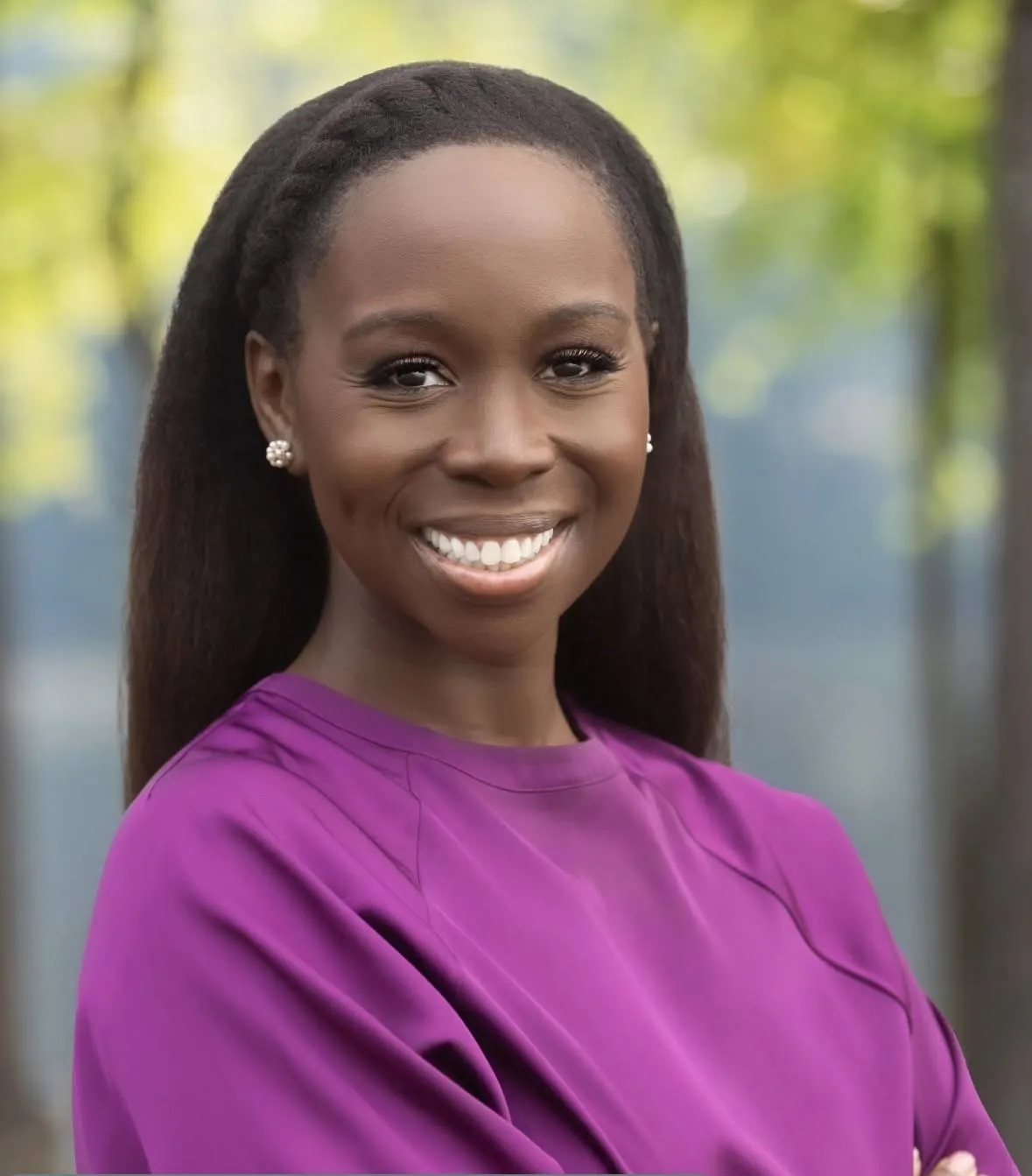
🏥 Medical Review Board Member
Dr. Michelle Uzor, MD
Board-Certified Obstetrician-Gynecologist | Southern Crescent Women’s HealthCare
Dr. Michelle Uzor, MD, is a board-certified Obstetrician-Gynecologist with extensive clinical experience dedicated to comprehensive women’s healthcare, obstetrics, and reproductive medicine. Practicing with Southern Crescent Women’s HealthCare, she is committed to providing evidence-based patient guidance and clinical oversight. Dr. Uzor ensures that every piece of women’s health content she reviews meets the highest standards of medical accuracy, safety, and clinical integrity.
Clinical Consensus: While modern cycle tracking applications provide valuable data parameters for monitoring menstrual trends and basal temperature variations, they rely on predictive mathematical modeling. They are supplementary data tools and cannot replace professional gynecological examinations, diagnostic ultrasounds, or clinical lab work.
If you have ever opened a period app and planned your month around its fertile window, you are not alone. I have done it too. But when we look closely at the Accuracy of cycle tracking apps vs clinical exams, the gap is hard to ignore. Apps are convenient, private, and easy to use. Still, convenience is not the same as precision, especially when you are trying to conceive, avoid pregnancy, or understand a cycle that feels unpredictable.
In my experience, many people assume a polished app interface means medical-grade accuracy. It rarely does. Most cycle apps are pattern trackers, not diagnostic tools. They can help you notice trends. They cannot reliably confirm when ovulation happens unless they include real biological data. That distinction matters.
I have also noticed how often cycle confusion overlaps with other health concerns. Someone may think an app is “wrong,” when the real issue is irregular ovulation, stress, thyroid changes, or conditions linked to Endometriosis Symptoms. That is why it helps to see apps as one tool, not the whole answer.
1. How cycle tracking apps actually make predictions
Most apps start with a simple idea: your past cycle predicts your next one.
They usually ask for:
- The first day of your period
- How long bleeding lasts
- Average cycle length
- Sometimes symptoms, mood, or sex logs
Then the algorithm estimates ovulation based on calendar math. This is where the debate around calendar method vs biological markers becomes important. Calendar-based tools assume ovulation happens around the middle of the cycle. Real bodies do not always follow that script.
Why the calendar approach falls short
Even in healthy cycles, ovulation can shift.
It may change because of:
- Stress
- Travel
- Poor sleep
- Illness
- Weight change
- Intense exercise
- Perimenopause
- PCOS or thyroid disorders
I have seen people with “regular” 28-day cycles still ovulate earlier or later than expected. A calendar app cannot see that shift unless you add biomarkers.
Apps that collect more data
Some apps now let users log:
- Basal body temperature
- Cervical mucus changes
- Ovulation test results
- Symptoms like cramping or breast tenderness
That is a step forward. But the app is only as useful as the data entered. If the inputs are incomplete, the prediction weakens.
2. What research says about app accuracy
This is the part many users never hear. Studies suggest that many period-tracking apps are far less reliable than people assume.
Research discussed in medical literature has found fertile window prediction rates around 21–22% in some app models. In plain language, that means many apps are often off target when timing matters most.
When I compare the Accuracy of cycle tracking apps vs clinical exams, one number stands out: app ovulation estimates can be wrong by as much as six days. For someone trying to conceive, that is a major difference. For someone avoiding pregnancy, it can be risky.
Ovulation prediction accuracy percentage: what the numbers mean
Here is the practical takeaway on ovulation prediction accuracy percentage:
- Basic cycle apps: about 20–25%
- BBT charting: about 70–80%
- LH surge testing: often above 90%
- Ultrasound and hormone testing: about 95–99%
Those numbers tell a simple story. The closer a method gets to real-time biology, the more accurate it becomes.
Why users still trust apps
Apps feel personal. They send reminders and create neat charts. They often make us feel informed.
But in my experience, visual confidence can hide biological uncertainty. A prediction is still a prediction, even when it appears in a clean design.
For evidence-based guidance, the clinical gold standard for ovulation remains ultrasound follicular monitoring and serum hormone evaluation rather than calendar estimates alone.
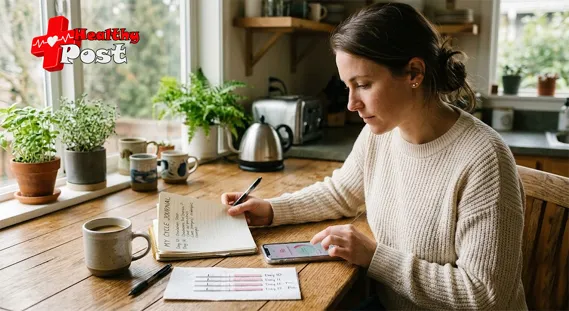
🟢 CAPTION: “An app can track patterns, but biomarkers provide stronger evidence.”
3. Clinical exams remain the gold standard
If you want the most precise answer to “Am I ovulating?” a clinic still offers the clearest path.
The clinical gold standard for ovulation includes:
- Transvaginal ultrasound follicular monitoring
- Serum hormone testing
- In some cases, progesterone testing after ovulation
These tools do not guess. They measure what your body is doing.
Why ultrasound is so precise
Ultrasound can track follicle growth in real time. It can show whether a dominant follicle is maturing and whether ovulation is likely near. That level of detail is impossible for a calendar-only app.
Why hormone testing matters
Hormone tests can confirm whether your body produced the signals needed for ovulation. This is especially useful if cycles are irregular or symptoms suggest a deeper issue.
In practice, I usually think of apps as weather forecasts. Clinical exams are more like stepping outside and checking the sky.
4. LH surge vs app predictions: one estimates, one detects
This comparison is one of the most useful for readers.
In the debate around LH surge vs app predictions, the biggest difference is direct evidence. Apps estimate your fertile window from patterns. LH tests detect the luteinizing hormone rise that usually happens 12 to 36 hours before ovulation.
That is a huge upgrade in timing.
Why LH strips outperform basic apps
LH test strips:
- Measure a real hormonal event
- Help narrow the fertile window
- Work better for timing intercourse or insemination
- Are affordable and widely available
Apps can still help organize the data. But the strip gives the proof point.
A simple real-life example
I once reviewed a case where an app predicted ovulation on day 14. LH testing showed the surge on day 18. That four-day gap explained months of frustration. The app was not malicious. It was just working from averages.
This is why LH surge vs app predictions is not a close contest when precision matters.
You can also review public guidance from the FDA-cleared fertility apps landscape to see how regulators treat app-based fertility tools differently from general wellness trackers.
5. Calendar method vs biological markers: the smarter framework
If I had to simplify this topic, I would return to calendar method vs biological markers.
Calendar methods ask:
“When do you usually ovulate?”
Biological markers ask:
“What is your body doing right now?”
That second question is far more useful.
The most helpful biomarkers
The best-known fertility biomarkers include:
- LH surge
- Basal body temperature
- Cervical mucus
- In some wearables, skin temperature trends and heart rate variability
Each marker gives a different clue.
- LH helps predict ovulation soon
- BBT helps confirm ovulation happened
- Cervical mucus can signal peak fertility
- Wearables may detect subtle body changes over time
In my experience, combining two or three markers beats relying on one app forecast alone.
Where BBT helps, and where it does not
BBT charting can be valuable, but it confirms ovulation after the fact. That means it is less useful for predicting the exact day ahead of time. Still, when paired with LH testing, it becomes much more informative.
This blended method is often easier to trust than app math alone.
6. FDA-cleared fertility apps are different from general period trackers
Not all apps should be placed in the same category.
Some FDA-cleared fertility apps have gone through regulatory review for specific uses, often contraception or fertility awareness. These apps usually require biomarker input, such as basal body temperature, instead of relying only on period dates.
That distinction matters.
What makes FDA-cleared tools more reliable
Compared with standard period apps, FDA-cleared fertility apps often have:
- Clinical validation data
- Defined instructions for use
- Biomarker integration
- Clearer safety warnings
- Ongoing monitoring requirements
That does not make them perfect. It makes them more accountable.
A note of caution
Even FDA-cleared fertility apps are not a replacement for a medical evaluation if cycles are highly irregular, painful, or absent. I would be especially cautious if symptoms overlap with issues discussed in Vaginal Discharge Shocking Facts or vaginitis treatmen, because infections or inflammation can complicate what you are noticing in the cycle.
7. Wearables are improving the picture in 2025–2026
One of the most interesting shifts is the rise of smart rings and wearable sensors. These devices track overnight temperature trends, sleep, pulse, and sometimes heart rate variability.
They are not the same as a clinic. But they are often better than calendar prediction alone.
Why wearables matter
Wearables can:
- Passively collect daily data
- Reduce logging fatigue
- Spot cycle shifts earlier than calendar tools
- Work well when paired with LH tests
I have noticed that users stick with wearables longer because they require less effort than daily charting. Still, passive data should not be mistaken for diagnosis.
Public health guidance continues to stress that apps and wearables should support decision-making, not replace medical care.
8. Comparison table: what works best and when
Here is the practical breakdown I would share with any reader comparing options.
| Method | Accuracy | Best For | Strengths | Weakness |
|---|---|---|---|---|
| Cycle Apps | ~20–25% | General awareness | Easy, accessible, tracks patterns | Large error margin, often ±6 days |
| LH Surge Tests | ~90% | Predicting ovulation 12–36 hours before | Direct biomarker, affordable | Requires daily urine testing |
| BBT Charting | ~70–80% | Confirming ovulation retrospectively | Low cost, useful for pattern review | Less useful for same-day prediction |
| Wearables (Oura/Ava type) | ~70–85% | Passive tracking | Ongoing data collection, convenient | Can be affected by environment and sleep |
| FDA-Cleared Apps | ~80–90% | Contraception or TTC with guided tracking | Combine biomarkers and algorithms | Subscription costs, limited availability |
| Ultrasound/Hormone Tests | ~95–99% | Clinical evaluation and highest precision | Clinical gold standard | Requires clinic visits and higher cost |
When I compare the Accuracy of cycle tracking apps vs clinical exams, the table makes the answer clear. Apps alone are weakest. Biomarker-based tools perform better. Clinical testing remains strongest.
This also connects with broader cycle health topics. Fatigue, pelvic pain, or discharge changes may affect how you interpret app data. If that sounds familiar, topics like Why do women feel tired during menstruation and What is pelvic floor physical therapy can add useful context.
9. So, can you trust your app?
Yes, but only for the right job.
I trust apps to:
- Track period history
- Show cycle trends
- Organize biomarker data
- Prompt me to notice changes
I do not trust apps alone to:
- Confirm ovulation
- Diagnose cycle disorders
- Serve as medical-grade fertility tools without biomarker input
That is the balanced answer.
If your goal is awareness, an app may be enough. If your goal is conception timing, pregnancy prevention, or investigating irregular cycles, you need more than a calendar algorithm.
FAQs
Are cycle tracking apps accurate enough to predict ovulation?
Usually not by themselves. Basic apps often rely on averages. That makes them less reliable than LH tests, BBT, or clinical exams.
What is the best option for ovulation prediction?
For home use, LH testing is one of the strongest tools. For medical precision, the clinical gold standard for ovulation is ultrasound plus hormone testing.
Are FDA-cleared fertility apps trustworthy?
Some are more reliable than general apps because they use biomarkers and validated models. Still, FDA-cleared fertility apps should be used exactly as directed.
What is better: calendar method vs biological markers?
In the comparison of calendar method vs biological markers, biomarkers win for real-time accuracy. They reflect what your body is doing now, not what it usually does.
How does LH surge vs app predictions compare?
In LH surge vs app predictions, LH strips are stronger because they detect a hormone rise linked to imminent ovulation. Apps mostly estimate based on past cycles.
Should I see a doctor if my app predictions never match my body?
Yes. That mismatch can signal irregular ovulation or another health issue. It may be worth exploring symptoms alongside topics like Endometriosis Symptoms or unusual discharge patterns.
Conclusion
Cycle tracking apps have changed the way many of us understand our bodies. I appreciate their convenience, and I use them as organizational tools. But when I weigh the Accuracy of cycle tracking apps vs clinical exams, the evidence is clear. Apps alone are not reliable enough for high-stakes fertility decisions. Their predictions can miss the mark by days, while biomarker tools and clinical exams offer much stronger precision.
The best path is a hybrid one. Use your app to log patterns. Add LH strips, BBT, cervical mucus tracking, or a wearable if it fits your lifestyle. If you need medical-grade certainty, seek clinical testing. That is especially important if your cycle comes with pain, fatigue, or symptoms that connect to Vaginal Discharge Shocking Facts, Why do women feel tired during menstruation, or What is pelvic floor physical therapy.
Trust your app for awareness and trust biomarkers for timing. Trust clinicians for answers.
References
- JAMA Network / JAMA Internal Medicine: fertility app and cycle prediction research
- U.S. FDA guidance on FDA-cleared fertility apps
- NIH resources on the clinical gold standard for ovulation
3 Comments
Pingback: What Not to Do After IUD Insertion: Recovery Tips, Bleeding & Sex
Pingback: Chance of Getting Pregnant After Vasectomy: Risks & Rates
Pingback: What Is a Frozen Embryo Transfer? FET Process, Risks & Success