

Medical Disclaimer: This article has been written by Dr. Himanshu Gupta (Orthopedics & Robotics, Amicare Hospital). The information provided on this website is intended solely for educational and informational purposes and should not be construed as personal medical advice, diagnosis, or treatment. Always seek the advice of a qualified healthcare provider regarding any medical condition or treatment plan.

🏥 Medical Review Board Member
Dr. Himanshu Gupta
Orthopedic Specialist | Amicare Hospital (Ghaziabad, India)
Dr. Himanshu Gupta is a distinguished medical professional with over 20 years of expertise in orthopedics and joint replacement surgery. As the Chief Orthopedic and Director at Amicare Hospital, he specializes in advanced robotic-assisted procedures and sports injury management, dedicated to enhancing mobility and quality of life for his patients. Dr. Gupta is committed to bridging the gap between complex surgical clinical practice and accessible, evidence-based patient education. His rigorous approach to medical oversight ensures that every piece of content he reviews meets the highest standards of clinical accuracy, safety, and reliability.
A sharp pain that starts in your lower back and travels through your buttock into your leg can make everyday activities uncomfortable. Sitting at your desk, walking upstairs, or even finding a comfortable sleeping position may become difficult. This pattern of pain is often associated with sciatica, a condition involving irritation or compression of nerves in the lower spine.
The pain can feel like burning, tingling, or an electric shock. Some people experience mild discomfort, while others struggle with pain that interferes with work, sleep, and daily movement. Fortunately, many cases improve without surgery. Understanding the symptoms, possible causes, safe exercises, and available treatments can help you make informed decisions about recovery.
What Is Sciatica?
Sciatica describes pain and other symptoms caused by irritation or compression of the sciatic nerve or the nerve roots that form it. Rather than being a separate disease, it is a symptom pattern associated with an underlying problem.
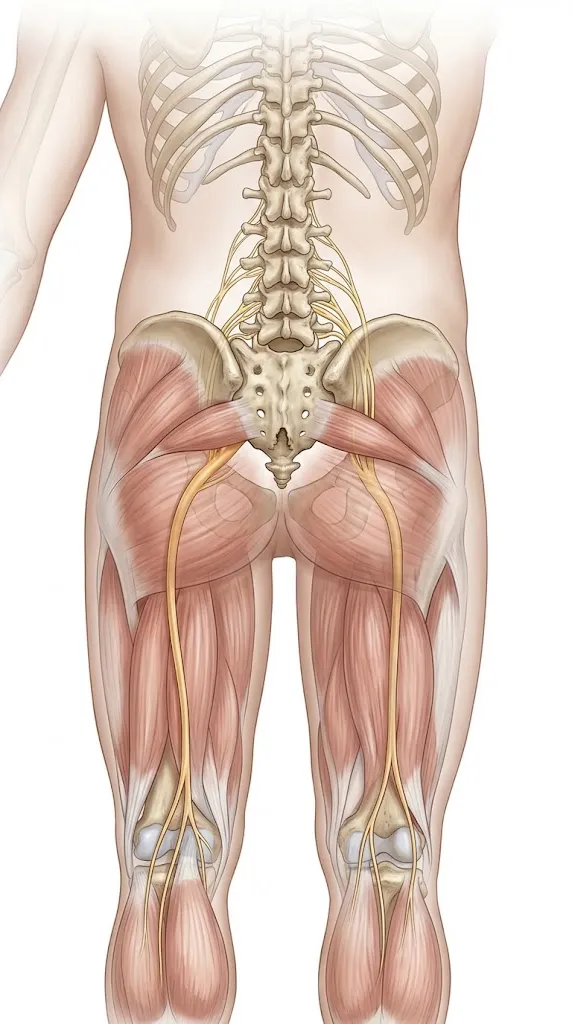
The sciatic nerve is the body’s largest nerve. It forms from nerve roots in the lower spine, travels through the buttock, and extends down each leg through its branches. These nerves help control certain leg muscles and carry sensory information.
When a nerve root becomes irritated, pain may travel from the lower back into the thigh, calf, or foot. This is known as radiating pain.
Not all lower back pain involves nerve irritation. For example, a strained back muscle typically causes more localised discomfort, whereas nerve-related pain often travels down a leg.
For a broader explanation of spinal discomfort, the guide to dorsalgia and its causes explains how different structures in the back can produce pain.
Sciatica Symptoms: Common Signs to Recognise
Sciatica symptoms vary depending on which nerves are affected and how much irritation occurs.
The most recognisable symptom is pain that travels along one leg, sometimes extending below the knee into the foot.
Other possible symptoms include:
- Shooting pain: Sudden, sharp, or electric-like sensations extending through the buttock and leg.
- Burning discomfort: A persistent burning sensation along part of the affected leg.
- Pins and needles: Tingling in the thigh, calf, foot, or toes.
- Numbness: Reduced sensation in certain areas of the leg.
- Muscle weakness: Difficulty lifting the foot, moving the toes, or controlling certain leg movements.
- Movement-related pain: Discomfort that increases when bending, sitting, coughing, or sneezing.
Some people experience intense leg pain with very little back discomfort. Others have both.
How Is Sciatica Different From Ordinary Back Pain?
| Feature | Sciatica | Typical muscular back pain |
|---|---|---|
| Pain location | Often buttock and one leg | Usually concentrated in the back |
| Pain sensation | Shooting, burning, electric-like | Aching, stiffness, soreness |
| Tingling or numbness | May occur | Uncommon |
| Muscle weakness | Possible when nerves are affected | Not usually a neurological feature |
| Common triggers | Sitting, bending, coughing | Certain movements or muscle loading |
These differences can help describe symptoms, but they cannot confirm a diagnosis.
Other conditions can also produce radiating discomfort. Understanding the difference between musculoskeletal pain and neuropathic pain may help explain why nerve-related symptoms sometimes feel different from ordinary muscle soreness.
Sciatica Causes: Why Does Sciatic Nerve Pain Develop?
Several spinal conditions can irritate or compress the nerve roots responsible for sciatic pain.
1. Herniated Disc
A herniated or slipped disc is one of the most common causes.
Intervertebral discs act as cushions between the bones of the spine. Each contains a softer inner material surrounded by a tougher outer layer.
If part of a disc protrudes and irritates a nearby nerve root, pain may travel into the buttock or leg.
However, a herniated disc seen on a scan does not automatically explain someone’s symptoms. Some people have disc changes without experiencing pain.
2. Spinal Stenosis
Spinal stenosis occurs when spaces within the spine narrow and place pressure on nearby nerves.
It becomes more common with age-related spinal changes.
People with lumbar spinal stenosis may notice leg discomfort while standing or walking. Sitting down or leaning forward can sometimes reduce symptoms.
3. Spondylolisthesis
Spondylolisthesis occurs when one vertebra slips forward relative to another.
Depending on its position and severity, the movement may narrow the space available for nerve roots.
It does not always cause pain, but some people develop lower back discomfort or radiating leg symptoms.
4. Piriformis-Related Irritation
The piriformis is a muscle located deep within the buttock.
In certain cases, structures around this muscle may irritate the sciatic nerve, producing symptoms similar to those caused by spinal nerve compression.
However, buttock pain alone is not enough to diagnose piriformis syndrome.
Other Contributing Factors
Factors associated with developing back and nerve problems include increasing age, smoking, repeated heavy lifting, certain occupational activities, and prolonged inactivity.
Less commonly, spinal injuries, infections, or tumours can affect nerve structures.
Identifying the underlying cause matters because different problems may respond to different treatments.
How Is Sciatica Diagnosed?
A healthcare professional usually begins by asking about your symptoms and examining your back and legs.
They may want to know when the pain started, where it travels, whether certain movements aggravate it, and whether you have experienced numbness or weakness.
The physical examination may involve checking muscle strength, reflexes, sensation, and walking ability.
A straight-leg raise test may also be performed. During this examination, the clinician carefully lifts your leg while you lie on your back to assess whether the movement reproduces familiar nerve-related symptoms.
Do You Need an MRI?
Not everyone needs imaging.
An MRI can show discs, nerve roots, and other soft tissues, but it is not routinely recommended when symptoms are uncomplicated and improving.
Imaging may be considered when symptoms are persistent, severe, or associated with significant neurological problems, particularly if the results could change treatment.
The NICE guidelines for lower back pain and sciatica recommend against routine imaging in non-specialist settings.
Sciatica Stretches: Gentle Movements That May Help
Gentle sciatica stretches can improve mobility and reduce stiffness for some people. However, stretching does not automatically release a compressed nerve, and movements that help one person may aggravate another person’s symptoms.
Start slowly, stay within a comfortable range, and avoid forcing any position.
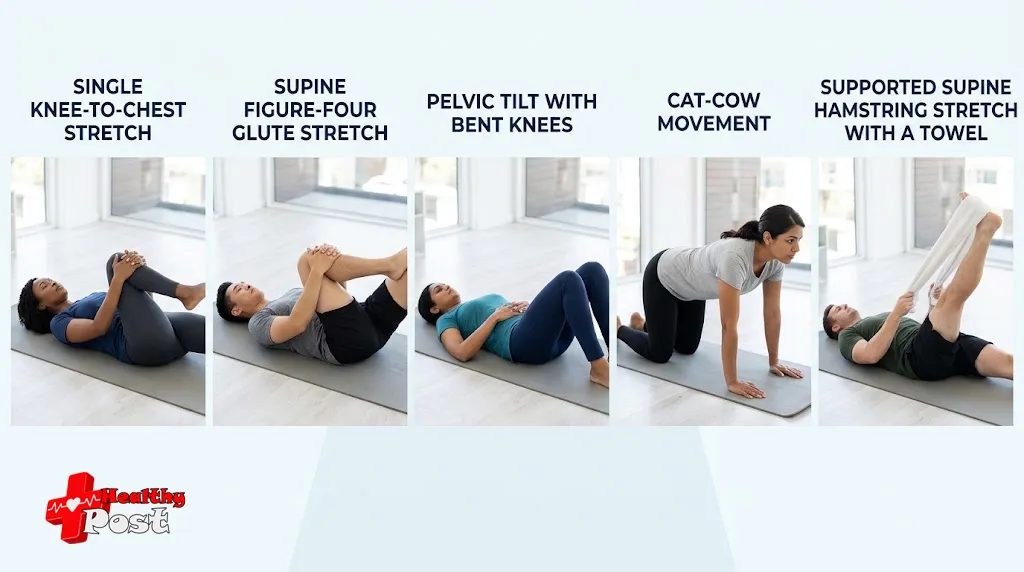
1. Knee-to-Chest Stretch
Lie on your back with both knees bent and your feet resting on the floor.
Slowly bring one knee towards your chest using your hands for support. Move only as far as comfortable, then return to the starting position.
This movement may help relieve lower back stiffness, although some people find that bending their spine increases leg pain.
2. Gentle Gluteal Stretch
Lie on your back with your knees bent.
Place one ankle over the opposite thigh, creating a figure-four position. If comfortable, gently bring the supporting thigh towards your body.
You should feel a mild stretch around your buttock rather than sharp pain running down your leg.
3. Pelvic Tilts
Lie on your back with your knees bent.
Gently tighten your abdominal muscles and flatten your lower back slightly against the floor. Relax and return to your natural position.
Keep the movement controlled without holding your breath.
4. Cat-Cow Mobility Exercise
Start on your hands and knees.
Slowly round your back upwards, then gently move in the opposite direction. Avoid pushing into either position.
The purpose is comfortable spinal movement rather than achieving the largest possible stretch.
5. Gentle Hamstring Stretch
Lie on your back and raise one leg with a towel or strap for support.
Keep the knee slightly bent if needed. Gently adjust the position until you feel a mild stretch behind the thigh.
Do not force the knee straight or pull the toes towards you if this increases tingling or radiating pain.
Safety reminder: Stop any exercise that increases pain travelling down your leg, causes new numbness, or worsens weakness. If you have significant neurological symptoms or a recent injury, seek clinical advice before exercising.
The NHS also provides a physiotherapist-led exercise guide for sciatica, with video guidance reviewed in March 2026.
Sciatica Exercises at Home: Building a Safe Routine
Sciatica exercises at home should focus on comfortable movement, gradually increasing activity, and improving everyday function.
A difficult workout is not necessarily a better workout. During a painful episode, a short walk may be more manageable than a demanding strengthening session.
Start With Short Walks
Walking encourages gentle movement without requiring specialised equipment.
You might begin by walking around your home or along a short, level route.
Choose a distance that feels manageable, and increase it gradually as symptoms permit. If walking consistently worsens leg pain, discuss alternatives with a physiotherapist.
Add Gentle Mobility Exercises
Pelvic tilts and comfortable spinal movements can help maintain flexibility.
Try a small amount of movement first and observe how you feel during and after the activity.
If a movement repeatedly aggravates symptoms, stop rather than pushing through.
Gradually Build Strength
As your symptoms improve, strengthening exercises for the abdomen, hips, and back may help support normal movement.
A physiotherapist can recommend appropriate exercises and progression based on your abilities and the likely source of pain.
For general spinal mobility ideas, HealthyPost also covers exercises for dorsalgia. These are broader back-care exercises, not a substitute for an individualised sciatica programme.
Make Movement Part of Your Day
If you work at a desk, try changing position regularly instead of sitting for several uninterrupted hours.
Standing briefly, taking a short walk, or alternating tasks may make the working day more comfortable.
There is no universal number of stretches, repetitions, or minutes of walking that suits everyone. The appropriate amount depends on symptoms, fitness, and your response to activity.
Sciatica Treatments: Medical and Non-Medical Options
The most appropriate sciatica treatments depend on the underlying cause, symptom severity, duration, and how much pain affects daily life.
Many people improve with conservative care, meaning treatment that does not involve surgery.
Conservative Treatments and Self-Care
Staying active: Continuing comfortable daily activities is generally preferable to prolonged bed rest. Temporarily reduce movements that aggravate symptoms, then gradually resume them.
Heat or cold therapy: A comfortably warm pack may help with muscular discomfort, while some people prefer a wrapped cold pack. Protect your skin and avoid applying heat to areas with reduced sensation.
Physiotherapy: A physiotherapist can assess how you move, identify aggravating activities, and recommend an appropriate rehabilitation programme. Manual therapy may sometimes be used alongside exercise.
Activity adjustments: Changing your sitting position, reducing repetitive lifting during a painful flare, and pacing physical tasks can help you remain active without unnecessarily aggravating symptoms.
Medicines for Sciatic Nerve Pain Relief
Medication does not work equally well for every person with nerve-related pain.
Non-steroidal anti-inflammatory drugs (NSAIDs), such as ibuprofen, may be considered in some situations, but their benefit specifically for sciatica is uncertain. They can also cause stomach bleeding, kidney problems, and cardiovascular complications.
NICE recommends against routinely offering gabapentinoids, other antiepileptic medicines, oral corticosteroids, or benzodiazepines for sciatica because of limited overall benefit and potential harm. Opioids are not recommended for chronic sciatica.
Speak with a pharmacist or healthcare professional before using pain medication, particularly if you have other medical conditions, are pregnant, or take regular medicines. Do not stop prescribed medication suddenly without appropriate advice.
Injections and Surgery
Specialist treatments may be considered when severe pain persists despite appropriate conservative care.
For selected people with acute, severe symptoms, an epidural injection containing a local anaesthetic and corticosteroid may be considered. Any benefit may be temporary.
Surgical decompression aims to relieve pressure on affected nerve roots. It may be appropriate when imaging findings match the symptoms and non-surgical treatments have not provided sufficient improvement.
Surgery carries risks and is not necessary for most people. Treatment decisions should follow an individual assessment and discussion of expected benefits and possible complications.
How to Treat Sciatic Nerve Pain at Home
People looking for how to treat sciatic nerve pain often want practical relief that fits around their normal routine.
Although home measures cannot resolve every underlying cause, several adjustments may reduce discomfort.
- Change positions regularly. Avoid remaining in one sitting or standing position if it aggravates your pain.
- Take gentle walks. Stay within a manageable level of activity rather than remaining in bed for long periods.
- Use heat or cold carefully. Choose whichever feels more comfortable and protect your skin.
- Choose suitable movements. Avoid aggressive stretching, especially if it makes pain travel farther down your leg.
- Adjust your sleeping position. A pillow between the knees when side sleeping, or underneath the knees when lying on your back, may improve comfort.
- Temporarily reduce aggravating tasks. Heavy lifting and repeated bending may need modification during a painful flare.
- Seek assessment when necessary. Pain that persists, worsens, or restricts normal activities should not be managed indefinitely with home remedies.
For instance, someone who develops leg pain after prolonged desk work may feel more comfortable alternating sitting with brief standing or walking breaks.
These adjustments are intended to improve comfort, not guarantee a cure.
When Is Sciatica a Medical Emergency?
Most episodes do not require emergency treatment. However, certain symptoms can indicate serious compression of nerves in the lower spine.
Seek emergency medical care immediately
Go to A&E or call 999 in the UK if you develop:
- New difficulty starting urination, inability to urinate, or unexpected loss of bladder control.
- New loss of bowel control or difficulty sensing when you need to pass stool.
- Numbness around your genitals, anus, inner thighs, or buttocks.
- Severe or worsening weakness or numbness affecting both legs.
- Sciatic pain affecting both sides, particularly with concerning neurological symptoms.
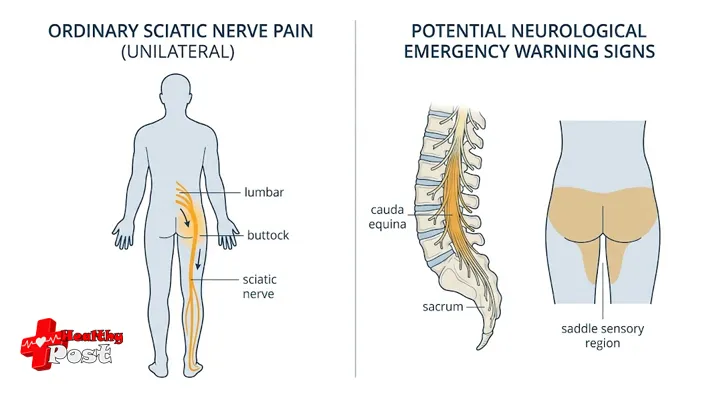
These symptoms can indicate cauda equina syndrome, a serious condition requiring urgent hospital assessment. Do not wait for exercises or painkillers to help.
The term saddle anaesthesia describes reduced sensation in the region that would touch a saddle when sitting. It is an important warning sign, particularly when accompanied by bladder or bowel changes.
For further explanation of this symptom, HealthPage provides a guide to saddle anaesthesia and its possible causes.
Prompt medical assessment is also important when back or leg pain occurs with fever, unexplained weight loss, significant trauma, a history of cancer, or progressive muscle weakness.
How Long Does Sciatica Last?
Recovery varies from person to person.
Many uncomplicated episodes improve over several weeks, although symptoms can sometimes continue for a few months or longer. Some people also experience recurring episodes.
The NHS explains that symptoms often improve within weeks to months, but recovery is not identical for everyone.
Several factors can influence recovery, including the underlying cause, the extent of nerve irritation, associated weakness, and how symptoms respond to treatment.
Pain may also fluctuate. Having a more uncomfortable day does not necessarily mean permanent damage has occurred.
However, worsening neurological symptoms require medical attention regardless of how recently the pain began.
If symptoms have not improved after a few weeks, interfere significantly with daily activities, or continue to worsen, arrange a clinical assessment.
How to Prevent Sciatica or Reduce Recurrence
There is no guaranteed way to prevent sciatic nerve pain. Disc problems and age-related spinal changes can occur even in otherwise healthy people.
Still, regular movement and sustainable habits may help maintain spinal function and reduce unnecessary physical strain.
Consider these everyday practices:
- Exercise regularly: Walking, swimming, or other manageable activities can help maintain general fitness and mobility.
- Strengthen supporting muscles: Gradual abdominal, back, and hip strengthening may improve physical function.
- Lift carefully: Keep objects close to your body and avoid sudden twisting while carrying heavy loads.
- Interrupt prolonged sitting: Stand, move, or change position throughout the day.
- Use a comfortable workstation: Adjust your desk and chair to suit your body rather than forcing a rigid posture.
- Avoid smoking: Smoking is associated with an increased risk of back problems.
- Maintain overall health: A balanced lifestyle and appropriate weight management can support musculoskeletal health.
The aim is not to maintain perfect posture throughout the day. Comfortable movement and gradually building physical capacity are more realistic long-term goals.
Frequently Asked Questions About Sciatica
Can sciatica go away on its own?
Yes. Many episodes improve without surgery. Gentle activity, suitable exercises, and symptom management may help during recovery. Persistent or worsening symptoms should be medically assessed.
Is walking good for sciatica?
Walking is often a useful low-impact activity when tolerated. Start with a manageable distance and gradually increase. If walking significantly aggravates radiating pain or weakness, seek professional advice.
Which sciatica stretches are best?
There is no single best stretch for everyone. Gentle pelvic movements, selected gluteal stretches, and comfortable spinal mobility exercises may help some people. The most appropriate exercises depend on the underlying cause and individual symptoms.
Does sitting make sciatica worse?
Sitting can aggravate symptoms in some people, particularly when certain positions increase irritation around a nerve root. Others may feel better while sitting, especially with spinal stenosis. Regular position changes may help.
Can massage help with sciatic nerve pain?
Massage may temporarily reduce associated muscle tension or discomfort. However, it does not necessarily resolve nerve compression. When appropriate, manual therapy is generally best considered as part of a broader programme that includes exercise.
When should I see a doctor?
Arrange an assessment if pain is worsening, has not improved after a few weeks, limits everyday activities, or is accompanied by numbness or weakness. New bladder or bowel problems, saddle-area numbness, or severe worsening neurological symptoms need emergency assessment.
Conclusion
Sciatica can affect much more than your lower back. Radiating leg pain, tingling, and weakness may interfere with sleep, work, and ordinary movement, but many people improve through appropriate conservative care.
Gentle activity, suitable stretches, physiotherapy, and careful symptom management can all have a role. The key is understanding that treatment should match the underlying cause and your individual symptoms. Avoid forcing exercises that worsen nerve pain, and never ignore new neurological warning signs.
If your pain is not improving or is affecting your daily life, a healthcare professional can help identify the next appropriate step.
Medical disclaimer: This article is intended for general education and does not replace personalised medical advice, diagnosis, or treatment. A qualified healthcare professional should review it before publication as medical guidance.
References
- NHS — Sciatica. Information about symptoms, self-care, recovery, treatment, and emergency warning signs. NHS Sciatica Guide.
- NICE — Low Back Pain and Sciatica in Over 16s: Assessment and Management (NG59). Clinical recommendations regarding diagnosis, imaging, exercise, medications, injections, and surgery. NICE Clinical Recommendations.
- MedlinePlus — Sciatica. US National Library of Medicine information covering nerve anatomy, causes, symptoms, and treatment. MedlinePlus Sciatica Overview.