

Written by: Dr. Mary Jacob, Registered Pharmacist, Goulburn Valley Health ↗
The information provided in the article “How Long Does Protonix Take to Work? 5 Important Facts” is for educational and informational purposes only and is not intended as a substitute for professional medical advice, diagnosis, or treatment. Always seek the advice of your physician, pharmacist, or other qualified healthcare provider with any questions you may have regarding a medical condition or before starting, stopping, or changing any medication, including Protonix (pantoprazole). Never disregard professional medical advice or delay in seeking it because of something you have read in this article.

✍️ HealthyPost Author
Dr. Mary Jacob
Clinical Pharmacist | Goulburn Valley Health (Australia)
Dr. Mary Jacob is a Registered Pharmacist with qualifications in pharmacy and clinical pharmacology. Associated with Goulburn Valley Health in Australia, her professional interests include medication safety, pharmaceutical care, antimicrobial stewardship, and patient education. Through her contributions to HealthyPost, she shares accessible information about medicines, pharmaceutical treatments, and responsible medication use to help readers better understand common medication-related topics.
Goulburn Valley Health (Official Website) | LinkedIn Profile
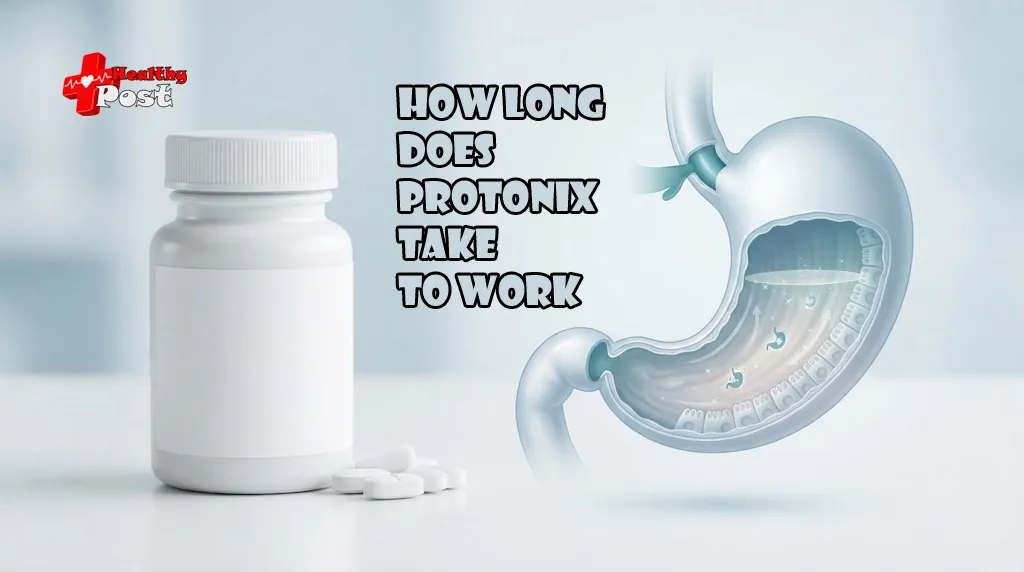
People who start pantoprazole tend to ask the same thing within a day or two: how long does Protonix take to work? The answer has three parts. Protonix, the brand name for the proton pump inhibitor pantoprazole, starts lowering stomach acid with the first dose. Most people notice some improvement in heartburn after two to three days, and the NHS says it can take up to four weeks to fully control symptoms. If acid has inflamed the esophagus, healing takes longer still.
Those are three separate milestones: less acid, fewer symptoms, and repaired tissue. Treating them as one event is why the first week can feel disappointing even when the medicine is doing what it should. This article covers each stage, when to take the tablet, how long GERD treatment may last, and what to do if relief doesn’t arrive.
What Protonix is and how it works
Protonix is a prescription medicine in the proton pump inhibitor (PPI) class. In the United States it comes as 20 mg and 40 mg delayed-release tablets and as a 40 mg granule formulation for oral suspension, and an intravenous form is used in hospitals. In the UK, pantoprazole is usually sold as Pantoloc, and lower-strength 20 mg tablets can be bought from pharmacies for short-term heartburn.
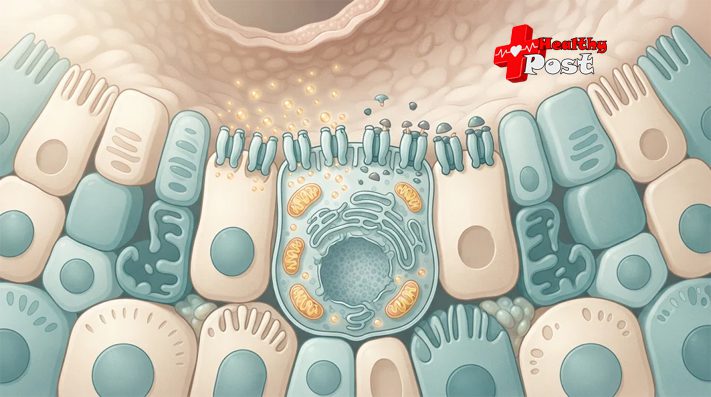
Cells in the stomach lining called parietal cells make the hydrochloric acid that digests food. The final step depends on enzymes known as proton pumps (technically H+/K+-ATPase). Pantoprazole binds to these pumps and switches them off, so the stomach produces less acid and less of it can wash back into the esophagus.
An analogy helps. An antacid is a mop: it neutralizes acid that is already there, within minutes. A PPI is closer to turning down the tap. The stomach takes time to settle, and irritated tissue takes longer. That is why Protonix is not designed as a rescue treatment for an occasional bout of heartburn.
Fact 1: Acid suppression starts with the first dose, well before you feel better
According to the Protonix prescribing information, a first 40 mg dose produced a mean 51% inhibition of stimulated acid secretion by 2.5 hours. With once-daily dosing for seven days, mean inhibition rose to 85%, and acid secretion was suppressed by more than 95% in half of the subjects. These figures come from pharmacology studies in healthy volunteers, so they show what the drug does to acid output, not how fast any one person’s symptoms will fade.
The label describes inhibition increasing with repeated daily dosing, which fits the common experience that the first day or two can feel underwhelming. An inflamed esophagus also stays sore for a while after acid exposure drops.
Pantoprazole acts for much longer than its blood levels suggest, which answers a question many people have: how long does pantoprazole last? Its half-life is only about one hour, yet the antisecretory effect persists beyond 24 hours because the drug binds durably to the pumps. That is why one dose a day is enough. In the same pharmacology data, acid secretion returned to normal within a week of the last dose.
| Stage | Typical timing | What is happening |
|---|---|---|
| Acid suppression | Begins within hours; builds over about a week | Proton pumps are blocked and acid output falls |
| Symptom relief | Often 2–3 days; varies | Heartburn and regurgitation become less frequent |
| Full symptom control | Up to 4 weeks | Symptoms settle as acid exposure stays low |
| Healing of erosive esophagitis | Up to 8 weeks, sometimes longer | The inflamed lining repairs |
Fact 2: Most people feel some improvement in two to three days
How quickly does Protonix relieve acid reflux?
The NHS pantoprazole guidance says you should start to feel better in two to three days, although it may take up to four weeks to fully control symptoms. Other medical references quote slightly different windows, so treat any figure as a typical range. Some people improve after a day, others need a week or more, and nobody should expect the first tablet to end the burning.
Several things shape the response:
- How severe the reflux is and how often it occurs
- Whether the esophageal lining is inflamed or damaged
- The prescribed dose and how consistently it is taken
- Individual differences in how the body handles the drug
The same timeline answers the question of how long pantoprazole takes to work. Pantoprazole is the generic name for the same active ingredient, so the onset of action is the same whichever brand or generic you receive.
While waiting, a pharmacist or doctor may suggest a fast-acting antacid or alginate for breakthrough symptoms. The Protonix label states that antacids do not affect absorption of the tablets, and the NHS says pantoprazole can be taken alongside an antacid such as Gaviscon. It is still worth checking against your other medicines first.
If you bought pantoprazole without a prescription, the NHS advises it can usually be taken for up to two weeks, and that you should see a doctor if symptoms haven’t improved by then.
Fact 3: Healing esophageal damage takes longer than symptom relief
How long does Protonix take to heal GERD?
GERD means reflux that recurs often enough to cause symptoms or complications. Erosive esophagitis is one such complication, with visible inflammation and erosion of the esophageal lining. Not everyone with GERD has it, and the timelines differ.
For adults with erosive esophagitis associated with GERD, the US label supports Protonix for up to eight weeks for healing and symptom relief. If the lining hasn’t healed, the prescriber may add a second eight-week course. Someone with mild, uncomplicated reflux may improve much sooner, while someone with more inflammation may need longer. Some people continue treatment to keep esophagitis from returning, although the label notes that safety and effectiveness for that purpose beyond 12 months are not established, so long-term use deserves periodic review with the prescriber.
| Treatment stage | What to expect |
|---|---|
| First days | Acid output falls; symptoms may or may not ease yet |
| First weeks | Heartburn and acid-related discomfort usually decrease |
| Up to 8 weeks | Esophageal irritation can gradually heal |
| Beyond | Some people need maintenance treatment to prevent recurrence |
Feeling better is not proof that the lining has healed. For that reason, a prescribed course should not be cut short on the strength of improved symptoms alone.
Fact 4: When is the best time to take Protonix?
The best timing depends partly on the formulation, and UK and US guidance differ slightly.
Delayed-release tablets. Swallow them whole with water. Do not crush, split, or chew them, because the coating protects the drug from stomach acid. The US label says they can be taken with or without food. Food may delay absorption by up to two hours, but the total amount absorbed doesn’t change. The NHS guidance on how and when to take pantoprazole is more specific: once a day, usually first thing in the morning, ideally an hour before a meal. A common rationale is that PPIs act on pumps that are actively making acid, so a dose before the first meal of the day tends to be favored. Both sources agree on consistency.
Oral suspension. The granules should be taken about 30 minutes before a meal, mixed only in applesauce or apple juice as the instructions describe.
Once or twice daily? Most people take one dose in the morning. If a clinician prescribes two daily doses, the NHS advises one in the morning and one in the evening.
If you miss a dose, the Protonix label says to take it as soon as you remember, unless the next dose is almost due, and never to double up. Ask your pharmacist if your prescription label and the general advice seem to conflict. The label on your own box governs.
Fact 5: A slow start isn’t always a failure, but persistent symptoms need review
If several weeks have passed with little change, a few explanations are worth considering:
- Insufficient time. Full control can take up to four weeks.
- How the medicine is taken. Crushing a tablet, taking it erratically, or mixing up the formulation can reduce benefit.
- More severe disease. Significant esophagitis may need further evaluation.
- A different cause. Not everything that feels like heartburn is acid reflux. Persistent bloating or bowel changes, for example, can reflect other digestive conditions such as small intestinal bacterial overgrowth.
- Contributing factors. Certain foods, medicines, smoking, and body weight can all keep symptoms going.
Raising the dose on your own is not the answer. The prescribing information notes that doses above 40 mg did not produce significantly higher gastric pH than 40 mg in its dose-response studies, so more tablets are not simply more relief.
Contact a healthcare professional if symptoms haven’t improved despite taking the medicine as prescribed, if heartburn worsens or keeps returning after treatment, or if you have any of the following:
- Painful or difficult swallowing
- Vomiting blood, or black, tarry stools
- Persistent vomiting
- Unexplained weight loss
Chest pain deserves particular care because it should not automatically be assumed to be heartburn. Pressure or pain with shortness of breath, sweating, nausea, or pain spreading to the arm, jaw, or shoulder can signal a heart attack, and the right response is emergency care. It helps to know heart attack symptoms well before you ever need them.
Common side effects and safety concerns
Most people take pantoprazole without serious problems. The Protonix Medication Guide lists headache, diarrhea, nausea, abdominal pain, vomiting, gas, dizziness, and joint pain as the most common side effects in adults. None of them occurs in everyone.
Less common problems are mostly tied to specific circumstances or longer treatment:
- Acute tubulointerstitial nephritis, a kidney inflammation that can occur at any point in treatment
- Persistent watery diarrhea, which can signal a Clostridioides difficile infection
- Low magnesium, reported in people who have taken it for at least three months
- Low vitamin B12 after long-term use, more than three years in the label’s wording
- Bone fractures with multiple daily doses over a year or longer
- Lupus erythematosus and rare severe skin reactions
These are not inevitable, and their likelihood depends on dose, duration, and individual health. The label’s own advice is to use the lowest dose for the shortest time needed.
Two of these deserve practical attention for anyone on a long course. Magnesium shortfalls can show up as muscle weakness, spasms, or an irregular heartbeat, and HealthPage’s overview of early signs of magnesium deficiency describes what to watch for. Separately, people on prolonged acid suppression are among those who may need to think about B12 intake, and HealthyPost’s guide to vitamin B12 supplement options explains forms and doses. Tell your prescriber about every other medicine you take. The label lists rilpivirine, an HIV medicine, as a contraindication and flags methotrexate, digoxin, and diuretics for caution.
Frequently asked questions
Does Protonix work immediately?
It starts reducing acid within hours, but symptom relief usually takes a few days. If you need quicker relief in the meantime, ask a pharmacist about an antacid or alginate that suits your other medicines.
Does a higher dose work faster?
Not reliably. In the label’s dose-response studies, 40 mg raised gastric pH more than 20 mg, but doses above 40 mg gave no further significant increase. Dose changes should come from your prescriber.
Can I take Protonix at night?
That depends on the prescription. Once-daily dosing is usually in the morning, while twice-daily regimens include an evening dose. Follow the directions on your label.
Is Protonix stronger than omeprazole?
Both are proton pump inhibitors that reduce stomach acid. Which suits a person depends on the condition, dose, other medicines, and individual response, and neither is automatically stronger for everyone.
Can I stop once my heartburn improves?
Ask your doctor first. The NHS notes pantoprazole usually doesn’t need to be tapered, but a prescribed course may be aimed at healing, not just comfort, and stopping early can let symptoms return.
Conclusion
So, how long does Protonix take to work? Acid suppression begins with the first dose, noticeable relief typically takes two to three days, full symptom control can take up to four weeks, and healing erosive esophagitis can take up to eight weeks or more. Knowing which milestone you are waiting for makes the early days easier to interpret.
A useful next step is to note when your symptoms occur and how they change over the first two weeks, then bring that to your pharmacist or doctor if progress stalls. For other explainers on how common medicines work, HealthyPost’s medicine guides are a good place to continue. This article is general information and doesn’t replace advice from a clinician who knows your history.
References
- NHS. “Pantoprazole” (Brand name: Pantoloc Control). https://www.nhs.uk/medicines/pantoprazole
- NHS. “How and when to take pantoprazole.” https://www.nhs.uk/medicines/pantoprazole/how-and-when-to-take-pantoprazole/
- Pfizer Medical. “PROTONIX® (pantoprazole sodium) 12 Clinical Pharmacology,” including the Medication Guide. https://www.pfizermedical.com/protonix/clinical-pharmacology