

Close Menu

    Subscribe to Updates

    Get the latest creative news from FooBar about art, design and business.

    What's Hot

    How to Get Rid of Post Nasal Drip Fast: Effective Relief & Remedies

    August 15, 2026

    Chance of Getting Pregnant After Vasectomy: Failure Rates & Risks

    August 11, 2026

    What Not to Do After IUD Insertion: Dos, Don’ts & Recovery, Dr. Michelle Uzor Advised

    August 10, 2026
    Facebook X (Twitter) Instagram
    • About Us
    • Contact Us
    • Our Medical Review Board & Expert Contributors
    • Cancer
    • Cardiology
    • Dental
    • General Disease
    • Gyne
    • Healthy food
    • Medicine
    • Orthopedics
    • Skin
    Button
    Home » Can kitchen fumes cause lung cancer?
    Patient Education

    Can kitchen fumes cause lung cancer?

    AdminBy AdminJuly 22, 2025Updated:May 19, 20261 Comment5 Mins Read
    Share Facebook Twitter Pinterest LinkedIn Tumblr Reddit Telegram Email
    kitchen fumes
    Share
    Facebook Twitter LinkedIn Pinterest Email

    Lung cancer ranks first in the incidence and mortality of malignant tumors in China! Smoking is the primary carcinogenic factor of lung cancer , but most women do not smoke, so many people think that women are less likely to develop lung cancer.

    In fact, lung cancer ranks second among cancers in women, second only to breast cancer. In addition to secondhand smoke, kitchen fumes are also listed as a key suspect.

    Kitchen fumes, a hidden health killer


    Non-smoking women, please take note, lung cancer is watching you! Because many people have a habit of cooking: stir-frying at high temperatures. The “sizzling” sound of the ingredients when they are put into the pot is really a treat for the ears. However, it is a torture for the lungs. There is even a saying that “cooking for an hour is like smoking half a pack of cigarettes.”

    A five-year domestic epidemiological survey on lung cancer [2] found that among the risk factors for lung cancer in non-smoking women, more than 60% of patients had a history of long-term exposure to kitchen fumes. Frequent exposure to the kitchen and frequent smoking were almost equally likely to cause lung cancer. In other words, the relationship between kitchen fume pollution and lung cancer in women is very close.

    Cooking oil will decompose and produce carcinogens when heated at high temperatures . Kitchen fumes produced by high temperatures contain mutagens and carcinogens such as benzopyrene and volatile nitrosamines. For example, benzopyrene can cause damage to chromosomes in human cells , and long-term inhalation can induce lung tissue cancer.

    Moreover, frequent contact with oil smoke will cause the smoke to adhere to the skin, affecting the normal breathing of the skin, and easily accelerating skin aging and spots . SKII, LA MER and other luxury skin care products may not be able to withstand the attack of strong oil smoke.

    It turns out that we really have been cooking with our lives! Please take good care of the person who washes his hands and cooks for you every day.

    kitchen fumes

    The key to reducing the harm of oil fume is to learn to control the oil temperature

    1. Use a pair of chopsticks to teach you how to distinguish oil temperature

    Cold oil temperature

    Between 0℃-30℃. Because the oil temperature is low, there will be no reaction when you put chopsticks in it.

    Low oil temperature

    Between 85℃-120℃. Put the chopsticks into the oil and you can see tiny bubbles appear around the chopsticks.

    Medium oil temperature (mostly used for cooking)

    Between 120℃-180℃. The bubbles around the chopsticks become dense, but there is no sound.

    ·High oil temperature

    Between 180℃-240℃. A lot of bubbles appear around the chopsticks, and there will be a crackling sound.

    If you can’t remember, there is another method: after adding oil, throw in shredded ginger and chopped green onion. When you see bubbles start to form evenly around the oil, you can add the ingredients and stir-fry.

    2. Choosing the right oil can also reduce kitchen fumes

    ① Choose high-quality, stable oil with a high smoke point, such as peanut oil, sesame oil, olive oil, etc., which are suitable for cooking methods with higher oil temperatures; while salad oil, sunflower oil, etc. have lower stability and are more suitable for low-temperature cooking such as cold dishes.

    ② Do not reuse oil. The smoke point of used oil will decrease, which means that more oil smoke will be produced when cooking.

    kitchen fumes
    kitchen fumes

    Get rid of kitchen fumes and stay away from lung cancer

    1. The range hood should be turned on early and closed late.

    Turn on the range hood before lighting the fire; keep the kitchen ventilated during cooking and do not close the doors and windows tightly; after turning off the fire, the range hood should be turned on for another 3-5 minutes to ensure that any residual exhaust gas is discharged.

    2. Choose a thick-bottomed pot.

    Because the thin bottom pan heats up quickly, it is easy to produce oil smoke. For novices who are not familiar with controlling the oil temperature, it is difficult to control.

    3. Steaming and boiling are the main methods of cooking.

    Stir-frying and frying will inevitably produce oil smoke. Relatively speaking, steaming and cold dishes produce less oil smoke.

    4. Wear a mask.

    Although wearing a mask while cooking at home may seem strange and a bit silly, it can reduce the inhalation of fumes to a certain extent.

    kitchen fumes
    kitchen fumes

    Doctor’s Tips

    In addition to the above methods, you should also remember to have regular checkups. Not only housewives/husbands and chefs who often deal with kitchen fumes, but also people at high risk of lung cancer should undergo a low-dose spiral CT scan of the chest once a year to detect and treat early.

    Attached is the high-risk group for lung cancer:1. Smoking ≥ 20 packs/year, including those who have quit smoking for less than 15 years (a pack-year is the number of packs smoked per day multiplied by the number of years of smoking);2. Passive smoking (frequent exposure to second-hand and 

    third-hand smoke );3. History of occupational exposure (exposure to asbestos, beryllium, uranium, radon, etc.);4. History of malignant tumors or family history of lung cancer;5. History of 

    chronic obstructive pulmonary disease or diffuse 

    pulmonary fibrosis .
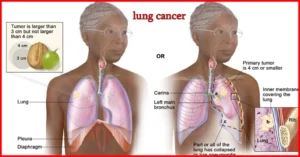
    Non-Small Cell Lung Cancer ICD-10
    Non-Small Cell Lung Cancer ICD-10: The Ultimate Guide for 2024
    Editorial Notice & Disclaimer: All material published on this platform is curated strictly for general educational and healthcare informational purposes. Content should not be interpreted as professional medical advice, official diagnosis, or a definitive treatment protocol. We strongly advise consulting a licensed physician or qualified healthcare provider regarding any specific medical concerns or health choices.

    Share. Facebook Twitter Pinterest LinkedIn Tumblr Email
    Previous Article7 Alarming Signs Linked to Abdominal Tenderness ICD 10 Code Diagnosis
    Next Article You can avoid flat feet, but you can’t avoid high arches! These few moves will teach you how to improve high arches

    Related Posts

    Cancer

    Difference between mouth ulcer and oral cancer: symptoms & precaution

    August 8, 2026
    Patient Education

    Couples Therapy: What to Expect in Your First Session (A Clinical Guide)

    July 20, 2026
    Patient Education

    How Soon Do Doctors Receive CT Scan Results in the ER? A Medical Guide

    July 14, 2026
    View 1 Comment

    1 Comment

    1. Pingback: Long-Term Survival in Small Cell Lung Cancer: Advances, Factors, and Patient Stories

    Leave A Reply Cancel Reply

    You must be logged in to post a comment.

    Recent Posts
    • How to Get Rid of Post Nasal Drip Fast: Effective Relief & Remedies
    • Chance of Getting Pregnant After Vasectomy: Failure Rates & Risks
    • What Not to Do After IUD Insertion: Dos, Don’ts & Recovery, Dr. Michelle Uzor Advised
    • Difference between mouth ulcer and oral cancer: symptoms & precaution
    • Can Cavities Cause Bad Breath? Dr. Mohanned Alghamdi Explained
    Top Posts

    What are the effects of smoking on the lungs?

    March 7, 2024

    What are the causes of headaches? How to prevent it in daily life?

    April 11, 2024

    Cardiovascular Disease, can do these 4 things, and blood vessels can stay young.

    April 18, 2024
    Latest Reviews
    Most Popular

    How to Get Rid of Post Nasal Drip Fast: Effective Relief & Remedies

    August 15, 2026

    Chance of Getting Pregnant After Vasectomy: Failure Rates & Risks

    August 11, 2026

    What Not to Do After IUD Insertion: Dos, Don’ts & Recovery, Dr. Michelle Uzor Advised

    August 10, 2026

    Difference between mouth ulcer and oral cancer: symptoms & precaution

    August 8, 2026

    Can Cavities Cause Bad Breath? Dr. Mohanned Alghamdi Explained

    August 7, 2026

    Our Medical Board

    Our health platform content is written, reviewed, and vetted by a dedicated board of licensed clinicians and specialists to guarantee clinical accuracy.

    • Dr. Rachana Bhoite
      Dr. Rachana Bhoite Nutrition Science Dr. Reddy's Labs ↗
    • Dr. Priyanka Agarwal
      Dr. Priyanka Agarwal Dermatologist Dakai Skin Clinic ↗
    • Dr. Himanshu Gupta
      Dr. Himanshu Gupta Orthopedics & Robotics Amicare Hospital ↗
    • Dr. Michelle Uzor
      Dr. Michelle Uzor OB-GYN Southern Crescent ↗
    • Dr. Kamlesh Verma
      Dr. Kamlesh Verma Surgical Oncology Max Hospital ↗
    • Dr. Mohanned Alghamdi
      Dr. Mohanned Alghamdi Esthetic & Restorative UniDents Clinic ↗
    • Dr. Neha Sood
      Dr. Neha Sood Otolaryngologist (ENT) BLK-Max / Sir Ganga Ram ↗
    • Dr. Sarita Rao
      Dr. Sarita Rao Interventional Cardiology Apollo Hospitals ↗
    Our Picks

    How to Get Rid of Post Nasal Drip Fast: Effective Relief & Remedies

    August 15, 2026

    Chance of Getting Pregnant After Vasectomy: Failure Rates & Risks

    August 11, 2026

    What Not to Do After IUD Insertion: Dos, Don’ts & Recovery, Dr. Michelle Uzor Advised

    August 10, 2026

    Difference between mouth ulcer and oral cancer: symptoms & precaution

    August 8, 2026

    Can Cavities Cause Bad Breath? Dr. Mohanned Alghamdi Explained

    August 7, 2026
    Facebook X (Twitter) Instagram Pinterest
    • About Us
    • Contact Us
    • Disclaimer
    • Our Medical Review Board & Expert Contributors
    • Terms and Conditions
    • Write for Us
    © 2026 Healthy Post. All Rights Reserved.

    Type above and press Enter to search. Press Esc to cancel.