


Medical Disclaimer
Content Authored by: Dr. Sana Lodhi, MBBS
The information provided in this article is for educational purposes only and does not constitute professional medical advice, diagnosis, or treatment. Always seek the advice of your physician or other qualified health provider with any questions you may have regarding a medical or psychological condition. Never disregard professional medical advice or delay in seeking it because of something you have read on this website.
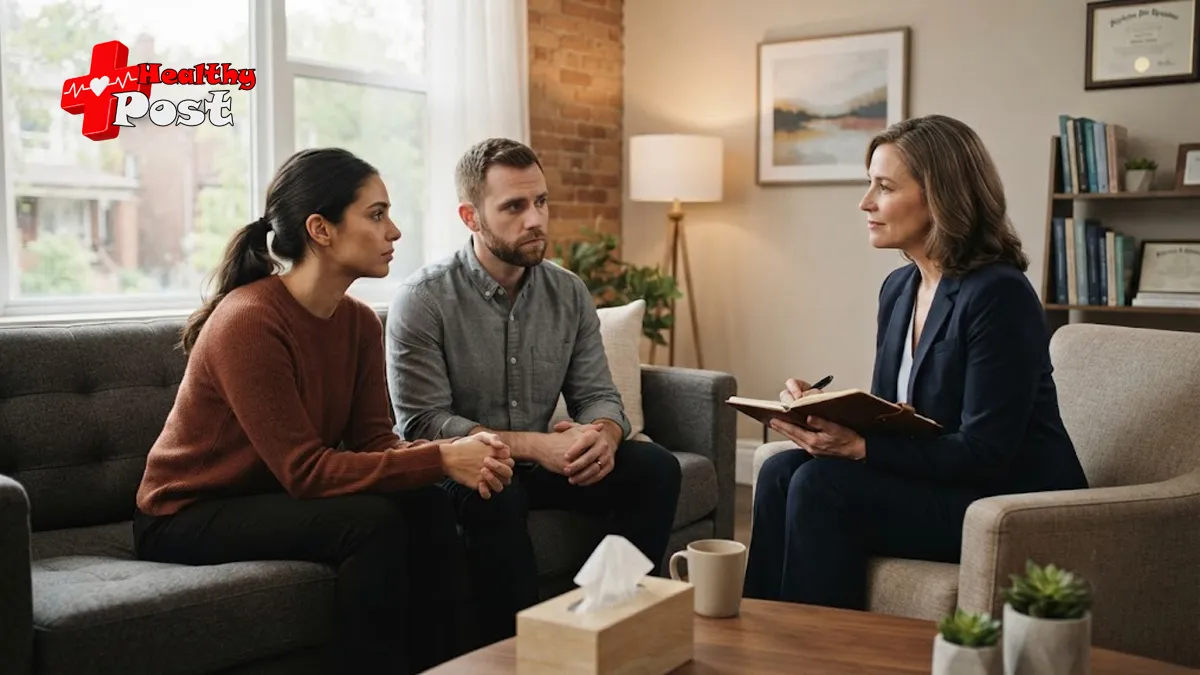
Starting couples therapy what to expect first session is one of the most common worries we hear in clinical practice. Many couples arrive tense, quiet, or braced for a verdict. That reaction is understandable. When a relationship feels strained, even booking the first appointment can stir fear, hope, shame, and relief all at once. The truth is simpler and gentler than many people expect: the first session is usually not about “fixing” everything. It is about understanding the relationship, creating emotional safety, and building a roadmap forward.
In our medical editorial work reviewing behavioral health guidance and patient-facing counseling materials, we find that knowing what to expect during first couples therapy session often lowers anxiety and helps partners participate more openly. Most therapists are not there to decide who is right. They are there to observe patterns, ask focused questions, and help both people speak and listen more clearly.
If you are wondering what to expect first couples session, this guide walks you through the process step by step. We will cover what happens in the room, questions asked in first couples counseling, how to prepare for couples therapy, and how therapists typically set goals for future sessions.
1. The First Session Is an Assessment, Not a Final Judgment
A first couples counseling appointment is often best understood as an intake session. Think of it less like a courtroom and more like a careful map-making exercise. The therapist is trying to understand the landscape of your relationship.
In most cases, the first visit includes:
- A brief review of paperwork, consent, and confidentiality
- An outline of session structure and ground rules
- A discussion of the main reasons you are seeking help
- Observation of how you communicate in real time
- Initial goal-setting for treatment
This is why what happens in couples therapy first meeting can feel surprisingly practical. There is often less dramatic confrontation than people imagine. Instead, the therapist listens for themes: recurring arguments, emotional distance, parenting conflict, stress around money, intimacy concerns, or the impact of an affair or breach of trust.
Most evidence-informed approaches, including methods discussed in clinical literature indexed on PubMed, emphasize assessment first. That matters. A therapist cannot offer useful interventions without first understanding the pattern underneath the conflict.
What therapists are noticing early on
Even when only one person is speaking, the therapist is often observing both partners. They may notice:
- Who interrupts and who withdraws
- Whether criticism escalates quickly
- How each partner responds to pain or defensiveness
- Whether there are signs of emotional or physical safety concerns
- How stress from work, parenting, illness, or family affects the relationship
A simple example: one partner says, “You never listen.” The other immediately replies, “That’s not true. You always exaggerate.” A therapist is not only hearing the words. They are seeing a cycle of protest and defense.
That cycle, not just the topic, often becomes the focus of treatment.
2. Ground Rules and Confidentiality Come First
One of the most important parts of a couples counseling initial consultation is the therapist’s explanation of boundaries. This may feel formal, but it is meant to make the work safer and clearer.
You can usually expect a discussion of:
- Session length and frequency
- Fees and cancellation policies
- Confidentiality and its limits
- Emergency procedures
- Whether the therapist will ever meet with each partner individually
Confidentiality is important, but it is not unlimited. In many regions, therapists must act if there is risk of harm, abuse, or other legally reportable concerns. Standards vary by location and license type, so your clinician should explain the rules that apply in your area. Trusted organizations such as the NHS and professional counseling bodies also describe confidentiality as a core part of therapy.
Why ground rules matter
Ground rules may include:
- No yelling over each other
- No insults or name-calling
- No threats
- No leaving the room abruptly unless needed for safety or regulation
- Speaking from personal experience rather than making global accusations
These rules are not about controlling the couple. They are about slowing down destructive patterns so something more useful can happen.
In our clinical reviews, couples often relax once they realize the therapist will actively manage the room. They do not have to carry the conversation alone.

3. You Will Likely Be Asked for Your Relationship Story
One of the clearest answers to what to talk about in couples therapy first session is this: your shared history matters.
Therapists often ask about:
- How you met
- What drew you together
- Key milestones such as moving in, marriage, or children
- Major stressors, losses, or life transitions
- When things began to feel different
- What each of you still values in the relationship
This part can feel emotional. For some couples, telling the early story brings warmth back into the room. For others, it highlights how much has changed. Both responses are normal.
A therapist may also ask about your individual backgrounds. Family patterns, earlier attachment wounds, trauma history, cultural values, and past relationships may all shape how you relate today. We sometimes describe this clinically as the “history each person brings into the bond.” Patients often describe it more simply: baggage. Either way, it matters.
A practical example
One partner grew up in a home where conflict was loud and constant. The other grew up in a family where emotions were never discussed. In adulthood, one pursues hard during conflict. The other shuts down. Neither response appears out of nowhere.
That is why questions asked in first couples counseling often reach beyond the current argument. The therapist is looking for context, not ammunition.
4. Common Questions Asked in First Couples Counseling
If you are nervous, it helps to know the questions are usually straightforward. You do not need polished answers. Honest answers are more useful.
Here are common questions asked in first couples counseling:
Questions about the presenting problem
- What brought you here now?
- Was there a specific event, or has this been building over time?
- What worries you most about the relationship right now?
Questions about strengths
- What is still working between you?
- When do you feel most connected?
- What do you each appreciate about the other person?
Questions about conflict
- How do arguments usually begin?
- What happens when one of you feels hurt?
- How do you repair after conflict, if at all?
Questions about goals
- What would improvement look like in three months?
- Are you hoping to rebuild trust, improve communication, decide about the future, or all three?
- What would make therapy feel worthwhile?
Questions about prior support
- Have either of you had therapy before?
- Have you tried books, workshops, clergy support, or self-help tools?
- What helped, and what did not?
The therapist may also screen for depression, anxiety, substance use, trauma exposure, or safety concerns. That is not a sign they think your relationship is “broken.” Mental health and relationship stress often affect each other.
5. How to Prepare for Couples Therapy Without Over-Rehearsing
People often search for how to prepare for couples therapy because they want to “do it right.” That instinct makes sense, but preparation does not mean scripting every sentence. In fact, over-preparing can make the session feel stiff or defensive.
A better goal is thoughtful readiness.
Before the session, consider these steps
- Reflect on your own goals
- Write down two or three key concerns
- Think about what is going well, not only what is failing
- Arrive on time and avoid rushing
- Skip alcohol or recreational drugs beforehand
- Plan a little decompression time after the appointment
If you and your partner talk beforehand, keep it brief. Focus on intention, not strategy. For example: “I want us to be honest and respectful” is helpful. “Let’s make sure the therapist understands your part in this” is not.
What not to do
- Do not treat the therapist like a referee
- Do not collect a list of your partner’s flaws as evidence
- Do not expect one session to resolve long-standing pain
- Do not hide major information that directly affects treatment
For couples also exploring other forms of rehabilitation or supportive care, it can be useful to compare preparation styles. The mindset is similar to learning about What is pelvic floor physical therapy or asking Does your child need occupational therapy: clarity helps, but meaningful care still depends on honest assessment and follow-through.
6. What the Therapist Is Actually Trying to Understand
To many couples, the session may seem like a long conversation. Clinically, however, the therapist is gathering several kinds of information at once.
Here is a simple breakdown:
| Area the Therapist Assesses | What They May Ask or Observe | Why It Matters |
|---|---|---|
| Presenting issue | “Why now?” “What changed?” | Identifies the main source of distress |
| Communication pattern | Interruptions, shutdowns, criticism, defensiveness | Reveals the cycle driving conflict |
| Relationship strengths | Shared values, affection, commitment | Helps build on existing resilience |
| Emotional safety | Fear, intimidation, volatility | Guides safety planning and treatment fit |
| Personal history | Family patterns, trauma, prior therapy | Adds context to reactions and attachment |
| Goals for therapy | Repair, clarity, conflict reduction, intimacy | Shapes the treatment plan |
This is why what to expect during first couples therapy session often includes more listening than advice. Good assessment is active care.
Therapists may also be deciding whether couples therapy is the right starting point. In some cases, one or both partners may benefit from individual therapy alongside couples work, especially when severe trauma symptoms, active addiction, or untreated mental health conditions are present.
The same principle shows up across health content. Someone comparing options like Excimer Laser Therapy or even wellness-focused topics such as what is condish healthy hair therapy still needs the right intervention matched to the right problem. Relationship care is no different.
7. Goal-Setting Usually Begins Before the Session Ends
Toward the end of the first meeting, many therapists begin shaping goals with you. These goals are often practical and measurable.
Examples include:
- Reduce interrupting during conflict
- Learn a pause-and-repair strategy after arguments
- Rebuild trust after a betrayal
- Improve co-parenting communication
- Increase emotional check-ins during stressful weeks
- Reconnect physically and emotionally
This part matters because distressed couples often speak in global terms: “Everything is bad.” “We are broken.” “We cannot talk at all.” Therapy works better when pain is translated into specific targets.
A stronger goal sounds like this:
- “We want to have one hard conversation a week without yelling.”
- “We want to understand why small disagreements become major fights.”
- “We want to decide whether trust can be rebuilt, and what that would require.”
This is often the most reassuring part of what to expect first couples session. You leave with a framework, even if you do not leave with total relief.
8. What the First Session Usually Does Not Do
Managing expectations can prevent disappointment. The first session usually does not:
- Solve every conflict
- Determine who is right
- Guarantee the relationship will stay together
- Force immediate forgiveness
- Produce a quick diagnosis of the relationship
Instead, it opens a process.
Most studies and clinical guidelines agree that progress in relationship therapy depends on factors such as engagement, honesty, emotional safety, treatment fit, and consistency over time. The first session sets the foundation. It is important, but it is still only the beginning.
9. If You Feel Emotional Afterward, That Is Normal
After a first appointment, couples may feel:
- Relieved
- Drained
- Hopeful
- Exposed
- Skeptical
- More tender toward each other
- Temporarily stirred up
All of these responses can happen after a meaningful conversation. If difficult material surfaced, try not to process everything in the car on the way home. Give it some space. Eat. Walk. Rest. Then return to the discussion later if needed.
This is especially important when preparing for marriage counseling session or therapy after a major rupture. Emotional pacing matters. Too much processing too fast can reignite conflict.
FAQs
1. What should we bring to the first couples therapy session?
Usually just any intake forms, insurance information if relevant, and a willingness to be honest. A short list of concerns can help, but you do not need a full script.
2. What if my partner and I want different things from therapy?
That is common. One partner may want repair, while the other wants clarity about whether the relationship can continue. A trained therapist can work with differing goals at the start.
3. How do we know how to prepare for couples therapy?
Keep it simple. Reflect on your goals, arrive regulated if possible, and avoid turning the session into a debate brief against your partner.
4. Are there standard questions asked in first couples counseling?
Yes. Most therapists ask why you came now, how conflict usually unfolds, what strengths remain, and what improvement would look like. They may also ask about safety, trauma, and previous therapy.
5. What if we argue during the appointment?
That can happen. In fact, seeing conflict unfold in real time may help the therapist identify the pattern more clearly. The therapist should help slow the exchange and keep it safe.
6. Is the first session different from other therapy fields?
The structure is similar in some ways: intake, assessment, goals, and planning. Whether someone is learning about Does your child need occupational therapy or relationship care, the first meeting is usually about understanding needs before starting targeted treatment.
Conclusion
If you are searching for couples therapy what to expect first session, the most important thing to know is this: the first appointment is a starting point, not a test you need to pass. It is a structured, supportive conversation designed to understand your relationship, identify patterns, and set practical goals. You may discuss history, conflict, strengths, trust, and what each of you hopes can change. You may also leave feeling more seen than solved, and that is often a meaningful first step.
In our clinical editorial experience, couples do best when they enter the room with openness, realistic expectations, and a willingness to speak honestly without turning the session into a verdict. If you have been wondering what to expect during first couples therapy session, let that knowledge reduce some of the fear. Preparation helps. Perfection does not.
For many couples, this first meeting becomes the moment the relationship stops spinning in circles and starts moving, carefully, toward clarity.