


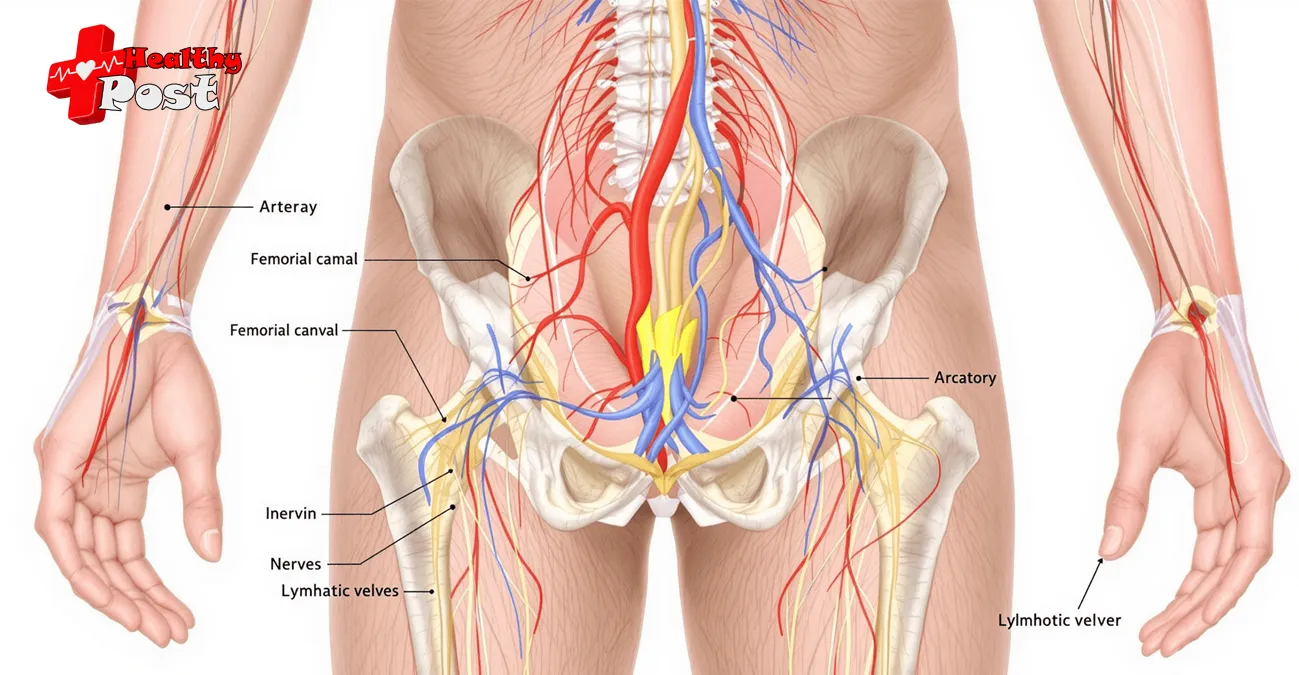
The femoral canal is an important passageway in your body that needs careful attention. This small tunnel-like structure sits in your upper thigh, near where your leg meets your hip.
Think of the femoral canal as a protected highway for important blood vessels and nerves. It carries:
- The femoral artery (main blood supply to your leg)
- The femoral vein (returns blood from your leg)
- Key nerves that control leg movement
- Lymphatic vessels that help fight infection
This tiny space might seem insignificant, but it’s one of your body’s most crucial areas. Problems in the femoral canal can quickly become dangerous medical emergencies.
Five dangerous femoral canal conditions require immediate medical care:
- Femoral hernias
- Strangulated tissue
- Blood vessel compression
- Nerve entrapment
- Infections
These conditions can cause severe pain, limit movement, or cut off blood flow to your leg. Some might even threaten your life without quick treatment.
The good news? Most femoral canal problems can be fixed when caught early. Knowing the warning signs helps you spot trouble before it becomes serious.
Learn more about femoral canal anatomy
1. Femoral Hernia
A femoral hernia happens when body tissue pushes through a weak spot in your abdominal wall. This creates a painful bulge near your upper thigh or groin area.
Common causes of femoral hernia include:
- Lifting heavy objects
- Pregnancy and childbirth
- Chronic coughing
- Straining during bowel movements
- Being overweight
Women aged 50 and above face a higher risk of developing femoral hernias. The wider shape of the female pelvis creates natural weak points in the lower abdominal wall.
Key warning signs to watch for:
- A small, hard lump near the groin or thigh
- Pain when bending or lifting
- Discomfort during physical activity
- Nausea or vomiting
- Sudden sharp pain in the affected area
The size of a femoral hernia can change throughout the day. It might appear bigger when standing up and smaller when lying down.
Risk factors specific to older women:
- Loss of muscle tone with age
- Weakened connective tissues
- Multiple pregnancies
- Menopause-related changes
- Family history of hernias
A femoral hernia needs medical attention right away. Unlike other types of hernias, femoral hernias have a high risk of getting trapped or strangulated.
Signs that need immediate medical care:
- The bulge turns dark or purple
- Severe pain in the groin area
- Fever develops
- Unable to push the hernia back in
- Constant nausea or vomiting
2. Inguinal Hernia vs Femoral Hernia
An inguinal hernia happens when tissue pushes through a weak spot in your groin muscles. This creates a bulge in your groin area that might hurt when you bend over, cough, or lift heavy things.
Let’s look at the key differences between these two types of hernias:
Location
- Inguinal hernia: Appears above and along the groin crease
- Femoral hernia: Shows up below the groin crease, in the upper thigh
Who Gets Them
- Inguinal hernia: Most common in men (9 out of 10 cases)
- Femoral hernia: Affects women more often, especially those over 50
Size and Feel
- Inguinal hernia: Usually larger and more noticeable
- Femoral hernia: Tends to be smaller and harder to spot
Risk Level
- Inguinal hernia: Less likely to cause serious problems
- Femoral hernia: Higher risk of dangerous complications
Common Causes
- Inguinal hernia:
- Heavy lifting
- Chronic coughing
- Pregnancy
- Being overweight
- Femoral hernia:
- Childbirth
- Chronic constipation
- Weak abdominal walls
- Pelvic floor issues
Both types share some symptoms:
- Pain or discomfort in the groin
- A visible bulge that gets worse with activity
- Pressure in the groin area
- Burning or aching sensations
Treatment options differ based on the hernia type and size. Inguinal hernias might not need immediate surgery if they’re small and don’t cause pain. Femoral hernias need quick medical attention due to their higher risk of complications.
3. Strangulated Hernia
A strangulated hernia is one of the most dangerous types of hernias affecting the femoral canal. This life-threatening condition occurs when the herniated tissue gets trapped and loses its blood supply.
Key Signs of a Strangulated Hernia:
- Sudden, intense pain in the hernia area
- Dark red or purple bulge
- Fever and rapid heart rate
- Nausea and vomiting
- Hard, tender lump that can’t be pushed back
The process of strangulation begins when herniated tissue gets squeezed through a tight opening in the femoral canal. This tight squeeze acts like a tourniquet around the tissue’s blood vessels.
Without blood flow, the trapped tissue starts to die within hours. The dead tissue can release toxins into your bloodstream, leading to sepsis – a severe body-wide infection.
Time Matters in Strangulated Hernias
The window for successful treatment becomes smaller with each passing hour. Doctors need to restore blood flow to the affected tissue through emergency surgery.
During surgery, doctors:
- Cut through the constricting tissue
- Check the damaged area
- Remove any dead tissue
- Repair the hernia defect
The risk of tissue death makes strangulated hernias different from regular hernias. Regular hernias might cause discomfort but don’t threaten the blood supply to your tissues.
Risk Factors That Increase Strangulation:
- Small hernia openings
- Age over 60 years
- Chronic cough
- Heavy lifting
- Pregnancy
- Obesity
Strangulated hernias need immediate medical care. Any delay can lead to gangrene, bowel perforation, or severe infection. The condition won’t improve on its own – it requires surgical intervention.
4. Bowel Obstruction Caused by Hernias
Bowel obstruction due to hernias creates a dangerous blockage in your intestines. This blockage stops food and fluids from moving through your digestive system.
A hernia can trap part of your intestine in the femoral canal, leading to:
- Complete blockage of intestinal contents
- Reduced blood flow to the trapped section
- Swelling of the affected bowel segment
- Build-up of intestinal pressure
Warning Signs of Bowel Obstruction
Your body sends clear signals when a hernia causes bowel obstruction:
- Severe abdominal pain that comes in waves
- Nausea and vomiting – often with a greenish color
- Bloating and swelling of your belly
- Inability to pass gas or have bowel movements
- Loud gurgling sounds from your stomach
- Loss of appetite
Immediate Medical Care
Bowel obstruction requires emergency treatment. The trapped intestine can:
- Lose its blood supply
- Begin to die within hours
- Lead to serious infection
- Cause permanent damage
- Result in life-threatening complications
Risk Factors
Some people face higher chances of developing bowel obstruction from hernias:
- Those with previous abdominal surgeries
- People who ignore small hernias
- Individuals who delay hernia treatment
- Elderly patients
- People who lift heavy objects regularly
Doctors use special imaging tests to check for bowel obstruction. These include:
- CT scans
- X-rays
- Ultrasound
- MRI scans
Treatment often requires surgery to fix both the hernia and the bowel obstruction. Quick action helps prevent serious complications.
5. Post-Surgical Complications After Hernia Repair Surgeries
Surgical risks after hernia repair surgeries need careful attention during recovery. Understanding these risks helps patients make informed decisions about their treatment.
Common Post-Surgery Complications:
- Infection at the surgical site: Look out for redness and warmth around the incision, fever above 101°F (38.3°C), pus or unusual drainage, and increasing pain at the surgery site.
- Bleeding issues: Watch for bruising beyond the surgical area, blood collecting under the skin, and excessive swelling at the surgery site.
- Nerve damage: Be aware of numbness in the groin or thigh area, burning sensations near the incision, and sharp, shooting pains.
- Urinary problems: Pay attention to difficulty urinating, burning during urination, and frequent urination.
Hernia Recurrence Risk Factors:
Prevention Steps:
- Follow post-surgery instructions strictly
- Wear prescribed compression garments
- Maintain a healthy weight
- Avoid strenuous activities for 6-8 weeks
- Keep incision site clean and dry
- Take prescribed medications as directed
Recovery Timeline:
- Week 1-2: Rest and minimal movement
- Week 3-4: Light daily activities
- Week 5-6: Gradual return to normal activities
- Week 8+: Full recovery with doctor’s approval
Studies show that mesh repairs have a lower recurrence rate (1-3%) compared to non-mesh repairs (10-15%).
The Importance of Early Diagnosis and Treatment for Femoral Canal Conditions
Early diagnosis is vital for femoral canal conditions – it can mean the difference between a simple procedure and a medical emergency. These 5 Dangerous Femoral Canal Conditions You Should Never Ignore need quick action.
Watch for these warning signs:
- A painful lump in your groin area
- Nausea or vomiting
- Severe belly pain
- Fever
- Unable to pass gas or stool
Don’t wait to get help if you notice these signs. Quick treatment can stop serious problems before they start.
“Time is tissue” – this medical saying means waiting too long can lead to permanent damage.
Your doctor has many ways to check for femoral canal problems:
- Physical exam
- Ultrasound imaging
- CT scans
- MRI tests
Most femoral canal conditions can be fixed with surgery. The success rate is high when caught early.
When to call emergency services:
- Sharp, sudden groin pain
- A hard, dark-colored lump
- High fever with groin pain
- Throwing up that won’t stop
Remember: These conditions won’t heal by themselves. A quick call to your doctor today could save you from bigger problems tomorrow.
FAQs (Frequently Asked Questions)
What is the femoral canal and why is it significant in the body?
The femoral canal is a small anatomical space located near the thigh, important because it can be associated with serious medical conditions such as hernias that require immediate attention.
What causes femoral hernias and who is most at risk?
Femoral hernias occur due to a weakness in the abdominal wall, allowing tissue to protrude through the femoral canal. Older women are particularly susceptible to this condition due to factors like age-related muscle weakening.
How do inguinal hernias differ from femoral hernias?
While both inguinal and femoral hernias involve protrusions near the groin area, inguinal hernias occur above the inguinal ligament whereas femoral hernias occur below it, within the femoral canal. Their locations and risk factors vary, making accurate diagnosis essential.
What is a strangulated hernia and why is it dangerous?
A strangulated hernia happens when the blood supply to the herniated tissue is cut off, leading to tissue death if not treated urgently. This condition requires immediate medical intervention to prevent severe complications.
How can hernias lead to bowel obstruction and what are the symptoms?
Hernias can cause bowel obstruction by trapping sections of the intestine, leading to blockage. Symptoms include severe abdominal pain, vomiting, and abdominal distension, which are potentially life-threatening and require prompt treatment.
What are common post-surgical complications after hernia repair surgeries?
Post-surgical risks after hernia repair include infection, bleeding, and the possibility of hernia recurrence. Patients can minimize these risks by following medical advice closely and seeking early treatment if symptoms reappear.
1 Comment
Pingback: 10 Critical Lung Cancer ICD-10 Facts You Must Know Today