
Clinical Review & Dermatological Safety Notice
This emergency first-aid and tracking guide analyzing toxic sap exposure and giant hogweed burns has been thoroughly reviewed and medically validated by Dr. Priyanka Agarwal (Dermatology) to ensure accurate clinical toxicology and wound-care context.
Disclaimer: The toxicological facts, blistering timelines, and treatment protocols detailed below regarding phytophotodermatitis are intended strictly for educational and general risk awareness purposes. Giant Hogweed sap causes severe photosensitivity that can lead to long-term skin damage, hyperpigmentation, or scarring. This content cannot replace professional medical diagnosis, emergency department triage, or a personalized dermatological treatment plan. Always consult a licensed physician or visit an urgent care clinic immediately if you experience severe skin blistering, intense pain, or if the toxic sap comes into contact with your eyes.

Dr. Priyanka Agarwal
Dermatologist | Dakai Skin Clinic
Dr. Priyanka Agarwal is an experienced Dermatologist dedicated to providing advanced medical and aesthetic skin care solutions. Practicing at Dakai Skin Clinic, Dr. Agarwal combines evidence-based dermatological care with a patient-centered approach, ensuring optimal skin health, advanced clinical treatments, and the highest standards of safety and diagnostic precision.
If you have ever walked along a riverbank or country path and brushed past tall plants, you might have been closer to danger than you realized. 🌿 Giant hogweed burns are not like ordinary sunburn or a mild rash. This invasive plant can cause severe skin damage, long‑lasting scars, and even blindness if its sap reaches your eyes.
Understanding how this plant harms you, and what to do within minutes of exposure, can literally protect your skin and your sight.
1. Giant Hogweed Is a Giant Cousin of Carrots – With a Dark Side
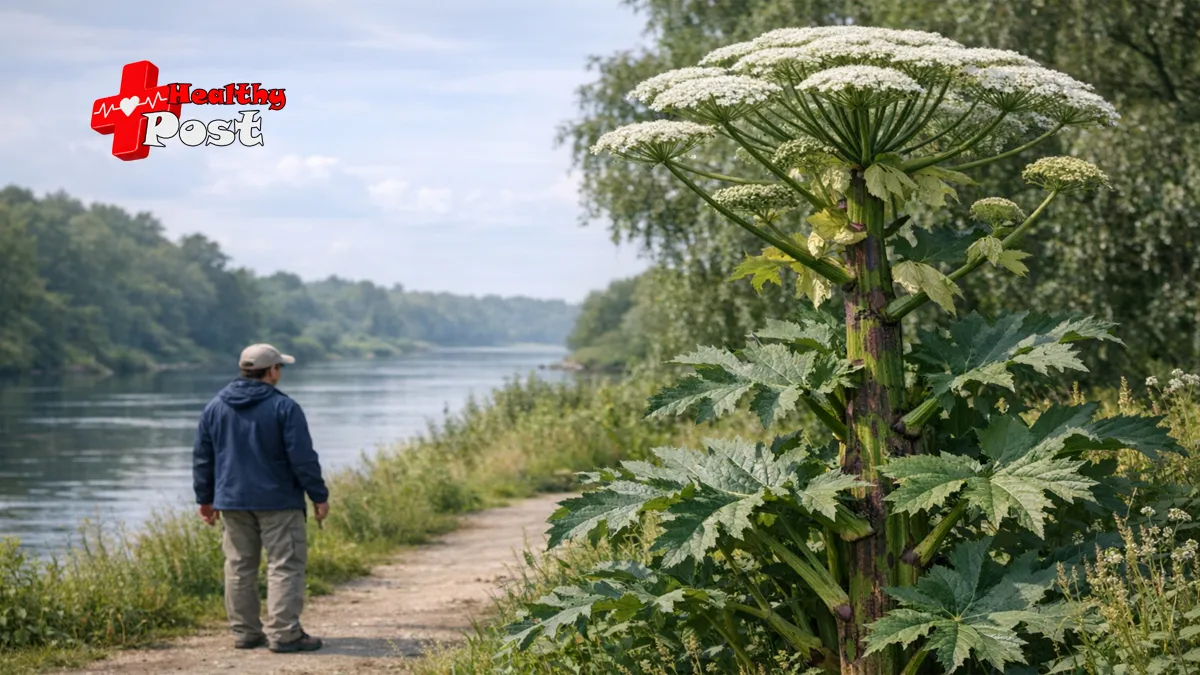
Giant hogweed (Heracleum mantegazzianum) belongs to the carrot and parsley family (Apiaceae), but it is nothing like the harmless vegetables in your kitchen.
How to recognize it:
- Height: 10–16 feet tall (3–5 meters)
- Stems: Thick, hollow, hairy, with distinctive purple blotches
- Leaves: Huge, jagged, and sharply pointed
- Flowers: Large, umbrella-shaped clusters (umbels) of many small white flowers
It often grows:
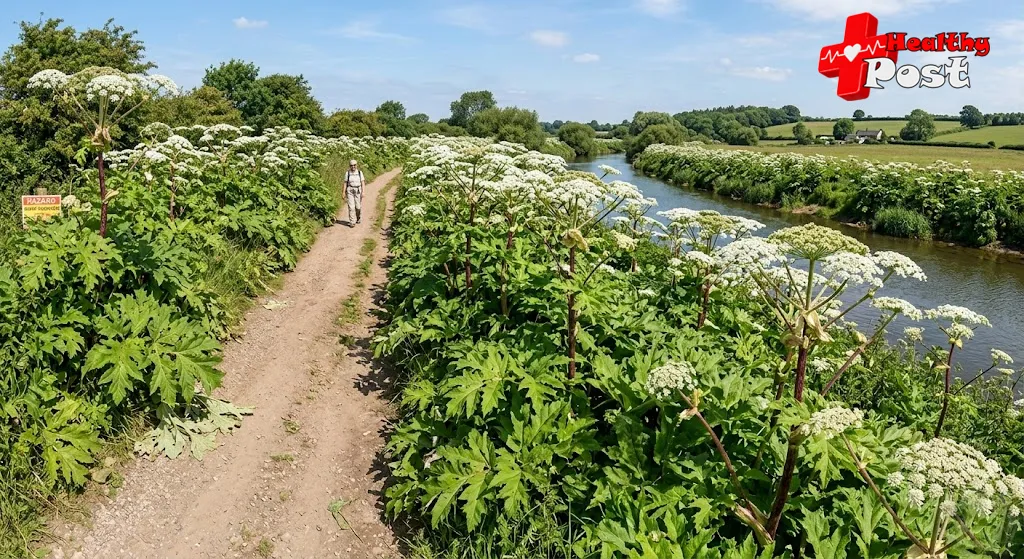
- Along rivers and streams
- On waste ground and disturbed soil
- At the edges of fields and paths
Where it is found:
- UK & Europe: Widely established along riversides, canals, and unmanaged land
- North America: In parts of the U.S. (Maine, New York, New Jersey, Virginia, Oregon, Washington, Wisconsin) and across sections of Canada
People often confuse it with:
- Cow parsnip
- Cow parsley
- Poison hemlock
But giant hogweed is usually taller, with more jagged leaves and dramatic flower heads. If you are unsure what you are seeing, treat it as dangerous and keep your distance.
2. The Sap Turns Sunlight Into a Chemical Weapon ☀️
The shocking part is not just the plant’s size but what happens when its sap touches your skin. Burns giant hogweed burns come from a chemical reaction, not heat or flames.
The sap contains chemicals called furanocoumarins. When these chemicals touch your skin and are then exposed to ultraviolet (UV) light from the sun, they trigger a condition called phytophotodermatitis.
In simple terms:
- Sap gets on your skin.
- UV light from the sun activates the sap chemicals.
- Your skin becomes extremely sensitive to light.
- A severe, sunburn‑like injury develops over hours to days.
This reaction can occur even on a cloudy day, because UV rays still reach your skin. That is why strict sun avoidance is critical after contact.
Common early symptoms include:
- Redness
- Stinging or burning sensation
- Itching or tenderness
Within 24–72 hours, this can progress to:
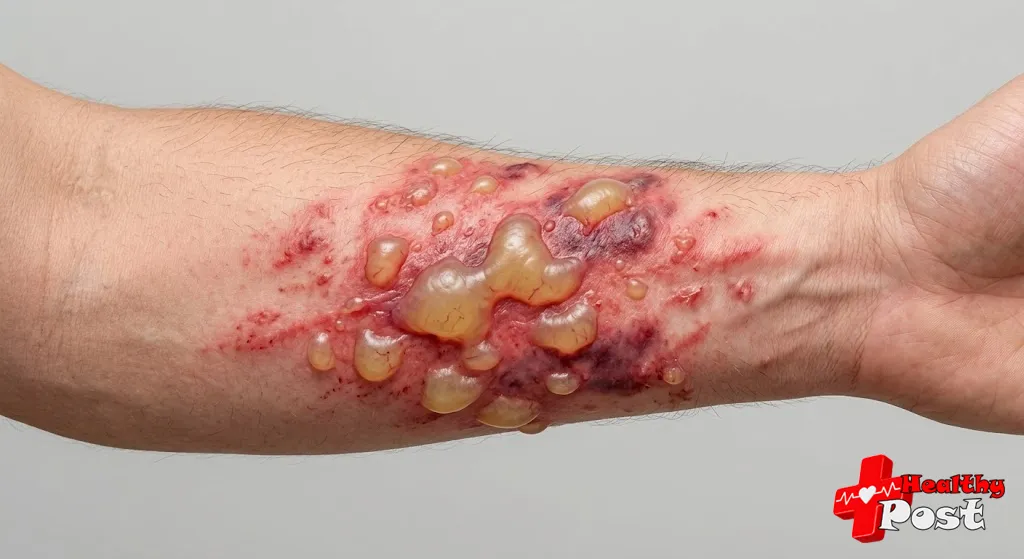
- Large, painful blisters
- Swelling and inflammation
- Peeling skin
The damage is often far worse than people expect, especially when compared to a typical sunburn.
3. Burns Can Be Severe, Long‑Lasting, and Even Life‑Changing
Many people think “plant rash” and imagine mild irritation like nettle stings. Giant hogweed burns are in a completely different category.
What the injuries can look like
Depending on how much sap you encounter and how long you stay in sunlight, you may develop:
- Intense redness and rash that can appear in streaks where sap dripped
- Large fluid-filled blisters that may cover big areas of skin
- Darkened patches of skin (hyperpigmentation) that last months or years
- Permanent scarring and changes in skin texture
In extreme cases, especially when exposure is not treated quickly, people can suffer what resemble third degree giant hogweed burns. These severe injuries can involve:
- Deep tissue damage
- Loss of normal skin function
- Need for surgical treatment, such as debridement or skin grafts
Once the skin is injured, it may remain sun-sensitive for years. Even mild sunlight may trigger redness or reactivation of the burn area long after the first injury.
Possible long‑term complications
- Persistent dark or light patches of skin
- Raised or thickened scars (keloids or hypertrophic scars)
- Premature aging of the affected skin
- In rare cases, increased risk of skin cancer with repeated severe exposures
These are not just cosmetic issues. They can affect confidence, mental health, and daily activities.
4. Sap in Your Eyes or Mouth Is a Medical Emergency 😨
Most people worry about giant hogweed burns on arms or legs. But the greatest danger appears when the sap reaches your eyes or is swallowed.
Eye exposure
If sap splashes in your eyes, it can cause:
- Severe pain and burning
- Redness and intense irritation
- Sensitivity to light
- Headache or migraine
- Blurred vision or vision loss
Without urgent care, there is a real risk of permanent vision damage and even blindness. You should:
- Immediately flush your eyes with plenty of clean, cool water.
- Continue rinsing for at least 10–15 minutes.
- Remove contact lenses if possible.
- Seek emergency medical help straight away.
Do not wait to see if it “settles down.” The damage may worsen with time and continued light exposure.
Ingestion
Swallowing sap, or sometimes even large amounts of plant material, can lead to:
- Severe irritation of the mouth and throat
- Stomach pain, nausea, or vomiting
- Liver damage
- Cellular mutations and, in rare cases, potentially fatal complications
If there is any chance sap has been swallowed, contact emergency services or a poison center without delay.
5. Immediate First Aid Can Dramatically Reduce Damage
The most important fact about giant hogweed burns treatment is this: what you do in the first minutes and hours counts. Your actions can limit how severe the injury becomes.
Step‑by‑step first aid after contact
If you suspect you have touched giant hogweed sap:
- Get out of the sunlight at once
- Move indoors or into full shade.
- Cover the affected skin if you must stay outdoors.
- Wash the area thoroughly with soap and cool water
- Use plenty of water and mild soap.
- Gently remove sap without scrubbing hard.
- Avoid sunlight for at least 48 hours
- Keep the affected skin covered with clothing.
- Stay indoors as much as you can.
- Do not burst blisters
- Bursting them increases infection risk.
- Cover gently with a clean, non-stick dressing if needed.
- If your eyes are exposed
- Flush with copious cool water immediately.
- Seek urgent medical care or go to the nearest emergency department.
- Wash contaminated clothing
- Handle with gloves if possible.
- Wash separately to avoid spreading sap.
When to seek medical help
Get professional care if:
- The affected area is large or on the face, hands, or genitals
- You develop large or multiple blisters
- You have severe pain, swelling, or signs of infection
- Your eyes were exposed
- You feel unwell or are worried about the injury
Medical teams may use:
- Topical steroid creams to reduce inflammation
- Oral medications for pain and itching
- Antibiotics if there is infection
- Debridement or surgical treatment for deep or extensive burns
- Skin grafts for extensive tissue loss or third degree giant hogweed burns
Prompt treatment can improve healing and reduce long-term scarring.
6. Prevention and Reporting: You Should Never Try to Remove It Yourself 🚫
Because the plant is so dangerous, prevention is far better than any cure.
How to protect yourself and others
- Do not touch giant hogweed, even with bare curiosity.
- Teach children to recognize and avoid it.
- Keep dogs on a lead near suspicious tall plants.
- Wear protective clothing (long sleeves, trousers, gloves, eye protection) if you must work near it.
If you notice the plant on public land or near paths:
- In the UK: Giant hogweed is a regulated invasive species. Report it to your local council or environmental authority. It is often considered a notifiable plant because of its risks.
- In the U.S. or Canada: Contact your state Department of Conservation, Department of Natural Resources, or local environmental agency.
Specialist teams use:
- Protective suits, gloves, and face shields
- Controlled cutting or herbicide application
- Proper disposal methods to prevent spread
Never strim, mow, or cut it yourself. Cutting can spray sap into the air, putting your skin and eyes in danger.
For a detailed overview of the plant and its risks, you can refer to trusted resources on giant hogweed burns from government or health organizations, such as those referenced in reputable guides like Verywell Health giant hogweed burns.
Quick Comparison of Key Guidance
The table below summarizes some core advice from two commonly cited approaches in the UK and US context.
| Aspect | UK‑style guidance (e.g., first aid training) | US‑style guidance (e.g., health articles) |
|---|---|---|
| Immediate action | Wash with soap and water; avoid sunlight for ≥48 hours | Wash with soap and water; avoid touching eyes |
| When to see a doctor | Contact GP or pharmacist; A&E if burns are severe | Seek healthcare provider; may need steroids, antibiotics, surgery |
| Eye exposure | Flush with water; urgent risk of blindness | Vision loss possible; urgent medical care required |
| Reporting | Report to local council or environment agency | Contact state conservation or natural resources department |
| Severity of outcomes | Scarring, blindness, recurring burns with sun exposure | Scarring, possible skin cancer risk, liver damage if ingested |
These differences reflect local systems, but the core message is the same: this plant is a serious hazard and needs professional handling.
7. Giant Hogweed Is a Public Health Threat, Not Just a Garden Nuisance
Because giant hogweed spreads along rivers and disturbed ground, it can quickly invade areas where families walk, children play, and pets roam. The danger is not always obvious. Many people only learn about burns giant hogweed burns after someone they know has already been injured.
Key reasons it is considered a public health issue:
- Widespread distribution in the UK, parts of Europe, the U.S., and Canada
- Severe injury risk from even brief contact
- Long‑lasting or permanent damage to skin and eyes
- Healthcare burden from extensive burns and surgical treatments
- Environmental impact as an aggressive invasive species
Because of this, many authorities encourage the public to report sightings rather than ignore them. Responsible reporting helps professionals track and control its spread.
You can find a helpful overview of its identification and risks from organizations that track invasive plants, such as summaries on giant hogweed burns treatment and risks from medical and environmental sources.
Frequently Asked Questions About Giant Hogweed Burns
1. How soon after contact do giant hogweed burns appear?
Symptoms may begin within a few hours but often become most obvious 24–72 hours after exposure, especially once the skin has been in sunlight.
2. Can giant hogweed burns be treated at home?
Mild redness or small blisters may be managed at home with:
- Cool water washing
- Sun avoidance
- Over‑the‑counter pain relief
However, any large area, severe blisters, facial burns, or eye exposure should be seen by a healthcare professional promptly.
3. Are children more at risk from giant hogweed?
Yes. Children are often curious, may use the hollow stems as “telescopes” or toys, and have more delicate skin. This makes them more likely to develop severe burns and long‑term scars.
4. Do the scars from giant hogweed burns ever go away?
Some discoloration fades over months to years, but many people are left with some degree of long‑term hyperpigmentation or scarring. Early and appropriate treatment can reduce, but not always prevent, visible marks.
5. Can you get burned just by brushing past the plant?
Yes, if sap gets onto your skin, which can happen through broken stems, leaves, or flowers. Even small amounts on exposed skin can cause a phototoxic reaction when exposed to sunlight.
6. Is it safe to remove giant hogweed if I wear gloves?
No. Even with gloves, sap can splash or spread to unprotected skin, eyes, or clothing. Removal should be done by trained professionals using full protective gear and proper disposal methods.
Conclusion: Respect the Plant, Protect Your Skin and Eyes 🌱
Giant hogweed burns are not ordinary rashes. The plant’s sap can trigger intense chemical burns, deep blisters, scarring, and even blindness. But you can greatly reduce the damage by knowing what to do.
- Learn to recognize giant hogweed and never touch it.
- If exposed, wash with soap and water immediately and avoid sunlight for at least 48 hours.
- Seek medical care promptly when burns are extensive, painful, or involve the eyes.
- Report sightings to local councils, environmental agencies, or conservation departments so professionals can handle removal safely.
By staying informed and cautious, you protect yourself, your family, and your community from the hidden danger of giant hogweed burns, and help prevent this invasive plant from causing more harm.
How soon after contact do giant hogweed burns appear?
Symptoms may begin within a few hours but often become most obvious 24–72 hours after exposure, especially once the skin has been in sunlight.
Can giant hogweed burns be treated at home?
Mild redness or small blisters may be managed at home with:
Cool water washing
Sun avoidance
Over‑the‑counter pain relief
However, any large area, severe blisters, facial bur