


This article has been written by Dr. Rachana Bhoite (Nutrition Science, Dr. Reddy’s Labs ↗), specializing in clinical nutrition, metabolic health, dietary management, and evidence-based patient wellness education.
Medical Disclaimer: The information provided regarding GLP-1 receptor agonists, before-and-after weight loss timelines, dietary modifications, metabolic changes, and potential side effects is for educational and informational purposes only. Individual responses to medications and nutritional strategies vary significantly based on personal health profiles. Always consult a licensed physician, clinical endocrinologist, or qualified healthcare professional before starting, stopping, or modifying any medication or weight management plan.

🏥 Medical Review Board Member
Dr. Rachana Bhoite, PhD
Nutrition Science Expert | Dr. Reddy’s Laboratories (Hyderabad, India)
Dr. Rachana Bhoite, PhD, is a distinguished industry veteran with over 22 years of expertise in Foods & Nutrition and clinical research. With a career deeply rooted in medical nutrition and nutraceutical innovation, she has successfully designed and launched numerous scientifically differentiated products across global markets. Dr. Bhoite is dedicated to bridging the gap between complex clinical data and accessible, evidence-based nutrition. Her commitment to rigorous research ensures that every piece of content she reviews meets the highest standards of scientific accuracy and consumer safety.
If you are searching for GLP 1 before and after results, you will find plenty of dramatic transformation photos online. Those images can show what is possible, but they do not tell you what a typical treatment journey looks like. Clinical trials paint a more useful picture: weight loss usually develops over months, the amount varies considerably between individuals, and appetite changes may occur before obvious changes in body shape.
The strongest long-term evidence for obesity treatment comes from medications such as semaglutide and tirzepatide. In the STEP 1 trial, adults with overweight or obesity who received semaglutide 2.4 mg weekly alongside lifestyle intervention lost an average of 14.9% of their starting body weight after 68 weeks. In SURMOUNT-1, average weight loss after 72 weeks ranged from 15.0% with 5 mg tirzepatide to 20.9% with 15 mg. These are clinical-trial averages, not promises for an individual.
What Does a GLP-1 Before-and-After Transformation Actually Mean?
A GLP-1 transformation is more than a lower number on the scale. Treatment may affect several aspects of health and daily life, including:
- Body weight and waist circumference
- Hunger and appetite
- Portion sizes
- Food cravings
- Blood glucose in people with diabetes
- Clothing fit and body measurements
- Physical mobility and exercise tolerance
- Body-fat and lean-mass levels
GLP-1-based medications work partly by influencing appetite and food intake. Tirzepatide also activates the GIP receptor, making it a dual GIP/GLP-1 receptor agonist.
That distinction matters because two people taking the same medication can have very different experiences. Starting weight, BMI, dose, treatment duration, other medical conditions, eating patterns, physical activity, adherence, side effects and individual biology can all influence the result.
A realistic way to view the GLP-1 weight loss journey is as a progression rather than a sudden transformation.
GLP-1 Weight Loss Results Timeline
There is no scientifically established rule saying exactly how many pounds someone should lose each week or month. Clinical trials provide averages over longer periods, while individual weight often fluctuates from week to week.
Weeks 1–4: The Adjustment Period
The first month is often more about adapting to treatment than achieving a dramatic physical transformation.
Semaglutide and tirzepatide are generally introduced at lower doses and increased gradually according to the prescribing plan. During this period, some people notice:
- Reduced hunger
- Feeling full sooner
- Smaller portions
- Less interest in certain foods
- Nausea or other digestive symptoms
- Little change on the scale or modest weight loss
Semaglutide’s STEP 1 trial found that weight loss was already measurable by the first post-treatment assessment at week 4, but the substantial average reduction developed over a much longer period.
This is important when interpreting online GLP-1 weight loss before and after photographs. A person may look almost unchanged after several weeks and still go on to experience meaningful weight reduction over subsequent months.
Weeks 5–12: Early Progress
As treatment progresses and the dose is adjusted, appetite suppression may become more noticeable.
Some people begin seeing:
- More consistent weight reduction
- A smaller waist
- Different clothing fit
- Better portion control
- Reduced food cravings
However, there is no universal target for this stage.
Someone who loses very little during the first two or three months should not automatically assume the medication has failed. At the same time, persistent lack of response deserves discussion with the prescribing clinician rather than simply increasing the dose independently.
Months 3–6: Changes Become Easier to Notice
For people who respond well, cumulative weight loss may become much more visible during this period.
Changes can include a smaller waist, altered clothing size and noticeable differences around the abdomen, face, hips or thighs. The exact pattern depends partly on genetics, starting body composition and where an individual naturally stores fat.
This is also a useful point to measure progress beyond the scale.
Consider tracking:
- Waist circumference
- Body weight
- Strength
- Physical activity
- Clothing fit
- Energy and mobility
- Blood glucose when medically relevant
A weekly photograph can sometimes make gradual changes easier to recognize, but photographs should not be treated as a medical measurement.
Months 6–12: Cumulative Weight Loss
The difference between the starting point and current weight can become much more apparent after six months.
The STEP 1 trial provides an important reference. Adults with overweight or obesity but without diabetes who received semaglutide 2.4 mg plus lifestyle intervention had an average 14.9% reduction in body weight at week 68.
For example, if someone started at 200 pounds:
| Percentage of weight lost | Approximate weight reduction | Weight remaining |
|---|---|---|
| 5% | 10 lb | 190 lb |
| 10% | 20 lb | 180 lb |
| 15% | 30 lb | 170 lb |
| 20% | 40 lb | 160 lb |
These calculations are illustrations, not predictions.
Tirzepatide produced larger average reductions in the SURMOUNT-1 trial, with mean weight loss of 15.0% at 5 mg, 19.5% at 10 mg and 20.9% at 15 mg after 72 weeks.
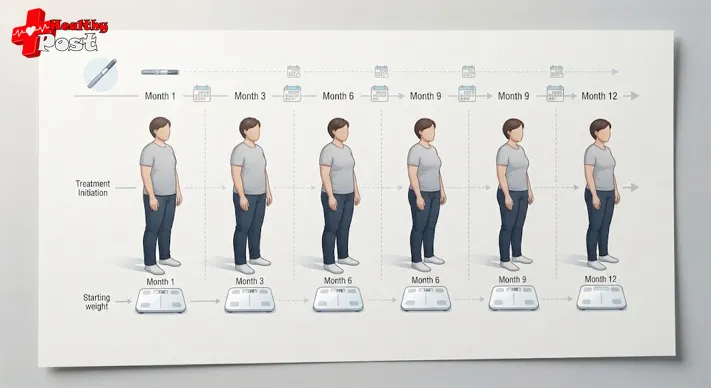
🟢 Alt Text: “Illustration showing gradual body changes during a 12-month GLP-1 weight-loss treatment timeline”
🟢 CAPTION: “GLP-1 weight loss generally develops gradually, with individual results varying throughout treatment.”
Semaglutide and Tirzepatide: What the Evidence Shows
Semaglutide is a GLP-1 receptor agonist. Tirzepatide activates both GIP and GLP-1 receptors.
The two medications have been studied extensively for chronic weight management, but their trial populations and protocols differ, so individual study results should not be treated as a direct prediction of what one person will experience.
| Medication | Major trial | Treatment period | Average weight change |
|---|---|---|---|
| Semaglutide 2.4 mg | STEP 1 | 68 weeks | −14.9% |
| Tirzepatide 5 mg | SURMOUNT-1 | 72 weeks | −15.0% |
| Tirzepatide 10 mg | SURMOUNT-1 | 72 weeks | −19.5% |
| Tirzepatide 15 mg | SURMOUNT-1 | 72 weeks | −20.9% |
A later head-to-head trial, SURMOUNT-5, compared maximum tolerated doses of tirzepatide and semaglutide in adults with obesity who did not have type 2 diabetes. At 72 weeks, mean weight change was −20.2% with tirzepatide and −13.7% with semaglutide.
That finding does not mean tirzepatide will produce a greater result for every person. Medication choice involves factors such as medical history, treatment goals, tolerability, contraindications, cost and clinician assessment.
What to Expect on GLP-1 Medications
A more realistic expectation is:
Starting treatment → gradual dose adjustment → appetite changes → progressive weight loss → visible body changes → slower loss or plateau → maintenance
The speed of this process can differ substantially.
Important influences include:
- Starting weight and BMI
- Medication and dose
- Dose-escalation schedule
- Diabetes status
- Food intake
- Protein and overall nutritional intake
- Physical activity
- Resistance training
- Treatment adherence
- Side effects
- Individual biological response
The goal should not be to reproduce somebody else’s social-media transformation. Clinical-trial averages are much more useful for setting realistic expectations.
For practical nutrition during weight loss, maintaining adequate protein and including fiber-rich foods can be useful. A balanced approach is discussed in this site’s guide to [fiber and protein for weight management].
GLP-1 Side Effects and Body Changes
Digestive symptoms are among the most common side effects associated with semaglutide and tirzepatide.
They can include:
- Nausea
- Vomiting
- Diarrhea
- Constipation
- Abdominal discomfort
- Indigestion or reflux
These symptoms are particularly common during treatment initiation and dose escalation. In clinical trials, most gastrointestinal adverse events were mild to moderate, although some people discontinued treatment because of side effects.
Reduced appetite can also change how a person eats and drinks. Someone who suddenly consumes much smaller meals may unintentionally reduce protein, fiber or fluid intake.

Severe or persistent abdominal pain, repeated vomiting, inability to keep fluids down, signs of dehydration or other concerning symptoms should be medically assessed rather than automatically attributed to a normal medication reaction.
For broader context about symptoms associated with newer incretin-based weight-loss treatments, see HealthyPost’s [guide to retatrutide and treatment-related headaches]. Retatrutide is investigational and should not be confused with approved semaglutide or tirzepatide.
What Happens to Body Composition?
One of the less visible parts of a GLP-1 transformation before and after is the change in body composition.
Weight loss is not composed exclusively of body fat. Lean mass can also decline during substantial weight reduction.
A 2026 systematic review and meta-analysis of randomized controlled trials examined body-composition changes associated with incretin therapies. Across the included studies, lean mass represented approximately 25% to 39% of total weight lost with incretin agonists, with variation between medications and studies.
That does not mean a person will lose a specific percentage of muscle. Body-composition measurements differ according to the method used, and lean mass is not identical to skeletal muscle.
This is one reason resistance training and adequate nutrition deserve attention during substantial weight loss.
A useful progress checklist can include:
- Weight
- Waist measurement
- Strength
- Physical function
- Protein intake
- Physical activity
- Body composition when clinically appropriate
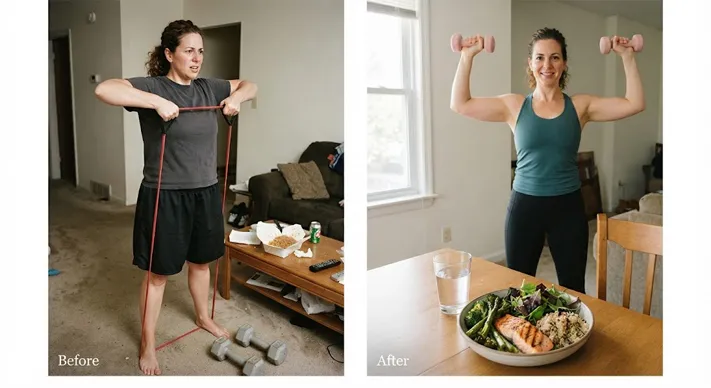
Why Before-and-After Photos Can Be Misleading
Transformation photographs are visually persuasive, but they leave out important information.
A photograph usually cannot tell you:
- Starting weight
- Starting BMI
- Medication and dose
- Treatment duration
- Whether lifestyle changes were also made
- Body composition before treatment
- Whether the person reached the photographed weight temporarily
- Whether weight was regained later
Lighting, clothing, posture, camera angle and timing can also change how a person’s body appears.
That does not make genuine transformations unimportant. It simply means photographs are not a substitute for controlled clinical evidence.
A clinical trial measures thousands of details that a social-media post usually cannot show.
What Happens If GLP-1 Treatment Is Stopped?
This is an important part of the before-and-after story that is sometimes overlooked.
Weight regain can occur after stopping treatment.
In the STEP 1 extension, participants who stopped semaglutide after 68 weeks regained a substantial amount of the weight they had previously lost during the following year. The researchers reported that participants regained approximately two-thirds of their prior weight loss on average.
This does not mean everyone will regain exactly the same amount. Individual outcomes vary, and treatment after discontinuation can differ.
The broader point is that obesity is considered a chronic condition, and maintaining weight loss may require continuing treatment and lifestyle strategies over the long term.
A decision to stop, continue or change medication should therefore be made with a healthcare professional rather than based solely on reaching a particular number on the scale.
How to Track Your Own GLP-1 Weight Loss Journey
If you are using a GLP-1-based medication under medical supervision, tracking several measures can provide a more complete picture than weighing yourself every day.
1. Record weight consistently
Use the same scale and, where practical, similar conditions. Daily fluctuations can occur because of fluid, food intake, bowel movements and other factors.
2. Measure your waist
Waist circumference can provide useful information about changes in abdominal size that may not be obvious from body weight alone.
3. Monitor strength
If you are exercising, track simple indicators such as repetitions, resistance or functional ability. Losing weight while maintaining strength can provide useful context.
4. Pay attention to nutrition
Reduced appetite can make it easier to eat too little. Discuss protein, fiber, fluids and overall calorie intake with a qualified professional when appropriate.
5. Track side effects
Recording nausea, constipation, vomiting, abdominal symptoms and other changes can help a clinician determine whether the treatment is well tolerated.
Frequently Asked Questions
How much weight can you lose with GLP-1 medications?
There is no single amount that applies to everyone. In major trials, semaglutide 2.4 mg produced an average 14.9% weight reduction at 68 weeks, while tirzepatide produced average reductions of 15.0% to 20.9% at 72 weeks depending on dose. Individual results can be considerably different.
When do you start seeing results from GLP-1 medications?
Some people notice appetite changes early, and clinical trials have detected weight changes within the first several weeks. More visible body changes generally require longer treatment, often several months.
Can GLP-1 medications cause muscle loss?
Some lean mass can be lost during substantial weight reduction. This is not unique to GLP-1-based treatment. Resistance training and adequate nutrition can be important strategies for supporting lean-mass preservation.
Why has my GLP-1 weight loss slowed down?
Weight loss commonly becomes slower as treatment continues. A plateau can reflect changing energy requirements, adaptation, dose, adherence or individual response. A persistent plateau should be discussed with the prescribing clinician rather than treated by changing the dose independently.
Will I regain weight after stopping a GLP-1 medication?
Weight regain is common after stopping effective weight-management medication, although the amount varies. In the STEP 1 extension, participants regained a substantial proportion of their previous semaglutide-associated weight loss during the year after treatment ended.
Are before-and-after photos a reliable way to judge GLP-1 results?
They can demonstrate that substantial changes are possible, but they cannot establish a typical result. Clinical trials provide a more reliable framework because they measure groups systematically over defined treatment periods.
Conclusion
The most useful way to understand GLP 1 before and after results is to think in terms of a long-term treatment journey rather than a dramatic overnight transformation.
Semaglutide and tirzepatide can produce substantial average weight loss in clinical trials, but the timeline and degree of change vary from person to person. Appetite may change before body shape does, visible results often become clearer over several months, and weight loss may slow or plateau as treatment continues.
The transformation also involves more than body weight. Waist circumference, appetite, physical function, metabolic measures and body composition can all change, while side effects and nutritional needs deserve attention along the way.
Before-and-after photographs can be interesting, but they should not become a personal benchmark. A better approach is to compare your own measurements and health goals over time while working with a qualified healthcare professional.
If you are considering semaglutide, tirzepatide or another weight-management medication, use clinical evidence—not social-media transformations—to set expectations and make treatment decisions.
Medical Disclaimer
This article is for general educational and informational purposes and does not provide a diagnosis or individualized medical advice. Semaglutide, tirzepatide and other prescription weight-management medications should be used under appropriate medical supervision. Discuss potential benefits, risks, contraindications, side effects and treatment duration with a qualified healthcare professional.
References
- New England Journal of Medicine — Once-Weekly Semaglutide in Adults with Overweight or Obesity (STEP 1).
- New England Journal of Medicine — Tirzepatide Once Weekly for the Treatment of Obesity (SURMOUNT-1).
- New England Journal of Medicine — Tirzepatide as Compared with Semaglutide for the Treatment of Obesity (SURMOUNT-5).