


This article has been written by Dr. Rachana Bhoite (Nutrition Science, Dr. Reddy’s Labs ↗), specializing in clinical nutrition, dietary phytochemicals, nutritional value, and evidence-based patient wellness education.
Medical Disclaimer: The information provided regarding purple lettuce, its nutritional profile, caloric breakdown, health benefits, and culinary uses is for educational and informational purposes only. Dietary requirements and nutritional tolerances vary depending on individual health conditions, allergies, and dietary restrictions. Always consult a qualified nutritionist, dietitian, or healthcare professional before making major changes to your diet or if you have specific medical nutritional requirements.

🏥 Medical Review Board Member
Dr. Rachana Bhoite, PhD
Nutrition Science Expert | Dr. Reddy’s Laboratories (Hyderabad, India)
Dr. Rachana Bhoite, PhD, is a distinguished industry veteran with over 22 years of expertise in Foods & Nutrition and clinical research. With a career deeply rooted in medical nutrition and nutraceutical innovation, she has successfully designed and launched numerous scientifically differentiated products across global markets. Dr. Bhoite is dedicated to bridging the gap between complex clinical data and accessible, evidence-based nutrition. Her commitment to rigorous research ensures that every piece of content she reviews meets the highest standards of scientific accuracy and consumer safety.
Purple lettuce is a colorful leafy vegetable that can make an ordinary salad look far more interesting while adding very few calories. The name generally describes red, burgundy, or reddish-purple lettuce varieties rather than one single standardized cultivar. That distinction matters because the exact nutritional profile varies with the variety, growing conditions, maturity, and even light exposure.
Much of the deeper color comes from anthocyanins, a family of flavonoid pigments also found in foods such as berries and purple cabbage. Research on red-leaf lettuce shows that darker varieties can contain substantial amounts of anthocyanins and other phenolic compounds, although concentrations differ considerably between cultivars.
For everyday eating, the appeal is straightforward: purple or red-leaf lettuce is generally low in calories, contains plenty of water, contributes fiber and several vitamins and minerals, and adds plant pigments to salads, sandwiches and wraps. It is not a miracle food, but it can be a useful part of a varied diet.
What Is Purple Lettuce?
“Purple lettuce” is mostly a practical food description rather than the name of one specific lettuce species or universally standardized variety.
You may see similar leaves sold as:
- Red leaf lettuce
- Red lettuce
- Reddish-purple lettuce
- Burgundy lettuce
- Lollo rosso or other red-leaf cultivars
Some varieties are predominantly red, while others have green leaves with purple or burgundy edges. Their appearance depends partly on the accumulation of anthocyanins in the leaves.
This also explains why nutrition information for purple lettuce can vary. Different cultivars do not necessarily contain identical amounts of vitamins, minerals, carotenoids, phenolic compounds or anthocyanins. Research has found substantial biochemical differences among red-leaf lettuce varieties.
Why does lettuce turn purple?
The red-to-purple coloration is strongly associated with anthocyanin pigments. These compounds belong to the flavonoid family and can produce red, purple or blue colors in plants.
In red lettuce, cyanidin derivatives are among the important anthocyanins identified by researchers. The amount present can vary significantly according to genetics and growing conditions, so a very dark purple leaf should not automatically be assumed to contain a specific standardized amount of anthocyanins.
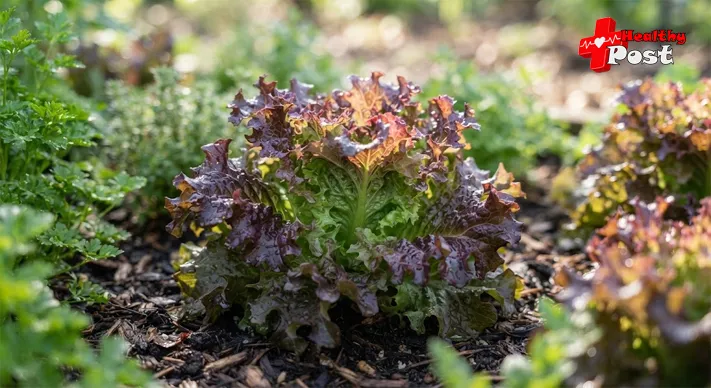
Purple Lettuce Nutrition
The nutritional value of purple lettuce is broadly similar to other leafy lettuces, although individual cultivars can differ.
Because lettuce contains a large amount of water, it provides relatively few calories for the volume it occupies. It also contributes vitamin K, vitamin A-related carotenoids, vitamin C, folate, potassium and small amounts of other micronutrients.
The following is a useful way to understand its nutritional profile rather than treating one number as representative of every purple lettuce cultivar:
| Nutrient or compound | What purple/red-leaf lettuce contributes |
|---|---|
| Calories | Very low calorie density |
| Water | High water content |
| Fiber | A modest amount of dietary fiber |
| Vitamin A-related carotenoids | Contribute to vitamin A nutrition |
| Vitamin K | Important nutrient found in leafy vegetables |
| Vitamin C | Present in varying amounts |
| Folate | Contributes to dietary folate intake |
| Potassium | Provides a small amount of this mineral |
| Carotenoids | Includes compounds such as beta-carotene and lutein |
| Anthocyanins | Characteristic of many red/purple cultivars |
The USDA MyPlate guidance also recognizes leafy salad greens as vegetables and notes that vegetables can contribute important nutrients such as potassium, dietary fiber, folate, vitamin A and vitamin C.
Vitamin K deserves special attention
Leafy vegetables are well-known dietary sources of vitamin K. Vitamin K is involved in normal blood clotting and bone metabolism. The NIH Office of Dietary Supplements lists lettuce among foods that provide vitamin K.
If you take an anticoagulant such as warfarin, consistency matters more than suddenly eliminating vegetables. The NIH advises people taking warfarin to maintain a consistent vitamin K intake and discuss significant dietary changes with their healthcare professional.
Purple Lettuce Calories
One of the easiest reasons to include purple lettuce in meals is its very low calorie density.
Exact values depend on the cultivar and serving size, so there is no single calorie figure that applies to every leaf sold as purple lettuce. Red-leaf lettuce, for example, is generally a very low-calorie food.
What matters in real life is also what you put on it.
A large bowl of lettuce can remain quite light, but adding generous amounts of:
- Creamy dressing
- Cheese
- Nuts
- Seeds
- Avocado
- Fried toppings
- Bacon
- Croutons
can substantially increase the calories of the finished salad.
That does not make those ingredients “bad.” It simply means the calorie content of a complete meal should not be confused with the calorie content of the lettuce itself.
For people trying to make meals more filling without relying entirely on calorie-dense ingredients, using leafy vegetables as part of the meal can be a practical strategy. MyPlate similarly emphasizes vegetables as naturally low in calories and encourages variety in vegetable choices.
Purple Lettuce Benefits
1. It provides colorful plant compounds
The most distinctive nutritional feature of purple or red lettuce is its pigment profile.
Anthocyanins are responsible for much of the red-purple coloration, while lettuce also contains other phytochemicals, including carotenoids and phenolic compounds. Research has found that red-pigmented cultivars can contain higher levels of certain phenolic compounds than some green varieties.
However, laboratory measurements of antioxidant activity should not be interpreted as proof that eating purple lettuce prevents or treats a disease. Human health outcomes depend on the whole dietary pattern, not one pigment or vegetable.
2. It contributes vitamin A-related carotenoids
Some lettuce varieties provide carotenoids such as beta-carotene and lutein.
Beta-carotene can contribute to the body’s vitamin A supply, while vitamin A itself plays important roles in normal vision, immune function and cell development.
The amount varies between varieties, so it is more accurate to say that red-leaf lettuce can contribute carotenoids rather than treating every purple leaf as nutritionally identical.
3. It provides vitamin K
Vitamin K is one of the notable nutrients associated with leafy vegetables.
The nutrient is needed for normal blood clotting and also has roles in bone metabolism. Lettuce is included among dietary sources of vitamin K by the NIH.
For most people, eating lettuce as part of a varied diet is entirely compatible with healthy nutrition. The main dietary consideration is for people whose medications make vitamin K consistency particularly important.
4. It adds water to meals
Lettuce is naturally water-rich, so eating it contributes to overall fluid intake.
That does not mean lettuce can replace drinking water. Rather, water-rich foods such as lettuce, cucumber, tomatoes and other vegetables can complement beverages as part of normal hydration.
This can be especially useful when building salads or meals that otherwise contain relatively dry foods.
5. It adds fiber without many calories
Purple lettuce is not one of the most concentrated sources of dietary fiber. Beans, lentils, whole grains, seeds and many other vegetables provide considerably more.
Still, adding leafy vegetables regularly can increase the overall fiber and plant-food content of your meals.
For example, a sandwich containing lettuce, tomato and other vegetables offers a different nutritional profile from one made primarily from refined bread and a calorie-dense filling.
If you’re interested in building meals around fiber rather than focusing on one vegetable alone, HealthyPost’s guide to fiber-rich foods and balanced fiber intake provides additional context.
6. It contains carotenoids such as lutein
Lutein is a carotenoid found in leafy vegetables and is particularly associated with tissues of the eye.
Purple lettuce does not need to be marketed as a special eye-health treatment to be useful. It simply adds another source of naturally occurring plant compounds to the diet.
A varied intake of leafy greens and other colorful vegetables is a more sensible nutritional strategy than relying on one particular vegetable.
7. It can make vegetable-rich meals more appealing
Not every nutritional benefit needs to be a biochemical effect.
Color matters when people are deciding what they want to eat. Purple lettuce creates visual contrast with green lettuce, cucumber, tomatoes, carrots, peppers and other ingredients.
Anthocyanins in Purple Lettuce: What Does the Research Say?
Anthocyanins are naturally occurring flavonoid pigments that give many fruits and vegetables their red, purple and blue colors.
In red lettuce, researchers have identified cyanidin-based anthocyanins, including cyanidin derivatives that occur prominently in several red-pigmented cultivars. Studies also show that anthocyanin concentrations can differ dramatically between lettuce varieties.
Growing conditions matter too. Light exposure, genetics and developmental stage can influence phytochemical concentrations in lettuce. Research comparing different cultivars and growth conditions has demonstrated considerable variation in anthocyanin levels.
Anthocyanins are being investigated for potential antioxidant and other biological effects, but it would be misleading to turn that research into a claim that purple lettuce treats cancer, diabetes, heart disease or another medical condition.
A better takeaway is simpler: purple lettuce adds naturally occurring plant pigments to a diet that already contains a variety of vegetables and fruits.
Purple Lettuce vs Green Lettuce
Purple and green lettuce are both useful leafy vegetables. The main difference is their pigment composition and appearance, not that one universally replaces the other.
| Feature | Purple/Red Lettuce | Green Lettuce |
|---|---|---|
| Calories | Very low | Very low |
| Water | High | High |
| Vitamin K | Present | Present |
| Vitamin A-related carotenoids | Present in many varieties | Present in many varieties |
| Anthocyanins | Characteristic of red/purple types | Generally much lower |
| Other plant compounds | Phenolics and carotenoids | Carotenoids and other phenolics |
| Color | Red, burgundy or purple | Green |
| Flavor | Usually mild, sometimes slightly bitter | Usually mild |
| Common uses | Salads, wraps, sandwiches, garnish | Salads, wraps, sandwiches, garnish |
Research suggests that some red-leaf cultivars have greater amounts of particular phenolic compounds than green varieties, but the differences depend heavily on the cultivar and growing conditions.
So, rather than asking whether purple lettuce is “better,” it makes more sense to use both types when you enjoy them.
Red Leaf Lettuce vs Purple Lettuce
The terms can overlap.
A red-leaf lettuce cultivar may have leaves that look distinctly purple or burgundy, which means a grocery store, recipe creator or consumer may describe it as purple lettuce.
For that reason, nutrition information should not be presented as though “purple lettuce” represents one standardized food with one exact nutritional composition.
If you want precise nutrition information for a packaged product, check its nutrition label. For fresh produce, cultivar and serving size can affect the values.
How to Eat Purple Lettuce
Purple lettuce is usually eaten raw because its leaves are tender and crisp.
In salads
A simple combination might include:
- Purple lettuce
- Cucumber
- Tomato
- Carrot
- Bell pepper
- Chickpeas
- Boiled egg
- Grilled chicken
- Seeds or nuts
- A simple vinaigrette
You can combine purple leaves with green lettuce rather than using them alone. This creates more texture and color without making the meal complicated.
In sandwiches and burgers
Use whole leaves to add crunch and moisture to sandwiches and burgers. The darker leaves also create a striking contrast with tomato, cheese and other fillings.
In wraps
Purple lettuce pairs well with chicken, turkey, hummus, beans, grilled vegetables or eggs.
A whole-grain wrap filled with a protein source, vegetables and a modest amount of dressing can turn the lettuce from a decorative ingredient into part of a more balanced meal.
As a mixed salad base
You do not need a complicated recipe. A handful of purple lettuce mixed with cucumber, tomatoes, carrots and a protein source can form the foundation of lunch or dinner.
HealthyPost’s discussion of heart-healthy dietary patterns and vegetable variety also illustrates how leafy vegetables can fit into broader meal patterns rather than being treated as isolated “superfoods.”
Can you cook purple lettuce?
Yes, although raw preparation is the most common use.
Lettuce can be lightly cooked or added to certain warm dishes, but heat changes its texture and can affect some heat-sensitive nutrients. If you enjoy the crispness of purple lettuce, using it raw is usually the easiest way to preserve that characteristic.
How to Choose, Wash and Store Purple Lettuce
Choose leaves that look crisp, fresh and reasonably vibrant. Avoid heads or loose leaves that are excessively slimy, badly wilted or extensively damaged.
Before eating fresh lettuce, follow basic produce-safety practices.
The FDA recommends washing fresh fruits and vegetables under running water before preparation or eating and specifically advises against using soap or household detergent on produce. Washing can reduce contamination but does not guarantee that all harmful microorganisms are removed.
For lettuce:
- Wash your hands before preparation.
- Remove visibly damaged or rotten portions.
- Rinse the leaves under clean running water.
- Gently rub the leaves as appropriate.
- Dry them thoroughly with a clean towel or salad spinner.
- Refrigerate promptly.
Is Purple Lettuce Healthy?
Yes. Purple lettuce can be a nutritious part of a balanced eating pattern.
Its strengths are its low calorie density, high water content, contribution of vitamins and minerals, modest fiber content and naturally occurring plant compounds such as anthocyanins and carotenoids.
The important qualification is that its benefits should not be exaggerated. Eating purple lettuce does not compensate for an otherwise poor diet, and the presence of anthocyanins does not mean the vegetable is a treatment for disease.
Think of it as one useful option among many leafy green vegetables and colorful plant foods.
Frequently Asked Questions
Does purple lettuce have more antioxidants than green lettuce?
Some red/purple lettuce cultivars contain higher levels of anthocyanins and certain phenolic compounds than some green cultivars. However, amounts vary substantially by variety and growing conditions, so purple color alone cannot tell you an exact antioxidant level.
How many calories are in purple lettuce?
Purple lettuce is very low in calories, but the exact number depends on the cultivar and serving size. The lettuce itself contributes relatively little energy; dressings, cheese, nuts and other toppings can contribute much more.
Is purple lettuce good for weight management?
It can fit easily into a calorie-conscious eating pattern because leafy lettuce provides a lot of volume for relatively few calories. Its role is mainly as a low-calorie vegetable component of a balanced meal rather than a special weight-loss food.
Can I eat purple lettuce every day?
For most people, lettuce can be part of a regular varied diet. It is useful to rotate different vegetables rather than relying exclusively on one type of produce.
Is purple lettuce safe for people taking blood thinners?
People taking warfarin or another medication affected by vitamin K should discuss major dietary changes with their healthcare professional. The NIH recommends maintaining a consistent vitamin K intake for people taking warfarin.
What is the easiest way to eat purple lettuce?
Add it raw to salads, sandwiches and wraps. Combining it with protein, vegetables, whole grains, beans or healthy fats can make the resulting meal more substantial.
Conclusion
Purple lettuce is best understood as a group of red, burgundy or reddish-purple leafy lettuce varieties rather than one nutritionally identical vegetable.
Its low calorie density makes it easy to add to meals, while its leaves provide water, fiber and nutrients such as vitamin K and vitamin A-related carotenoids. The distinctive color comes largely from anthocyanins and other plant pigments, and research shows that red-leaf cultivars can differ substantially in their phytochemical composition.
The most practical purple lettuce benefits come from using it as part of a varied eating pattern. Add it to salads, sandwiches and wraps, combine it with other colorful vegetables, and choose a dressing or toppings that fit the overall meal.
There is no need to treat purple lettuce as a miracle food. Its real value is much simpler: it is a flavorful, colorful and very low-calorie way to eat more vegetables.
References
- U.S. National Institutes of Health, Office of Dietary Supplements — Vitamin K Fact Sheet for Health Professionals. The source explains vitamin K’s functions, dietary sources and considerations for people taking warfarin.
- U.S. Food and Drug Administration — Selecting and Serving Produce Safely. Guidance on washing, preparing and handling fresh fruits and vegetables safely.
- Peer-reviewed review — Red-Leafed Lettuces: Genetic Variation or Epigenetic Photomorphogenesis? Reviews anthocyanins, phenolic compounds, cultivar variation and environmental influences in red-leaf lettuce.