


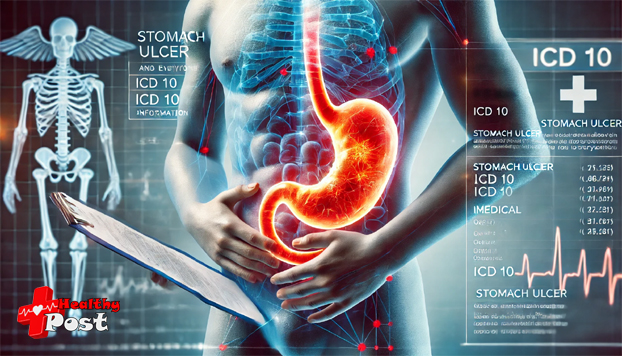
A stomach ulcer is a sore that forms in the stomach lining. It happens when stomach acid damages the tissue. Many people suffer from this condition, and doctors use specific codes to classify it. One important code is stomach ulcer ICD 10.
ICD-10 stands for the International Classification of Diseases, 10th Edition. It helps doctors and hospitals track and treat diseases. Knowing about stomach ulcer ICD 10 is useful for patients, medical staff, and insurance providers. It ensures correct diagnosis, treatment, and billing.
This article will explain:
- What a stomach ulcer is and why it happens.
- The ICD-10 codes for stomach ulcers and what they mean.
- How these codes help in diagnosis and medical records.
If you or a loved one has a stomach ulcer, understanding stomach ulcer ICD 10 can be helpful. Let’s dive deeper into this important topic.
ICD-10 Codes for Stomach Ulcers (Table Example)
| ICD-10 Code | Condition |
|---|---|
| K25.0 | Acute gastric ulcer with bleeding |
| K25.1 | Acute gastric ulcer with perforation |
| K25.2 | Acute gastric ulcer with both bleeding and perforation |
| K25.3 | Acute gastric ulcer without complications |
| K25.4 | Chronic gastric ulcer with bleeding |
| K25.7 | Chronic gastric ulcer without complications |
This guide will help you understand stomach ulcer ICD 10 codes and their importance. Keep reading to learn more!

What is a Stomach Ulcer?
A stomach ulcer is a sore that forms in the lining of the stomach. It happens when stomach acid damages the protective layer inside the stomach. These ulcers are also called gastric ulcers and are a type of peptic ulcer disease (PUD).
Where Do Stomach Ulcers Occur?
Stomach ulcers develop in the inner lining of the stomach. When the protective mucus layer is weakened, acid eats away at the tissue, creating an open sore.
Causes of Stomach Ulcers
Several factors can cause stomach ulcers, including:
- H. pylori bacteria – A common infection that weakens the stomach lining.
- Nonsteroidal anti-inflammatory drugs (NSAIDs) – Pain relievers like ibuprofen and aspirin can damage the stomach lining over time.
- Smoking – Increases stomach acid and slows ulcer healing.
- Excess alcohol – Irritates the stomach lining and increases acid production.
- Stress – Doesn’t directly cause ulcers but can make symptoms worse.
- Spicy foods – Don’t cause ulcers but may irritate existing ones.
Common Symptoms of Stomach Ulcers
Stomach ulcers can cause discomfort and digestive problems. Symptoms include:
- Burning stomach pain – Usually between meals or at night.
- Bloating – Feeling full quickly.
- Nausea or vomiting – Sometimes with blood in severe cases.
- Loss of appetite – Due to pain or discomfort.
- Unexplained weight loss – May indicate a serious condition.
When to See a Doctor
Seek medical help if you have:
- Severe or persistent stomach pain.
- Vomiting blood or dark stools.
- Trouble eating due to pain.
Early treatment can prevent complications like bleeding or perforation.
Understanding ICD-10 Codes
ICD-10 codes are special codes used by doctors to classify diseases, symptoms, and medical conditions. ICD-10 stands for International Classification of Diseases, 10th Edition. These codes help healthcare professionals record, track, and treat illnesses properly.
Why Do Doctors Use ICD-10 Codes?
Doctors use ICD-10 codes for several reasons:
- To identify and diagnose diseases correctly.
- To keep medical records organized.
- To help with insurance claims for billing and reimbursement.
- To track diseases for research and public health reports.
How Are ICD-10 Codes Organized?
Each ICD-10 code consists of letters and numbers. These codes are grouped based on different diseases and conditions. For example, stomach ulcers fall under K25-K27 in the ICD-10 system.
How Are ICD-10 Codes Used for Diagnosis?
When a doctor diagnoses a stomach ulcer, they assign an ICD-10 code that matches the condition. This code is then added to the patient’s medical record. It helps ensure accurate treatment and makes it easier for insurance companies to process claims.
Using ICD-10 codes improves healthcare by making medical information clear and standardized. This system helps both doctors and patients manage conditions like stomach ulcers more effectively.
Stomach Ulcer ICD-10 Codes: The Specifics
ICD-10 codes for stomach ulcers help doctors classify different types of ulcers based on their severity and complications. The codes for stomach ulcer ICD-10 fall under K25, which covers gastric ulcers. Each code describes whether the ulcer is acute or chronic and if it involves hemorrhage (bleeding) or perforation (a hole in the stomach wall).
Acute vs. Chronic Stomach Ulcers
- Acute ulcers develop suddenly and can cause serious complications.
- Chronic ulcers develop over time and may last for weeks or months.
Hemorrhage and Perforation: Key Differences
- Hemorrhage (bleeding): The ulcer damages blood vessels, causing internal bleeding.
- Perforation: The ulcer creates a hole in the stomach lining, which can lead to infections.
Below is a breakdown of the stomach ulcer ICD-10 codes:
K25.0: Acute Gastric Ulcer with Hemorrhage
This code is used when an ulcer is bleeding but not perforated.
✅ Example: A patient vomits blood or has black stools due to stomach bleeding.
K25.1: Acute Gastric Ulcer with Perforation
This code is for ulcers that have created a hole in the stomach wall but are not bleeding.
✅ Example: A patient experiences severe stomach pain as the ulcer breaks through the stomach lining.
K25.2: Acute Gastric Ulcer with Both Hemorrhage and Perforation
This code is for ulcers that are bleeding and have perforated the stomach wall.
✅ Example: A patient has vomiting with blood and sharp abdominal pain.
K25.3: Acute Gastric Ulcer Without Hemorrhage or Perforation
This code is for simple acute ulcers that are not bleeding or perforated.
✅ Example: A patient has stomach pain and nausea but no severe complications.
K25.4: Chronic or Unspecified Gastric Ulcer with Hemorrhage
This code applies to long-term ulcers or cases where the cause is unclear, and bleeding is present.
✅ Example: A patient has had stomach pain for months and notices blood in their stool.
K25.5: Chronic or Unspecified Gastric Ulcer with Perforation
This code is used when a chronic ulcer or an unspecified ulcer has created a hole in the stomach.
✅ Example: A patient with a long-term ulcer suddenly experiences severe abdominal pain.
K25.6: Chronic or Unspecified Gastric Ulcer with Both Hemorrhage and Perforation
This code applies when a chronic ulcer is both bleeding and perforated.
✅ Example: A patient has long-term stomach pain, worsened by vomiting blood and severe pain.
K25.7: Chronic Gastric Ulcer Without Hemorrhage or Perforation
This code is for long-term stomach ulcers without bleeding or perforation.
✅ Example: A patient has mild but persistent stomach discomfort that lasts for months.
K25.9: Gastric Ulcer, Unspecified, Without Hemorrhage or Perforation
This is a general code when details about the ulcer are unknown.
✅ Example: A patient is diagnosed with a stomach ulcer, but further tests are needed to determine its severity.
Conclusion
Understanding these stomach ulcer ICD-10 codes helps in proper diagnosis, treatment, and insurance claims. Whether an ulcer is acute or chronic, with or without complications, these codes guide doctors in providing the best care.

Diagnosis and Treatment of Stomach Ulcer ICD 10
Importance of Following the Doctor’s Plan
Following a doctor’s treatment plan is essential for healing. Ignoring treatment can lead to complications like bleeding or perforation. A well-structured plan includes medication, diet, and lifestyle changes.
How Doctors Diagnose Stomach Ulcers
Doctors use symptoms and medical history to suspect an ulcer. To confirm, they use different tests.
Tests Used to Diagnose Stomach Ulcers
| Test Type | Purpose |
|---|---|
| Endoscopy | Uses a tiny camera to see inside the stomach. |
| Breath Test | Checks for H. pylori bacteria. |
| Blood Test | Detects H. pylori antibodies. |
| Stool Test | Finds bacterial infections. |
How H. pylori is Tested
- Breath Test: Measures carbon dioxide levels after drinking a urea solution.
- Blood Test: Checks for H. pylori antibodies.
- Stool Test: Detects H. pylori bacteria in feces.
- Endoscopy: Takes a tissue sample for testing.
Common Treatments for Stomach Ulcers
Doctors treat ulcers based on their cause.
Antibiotics for H. pylori
Doctors prescribe antibiotics to kill the bacteria. A combination of two antibiotics is usually given to prevent resistance.
Proton Pump Inhibitors (PPIs)
PPIs reduce stomach acid, allowing the ulcer to heal faster. Common PPIs include omeprazole and lansoprazole.
H2 Blockers
H2 blockers reduce acid production and help relieve pain. Examples include ranitidine and famotidine.
Lifestyle Changes to Support Healing
- Healthy Diet: Eat fiber-rich foods and avoid spicy, acidic, and fried foods.
- Stress Management: Practice yoga, meditation, and breathing exercises.
- Quit Smoking: Smoking weakens the stomach lining.
- Limit Alcohol: Alcohol increases acid production and irritates ulcers.
- Avoid NSAIDs: Use alternative pain relievers like acetaminophen.
Understanding the stomach ulcer ICD 10 code (K25) helps in diagnosis and treatment. Early medical care and lifestyle changes can speed up recovery. Always follow a doctor’s plan for the best results.
Prevention of Stomach Ulcers
Stomach ulcers, also known as peptic ulcers, can cause significant discomfort and lead to serious health issues if not managed properly. Preventing ulcers involves reducing risk factors and adopting healthy habits.
1. Reduce H. pylori Risk
Helicobacter pylori (H. pylori) is a major cause of stomach ulcers. To lower the risk of infection, practice good hygiene by washing hands regularly with soap and water, especially before eating and after using the restroom. Additionally, ensure food is cooked properly and drink clean, safe water to prevent bacterial contamination.
2. Safe Use of NSAIDs
Nonsteroidal anti-inflammatory drugs (NSAIDs) like ibuprofen and aspirin can irritate the stomach lining, increasing ulcer risk. To minimize harm, take these medications with food, use the lowest effective dose, and consider alternative pain relievers like acetaminophen if appropriate. In some cases, doctors may recommend protective medications like proton pump inhibitors (PPIs) to reduce stomach acid.
3. Maintain a Healthy Lifestyle
A balanced diet rich in fiber, fruits, and vegetables promotes digestive health. Avoid excessive spicy foods and acidic beverages, which may aggravate the stomach lining. Staying hydrated and eating meals at regular intervals can also help.
4. Manage Stress Effectively
Chronic stress increases stomach acid production, which can contribute to ulcers. Practice relaxation techniques like deep breathing, meditation, and regular exercise to reduce stress levels.
5. Avoid Smoking and Alcohol
Smoking weakens the stomach lining, making it more vulnerable to ulcers. Excessive alcohol consumption can also irritate the stomach and increase acid production. Quitting smoking and limiting alcohol intake can significantly lower ulcer risk.
By following these preventive measures, you can protect your stomach and promote overall digestive health.
Real-Life Examples and Scenarios
- Treating H. pylori Successfully
John had frequent stomach pain and discomfort after meals. His doctor performed a test and diagnosed him with an H. pylori infection. After completing a two-week antibiotic treatment, his symptoms disappeared, and he felt much better. - Endoscopy for Stomach Pain
Lisa had persistent stomach pain that didn’t improve with antacids. Her doctor recommended an endoscopy, where a small camera examined her stomach lining. The test confirmed a mild ulcer, and she was prescribed medication to heal it. - Safe NSAID Use
Mark took ibuprofen daily for back pain, but he started experiencing stomach irritation. His doctor advised him to take the medication with food and switch to acetaminophen. His stomach discomfort improved, and he could still manage his pain safely. - Medical Billing with ICD-10 Codes
Dr. Smith diagnosed a patient with a stomach ulcer. She used the ICD-10 code K25.9 for billing and insurance purposes, ensuring proper documentation and coverage for treatment.
Conclusion
Stomach ulcers can be painful and disruptive, but they are preventable and treatable with the right approach. By practicing good hygiene, using NSAIDs safely, managing stress, and avoiding smoking and excessive alcohol, you can lower your risk. Recognizing symptoms early and seeking medical attention can prevent complications. Understanding the stomach ulcer ICD-10 code (K25.9) is essential for accurate diagnosis and insurance claims. If you experience persistent stomach pain, don’t ignore it—consult a doctor for proper evaluation and treatment. Prioritizing digestive health ensures a better quality of life. Stay informed, stay healthy, and take care of your stomach!