


This article has been written by Dr. Kamlesh Verma (Surgical Oncology, Max Hospital), specializing in oncological surgery, endocrine tumors, and clinical cancer diagnosis.
Medical Disclaimer: The information provided on Health Post regarding thyroid cancer symptoms, neck lumps, and oncological types is for educational and informational purposes only. Early detection and clinical evaluation are critical for proper diagnosis. Always consult a qualified surgical oncologist, endocrinologist, or healthcare professional if you discover a persistent neck lump, experience vocal changes, or have concerns regarding thyroid health.

🏥 Medical Review Board Member
Dr. Kamlesh Verma, MS, M.Ch
Director – Surgical Oncology | Max Super Speciality Hospital, Lucknow
Dr. Kamlesh Verma is a highly experienced Surgical Oncologist and Director of Surgical Oncology at Max Super Speciality Hospital, Lucknow. Trained at premier institutions including the Tata Memorial Centre in Mumbai and King George’s Medical University (KGMU), Dr. Verma specializes in advanced minimally invasive, robotic, and complex cancer surgeries. He is deeply committed to evidence-based oncology care, ensuring that every cancer-related publication he reviews meets the highest standards of medical accuracy, safety, and clinical integrity.
A lump in the lower front of the neck can be unsettling, especially when you start wondering whether it could be cancer. The reality is more nuanced: thyroid cancer symptoms may be subtle, and some thyroid cancers cause no noticeable symptoms at all. A thyroid nodule may be discovered during a routine examination or unexpectedly on an imaging scan done for another reason.
At the same time, a neck lump does not automatically mean cancer. Thyroid nodules are common, and the large majority are benign. What matters is whether a new or changing lump, swelling, voice change, swallowing problem, or other finding deserves medical evaluation.
This guide explains what to watch for, what a thyroid cancer lump may look or feel like, how papillary and medullary thyroid cancers differ, and how doctors actually determine whether a thyroid nodule is suspicious.
What Is Thyroid Cancer?
Thyroid cancer develops when abnormal cells in the thyroid begin growing uncontrollably. The thyroid is a small, butterfly-shaped gland located in the lower front of the neck. It produces hormones that help regulate processes such as metabolism, heart rate and body temperature.
Thyroid cancer is not one single disease. The major types include:
- Differentiated thyroid cancers, particularly papillary and follicular cancers
- Medullary thyroid cancer
- Anaplastic thyroid cancer
These cancers arise from different cells and can behave differently. Papillary thyroid cancer is the most common type, while medullary and anaplastic cancers are much less common.
The distinction matters because the symptoms, diagnostic approach, genetic considerations and treatment strategies can vary between types.
Early Thyroid Cancer Symptoms May Be Easy to Miss
One of the most important facts about thyroid cancer is that early disease may cause no obvious symptoms.
A small thyroid cancer can be discovered because a doctor feels a nodule during a neck examination, or because an ultrasound or other scan performed for another reason reveals an abnormality. Some nodules are too small to feel or see from the outside.
When symptoms do occur, possible warning signs include:
- A new lump or nodule in the lower front of the neck
- Swelling around the thyroid
- A lump or enlarged lymph node on the side of the neck
- Persistent hoarseness or another voice change
- Difficulty swallowing
- Difficulty breathing
- Persistent neck or throat discomfort
- A cough that does not appear to be caused by a cold
These findings are not specific to cancer. Infections, benign thyroid nodules, thyroid enlargement and other conditions can produce similar symptoms.
That is why symptoms should be treated as a reason for evaluation rather than a self-diagnosis checklist.
Signs of Thyroid Cancer That Deserve Medical Evaluation
Some changes are particularly worth discussing with a healthcare professional, especially when they persist or become progressively worse.
A new or growing neck lump
A thyroid lump in neck may be noticed while looking in the mirror, fastening a collar or necklace, or simply touching the front of the neck.
A growing lump should not be judged by appearance alone. Some benign nodules become large, while some cancers remain small and difficult to detect externally.
Persistent hoarseness
A voice that remains hoarse or changes without an obvious explanation deserves assessment. Thyroid abnormalities can affect structures near the voice box, and persistent hoarseness is among the recognized signs associated with thyroid cancer.
Difficulty swallowing
A sufficiently large thyroid mass can press on nearby structures and make swallowing uncomfortable or difficult. This symptom can have many other causes, however, so it does not establish a cancer diagnosis by itself.
Difficulty breathing
Large thyroid nodules or masses can sometimes place pressure on the windpipe. New or worsening breathing difficulty should receive prompt medical attention rather than being monitored indefinitely at home.
Enlarged lymph nodes
Thyroid cancer can involve nearby lymph nodes, particularly in the neck. A persistent enlarged lymph node alongside a thyroid lump or other neck changes is therefore something a clinician may investigate.
HealthyPost’s cancer and oncology guides can also provide broader cancer-related educational material, although it does not replace condition-specific medical evaluation.
What Does a Thyroid Cancer Lump Look and Feel Like?
There is no single appearance that identifies a cancerous thyroid lump.
A thyroid nodule may be:
- Small and impossible to see externally
- Large enough to produce visible swelling
- Solid or partly fluid-filled
- Found alone or alongside other nodules
- Detected only through imaging
Most thyroid nodules are benign. The American Thyroid Association notes that the majority do not contain cancer, and many produce no symptoms at all.
For that reason, trying to decide whether a lump is cancerous based on whether it feels hard, soft, round or irregular is unreliable. Physical examination is useful, but doctors generally need imaging and, when indicated, tissue sampling to determine what a suspicious nodule represents.
Pictures of thyroid cancer lump: Can photographs diagnose it?
Searches for pictures of thyroid cancer lump can be understandable when someone discovers a swelling in their own neck. However, comparing a personal photograph with an image online cannot determine whether the lump is cancerous.
Some thyroid cancers are too small to produce visible swelling. Conversely, a prominent neck swelling may result from a benign thyroid nodule, goiter or another noncancerous condition.
The more useful question is not, “Does my lump look like this picture?” but, “Has this lump been properly evaluated?”
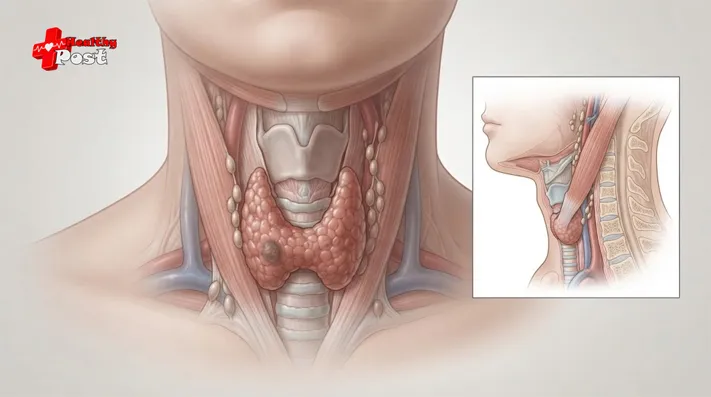
Papillary Thyroid Cancer
Papillary thyroid cancer is the most common type of thyroid cancer. The American Cancer Society states that about eight out of 10 thyroid cancers are papillary cancers. It generally grows slowly, although some tumors can spread to nearby lymph nodes.
Papillary cancer may produce no symptoms when it is small. When it becomes noticeable, possible findings include:
- A thyroid nodule or neck lump
- Enlarged lymph nodes
- Hoarseness or voice changes
- Difficulty swallowing
- Neck discomfort
This illustrates why symptoms alone are not a reliable way to judge risk. A small papillary tumor may be discovered before producing any obvious warning sign.
Medullary Thyroid Cancer
Medullary thyroid cancer (MTC) develops from thyroid C cells, which produce calcitonin. It is much less common than papillary thyroid cancer.
Possible findings include:
- A thyroid or neck mass
- Enlarged lymph nodes
- Difficulty swallowing
- Difficulty breathing
- Hoarseness
Some cases are associated with inherited changes in the RET gene and multiple endocrine neoplasia type 2 (MEN2). The National Cancer Institute notes that approximately one-quarter of reported medullary thyroid cancer cases are hereditary and that hereditary cases can be linked to RET variants.
Calcitonin is another important distinction. Because medullary thyroid cancer arises from calcitonin-producing C cells, calcitonin measurements can provide useful diagnostic or follow-up information in appropriate clinical circumstances.
For readers researching medications and thyroid C-cell tumors, HealthyPost also has an article discussing retatrutide and medullary thyroid carcinoma considerations. That information should not be used to diagnose either condition, but it can provide additional context about why MTC history is medically relevant.
Retatrutide and medullary thyroid carcinoma considerations
Other Types of Thyroid Cancer
Follicular thyroid cancer
Follicular thyroid cancer is another differentiated thyroid cancer. It is less common than papillary cancer and is more likely than papillary cancer to spread through the bloodstream to distant sites such as the lungs or bones, while lymph-node spread is less common.
Oncocytic or Hürthle cell carcinoma
Oncocytic carcinoma, historically called Hürthle cell cancer, is a less common differentiated thyroid cancer. It is recognized as a distinct type because its biological behavior can differ from conventional follicular thyroid cancer.
Anaplastic thyroid cancer
Anaplastic thyroid cancer is rare and tends to occur in older adults. Unlike many differentiated thyroid cancers, it can grow rapidly.
A rapidly enlarging neck mass accompanied by swallowing or breathing difficulty requires urgent medical assessment.
How Doctors Diagnose Thyroid Cancer
The thyroid cancer diagnosis does not come from symptoms alone. Doctors combine the patient’s history, physical examination, laboratory testing, imaging and, when appropriate, biopsy.
A typical evaluation may include:
- Medical history and neck examination
The clinician assesses the thyroid, the size and characteristics of any lump, and nearby lymph nodes. - Blood tests
Tests such as thyroid-stimulating hormone (TSH) help determine thyroid function. Importantly, thyroid blood tests can be normal even when a thyroid nodule contains cancer. - Thyroid ultrasound
Ultrasound can show whether a nodule is solid or fluid-filled, measure its size and identify characteristics associated with higher or lower levels of concern. It can also evaluate nearby lymph nodes. - Fine-needle aspiration biopsy
When a nodule has sufficient size or suspicious characteristics, a fine needle may be used to collect cells for examination by a pathologist. This is commonly called an FNA or fine-needle aspiration biopsy. - Additional testing when appropriate
Depending on the findings, clinicians may use additional imaging, molecular testing or specialized blood tests.
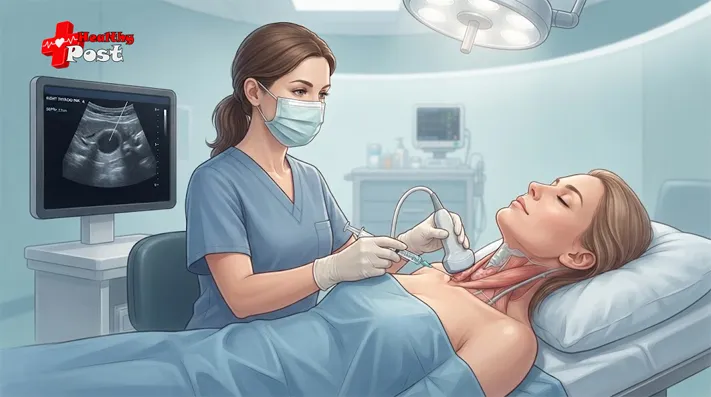
The American Thyroid Association describes ultrasound and fine-needle biopsy as key parts of thyroid nodule evaluation.
Thyroid Lump vs. Cancer: Why Symptoms Aren’t Enough
A thyroid nodule can cause symptoms without being cancerous, and a cancerous nodule can exist without obvious symptoms. That makes this one of the most important distinctions for anyone researching thyroid cancer.
| Finding | What it can mean | What it cannot tell you |
|---|---|---|
| Neck lump | Thyroid nodule, cyst, enlarged thyroid or another condition | Whether the lump is cancer |
| Hoarseness | Thyroid or voice-box problem, among other causes | Whether cancer is present |
| Difficulty swallowing | Pressure from a thyroid mass or many other conditions | The exact cause |
| Enlarged neck lymph node | Infection, inflammation or possible cancer involvement | Whether the node is cancerous |
| Normal thyroid blood tests | Thyroid function may be normal | That a nodule is definitely benign |
| Suspicious ultrasound findings | Greater reason for further assessment | A definitive cancer diagnosis by itself |
The American Thyroid Association emphasizes that most thyroid nodules are benign and that physical examination and blood tests alone generally cannot determine whether a nodule is cancerous.
That is why a thyroid ultrasound can be much more informative than trying to judge a lump by touch or appearance.
When Should You See a Doctor?
Arrange a medical evaluation if you notice a new, persistent or enlarging lump in the neck, particularly if it is accompanied by:
- Persistent hoarseness or another voice change
- Difficulty swallowing
- Difficulty breathing
- Enlarged lymph nodes
- Persistent neck or throat discomfort
- Noticeable growth of an existing lump
These symptoms do not mean you have cancer. They simply warrant an appropriate assessment so the underlying cause can be identified.
Breathing difficulty or rapidly increasing neck swelling deserves particularly prompt attention because a large mass can place pressure on the airway.
What If You Have No Symptoms?
The absence of symptoms does not completely exclude thyroid cancer.
Some thyroid cancers are discovered incidentally during imaging or when a clinician examines the neck for another reason. Small tumors may not create a visible lump, cause pain or affect swallowing and breathing.
At the same time, having a thyroid nodule does not mean cancer is present. Most thyroid nodules are benign.
This is why neither extreme—ignoring a lump because it does not hurt or assuming cancer because a lump exists—is appropriate.
Frequently Asked Questions
What is the first sign of thyroid cancer?
A thyroid lump or nodule is one of the more recognizable physical findings, but there is no universal first symptom. Early thyroid cancer can also be completely asymptomatic.
What does a thyroid cancer lump look like?
There is no distinctive appearance that reliably identifies cancer. Some tumors create visible swelling, while others are too small to see or feel. Ultrasound and, when indicated, biopsy are more useful than photographs for determining what a nodule represents.
Are thyroid lumps usually cancerous?
No. Most thyroid nodules are benign. However, a new, enlarging or suspicious nodule should be evaluated appropriately rather than diagnosed at home.
Is papillary thyroid cancer common?
Yes. Papillary thyroid cancer is the most common thyroid cancer and accounts for about eight out of 10 thyroid cancers, according to the American Cancer Society.
What are symptoms of medullary thyroid cancer?
Possible findings include a neck mass, enlarged lymph nodes, difficulty swallowing or breathing, and hoarseness. Some cases are hereditary and associated with RET gene variants and MEN2.
Can thyroid cancer cause hoarseness?
Yes. Persistent hoarseness or another voice change can occur when a thyroid cancer affects structures near the voice box. However, hoarseness has many other possible causes and does not by itself indicate cancer.
Key Takeaways
- Thyroid cancer symptoms can be subtle, and early thyroid cancer may cause no symptoms.
- A new or enlarging neck lump deserves medical evaluation, but most thyroid nodules are not cancerous.
- Persistent hoarseness, difficulty swallowing, breathing problems and enlarged neck lymph nodes are findings doctors may investigate.
- Pictures of thyroid cancer lump cannot reliably determine whether a person’s lump is cancerous.
- Papillary thyroid cancer is the most common thyroid cancer.
- Medullary thyroid cancer develops from calcitonin-producing C cells and can be associated with inherited RET variants and MEN2.
- Thyroid ultrasound helps identify suspicious nodule characteristics, while fine-needle aspiration can provide cells for pathological examination.
- Symptoms can raise concern, but diagnostic testing—not appearance alone—determines what a thyroid nodule represents.
If you notice a persistent or growing lump in your neck, particularly with voice, swallowing or breathing changes, arrange an evaluation with a qualified healthcare professional rather than relying on online photographs or symptom checklists.
References
- American Cancer Society — Signs and Symptoms of Thyroid Cancer
Supports the discussion of neck lumps, swelling, hoarseness, swallowing difficulty, breathing difficulty and other recognized symptoms. - American Thyroid Association — Thyroid Nodules
Supports information about benign thyroid nodules, thyroid ultrasound, thyroid function testing and fine-needle aspiration. - National Cancer Institute — Medullary Thyroid Cancer and Thyroid Cancer Treatment
Supports information about medullary thyroid cancer, calcitonin, hereditary MTC, RET variants and MEN2.