


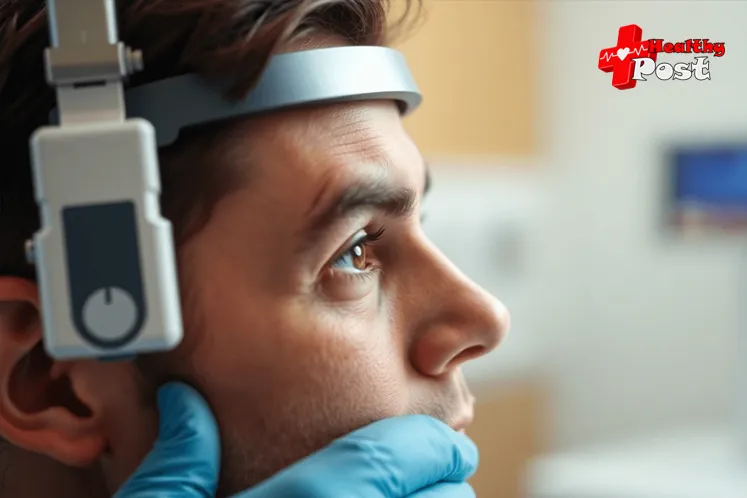
The Head Impulse Test (HIT) serves as a critical diagnostic tool in assessing your vestibular system’s functionality. This clinical examination evaluates the vestibulo-ocular reflex (VOR) – a vital mechanism that keeps your vision stable during head movements.
Think of your VOR as an automatic stabilizer for your eyes. When you move your head, this reflex triggers immediate eye movements in the opposite direction, allowing you to maintain clear vision. The Head Impulse Test specifically examines this function through quick, controlled head rotations.
The test’s primary components include:
- Rapid head movements performed by a healthcare provider
- Observation of eye movement responses
- Assessment of gaze stability during head rotation
- Detection of potential corrective eye movements
Your peripheral vestibular system plays a crucial role in maintaining balance and spatial orientation. By evaluating this system through the Head Impulse Test, healthcare providers can:
- Identify potential vestibular disorders
- Differentiate between peripheral and central causes of dizziness
- Guide appropriate treatment strategies
- Monitor recovery progress
This diagnostic approach proves particularly valuable for patients experiencing:
The Head Impulse Test stands as a cornerstone examination in vestibular assessment, providing essential insights into your inner ear function and helping healthcare providers deliver targeted treatment solutions.
How is the Head Impulse Test Performed?
The Head Impulse Test follows a precise protocol to ensure accurate assessment of vestibular function. Here’s a detailed breakdown of the procedure:
- Initial Patient Position
- Patient sits upright facing the examiner
- Eyes focused on examiner’s nose or a fixed target
- Head positioned approximately 30 degrees below horizontal
- Test Execution
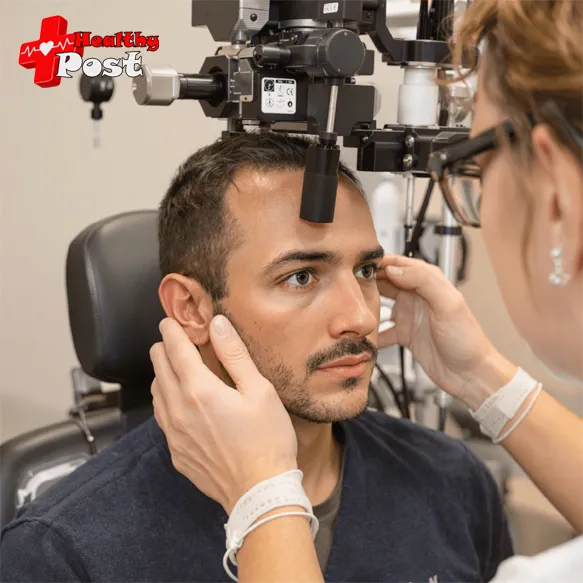
- Examiner places hands firmly on both sides of patient’s head
- Quick, unpredictable head rotations (15-20 degrees)
- Movements performed at high acceleration
- Direction alternates between left and right
- Test repeated 10-20 times for each side
- Patient Instructions
- Keep eyes fixed on target throughout test
- Avoid blinking during head movements
- Maintain relaxed neck muscles
- Report any discomfort or dizziness
Technical Specifications
- Head rotation speed: 150-300 degrees per second
- Movement duration: 100-200 milliseconds
- Rotation angle: 10-20 degrees from center
Advanced Testing Options
The test can be performed using specialized equipment:
- Video goggles with infrared cameras
- Motion sensors for precise movement tracking
- Computer software for detailed analysis
Safety Measures
- Support patient’s head throughout movement
- Stop immediately if patient experiences:
- Severe dizziness
- Nausea
- Neck pain
- Visual disturbances
Healthcare providers observe the patient’s eyes during each head rotation, looking for signs of corrective eye movements that might indicate vestibular dysfunction. The test requires skill and experience to perform correctly, as improper technique can lead to false results.
Understanding Test Results: Normal vs Abnormal VOR Responses
Normal VOR Response Characteristics
A normal VOR response during the Head Impulse Test shows specific characteristics:
- Eyes remain fixed on the target throughout head movement
- No visible corrective eye movements
- Smooth, continuous gaze stabilization
- Equal responses on both sides
When vestibular function is intact, your brain automatically adjusts eye position to maintain visual focus despite rapid head movements. This compensation happens instantly, allowing you to keep your vision clear and stable.
Abnormal VOR Response Patterns
An abnormal VOR response displays distinct patterns:
- Initial loss of target fixation
- Visible corrective saccade after head movement
- Delayed gaze stabilization
- Asymmetrical responses between sides
The presence of a corrective saccade serves as a key indicator of vestibular dysfunction. This quick, catch-up eye movement occurs when your brain realizes it has lost the target and needs to refocus. The timing and direction of these saccades provide valuable diagnostic information:
- Overt saccades: Visible to the naked eye, occurring after head movement
- Covert saccades: Only detectable with specialized equipment, occurring during head movement
Factors Affecting Test Result Interpretation
Test result interpretation depends on several factors:
- Direction of abnormal response
- Presence of unilateral vs bilateral dysfunction
- Severity of corrective saccades
- Consistency of responses across multiple trials
A positive test result (presence of corrective saccades) typically indicates dysfunction in the semicircular canal corresponding to the direction of head movement. Unilateral abnormalities suggest conditions like vestibular neuritis, while bilateral abnormalities might point to more systemic vestibular disorders.
The magnitude and consistency of corrective saccades help determine the severity of vestibular dysfunction. Larger, more consistent saccades often correlate with more significant impairment, guiding treatment decisions and monitoring recovery progress.
Clinical Applications of the Head Impulse Test in Dizziness Evaluation
The Head Impulse Test serves as a critical diagnostic tool for clinicians to distinguish between peripheral and central causes of vertigo. This distinction plays a vital role in determining appropriate treatment paths and identifying potentially serious conditions.
Key Diagnostic Applications:
Acute Vestibular Syndrome Assessment
- Helps identify vestibular neuritis
- Rules out stroke in emergency situations
- Evaluates sudden onset vertigo cases
Chronic Vestibular Conditions
- Monitors Ménière’s disease progression
- Assesses bilateral vestibular loss
- Tracks recovery in vestibular rehabilitation
The test proves particularly valuable in emergency settings where rapid differentiation between benign peripheral conditions and serious central pathologies is crucial. A positive head impulse test typically indicates peripheral vestibular dysfunction, while a negative test might suggest central pathology requiring immediate attention.
Common Conditions Where HIT Aids Diagnosis:
- Vestibular Neuritis
- Labyrinthitis
- Multiple Sclerosis
- Post-Traumatic Vertigo
The test’s ability to detect unilateral vestibular loss makes it invaluable for diagnosing conditions affecting single semicircular canals. When combined with other vestibular tests, the Head Impulse Test creates a comprehensive picture of vestibular function, enabling clinicians to develop targeted treatment strategies.
Clinical research demonstrates that early identification of vestibular disorders through HIT can lead to better patient outcomes, particularly in cases where prompt intervention is crucial. The test’s non-invasive nature and immediate results make it an essential component of the modern vestibular examination toolkit.
The Role of Semicircular Canals in Vestibular Evaluation: Why They Matter for Accurate Diagnosis
Your semicircular canals act as natural motion sensors, detecting head movements in three different planes. These tiny structures house specialized hair cells that respond to fluid movement, sending signals to your brain about your head’s position and motion.
Key Functions of Semicircular Canals:
- Detect angular head movements
- Maintain balance during motion
- Enable clear vision while moving
- Coordinate eye-head movements
A thorough semicircular canals assessment reveals crucial information about your vestibular system’s health. Each canal responds to specific head movements, making it possible to identify exactly which part of your vestibular system might be affected.
Complementary Testing Methods:
- Video Head Impulse Test (vHIT): Provides detailed measurements of each canal’s function
- Caloric Testing: Evaluates horizontal canal function
- Rotary Chair Testing: Assesses both sides of the vestibular system simultaneously
These tests work together to create a complete picture of your vestibular health. The Head Impulse Test specifically examines the high-frequency function of your semicircular canals, while other tests assess different aspects of vestibular function.
Understanding the role of semicircular canals helps clinicians pinpoint the exact location of vestibular dysfunction. This precise identification leads to more targeted and effective treatment strategies for patients experiencing dizziness or balance issues.
When Should You Consider Getting a Head Impulse Test?
Healthcare professionals recommend the Head Impulse Test in specific situations where vestibular function evaluation becomes crucial. Here are the key scenarios that might prompt your doctor to perform this test:
1. Acute Onset Symptoms
The Head Impulse Test may be recommended if you experience any of the following symptoms suddenly:
- Sudden, severe dizziness lasting hours or days
- Unexpected episodes of vertigo
- New onset of balance problems
- Unexplained falls
2. Specific Complaints
This test can also help assess specific complaints such as:
- Visual disturbances during head movement
- Difficulty focusing while walking
- Sensation of room spinning
- Persistent nausea associated with movement
3. Post-Event Assessment
If you have recently experienced certain events, your healthcare provider might suggest the Head Impulse Test to evaluate potential vestibular issues:
- Following head trauma
- After viral infections affecting the inner ear
- Recent episodes of vestibular neuritis
- Suspected Meniere’s disease
4. Risk Assessment Situations
In situations where there are concerns about balance or risk factors for falls, this test may be considered as part of the assessment:
- Age-related balance concerns
- Occupational requirements for balance testing
- Pre-surgical evaluation for certain ear procedures
- History of recurrent falls
The Head Impulse Test becomes particularly relevant if you experience these symptoms alongside other vestibular signs. Your healthcare provider might combine this test with additional diagnostic tools to create a comprehensive evaluation of your vestibular system and determine the most appropriate treatment approach.
Limitations and Considerations with the Head Impulse Test
The Head Impulse Test presents specific challenges that healthcare providers must consider for accurate diagnosis:
Patient-Related Factors
- Neck mobility issues can restrict proper head movement
- Inability to maintain visual focus during testing
- Anxiety or tension leading to anticipatory eye movements
- Medical conditions affecting eye movement control
Technical Execution Challenges
- Speed and amplitude of head thrust must be precise
- Insufficient head acceleration can produce false-negative results
- Excessive head movement may trigger compensatory mechanisms
Interpretation Complexities
- Subtle corrective saccades might be difficult to detect visually
- Bilateral vestibular loss can complicate result interpretation
- Pre-existing eye movement disorders may interfere with assessment
Environmental Considerations
- Proper lighting conditions are essential for accurate observation
- Room setup must allow for unobstructed head movement
- Visual target placement affects test reliability
Healthcare providers often combine the Head Impulse Test with additional vestibular assessments to overcome these limitations and ensure accurate diagnosis. Video-based recording systems can help address some visual detection challenges, providing more precise measurement of eye movements during testing. It’s also critical for clinicians to be aware of the potential pitfalls in interpreting the results, which can lead to misdiagnosis or inappropriate treatment plans.
Conclusion
The Head Impulse Test is an essential diagnostic tool in modern vestibular assessment. This simple yet powerful examination allows healthcare providers to:
- Make quick, accurate diagnoses of vestibular conditions
- Differentiate between peripheral and central causes of vertigo
- Create targeted treatment plans based on specific findings
- Monitor patient progress throughout rehabilitation
The test’s non-invasive nature, combined with its high diagnostic accuracy, makes it an invaluable asset in clinical settings. Healthcare professionals can detect vestibular dysfunction early, leading to faster intervention and better patient outcomes.
For patients experiencing dizziness or vertigo symptoms, the Head Impulse Test provides a reliable pathway to understanding their condition. The test results help shape personalized treatment strategies, from medication choices to specific vestibular rehabilitation exercises.
The Head Impulse Test remains a vital component in the comprehensive evaluation of balance disorders, helping countless individuals regain their stability and quality of life through precise diagnosis and targeted treatment approaches.
FAQs (Frequently Asked Questions)
What is the Head Impulse Test and why is it important?
The Head Impulse Test is a clinical examination used to assess the vestibulo-ocular reflex (VOR) function, which reflects peripheral vestibular function. It is crucial for accurately diagnosing conditions related to dizziness and vertigo by evaluating how well the inner ear and brain coordinate eye movements during head rotations.
How is the Head Impulse Test performed?
The test involves quickly rotating the patient’s head in small, sudden movements while observing their eye movements. The clinician looks for the eyes’ ability to maintain fixation on a target despite these head impulses, assessing the patient’s VOR response to detect any abnormalities.
What indicates a normal versus an abnormal VOR response during the Head Impulse Test?
A normal VOR response shows the eyes maintaining fixation on a target without corrective movements during head rotations. An abnormal response is characterized by corrective saccades—quick eye movements that compensate for impaired vestibular function—indicating possible vestibular dysfunction.
How does the Head Impulse Test help differentiate between peripheral and central causes of vertigo?
By assessing the integrity of peripheral vestibular function via VOR responses, the Head Impulse Test aids clinicians in distinguishing vertigo caused by peripheral issues such as semicircular canal deficits from central nervous system causes, enabling targeted diagnosis and treatment.
Why is assessing semicircular canals important in vestibular evaluation with the Head Impulse Test?
The semicircular canals play a key role in detecting rotational head movements and maintaining balance. Evaluating their function through the Head Impulse Test helps identify peripheral vestibular deficits accurately, often complemented by other tests for comprehensive assessment.
When should a healthcare professional recommend undergoing a Head Impulse Test?
The test is recommended when patients present symptoms like unexplained dizziness or vertigo, especially when differentiating between peripheral and central causes is necessary. It serves as an essential diagnostic tool in clinical scenarios requiring evaluation of vestibular function.