


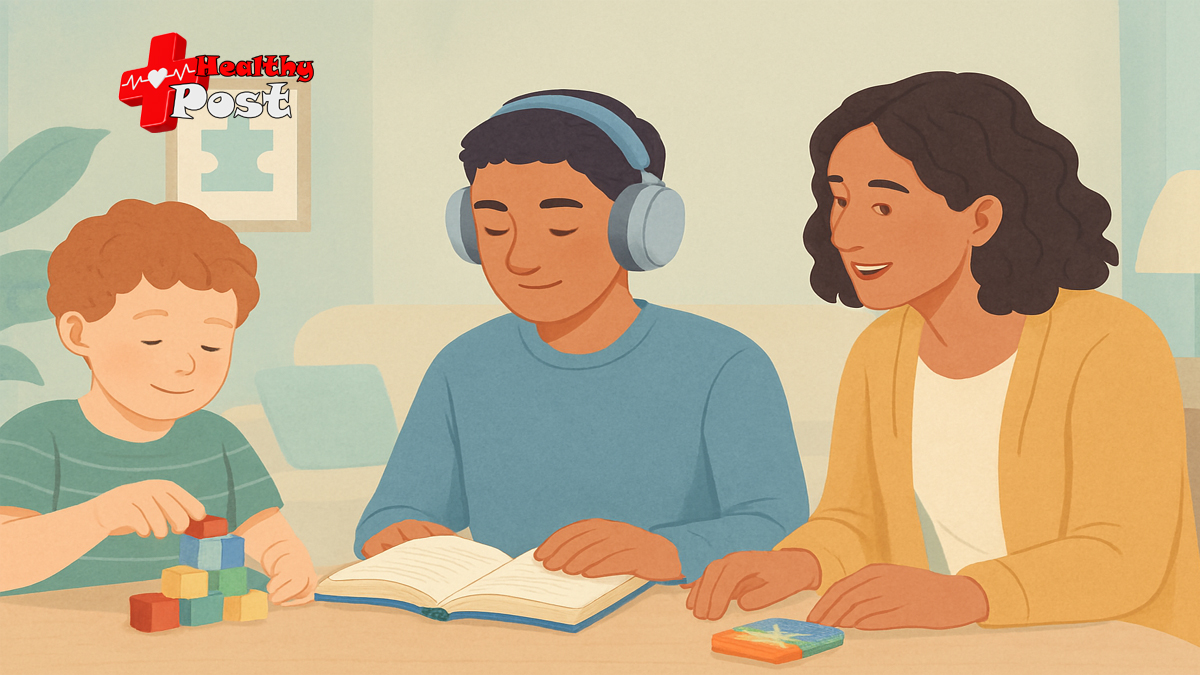
Many people first hear the word autism in a moment of worry. A teacher raises a concern. A doctor suggests an evaluation. A loved one seems “different” in ways you cannot explain.
It can feel scary. Yet behind the label is not a disease, but a different way of experiencing the world. Autism spectrum disorder (ASD) affects communication, social interaction, and behavior. It also shapes perception, attention, and even creativity.
This guide shares 7 positive ways to understand autism symptoms and what people often call high functioning autism. You will see how traits fit together, where support helps most, and why many autistic adults now embrace a neurodiversity perspective. 🌈
1. Understanding What Autism Spectrum Disorder Really Is
When people ask “what is autism?”, they often expect a simple answer. In reality, ASD is complex, varied, and deeply individual.
ASD is a neurodevelopmental condition, not a disease
Autism spectrum disorder is a lifelong neurodevelopmental condition. That means:
- It begins early in brain development.
- It affects how a person learns, senses, and relates to others.
- It is not something you “catch” or “cure.”
Autistic people are not “broken neurotypicals.” Their brains are wired differently. This wiring shapes:
- Communication style
- Sensory experiences
- Movement and coordination
- Emotional regulation
Thinking in terms of difference, not damage, can reduce shame and blame for everyone involved.
How common is ASD?
Research in the United States shows that about 1 in 54 children receive a diagnosis of ASD. Males are diagnosed about four times more often than females.
However, many girls and women are missed or diagnosed late. They may mask their traits, copy social behavior, or be labeled with anxiety or depression instead.
What causes ASD?
Scientists do not know a single cause, but they do know several things:
- Genetics play a major role.
- Environmental and developmental factors may influence how traits appear.
- Vaccines, diet, and parenting styles do not cause ASD.
Parents do not cause autism. Poor discipline does not cause it. Cold or distant parenting does not cause it.
Relieving families of this blame is often the first healing step. 💛
2. Noticing Early Signs and Autism Symptoms With Compassion
Understanding early autism symptoms helps families seek support sooner. However, traits can look different at every age.
Early signs of autism in babies and toddlers
Some early signs of autism may appear in the first years of life. For example:
- Limited eye contact or social smiles
- No babbling or pointing by 12 months
- No single words by 16 months
- Not responding to their name
- Lining up toys instead of imaginative play
- Avoiding cuddles or seeming “in their own world”
Any one trait alone does not prove ASD. Patterns over time matter more than single behaviors.
How traits can look in older children
In preschool and school years, the autism spectrum can show up as:
- Strong discomfort with changes in routine
- Repeating phrases from shows (echolalia)
- Taking language very literally
- Difficulty starting or joining conversations
- Deep focus on one topic, like trains or dinosaurs
- Meltdowns after busy or noisy days
An older child may cope well at school yet collapse at home. This does not mean they are “fine” and just misbehave with parents. It often means they work very hard to mask during the day.
Adults on the autism spectrum
Many adults discover they are on the autism spectrum after their child is diagnosed, or after years of feeling “different.” Traits might include:
- Exhaustion after social events
- Difficulty reading between the lines
- Strong preference for routine and predictability
- Discomfort with small talk
- History of burnout, anxiety, or depression
Online tools, such as an informal autism test or autism spectrum test, can raise self-awareness. They cannot replace a full clinical assessment, but they may encourage someone to seek a professional opinion.
Approach any concern with gentleness. Curiosity helps more than judgment. 🌱

3. Seeing Sensory Differences as a Different Way of Experiencing the World
Many autistic people describe sensory life as either “too loud” or “too quiet.” Sensory differences are not minor quirks. They shape daily comfort, behavior, and even safety.
Hypersensitivity and hyposensitivity
A person on the spectrum may be:
- Hypersensitive (over‑sensitive) to sounds, lights, smells, textures, or touch
- Hyposensitive (under‑sensitive) and seek stronger input, like spinning or crashing into things
Examples:
- A shopping mall feels like standing under a speaker at a rock concert.
- Clothing tags feel like sandpaper.
- Fluorescent lights flicker visibly and painfully.
From a Western clinical view, this is called sensory overload. Many writers on Chinese platforms like Zhihu describe it more personally. They talk about “burning ears” from noise or “losing words” when overwhelmed.
When sensory overload leads to shutdowns or meltdowns
Overload can lead to:
- Meltdowns: intense crying, yelling, or aggression, often from panic and pain
- Shutdowns: going quiet, withdrawing, or even losing the ability to speak
These are not tantrums. They are distress responses. Support looks different:
- Reduce noise and light.
- Offer a quiet space without questions.
- Speak softly and simply.
Instead of punishing a meltdown, ask: What sensory demands were too high?
Reframing behavior through a sensory lens
Many behaviors that confuse others make sense through a sensory lens:
- A child covers their ears in the cafeteria.
- An adult always wears headphones in public.
- Someone avoids hugs but enjoys deep pressure from a weighted blanket.
When you understand the sensory world, it becomes easier to respond with empathy instead of frustration. 🌟
4. Appreciating Special Interests, Stimming, and Emotional Regulation
Another way to view autism symptoms positively is to focus on how they help a person cope, learn, or feel joy.
Special interests are deep, meaningful passions
Autistic people often have special interests. These are intense, long‑lasting fascinations with:
- Topics (history, astronomy, anime)
- Systems (train schedules, calendars, maps)
- Activities (drawing, coding, music)
From one angle, the Western literature calls this “hyperfocus.” Many autistic adults describe these interests as lifelong passions that:
- Provide comfort and stability
- Support careers and expertise
- Create identity and community
Parents and teachers can use interests as bridges, not barriers. For example:
- Teaching math using train timetables
- Practicing writing through favorite characters
Stimming: self‑stimulatory behavior that regulates the nervous system
It means self‑stimulatory behavior, such as:
- Hand flapping
- Rocking
- Humming or repeating sounds
- Spinning objects
- Tapping fingers or feet
Stimming helps many autistic people:
- Reduce anxiety
- Manage sensory input
- Maintain focus
Unless it is dangerous, stimming usually does not need to be stopped. Instead, you can:
- Offer safer alternatives if needed
- Allow time and space for movement breaks
Stopping stimming without offering support can increase stress and lead to more intense behavior later.
Emotional regulation: shutdowns, meltdowns, and burnout
Both Zhihu writers and Western sources like Medical News Today describe emotional regulation challenges. Terms differ, but experiences overlap:
- Shutdown: withdrawing, going quiet, losing speech or movement
- Meltdown: explosive distress, crying or yelling, sometimes self‑injury
- Burnout: deep exhaustion from long‑term masking and overload
Supportive strategies include:
- Predictable routines
- Clear, honest communication
- Extra rest after busy events
- Validation instead of criticism
Instead of focusing only on stopping distress, focus on reducing the load that caused it.
Comparison of Perspectives on the Autism Spectrum
| Aspect | Zhihu Perspective (China) | Medical News Today (West) |
|---|---|---|
| Focus | Personal stories and everyday traits | Clinical features, diagnosis, and support options |
| Sensory differences | Strong emphasis on personal sensory experience | Often framed as “sensory overload” and environmental triggers |
| Emotional regulation | Talks about shutdowns, meltdowns, and long‑term burnout | Describes outbursts, distress, and shutdown in medical language |
| Special interests | Seen as deep, meaningful, lifelong passions | Described as hyperfocus on particular topics or objects |
| Support strategies | Understanding, tolerance, stable routine, family acceptance | Therapies, structured programs, and evidence‑based interventions |
| Overall outlook | Celebrates diversity within humanity | Stresses early intervention to improve outcomes |
Both views add value. Together, they offer a more complete, human picture of life on the autism spectrum disorder continuum.
5. How Assessment and an Autism Test Actually Work
Hearing that someone needs an autism test can raise many fears. Some imagine a pass‑fail exam. Others fear permanent labels. In reality, assessment is a detailed, careful process.
DSM‑5 criteria: how clinicians define ASD
Clinicians use the DSM‑5 (Diagnostic and Statistical Manual of Mental Disorders, 5th edition) to guide diagnosis. ASD has two major areas of criteria:
- Persistent difficulties in social communication and social interaction, such as:
- Trouble with back‑and‑forth conversation
- Difficulty understanding gestures or facial expressions
- Challenges forming and maintaining relationships
- Restricted, repetitive patterns of behavior, interests, or activities, such as:
- Repetitive movements or speech
- Insistence on sameness and routines
- Intense special interests
- Unusual responses to sensory input
These traits must cause significant impact in daily life, and not be better explained by another condition.
What happens in an assessment?
A full assessment often includes:
- Detailed developmental history with caregivers
- Observation of social interaction and play
- Questionnaires about behavior and sensory experiences
- Possibly hearing or vision checks to rule out other issues
Tools sometimes called an autism spectrum test help structure observation. They are not just yes/no forms, but complex rating systems used by trained professionals.
For more details on diagnostic criteria and current research, many families explore summaries provided according to article/topic from national health organizations.
Online quizzes vs. professional evaluation
Online self‑checks can:
- Increase self‑understanding
- Help adults recognize long‑term patterns
- Offer language for discussion with a doctor
They cannot:
- Provide an official diagnosis
- Capture the full complexity of a person’s life
- Replace interviews and direct observation
If results raise concerns, the next step is to seek a professional assessment. Early diagnosis, ideally by age two, can improve access to support. Yet it is never too late to understand yourself better.
6. Everyday Support Strategies That Respect Autistic Strengths
Once you understand traits, the next question appears: How can we help?
Support works best when it aims not to erase difference, but to reduce distress and build skills.
Therapies that can help
Depending on age and needs, families may consider:
- Speech and language therapy
- Builds communication skills, both spoken and non‑spoken
- Occupational therapy (OT)
- Supports sensory processing, coordination, daily living skills
- Applied Behavior Analysis (ABA) and related approaches
- Focuses on teaching specific skills and reducing unsafe behaviors
- Quality varies; ethical, consent‑based practice is essential
- Social skills training
- Helps decode social rules and practice conversations
Therapy should be:
- Respectful of the child’s autonomy
- Open to alternative communication methods
- Sensitive to sensory and emotional needs
Medication for co‑occurring conditions
There is no medication that “treats autism” itself. However, many autistic people also experience:
- Anxiety
- Depression
- ADHD
- Epilepsy
- Sleep difficulties
Medication may help with these co‑occurring conditions. Any medication plan should be combined with psychological and environmental support.
Practical strategies at home and school
Support does not only happen in clinics. Small daily changes can bring big relief. For example:
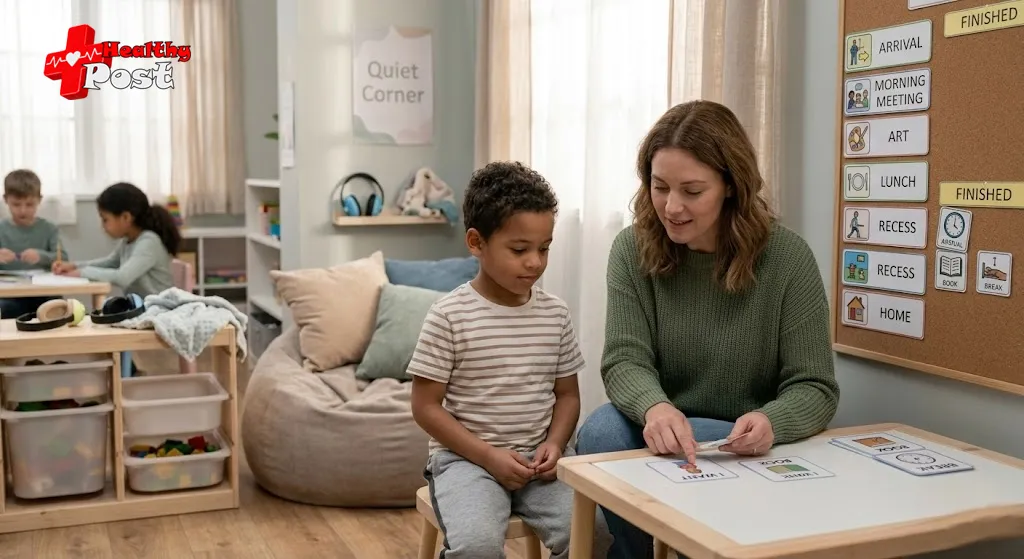
- Use visuals and routines
- Picture schedules
- Timers for transitions
- Prepare for changes in advance
- Talk through what will happen
- Use stories or role‑play
- Adjust the environment
- Reduce noise where possible
- Offer quiet corners and sensory tools
- Offer choices, not constant demands
- “Do you want to start homework or snack first?”
- Build on strengths and interests
- Use special interests to motivate and teach
Listening to autistic voices is key. Many adults share their experiences in blogs, books, and interviews according to article/topic from health and news platforms. Their insights can guide more respectful support. 📚
7. Embracing High Functioning Autism and the Neurodiversity Perspective
The term high functioning autism is common in everyday conversation. Many adults relate to it when they can speak, study, or work, yet still struggle inside.
Clinically, professionals now use the broader term autism spectrum disorder with different support levels. Still, the phrase “high functioning” raises important issues.
What people usually mean by “high functioning”
When people say “high functioning,” they often mean:
- The person can speak fluently.
- They attend mainstream school.
- They can live somewhat independently.
- Their traits are less visible to others.
However, internal challenges may still be intense:
- Sensory overload at work
- Difficulty reading social cues
- Chronic fatigue from masking
- Repeated burnout
A person may seem “fine” at first glance yet feel overwhelmed every day. Functioning labels often hide this reality.
Why many prefer the neurodiversity view
The neurodiversity perspective sees conditions like ASD as part of natural human variation. It does not deny real challenges. Instead, it:
- Rejects the idea that only one brain type is “normal”
- Values autistic communication and thinking styles
- Emphasizes accessibility and accommodations
During autism awareness month, many advocates ask for a shift from “awareness” to acceptance and appreciation. They invite society to:
- Offer flexible work and study environments
- Respect stimming and sensory needs
- Listen to autistic voices in policy and research
Outlook: life across the autism spectrum
Life outcomes on the spectrum are diverse:
- Some people need 24‑hour care throughout life.
- Some live independently with minimal support.
- Others fall in between, needing flexible, changing help.
Early, respectful support improves options. Yet growth can continue in every decade. Many adults discover strengths later in life once they understand their brains.
Autistic people can be:
- Artists, engineers, writers, parents
- Detail‑focused analysts
- Loyal friends
- Innovative thinkers
A diagnosis does not limit potential. It explains patterns and opens new doors. 🌍
FAQs About ASD and High Functioning Profiles
1. Is autism the same as Asperger’s?
No. Asperger’s was a separate diagnosis in older manuals. The DSM‑5 now includes it under autism spectrum disorder. People previously diagnosed with Asperger’s are still autistic.
2. Can someone be “a little autistic”?
Professionally, a person either meets criteria for ASD or does not. However, many people share some autistic traits. Traits exist on a continuum in the general population.
3. Does a high score on an online autism test mean I am autistic?
Not necessarily. Online quizzes can highlight patterns worth exploring. Only a qualified professional can diagnose ASD after a full assessment.
4. Can autism be cured?
No. ASD is a lifelong way of processing the world. Support can reduce distress and build skills. Many autistic people do not want a “cure.” They want understanding, accommodations, and respect.
5. Why do some autistic people have amazing skills, like in movies?
About 1 in 10 autistic people may have “savant” abilities. These can appear in memory, music, art, or math. Media often exaggerates this. Most autistic people do not have extreme savant skills, but many have strong talents.
6. When should I seek an evaluation?
Seek an evaluation if you see persistent signs of autism, such as social communication difficulties, sensory issues, repetitive behavior, or intense need for routine. Trust your observations. Early evaluation opens doors to support.
Conclusion: Bringing It Together for a More Hopeful Understanding of Autism
Understanding autism means seeing more than a list of symptoms. It means recognizing a different way of sensing, thinking, and feeling. It means noticing how traits like special interests, stimming, and strong routines can help a person cope and grow.
This article has explored seven positive ways to approach high functioning autism and the broader spectrum:
- Seeing ASD as neurodevelopmental difference, not disease
- Recognizing early and later‑life traits with compassion
- Viewing sensory differences as central, not minor
- Appreciating special interests and stimming
- Understanding assessment and what an autism spectrum test can and cannot do
- Using therapies and daily strategies that respect autonomy
- Embracing neurodiversity and moving from awareness to acceptance
Your role—whether as parent, partner, friend, teacher, or autistic person yourself—matters. Small shifts in understanding can transform daily life.
During every month, not just autism awareness month, you can:
- Listen to autistic voices
- Advocate for sensory‑friendly spaces
- Support flexible communication
- Celebrate strengths alongside challenges
With informed, compassionate support, people on the spectrum can build meaningful, self‑directed lives. That is the heart of a truly positive understanding of autism. 💛