

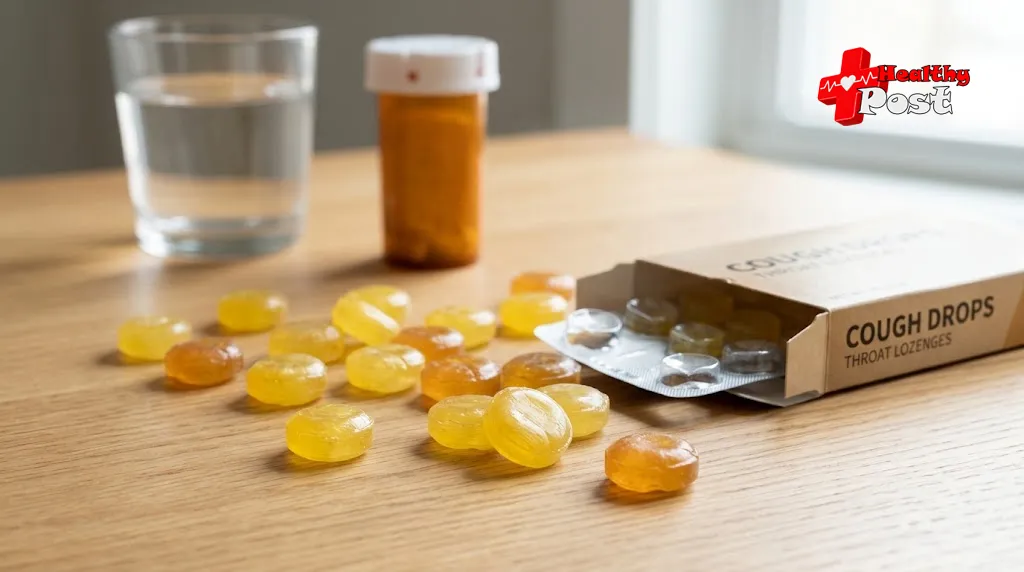
This article, “Can You Overdose on Cough Drops? Symptoms, Risks & What to Do,” is intended for informational and educational purposes only and should not be taken as medical advice, diagnosis, or treatment. Always consult a qualified healthcare professional or pharmacist regarding any medical concerns or potential overdose risks.
Article has been written by Dr. Mary Jacob, Registered Pharmacist, Goulburn Valley Health ↗

💊 Medical Review Board Member
Dr. Mary Jacob
Registered Australian Pharmacist | Goulburn Valley Health
Dr. Mary Jacob is a registered Australian pharmacist with an extensive background in pharmaceutical care, medication safety, and patient health education. Dedicated to upholding the highest standards of healthcare communication, she specializes in translating complex pharmacological data and medication guidelines into clear, accurate, and actionable resources for everyday readers.
Cough drops are easy to think of as harmless candy, especially when they are used to soothe a scratchy throat throughout the day. But can you overdose on cough drops? Yes. Taking more than the amount recommended on a product label can cause unwanted effects, and the risk depends on the ingredients, strength, amount consumed, and the person’s age and health.
That does not mean that eating an extra cough drop automatically causes dangerous poisoning. Many ordinary menthol lozenges contain a relatively small amount of menthol, and serious toxicity from typical cough-drop use appears uncommon. However, consuming a large quantity, swallowing an unknown product, or developing significant symptoms should not be ignored.
The safest approach is simple: do not use a universal number as your personal limit. Check the exact package directions, because cough drops are not all formulated the same way.
What Are Cough Drops?
Cough drops, also called throat lozenges, are products that dissolve slowly in the mouth to temporarily soothe an irritated throat or relieve coughing, depending on their ingredients.
Some medicated cough drops contain menthol, which produces the familiar cooling sensation. Others may contain different active ingredients, while nonmedicated lozenges may rely on ingredients such as honey, pectin, herbs, or other soothing substances.
This difference matters when asking how many cough drops can you take. The answer cannot safely be reduced to one number for every product.
For example, a current DailyMed label for Ricola Original Natural Herb Cough Drops lists 4.8 mg of menthol per drop and directs adults and children 6 years and older to dissolve two drops, one at a time, slowly in the mouth and repeat every two hours as needed or as directed by a doctor. Children under 6 are directed to ask a doctor. That is the dosing instruction for that particular product, not a universal recommendation for all cough drops.
Can You Overdose on Cough Drops?
Yes, taking more than the recommended amount can potentially cause adverse effects. However, an overdose does not necessarily mean that severe poisoning will occur.
The distinction is important. Poison Control explains that an overdose involves taking or being exposed to more than the recommended amount, but the consequences depend on the substance and the amount involved.
For ordinary menthol cough drops, serious systemic toxicity is considered different from swallowing a concentrated menthol product. MedlinePlus notes that menthol can be harmful in large amounts and that it is found in products including cough drops. It also describes much more serious poisoning symptoms after significant menthol exposure.
So, if someone accidentally takes one additional lozenge, that situation should not automatically be treated as severe poisoning. On the other hand, eating a large number of cough drops, taking an unknown product, or developing concerning symptoms warrants professional advice.
Why the product matters
Two packages can both be labeled “cough drops” while containing different ingredients and strengths.
| Product characteristic | Why it matters |
|---|---|
| Active ingredient | Different ingredients have different risks |
| Strength per lozenge | A stronger product can provide more active ingredient per drop |
| Sugar or sugar alcohols | Large amounts may contribute to digestive symptoms |
| Age directions | Children may have different restrictions |
| Other medicines | Some products contain multiple active ingredients |
| Amount consumed | Risk generally increases with greater exposure |
This is why calculating a supposedly “safe” number of cough drops without knowing the product can be misleading.
How Many Cough Drops Can You Take?
There is no universal maximum number of cough drops that applies to everyone.
The appropriate amount depends on the exact product, including its:
- active ingredient
- strength per lozenge
- age directions
- formulation
- other ingredients
- warnings and dosing instructions
The product label should be your first reference.
For example, the current DailyMed listing for Ricola Original Natural Herb Cough Drops contains 4.8 mg of menthol per drop and gives specific directions for adults and children 6 years and older. It says to dissolve two drops slowly in the mouth, one at a time, and repeat every two hours as needed or as directed by a doctor.
That example should not be turned into a general rule such as “you can safely take X cough drops every day.” Another product may have a different formulation or different directions.
If you are unsure about the appropriate amount, check the Drug Facts label or ask a pharmacist or healthcare professional.
Too Many Cough Drops Symptoms
Eating too many cough drops may cause digestive discomfort, particularly when a person consumes a substantial amount.
Possible too many cough drops symptoms can include:
- nausea
- vomiting
- stomach or abdominal pain
- diarrhea
- bloating
- abdominal discomfort
- heartburn or digestive irritation
The exact symptoms depend on what was consumed. Menthol itself can cause gastrointestinal symptoms when exposure is significant, while other ingredients may contribute to digestive problems as well. MedlinePlus lists abdominal pain, diarrhea, nausea, and vomiting among possible symptoms of significant menthol poisoning.
Sugar-free cough drops are not automatically harmless
Sugar-free lozenges deserve particular attention because some contain sugar alcohols such as sorbitol or isomalt.
For example, a DailyMed listing for a sugar-free Ricola product identifies sorbitol and isomalt among its inactive ingredients.
Large amounts of sugar alcohols can cause gastrointestinal symptoms such as gas, bloating, abdominal cramping, and diarrhea in some people. Therefore, someone who has been eating many sugar-free cough drops may experience digestive symptoms even if the product contains relatively little medication.
Cough Drop Overdose Symptoms: When to Be Concerned
The severity of cough drop overdose symptoms depends on the specific product and the amount consumed.
Significant menthol exposure can cause symptoms such as:
- nausea and vomiting
- abdominal pain
- diarrhea
- dizziness
- rapid heartbeat or palpitations
- tremors
- unsteady walking
- confusion
- seizures
- loss of consciousness
- rapid or shallow breathing
These are symptoms associated with significant menthol poisoning, not a list of effects that should be expected after eating a few ordinary cough drops. MedlinePlus specifically notes that severe menthol poisoning can affect the digestive, cardiovascular, respiratory, and nervous systems.
The distinction is especially important because concentrated menthol exposure and the relatively small amount of menthol in a typical lozenge are not equivalent exposures.
Menthol cough drops are not the same as pure menthol
Menthol is responsible for the cooling sensation found in many cough drops. But menthol-containing cough drops should not be treated as though they contain concentrated pure menthol.
A current DailyMed listing for Ricola Original Natural Herb Cough Drops, for example, contains 4.8 mg of menthol per lozenge alongside several inactive ingredients.
MedlinePlus, meanwhile, discusses menthol poisoning primarily in the context of swallowing harmful amounts of menthol and notes that the outcome depends partly on the quantity and the other ingredients in the product.
That means readers should not try to calculate their own poisoning threshold by comparing a cough drop with concentrated menthol or peppermint oil.
When Is a Cough Drop Overdose a Medical Emergency?
Most accidental excess consumption does not necessarily lead to a medical emergency, but certain symptoms require immediate attention.
Call emergency services if the person:
- has difficulty breathing
- has a seizure
- collapses
- cannot be awakened
- develops severe or rapidly worsening confusion
- has severe symptoms that are getting worse
Poison Control specifically advises calling emergency services immediately when a person collapses, has a seizure, has trouble breathing, or cannot be awakened.
A serious allergic reaction is another emergency. Swelling of the lips, tongue, face, or throat, wheezing, or difficulty breathing should be treated as an emergency rather than assumed to be an ordinary side effect of a cough drop.
If the person is conscious and symptoms are mild, professional poison advice can help determine whether home observation is appropriate.
What Should You Do If You Take Too Many Cough Drops?
If you realize that you have consumed more cough drops than the package recommends, avoid trying to judge the risk from the number alone.
Instead:
- Stop taking additional cough drops.
- Keep the package or wrapper available.
- Check the active ingredients and strength.
- Estimate how many lozenges were consumed.
- Note approximately when they were eaten.
- Consider the person’s age and weight, particularly for a child.
- Record any symptoms that have developed.
- Contact a poison center or healthcare professional if the amount was significant, the product is unknown, or symptoms are developing.
Poison Control’s online tool is designed to assess exposures using information such as the person’s age, the substance, the amount, and symptoms.
Do not deliberately induce vomiting. Poison Control states that inducing vomiting is not recommended for swallowed poison exposures.
If you are outside the United States, use your country’s poison-information service or emergency medical system rather than relying on the U.S. Poison Control telephone number.
Are Cough Drops Safe for Children?
Cough drops require extra caution around young children.
There are two separate issues: ingredient exposure and choking risk.
A child may also mistake cough drops for candy and consume several before an adult notices. Product age restrictions vary. The current DailyMed label for Ricola Original Natural Herb Cough Drops says not to use the product in children under 6 unless directed by a doctor.
Parents and caregivers should:
- keep medicated lozenges out of children’s reach
- follow the age restriction on the exact package
- avoid assuming that an adult product is suitable for a child
- keep track of how many lozenges a child receives
- seek poison-control advice after a significant or unknown ingestion
If a young child has swallowed a cough drop and is choking or having difficulty breathing, treat that as an emergency rather than waiting for poisoning symptoms.
Parents should also distinguish a simple throat lozenge from multi-ingredient cough-and-cold medicines. Those products can contain several active ingredients and may have substantially different overdose considerations.
Cough Drops Side Effects and When to Stop Using Them
Not every unpleasant symptom after using a cough drop means poisoning.
A person may experience irritation, digestive discomfort, or an adverse reaction to a particular ingredient. Some people may also be sensitive to flavoring agents or other ingredients.
More importantly, cough drops only provide temporary symptom relief. They do not necessarily treat the underlying reason for a cough or sore throat.
If your sore throat continues, consider the possible underlying causes rather than simply taking more lozenges. HealthyPost’s guide to common causes of sore throat explains that infections, allergies, acid reflux, and other conditions can produce throat pain.
Similarly, seek medical attention if a cough persists, repeatedly returns, or is accompanied by symptoms listed in the product’s warnings. One current DailyMed menthol cough-drop label advises medical evaluation if the cough persists for more than a week or is accompanied by fever, rash, or persistent headache.
What Can You Use Instead of Eating More Cough Drops?
If your throat remains uncomfortable after using the recommended amount, taking additional lozenges is not necessarily the best next step.
Depending on the cause of the irritation, supportive measures may include:
- drinking adequate fluids
- avoiding cigarette smoke and other throat irritants
- using appropriate humidification when the air is dry
- choosing soothing foods or drinks that you tolerate well
- addressing the underlying cause of persistent symptoms with a healthcare professional
HealthyPost also has an article discussing foods that may soothe a sore throat, which may be useful for readers looking for nonmedication comfort measures.
The goal should not be to replace one treatment with unlimited use of another. If symptoms continue or worsen, finding the cause is more useful than continually increasing cough-drop consumption.
How to Prevent a Cough Drop Overdose
A few simple habits can reduce accidental overuse:
- Follow the exact directions on the package.
- Keep track of how many lozenges you use.
- Do not treat medicated cough drops like ordinary candy.
- Check active ingredients before combining different cough or cold products.
- Keep products away from children.
- Read the warnings and age restrictions.
- Ask a pharmacist if you are uncertain about a product.
- Stop relying on lozenges alone when a cough or sore throat persists.
If you regularly find yourself using cough drops throughout the day for a prolonged period, that is a reason to consider why the cough or throat irritation is continuing.

When a Sore Throat Needs More Than a Cough Drop
A cough drop can temporarily soothe irritation, but it should not mask symptoms that need medical attention.
For example, difficulty breathing, inability to swallow saliva, persistent drooling, rapidly worsening throat swelling, or other severe symptoms can require urgent evaluation. HealthyPost’s guide to dangerous throat infection symptoms covers several warning signs that should not be managed simply by continuing to use throat lozenges.
A persistent cough also deserves attention when it does not improve as expected. A cough can have many causes, including infections, allergies, reflux, asthma, smoking-related irritation, and other conditions.
The cough drop may make the throat feel better temporarily, but symptom relief is not the same as treating the underlying problem.
Frequently Asked Questions
Can you overdose on cough drops?
Yes. Taking more than the recommended amount can cause adverse effects, although serious poisoning from ordinary menthol cough drops appears uncommon. The risk depends on the exact product, ingredients, amount consumed, and the person exposed.
How many cough drops can you take in a day?
There is no universal number that is safe for every cough drop. Follow the directions on your specific product because active ingredients, strengths, age restrictions, and formulations differ.
Can cough drops make you sick?
Yes. Eating too many may contribute to nausea, vomiting, abdominal discomfort, diarrhea, or other symptoms. Ingredients such as sugar alcohols in some sugar-free products can also cause digestive problems when consumed in large quantities.
What are the symptoms of a cough drop overdose?
Symptoms depend on the ingredients and amount consumed. Significant menthol exposure can cause nausea, vomiting, abdominal pain, dizziness, rapid heartbeat, tremors, unsteady walking, confusion, seizures, breathing problems, or unconsciousness. These severe effects should not be assumed to occur after consuming only a few ordinary lozenges.
What should I do if my child eats a lot of cough drops?
Keep the package, identify the product and ingredients, estimate how many were consumed, and contact a poison center or healthcare professional for individualized advice. If the child has trouble breathing, has a seizure, collapses, or cannot be awakened, call emergency services immediately.
Should I make someone vomit after eating too many cough drops?
No. Do not deliberately induce vomiting unless a medical professional specifically instructs you to do so. Poison Control does not recommend inducing vomiting after swallowed poison exposures.
Key Takeaway
Can you overdose on cough drops? Yes, taking too many can cause adverse effects, but the risk of severe poisoning depends heavily on the particular product and the amount consumed. Ordinary menthol cough drops contain much less menthol than concentrated menthol products, so serious toxicity should not be assumed after a small accidental excess.
There is also no single answer to how many cough drops can you take. Check the label for the exact product rather than relying on a general number found online.
Mild problems after eating too many cough drops may include nausea, stomach discomfort, vomiting, bloating, or diarrhea. More serious symptoms such as seizures, difficulty breathing, severe confusion, collapse, or loss of consciousness require urgent medical attention.
If a significant amount has been consumed, particularly by a child, keep the packaging available and seek advice based on the exact product, amount, age, and symptoms. And if you keep needing cough drops because a cough or sore throat is not improving, focus on finding the cause rather than simply taking more lozenges.
References
- MedlinePlus — Menthol poisoning — U.S. National Library of Medicine information on menthol poisoning, symptoms, and emergency considerations.
- Poison Control — First aid for poisonings — Guidance on swallowed poison exposures, emergency symptoms, and avoiding induced vomiting.
- DailyMed — Ricola Original Natural Herb Cough Drops — Current product-specific labeling, including 4.8 mg menthol per drop, directions, warnings, and age restrictions; the listing was updated September 16, 2026.