

Written by: Dr. Mohanned Alghamdi, Esthetic & Restorative — UniDents Clinic ↗
Medical Disclaimer: The information provided in the article “Dental Anesthesia During Pregnancy: Is Lidocaine With Epinephrine Safe?” is for educational and informational purposes only and is not intended as a substitute for professional medical or dental advice, diagnosis, or treatment. Always seek the advice of your dentist, obstetrician, or other qualified healthcare provider with any questions you may have regarding dental procedures, medications, or local anesthesia during pregnancy. Never disregard professional medical advice or delay seeking it because of something you have read in this article.

✍️ HealthyPost Author
Dr. Mohanned A. Alghamdi, BDS, MS, CAGS, ABGD
Esthetic and Restorative Dentist & Medical Director | UniDents Clinic (Jeddah, Saudi Arabia)
Dr. Mohanned A. Alghamdi, BDS, MS, CAGS, ABGD, is an esthetic and restorative dentist and the Medical Director at UniDents Clinic in Jeddah, Saudi Arabia. With an academic background that includes Tufts University, his professional interests include esthetic dental procedures, restorative treatments, and comprehensive dental care. His work also involves clinical leadership and collaboration with dental professionals. Through his contributions to HealthyPost, he shares accessible information about oral health, dental treatments, restorative procedures, and modern approaches to dental care.
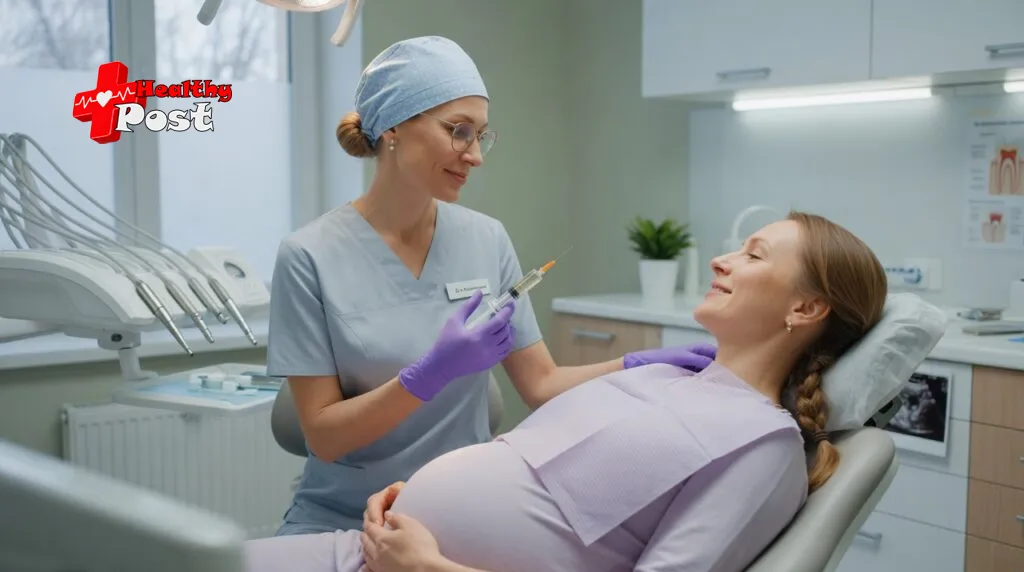
If you are pregnant and a tooth has started to ache, the next worry is usually the needle: is it safe to be numbed? For most women, yes. Dental anesthesia during pregnancy, meaning a local anesthetic such as lidocaine that numbs one small area of the mouth, is not ruled out in any trimester. The American Dental Association (ADA) states that local anesthetics containing epinephrine, including lidocaine, may be used during pregnancy, and that necessary dental care is safe at any stage.
That does not mean you should pick the drug or the strength yourself. Your dentist weighs how far along you are, how long the procedure will take, your blood pressure, any heart condition, your medications and any pregnancy complications. The working principle is straightforward. Treatment for an active problem goes ahead with proper pain relief, and purely cosmetic work can wait until after the birth.
Why going without anesthesia is not the safer choice
It can feel more cautious to grit your teeth and avoid the injection. In practice, untreated pain tends to cause its own problems. Pain and fear raise heart rate and blood pressure, and a 2023 review of local anesthesia in pregnancy points out that fear and pain are among the most common causes of high blood pressure during dental treatment. Large swings in blood pressure are something clinicians try to avoid in pregnant patients.
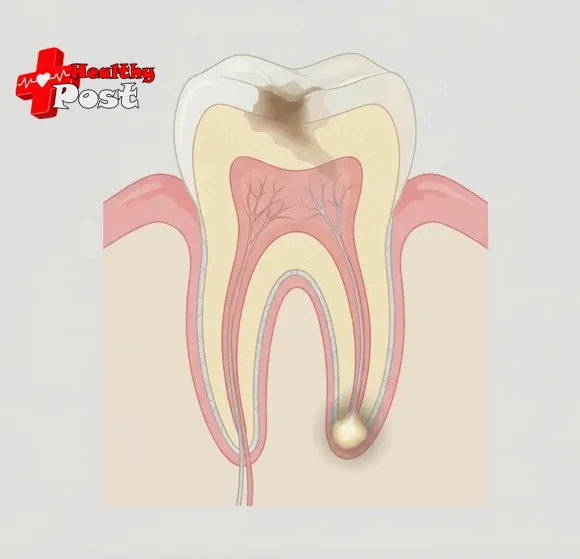
Infection is the other issue. Deep decay is easy to underestimate, because what cavities actually look like on the surface often says little about how close they are to the nerve. Once decay reaches the pulp, the soft tissue inside the tooth, or an abscess forms, pregnancy does not make the infection safer to leave. Waiting until after delivery can turn a manageable procedure into a more complicated emergency. The ADA, referring to obstetric guidance, says conditions that need immediate treatment, such as endodontic (root canal) treatment, extractions and restoration of untreated decay, can be managed at any time in pregnancy.
Is lidocaine safe during pregnancy?
Lidocaine is the most widely used dental local anesthetic and is the usual choice for pregnant patients. The US prescribing information for dental lidocaine with epinephrine says that published data and decades of clinical use in pregnant women have not identified an increased risk of major birth defects, miscarriage or other adverse maternal or fetal outcomes. The same 2023 review quotes the American College of Obstetricians and Gynecologists as saying no anesthetic drug in current use has been found to cause birth defects in humans at standard concentrations.
Other agents are available. The ADA lists bupivacaine and mepivacaine alongside lidocaine as options. Lidocaine tends to be preferred because it has the longest track record in pregnancy, while some others carry “use with caution” language in the literature.
Small amounts of lidocaine can reach the baby through the placenta, as with most drugs. That is why safety depends on dose. The dentist calculates it by body weight, uses the lowest amount that works, and injects slowly. Tell your dentist how long the procedure is likely to take and about any illness, so the plan can account for it.
What about the epinephrine (adrenaline)?
Epinephrine is added to most dental anesthetic solutions as a vasoconstrictor. It narrows the small blood vessels near the injection, which makes the numbness last longer and slows the rate at which lidocaine is absorbed into the bloodstream. A standard 1.8 mL cartridge of 2% lidocaine with 1:100,000 epinephrine contains 0.018 mg of epinephrine, a very small amount.
Its presence is not a reason to refuse anesthesia, and the ADA says so directly. There are nuances worth knowing. Product labeling advises caution with epinephrine in pregnancy, and reviews recommend extra care in women with high blood pressure disorders such as pre-eclampsia, significant heart disease or poorly controlled diabetes. Some reviews favor a lower concentration such as 1:200,000 as a good balance between effect and safety, while 1:100,000 and 1:80,000 are also widely used. The ADA does not name a single required strength, so this is a decision for your dentist.
Technique matters as much as the drug. The dentist draws back on the syringe (aspiration) to check the needle is not in a blood vessel, then injects slowly. Rapid injection into a vessel can cause a pounding heart and trembling, even in people who are not pregnant.
If your heart raced after anesthesia before
A fast heartbeat after a dental injection does not mean you are allergic, and it does not mean you cannot have local anesthesia again. It is more often caused by anxiety, by epinephrine’s natural effect, or by a little of the solution reaching a vessel. Many people describe it as what palpitations feel like: a thumping heart that settles within minutes.
What matters is whether anything else happened at the same time. Tell your dentist if you had hives, swelling of the lips or tongue, wheezing, a sharp drop in blood pressure or loss of consciousness. A true allergy to the amide-type anesthetics used in dentistry is rare, but a severe or unclear past reaction deserves a plan before the appointment, not during it.
Which trimester is best for dental treatment?
There is no “perfect” trimester for necessary care. Preventive, diagnostic and restorative treatment is considered safe throughout pregnancy. The middle months are often the most comfortable for planned work, and one review cites guidance suggesting roughly weeks 14 to 20. That is about comfort, not a ban on treatment at other times.
| Stage | What tends to matter | Practical approach |
|---|---|---|
| First trimester | Nausea, fatigue; extra caution about elective work | Needed and urgent treatment goes ahead; elective work is often deferred; shorter visits help |
| Second trimester | Nausea often eases; bump not yet large | Often the easiest window for planned treatment |
| Third trimester | Lying flat becomes uncomfortable | Shorter visits, semi-reclined or slightly tilted position, breaks as needed |
None of these rows means an aching or infected tooth should wait for a more convenient stage.
Toothache in the first trimester
Don’t count weeks before seeing a dentist. The first job is to find the cause. Pain when you bite down may point to a cracked tooth, an infection or an inflamed nerve, and each is handled differently. A short, routine, symptom-free procedure can sometimes be timed for comfort, but severe pain or infection should not be left for a “safer” week.
Please do not treat yourself with leftover antibiotics or painkillers. Which medicines are suitable in pregnancy depends on the drug, the stage and your own health.
The third trimester and the dental chair
Late in pregnancy, the main practical issue is often not the anesthetic but lying back for a long time. The enlarged uterus can press on large blood vessels when you lie flat, which in some women causes dizziness, nausea or a drop in blood pressure. Dentists manage this by keeping you semi-reclined or tilted slightly to the left, allowing position changes and breaks, and keeping appointments shorter. Letting your dentist know your due date lets them plan around it.
Do you need your obstetrician’s approval?
For routine treatment in a healthy pregnancy, formal obstetric “clearance” is usually not required. A conversation with your obstetrician or midwife is more useful if you have a high-risk pregnancy, severe hypertension or pre-eclampsia, significant heart disease, or you take blood-thinning medication, since these can change how dental care is managed. Dental teams are encouraged to ask whether a pregnancy is high-risk and whether there are any special concerns, so be ready with your due date, any complications and a full list of medicines.
X-rays and CBCT scans
If a dental x-ray will change the diagnosis or the treatment, pregnancy is not a reason to go without it. The ADA says radiographs are considered safe at any point in pregnancy, and its current guidance no longer recommends abdominal or thyroid shielding, although some practices still use it out of habit. An x-ray should still have a clear purpose, such as checking the depth of decay, the root tip or an injury, and not be taken “just in case.”
A CBCT scan, a 3D dental scan, is not part of routine treatment for decay or pulpitis (inflammation of the tooth’s nerve). It is reserved for complex cases where standard images are not enough and the result could change the plan.
Local anesthesia, sedation, general anesthesia and nitrous oxide
These are different things. Local anesthesia numbs one area. Sedation and general anesthesia act on the whole nervous system and come with their own monitoring requirements and risks.
The FDA warning here is easy to misstate. In 2016 it warned that repeated or lengthy (over three hours) use of general anesthetic and sedation drugs in the third trimester might affect a baby’s developing brain. In April 2017 the agency revised this. The information is now in the pregnancy and pediatric sections of drug labels, based on animal studies, and the FDA advised that pregnant women should not delay or avoid necessary procedures. The warning concerns general anesthetics and sedation drugs, not a routine dental injection. If deep sedation or general anesthesia is ever being considered, the decision is individual, based on urgency and obstetric risk.
Nitrous oxide (“gas”) is a sedative for anxiety, not a substitute for numbing. Asking for gas instead of an injection will not necessarily make treatment safer or more comfortable, and if the procedure is painful you may still need local anesthesia. Whether nitrous oxide suits you in pregnancy is a separate decision for your dentist.
Extractions, root canals and fillings, and what can wait
Extractions, root canal treatment and fillings can all be done in pregnancy when needed, and the ADA lists them as treatment that can be provided at any stage. Acute pulpitis, an abscess, a fractured tooth or a tooth you cannot use because of pain are medical problems, not cosmetic ones. A filling placed under good pain control is routine, and if you are curious about the process, here is why dentists use a curing light for fillings.
Things that can usually wait include whitening, major cosmetic makeovers and planned dental implants, unless a missing tooth is causing an urgent medical problem. The distinction is simple. Treating active disease stops it getting worse, while a cosmetic procedure offers no immediate medical benefit.
Antibiotics and painkillers
Antibiotics are not prescribed just because you are pregnant, and they cannot replace treating the source of an infection. In localized pulpitis, removing the inflamed tissue is the treatment. If there is swelling, fever or signs of spreading infection, your dentist or doctor will decide on a medicine suitable for pregnancy, as some antibiotics, such as tetracyclines, are avoided. Ask your dentist, doctor or pharmacist which painkiller is appropriate, because some, including ibuprofen and other anti-inflammatory painkillers, are generally avoided in pregnancy, especially later on.
What to tell your dentist before the injection
- Your exact stage of pregnancy and expected due date
- Any pregnancy complications, high blood pressure, pre-eclampsia or advice from your obstetrician
- All medicines and supplements you take
- Any previous fainting, palpitations, allergic or unusual reactions after dental anesthesia
- Any heart condition, rhythm problem or other significant long-term illness
- What symptoms you have noticed and how long you have had them
This is more useful than asking for “the weakest numbing.” Under-anesthetizing a painful tooth can make the visit more stressful and the procedure harder for both of you.
When a dental problem needs urgent attention
Do not wait for a routine appointment if pain becomes spontaneous or wakes you at night, or if you notice swelling, pus, fever, a tooth injury, severe pain when biting, or trouble eating and sleeping. A persistent bump on the gum can also signal infection and is worth showing a dentist.
Rapidly increasing swelling of the face or neck, difficulty breathing or swallowing, or feeling seriously unwell needs immediate medical help at any stage of pregnancy. Call your local emergency number or go to the nearest emergency department.
Frequently asked questions
Can I have local anesthesia in the first trimester?
Yes, if you need dental treatment. The first trimester does not rule out local anesthesia. Elective procedures are sometimes postponed, but pain and infection should not be ignored.
Is it safer to have numbing without epinephrine?
It can be an option, and the ADA says local anesthesia is acceptable with or without epinephrine. Dentists may choose a plain solution for certain conditions, such as a significant heart or blood pressure problem. The trade-off is that plain anesthetic wears off sooner and is absorbed faster, so it can mean more injections or a less reliable numb.
Does lidocaine reach my baby?
Small amounts can cross the placenta, as with many medicines. That is why the dose is kept to the minimum needed. US prescribing information states that published data and decades of use have not identified an increased risk of birth defects or other adverse outcomes.
Is it safe to have a dental x-ray?
Yes, when it is needed for diagnosis. It should answer a specific clinical question and should not be taken routinely.
Is it better to endure the pain than to have an injection?
If a procedure is genuinely painful, adequate anesthesia is usually the better choice. Stress, pain and untreated infection are not a risk-free alternative.
Key points before your appointment
Dental anesthesia during pregnancy is considered safe at any stage when it is needed, and lidocaine with epinephrine is a standard option. Necessary care such as imaging, fillings, root canals and extractions should not be delayed because of pregnancy, while elective cosmetic work can wait. Tell your dentist you are pregnant when you book, share your due date and medical history, and do not put off treatment for a painful or infected tooth.
References
- American Dental Association. Oral Health Topics: Pregnancy.
- U.S. Food and Drug Administration. Drug Safety Communication: FDA approves label changes for use of general anesthetic and sedation drugs in young children (April 2017 update).
- Zhou et al. Physiology of pregnancy and oral local anesthesia considerations. PeerJ 2023; 11:e15585.