

This article has been written by Dr. Priyanka Agarwal (Dermatologist, Dakai Skin Clinic ↗), specializing in medical dermatology, acne management, pore health treatments, and evidence-based skincare education.
Medical Disclaimer: This article is for general educational purposes and does not replace individualized medical advice, diagnosis, or treatment from a qualified dermatologist or skincare professional. Skin sensitivities, pore conditions, and responses to topical treatments or home remedies vary significantly among individuals. Always consult a licensed dermatologist before starting new skincare regimens, chemical peels, or extractions to prevent skin irritation, inflammation, or scarring.

Dr. Priyanka Agarwal
Dermatologist | Dakai Skin Clinic
Dr. Priyanka Agarwal is an experienced Dermatologist dedicated to providing advanced medical and aesthetic skin care solutions. Practicing at Dakai Skin Clinic, Dr. Agarwal combines evidence-based dermatological care with a patient-centered approach, ensuring optimal skin health, advanced clinical treatments, and the highest standards of safety and diagnostic precision.
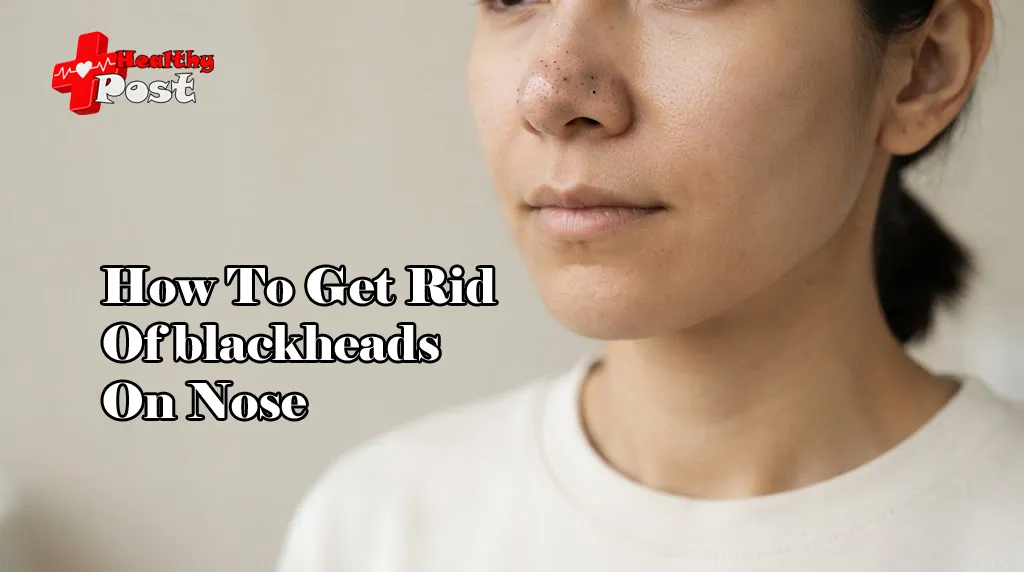
Blackheads on the nose can be surprisingly stubborn. If you are searching for how to get rid of blackheads on nose, the safest approach is usually not to scrub, squeeze, or try to pull them out with a tool. Blackheads are a type of acne called open comedones, and they form when oil and dead skin cells clog a hair follicle. The dark appearance is not simply dirt; the material in the open pore reacts with oxygen and becomes dark.
The good news is that nose blackheads can often be managed with a consistent, gentle skincare routine. Ingredients such as salicylic acid and topical retinoids can help unclog pores, while professional extraction may be appropriate when stubborn blackheads do not respond to home treatment.
What Are Blackheads?
A blackhead develops when sebum (the skin’s natural oil) and dead skin cells build up inside a hair follicle. When the opening remains open, the accumulated material is exposed to air and appears black.
This is why blackheads are not simply trapped dirt. Scrubbing harder will not solve the underlying problem and may instead irritate the skin. The American Academy of Dermatology specifically advises against scrubbing blackheads because the dark material is not dirt.
Blackheads are considered a form of comedonal acne. Unlike an inflamed pimple, they usually appear as small, dark, non-painful spots.
Why Do Blackheads Form on the Nose?
The nose is part of the facial T-zone, which includes the forehead and nose. This region contains numerous sebaceous glands and can be particularly prone to oil production and clogged follicles.
Several factors can contribute to clogged pores on the nose, including:
- Excess sebum production
- Accumulation of dead skin cells
- Hormonal changes
- A tendency toward acne
- Products that are irritating or likely to clog pores
- Picking, rubbing, or repeatedly irritating the skin
Having blackheads does not necessarily mean that you have poor hygiene. In fact, repeatedly washing or aggressively scrubbing your nose can irritate the skin and potentially make acne harder to manage.
Blackheads vs. Sebaceous Filaments: What’s the Difference?
Not every dark dot on your nose is a blackhead.
Sebaceous filaments are a normal part of the skin. They help move sebum from sebaceous glands toward the skin’s surface and are particularly noticeable around the nose. They can look like tiny gray, brown, or yellowish dots and are often mistaken for blackheads.
| Feature | Blackheads | Sebaceous filaments |
|---|---|---|
| What they are | A type of acne | A normal skin structure |
| Appearance | Usually darker and more defined | Often smaller, flatter and lighter |
| Cause | A clogged, open pore | Natural movement of sebum through the follicle |
| Can they be permanently removed? | They can be treated | No; they naturally refill |
| Treatment goal | Clear and prevent clogged pores | Make their appearance less noticeable |
This distinction matters because repeatedly squeezing normal sebaceous filaments can irritate your skin without permanently removing them. Cleveland Clinic notes that sebaceous filaments naturally return because they are part of normal skin function.
How to Get Rid of Blackheads on Nose: 8 Safe and Effective Ways
1. Cleanse Your Skin Gently
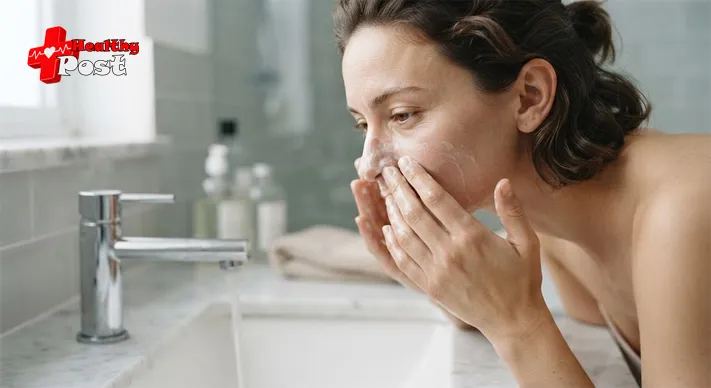
A gentle cleanser is a simple starting point for blackheads on nose treatment. Cleansing removes sunscreen, makeup, sweat, and excess surface oil without unnecessarily disturbing the skin barrier.
Use lukewarm water and your fingertips rather than a rough washcloth, cleansing brush, or abrasive sponge. The American Academy of Dermatology recommends gentle, non-abrasive cleansing and generally limiting face washing to twice a day and after heavy sweating.
A useful routine is:
- Cleanse gently in the morning if needed.
- Cleanse at night to remove sunscreen, makeup, oil, and daily buildup.
- Avoid very hot water.
- Do not scrub the nose trying to “lift out” blackheads.
- If your skin becomes tight or irritated after cleansing, consider a gentler product.
For additional guidance on avoiding common cleansing mistakes, you can also read HealthyPost’s guide to facial cleanser mistakes and gentler cleansing practices.
2. Try Salicylic Acid for Blackheads
Salicylic acid for blackheads is one of the better-established over-the-counter approaches because it can help loosen dead skin cells and unclog pores. The American Academy of Dermatology specifically identifies salicylic acid as an ingredient that works well for blackheads and whiteheads.
Mayo Clinic notes that nonprescription salicylic acid products are available in different strengths and can help unclog pores, although irritation or stinging can occur.
If you are new to salicylic acid:
- Follow the product label.
- Start cautiously if your skin is sensitive.
- Avoid adding several strong active ingredients at the same time.
- Give the product time to work rather than changing products every few days.
- Reduce or stop use if significant burning, swelling, or persistent irritation develops.
You do not need the strongest product to get started. Consistency and tolerability are more useful than trying to strip the skin quickly.
3. Consider a Topical Retinoid
Topical retinoids work differently from a cleanser or pore strip. They help normalize the way skin cells shed inside follicles, reducing the tendency for pores to become clogged.
Adapalene is a topical retinoid available without a prescription in some markets. The AAD identifies adapalene as an option for treating blackheads and other comedonal acne, while Mayo Clinic explains that it helps unclog pores and prevent new breakouts.
Retinoids can initially cause dryness, peeling, redness, or stinging. They also are not appropriate during pregnancy. NHS guidance states that topical retinoids such as adapalene and tretinoin should not be used during pregnancy because of potential fetal risk.
If you are pregnant, trying to become pregnant, or unsure whether a retinoid is appropriate for you, speak with a healthcare professional before using one.
4. Use Exfoliation Carefully
Chemical exfoliation can help remove dead skin cells, but more exfoliation is not necessarily better.
Beta hydroxy acids (BHAs), particularly salicylic acid, are relevant to clogged pores. Alpha hydroxy acids (AHAs), such as glycolic or lactic acid, can also exfoliate the skin’s surface. However, using several exfoliating products together can increase irritation.
The AAD recommends choosing an exfoliation method based on skin type and existing skincare products and warns that over-exfoliation can cause redness, irritation, dryness, and acne flare-ups.
Avoid treating your nose with:
- Rough physical scrubs
- Salt or sugar rubbed aggressively into the skin
- Abrasive cleansing brushes
- Multiple strong acids at once
- Exfoliation over irritated or damaged skin
If your skin is sensitive, a simpler routine may be more appropriate. HealthPage’s dermatologist-reviewed guide to skincare steps for sensitive skin also emphasizes gentle cleansing, gradual introduction of products, moisturization, and avoiding unnecessary irritation.
5. Choose Non-Comedogenic Skincare Products
Your skincare routine does not need to become complicated just because you have blackheads.
Look for products described as:
- Non-comedogenic
- Oil-free
- Won’t clog pores
These labels are particularly useful when choosing moisturizer, sunscreen, makeup, and other products that remain on the skin. The AAD recommends acne-prone people look for these descriptions when selecting moisturizers and other skincare products.
Moisturizer is not automatically the enemy of oily or acne-prone skin. In fact, excessive dryness and irritation can make it harder to tolerate acne treatments. A lightweight, non-comedogenic moisturizer can help support the skin while you use an active ingredient.
6. Don’t Squeeze or Pick Blackheads
If you want to know how to remove blackheads on nose, squeezing may seem like the quickest answer. It is also one of the easiest ways to irritate the surrounding skin.
Using fingernails or excessive pressure can:
- Damage the skin
- Increase inflammation
- Cause bleeding
- Introduce bacteria
- Increase the risk of dark marks or scarring
- Push material deeper into the follicle
The AAD warns that squeezing blackheads can cause infection or permanent scarring.
The temptation is understandable, particularly when a blackhead looks ready to come out. But a short-term cosmetic result is not necessarily worth damaging the skin around it.
7. Consider Professional Blackhead Extraction
Some blackheads are particularly stubborn or deeply embedded. If they remain despite a reasonable skincare routine, professional blackhead removal may be an option.
A dermatologist or appropriately trained medical professional can determine whether the spot is actually a blackhead and, when appropriate, perform comedo extraction using controlled technique.
Professional treatment is particularly worth discussing if you have numerous persistent comedones, scarring, painful acne, or uncertainty about what the spots actually are. Cleveland Clinic notes that deeply embedded blackheads may require removal by a medical professional.
That is very different from repeatedly using a metal extractor at home with considerable pressure.
8. Build a Consistent Routine to Prevent New Blackheads
The final step is prevention. Even after existing blackheads improve, new ones can form because the tendency toward clogged follicles does not disappear after one treatment.
A simple routine might look like this:
Morning
- Gentle cleanser, if needed
- Appropriate acne treatment
- Non-comedogenic moisturizer
- Broad-spectrum sunscreen
Evening
- Gentle cleansing
- Salicylic acid or another appropriate acne treatment
- Moisturizer
You do not necessarily need every active ingredient listed above. In fact, starting with one appropriate treatment is often easier on the skin than layering several products immediately.
The AAD emphasizes consistency because acne treatments take time to work. Depending on the treatment, some improvement may appear after several weeks, while clearer skin can take several months.
How Long Does It Take to Get Rid of Blackheads?
There is no reliable overnight method for permanently clearing blackheads.
Some products or procedures may make the nose look temporarily smoother, but controlling comedonal acne usually requires consistent treatment. The AAD advises giving an acne treatment several weeks to work; improvement may become noticeable around four to eight weeks, while more complete clearing can take longer.
If you have used an appropriate treatment consistently for several weeks without meaningful improvement, rather than continuously adding new products, consider speaking with a dermatologist.
Do Pore Strips Work?
Pore strips can temporarily remove material from the surface of pores, so the nose may look smoother immediately afterward. However, they do not address the underlying process that causes blackheads to develop.
They may also irritate some people’s skin, particularly when used frequently or aggressively.
If the tiny dots on your nose are actually sebaceous filaments, removing them with strips will not permanently eliminate them because those structures naturally refill.
For long-term management, a consistent acne-focused skincare routine is generally more useful than repeatedly relying on temporary extraction methods.
Home Remedies You Should Avoid
Searches for how to get rid of blackheads on my nose often lead to homemade treatments. Some are harmless in theory but unnecessary; others can irritate the skin.
Avoid using:
Toothpaste: The AAD specifically advises against toothpaste as an acne treatment. It can irritate the skin and is not a clinically established blackhead treatment.
Lemon juice: Applying concentrated lemon juice to facial skin can cause irritation and is not an evidence-based blackhead treatment.
Baking soda: Its use as a facial exfoliant can unnecessarily irritate the skin.
Aggressive sugar or salt scrubs: Rough rubbing can damage the skin barrier and worsen irritation.
Fingernail extraction: Pressing hard with your nails can injure the surrounding tissue and increase the risk of marks or scarring.
A simple, evidence-based routine is usually preferable to experimenting with several kitchen ingredients.
How to Prevent Blackheads on Your Nose
Once you understand how to get rid of blackheads on the nose, prevention becomes easier to manage.
Focus on habits that reduce unnecessary irritation and help keep pores from becoming clogged:
- Cleanse gently rather than repeatedly washing.
- Choose non-comedogenic skincare and makeup.
- Remove makeup and sunscreen at the end of the day.
- Use an appropriate acne treatment consistently.
- Avoid squeezing or picking.
- Moisturize when your skin becomes dry.
- Protect your skin from excessive sun exposure.
- Introduce new active ingredients gradually.
If your skin becomes dry, burning, or persistently irritated, simplify the routine rather than adding another exfoliant.
When Should You See a Dermatologist?
Consider professional medical advice if:
- Blackheads persist despite consistent appropriate treatment.
- You develop painful or deep acne.
- Acne is leaving scars or persistent dark marks.
- Your skin becomes significantly irritated by over-the-counter products.
- You are unsure whether the spots are blackheads or sebaceous filaments.
- You have tried appropriate nonprescription treatment without improvement.
A dermatologist can distinguish comedonal acne from other skin conditions and recommend prescription treatment or professional extraction when appropriate. The AAD specifically recommends dermatologic care when acne does not clear with nonprescription treatment or when deeper lesions or scarring are present.
Frequently Asked Questions
How do I get rid of blackheads on my nose?
Start with gentle cleansing and a consistent routine. Salicylic acid can help unclog pores, while a topical retinoid such as adapalene can help treat and prevent comedonal acne when appropriate. Avoid squeezing, and consider professional evaluation if stubborn blackheads do not improve.
How do you get rid of blackheads on your nose fast?
There is no reliably safe overnight cure. A professional extraction may provide an immediate cosmetic change for suitable blackheads, but long-term control usually requires consistent treatment and prevention.
How do I remove blackheads from my nose without squeezing?
Salicylic acid and appropriate topical acne treatments can help gradually clear clogged pores. If a blackhead is stubborn, professional extraction is safer than repeatedly applying pressure yourself.
Why do I keep getting blackheads on my nose?
Your nose contains many sebaceous glands, and blackheads can develop when sebum and dead skin cells accumulate inside follicles. Hormonal changes and an individual’s tendency toward acne can also contribute.
Are the tiny dots on my nose always blackheads?
No. Many small, evenly distributed gray or yellowish dots on the nose are sebaceous filaments rather than acne. They are normal skin structures and cannot be permanently removed.
Can I squeeze blackheads out of my nose?
It is better not to. Squeezing can damage the skin, increase inflammation, and raise the risk of infection or scarring. If extraction is appropriate, a qualified professional can perform it using controlled technique.
Conclusion
If you are wondering how to get rid of blackheads on nose, think beyond one-time removal. Blackheads form because pores become clogged, so the most useful approach is to manage that process consistently rather than trying to scrub or squeeze the problem away.
Gentle cleansing, salicylic acid, appropriate topical retinoids, non-comedogenic skincare, and a consistent routine can all have a role. At the same time, knowing the difference between blackheads and sebaceous filaments can prevent unnecessary treatment.
Most importantly, give your skin time. If blackheads remain stubborn, become inflamed, or start leaving scars, professional dermatology advice can help you choose a treatment that fits your skin rather than relying on increasingly aggressive home remedies.
References
- American Academy of Dermatology — How to Treat Different Types of Acne
- Mayo Clinic — Nonprescription Acne Treatment: Which Products Work Best?
- NHS — Acne: Treatment