


🏥 Medical Review Board Member
Dr. Rachana Bhoite, PhD
Nutrition Science Expert | Dr. Reddy’s Laboratories (Hyderabad, India)
Dr. Rachana Bhoite, PhD, is a distinguished industry veteran with over 22 years of expertise in Foods & Nutrition and clinical research. With a career deeply rooted in medical nutrition and nutraceutical innovation, she has successfully designed and launched numerous scientifically differentiated products across global markets. Dr. Bhoite is dedicated to bridging the gap between complex clinical data and accessible, evidence-based nutrition. Her commitment to rigorous research ensures that every piece of content she reviews meets the highest standards of scientific accuracy and consumer safety.
Indian gooseberry juice has a loyal following across South Asia, and it now turns up on supermarket shelves and wellness feeds well beyond the region. If you are deciding whether to try it, here is the short version. The juice is a tart way to take in vitamin C and plant polyphenols, and it can sit comfortably in a balanced diet. Most of the more exciting research on cholesterol and blood sugar, though, used standardized extracts, not the juice you pour from a bottle. It also has real drawbacks, including acidity and possible medication interactions, that many articles skip. This guide covers what amla is, what is in the juice, what it may do, and who should check with a professional first.
This article is general information and does not replace advice from your doctor or pharmacist.
What Is Indian Gooseberry Juice?
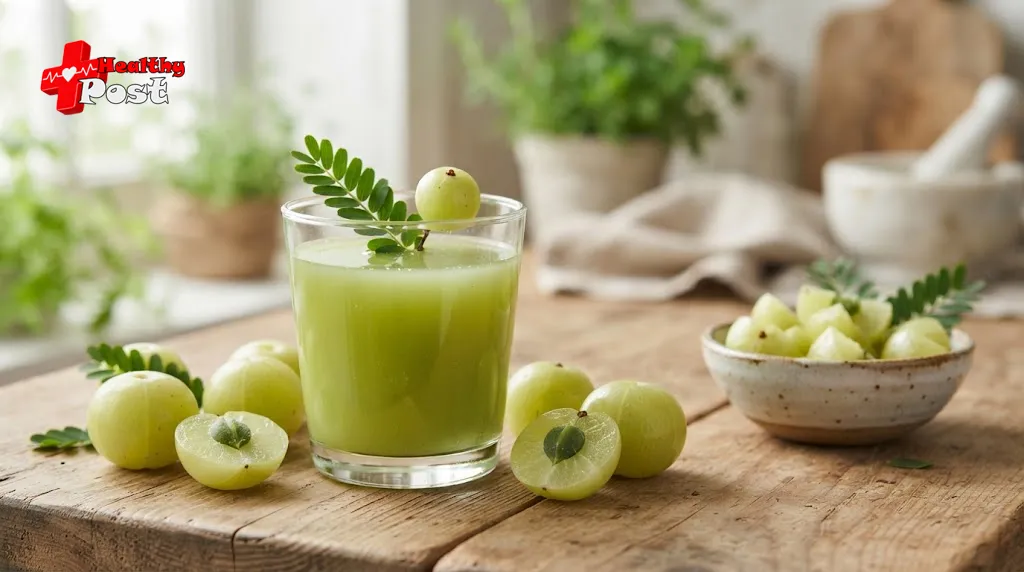
Indian gooseberry, known as amla across much of South Asia, is the fruit of Phyllanthus emblica, a tree older texts call Emblica officinalis. The fruit is small, pale green and round. Its flavour is sharply sour and astringent, leaving a dry, puckering feeling in the mouth not unlike strong black tea. It appears in pickles, chutneys and preserves, and it has a long history in Ayurvedic practice.
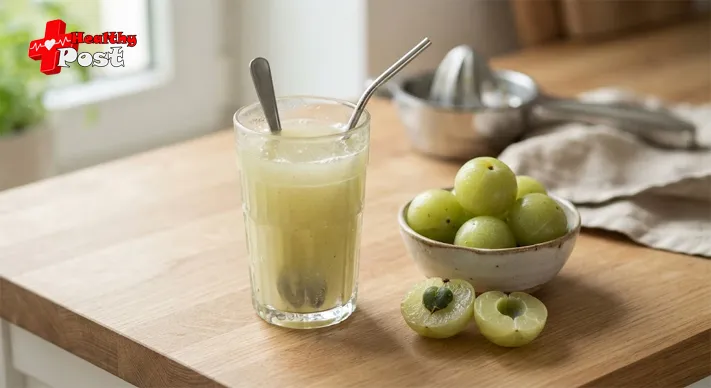
The juice is made by pressing or blending the fruit. It is usually diluted with water, because the undiluted liquid is hard to drink. Some bottled versions are blended with other juices or sweetened, so the product on a shelf can differ a lot from what a home juicer produces.
The fruit contains vitamin C, tannins, and polyphenols such as gallic and ellagic acid. A 2023 review of its phytochemistry and pharmacology describes antioxidant activity among many other reported effects. One caution runs through everything below. Findings from the whole fruit, laboratory work or concentrated extracts do not automatically show that an ordinary glass of juice does the same thing in people.
Amla Juice Nutrition
Vitamin C is the nutrient amla is known for, and reported figures vary widely. Older papers cite roughly 200–900 mg per 100 g of edible fruit, and the 2023 review above gives 600–1,300 mg. Variety, ripeness and measurement method all play a part. For scale, USDA-derived figures for raw orange are about 53 mg per 100 g, as summarised in this guide to orange nutrition and vitamin C. So the fruit is an unusually rich source, but a precise “times more than an orange” claim is not reliable, and it says little about what ends up in a glass of juice.
That last point matters. Juice is diluted, and vitamin C can be reduced by heat, light and storage. The amount in your glass depends on how much fruit went into it, how it was processed and how long it sat on a shelf. In general, amla provides:
- Vitamin C
- Polyphenols and tannins, including gallic acid and ellagic acid
- Flavonoids such as quercetin and kaempferol
- Small amounts of other vitamins and minerals
- Fibre, which is mostly present in the whole fruit and largely lost in strained juice
There is no single “standard” amla juice nutrition profile. A bottled product may be pure juice, diluted juice, a blend with apple or grape juice, or a sweetened drink. These differ substantially in calories, sugar and actual amla content. Reading the nutrition panel is especially worthwhile if you watch your blood glucose, calorie intake or dental health.
7 Potential Indian Gooseberry Benefits (amla juice benefits)
The benefits below run roughly from best supported to most tentative. Treat “may” as meaning exactly that.
Provides Vitamin C and Antioxidant Compounds
This is the strongest nutritional case. Humans cannot make vitamin C, so it has to come from food. It is needed for collagen formation and contributes to normal immune function. Amla’s polyphenols also show antioxidant activity in laboratory studies.
Antioxidant activity in a test tube is not the same as preventing disease in a person, though. Claims that amla juice “prevents” illness because it is an antioxidant go well beyond the evidence.
May Support Normal Immune Function
Because vitamin C contributes to normal immune function, amla juice can add to your daily intake. That is a modest, practical benefit, not a guarantee against colds or infections. If your diet already includes citrus, peppers, guavas or berries, the juice may add little you were missing. Evidence specific to concentrated amla juice products remains limited.
May Support Digestive Health
Amla has a long place in traditional remedies for digestion, and the RxList monograph, drawn from the Natural Medicines database, lists indigestion among its uses while rating the evidence as insufficient. Responses are also individual. Because the juice is acidic, some people with reflux or a sensitive stomach find it makes things worse. Whether it helps or irritates depends on who is drinking it.
May Support Heart and Cholesterol Health
This is the most interesting research area, with an important limitation. In a randomized, double-blind, placebo-controlled trial, 98 people with dyslipidemia took 500 mg of an amla fruit extract twice daily for 12 weeks. Total cholesterol, triglycerides, LDL and VLDL cholesterol were significantly lower than in the placebo group.
The participants took a proprietary extract in capsules, not Indian gooseberry juice, and the Natural Medicines monograph still rates the evidence for high cholesterol as insufficient. The result is promising but cannot be assumed for juice. Nobody should replace prescribed cholesterol medication with it.
May Help Maintain Healthy Blood Sugar
The same trial noted a general trend toward lower fasting blood glucose. Only eight people in the amla group had fasting glucose above 100 mg/dl, which is too few to draw conclusions. Early signals are worth following up, but they do not make amla juice a diabetes treatment.
There is a safety angle too, covered under side effects. If amla lowers blood sugar, it could add to the effect of diabetes medicines.
May Support Skin and Hair Health
Vitamin C is required for collagen, which gives skin much of its structure, and amla has been used in traditional hair care for generations. Evidence that drinking the juice stops hair loss, speeds growth or reverses grey hair is lacking. Both have many causes, including genetics, thyroid problems, low iron, stress and some medicines. Persistent hair loss deserves a medical assessment, not just a new drink.
Adds Nutrient-Dense Variety to the Diet
This is the least dramatic benefit and probably the most honest. A diluted, unsweetened glass of amla juice can add vitamin C and plant compounds while replacing a sugary soft drink. It works as one part of a varied diet, not as a substitute for whole foods or medical care.
Uses of Indian Gooseberry Juice
As a diluted drink. Fresh juice is extremely tart. Most people mix a small amount with plenty of cold or room-temperature water. A little honey or jaggery softens the flavour but adds sugar.
In smoothies. A small splash blends well with cucumber, mint, pear, apple or ginger. Start with less than you think you need, because the flavour is strong.
In cooking. A spoonful can stand in as the sour element in chutneys or salad dressings. Heat reduces vitamin C, so raw uses retain more.
Fresh versus bottled. The two are not equivalent, and the table summarises the usual differences.
| Feature | Fresh amla juice | Bottled amla juice |
|---|---|---|
| Processing | Minimal | May be pasteurised or preserved |
| Added sugar | None unless you add it | Sometimes present; check the label |
| Concentration | Depends on your recipe | Varies widely between brands |
| Shelf life | Short; best made fresh | Longer |
| Convenience | Needs preparation | Ready to drink |
Whole fruit versus juice. Juicing removes most of the fibre in the whole fruit, which affects fullness and how quickly sugars are absorbed. Anyone mainly after fibre will do better eating the fruit itself, whether raw, in a chutney or lightly cooked. The same trade-off applies to other juices, as this look at celery juice benefits and side effects explains.
How Much Amla Juice Should You Drink?
No universal medical dose exists. The RxList monograph states that there is not enough scientific information to set an appropriate dose range. The clinical studies that exist mostly used standardized extracts, and commercial juices differ enormously in strength, so a figure like “30 ml a day” is not a medically established target.
A cautious approach looks like this:
- Follow the serving instructions on the product.
- Choose unsweetened versions where possible, and dilute strong juice.
- Start with a small amount to see how your stomach responds.
- Do not assume more brings more benefit.
- Ask a pharmacist or doctor before regular, concentrated use if you have a medical condition or take medicines.
For most healthy adults, a modest glass as part of the diet is a food-level amount. The monograph describes Indian gooseberry as likely safe in food amounts.
Amla Juice Side Effects
Food-level amounts appear well tolerated, but amla juice side effects are not zero, and a few are easy to overlook.
Digestive discomfort. The juice is acidic and can trigger heartburn, stomach discomfort or nausea in susceptible people, particularly on an empty stomach. Burning behind the breastbone has several possible causes, and a guide to chest burning and reflux explains how to tell them apart and when it needs urgent attention.
Tooth enamel. Frequent exposure to acidic drinks can contribute to enamel erosion. Drinking a glass in one sitting, using a straw and rinsing with water afterwards is kinder to teeth than sipping all day.
Blood sugar. According to the monograph, Indian gooseberry might lower blood sugar. The interaction with diabetes medicines is rated moderate, and combining them might push glucose too low. If you take diabetes medication, monitor your levels and speak to your care team.
Bleeding. Indian gooseberry might slow blood clotting, which raises caution for people with bleeding disorders and those taking anticoagulant or antiplatelet drugs such as warfarin, clopidogrel or aspirin. Evidence here is mixed and partly theoretical, but caution is sensible until more is known.
Surgery. The monograph advises stopping Indian gooseberry at least two weeks before scheduled surgery. That guidance targets medicinal use, so ask your surgeon or pharmacist about juice specifically.
Liver concerns in multi-herb products. Some Ayurvedic formulations containing amla have been linked to liver damage. It is unclear whether amla or another ingredient was responsible, but this is one reason to be wary of products that combine many herbs.
Pregnancy and breastfeeding. Reliable information about medicinal-strength amla is lacking, and the usual advice is to stay with ordinary food amounts.
Who Should Be Careful With Amla Juice?
Speak with a healthcare professional before regular use of concentrated amla products if you:
- Take diabetes medication
- Use anticoagulant or antiplatelet medicines, or have a bleeding disorder
- Have significant reflux or ongoing stomach problems
- Are pregnant or breastfeeding
- Have surgery planned
- Take several medicines or herbal supplements
If reflux is your main concern, a trigger-aware eating pattern, such as this 7-day meal plan for acid reflux, may help you judge where a sour juice fits, or whether it fits at all.
What Does the Research Say About Amla Juice?
Putting the evidence in tiers helps separate what is established from what is hopeful.
| Evidence level | What can reasonably be said |
|---|---|
| Well supported | Amla is rich in vitamin C and contains polyphenols and tannins |
| Promising but preliminary | Some human studies of amla extracts show improvements in cholesterol and related markers |
| Still uncertain | Whether ordinary amla juice produces the same effects as standardized extracts |
| Not established | That amla juice cures diabetes, cancer, infections, obesity or other diseases |
Online claims about detoxing, fat burning, cancer prevention or guaranteed hair growth tend to rest on tradition, laboratory work or small early studies. A more useful way to read the science is to ask what amla may do, what the research actually shows and what remains unknown.
Frequently Asked Questions
Is Indian gooseberry juice the same as amla juice?
Yes. Amla is the common South Asian name for Indian gooseberry, Phyllanthus emblica. The products can still differ, because some are pure juice and others are diluted, sweetened or blended.
Can you drink amla juice every day?
Many people take a small glass as part of their diet, and food-level amounts appear well tolerated. There is no established daily medicinal dose, and daily use is less straightforward if you have reflux, take diabetes or blood-thinning medicines, or are pregnant.
Is it better to drink amla juice on an empty stomach?
No good evidence shows a special benefit from timing. Because the juice is acidic, taking it with or after food may be more comfortable if you have a sensitive stomach.
Does amla juice help with weight loss?
Not directly. Unsweetened juice is low in calories and can replace sugary drinks, which may help overall intake, but it does not burn fat. Whole fruit also keeps the fibre that supports fullness.
Can I drink amla juice with my regular medicines?
It depends on the medicine. Diabetes drugs and anticoagulant or antiplatelet drugs are the main concerns, according to the monograph. A pharmacist can check your specific list quickly.
Final Takeaway
Indian gooseberry juice is best seen as a tart, vitamin C-rich drink and one component of a varied diet, not a cure or a shortcut. The most encouraging research on cholesterol and blood sugar involved concentrated extracts, and we do not yet know how far it carries over to ordinary juice. Acidity, dental wear and medication interactions are real considerations.
A sensible next step is to read the label, choose an unsweetened product, dilute it, start small and see how you feel. If you take regular medicines or have a long-term condition, run it past a pharmacist or doctor before making it a daily habit.
References
- Prananda AT et al. “Phyllanthus emblica: a comprehensive review of its phytochemical composition and pharmacological properties.” Frontiers in Pharmacology, 2023. Read on PubMed Central
- “A randomized, double blind, placebo controlled, multicenter clinical trial to assess the efficacy and safety of Emblica officinalis extract in patients with dyslipidemia.” BMC Complementary and Alternative Medicine, 2019. Read on PubMed Central
- RxList. “Indian Gooseberry: Health Benefits, Side Effects, Uses, Dose & Precautions” (Natural Medicines monograph). RxList