


This article, “Eyelid Abscess: Symptoms, Causes, Treatment and When to Seek Urgent Care,” has been written by Dr. Sana Lodhi for informational and educational purposes only. While authored by a medical professional, the content provided does not constitute formal medical advice, diagnosis, or treatment, nor does reading it establish a doctor-patient relationship.
Always seek the direct advice of your physician, ophthalmologist, or another qualified healthcare provider with any questions you may have regarding a medical condition. Never disregard professional medical advice or delay in seeking urgent care—especially for eye-related symptoms such as severe pain, vision changes, or spreading swelling—because of something you have read in this article.

✍️ HealthyPost Author
Dr. Sana Lodhi, MBBS
Medical Doctor & General Health Specialist
Dr. Sana Lodhi, MBBS, is a medical doctor with a background in general clinical medicine and healthcare education. At HealthyPost, she focuses on making complex healthcare topics easier to understand through clear, practical health information. Her contributions cover general health awareness, preventive healthcare, and patient wellness, helping readers develop a better understanding of their health and make informed decisions.
An eyelid abscess is a pocket of pus that forms inside the tissue of the eyelid. It typically causes a red, swollen, tender lid, and it usually needs an eye doctor’s assessment. Small abscesses may settle with antibiotics, but a collection that has formed a soft, fluid-filled centre often has to be drained. Some eyelid swelling is also a sign of a deeper infection that needs emergency care, so the first job is to tell the two apart.
This guide explains what an eyelid abscess is, how it differs from a stye and from cellulitis, what causes it, how doctors diagnose and treat it, and which symptoms should send you to an emergency department rather than a routine appointment.
What is an eyelid abscess?
An abscess is a walled-off collection of pus. In the eyelid, it develops when bacteria enter the tissue and the immune system’s response forms a cavity of dead cells, bacteria and fluid. Over time the body builds a thin capsule of connective tissue around it. This is why a mature abscess feels like a soft, tender lump that seems to shift under the finger when pressed.
The term overlaps with several others, which causes much of the confusion online:
- A stye (hordeolum) is essentially a small abscess in an eyelash follicle or eyelid gland. Moorfields Eye Hospital describes it as a small collection of pus at the root of an eyelash. A true eyelid abscess usually refers to a larger or deeper collection.
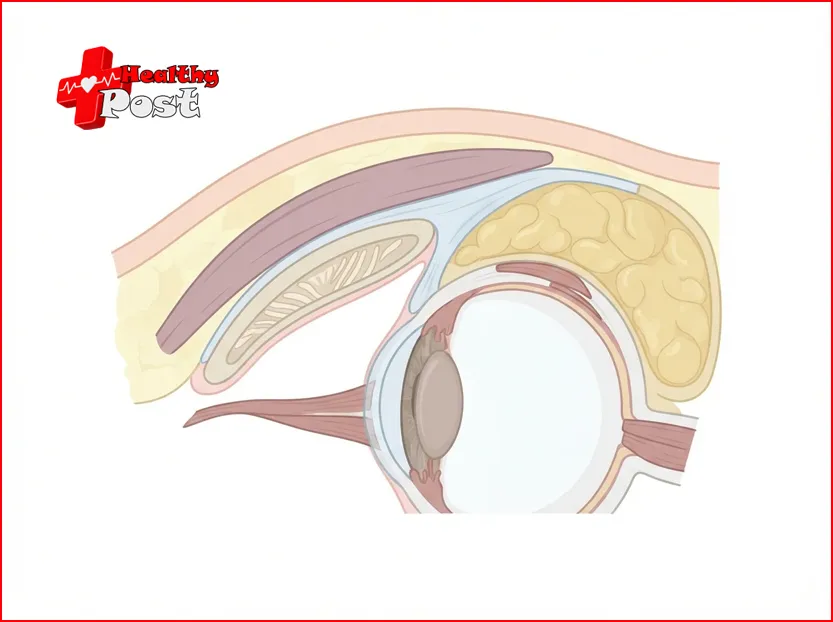
- Preseptal cellulitis is a spreading infection of the eyelid skin and soft tissue in front of the orbital septum, a thin sheet of tissue that separates the eyelid from the eye socket. An abscess can form within it.
- Orbital cellulitis is infection behind that septum, inside the eye socket. It is a different and more dangerous condition.
Telling these apart matters because they carry very different levels of urgency.
Causes and risk factors
Most eyelid abscesses are bacterial. Skin bacteria, particularly Staphylococcus aureus and streptococci, are the usual culprits. They get in through some break in the skin barrier, which may be obvious or almost invisible.
Local triggers
- Injury or surgery around the eye, including scratches, grazes and insect bites.
- Cosmetic injections such as filler or Botox, particularly if sterile technique is not followed.
- Existing eyelid or eye conditions, including blepharitis (chronic inflammation of the eyelid margins), a stye or chalazion that becomes infected, and conjunctivitis.
- Skin conditions such as rosacea, atopic dermatitis and seborrhoeic dermatitis, where scratching and cracked skin give bacteria an entry point.
- Boils on the face.
The MSD Manual lists facial or eyelid injuries, insect or animal bites, chalazion and hordeolum as common starting points for infections of this kind in front of the orbital septum.
Body-wide factors
Some conditions make infections more likely or harder to clear:
- Diabetes, which slows wound healing.
- A weakened immune system, whether from HIV, cancer, autoimmune disease or medicines that suppress immunity.
- Sinus, dental or other nearby infections, which can spread to the eye area. This is more of a concern in children.
Unusual organisms do occasionally turn up. A 2015 case report described an eyelid abscess caused by Escherichia coli in a man with liver cirrhosis, a condition that raises the risk of bacterial infections generally. It is a curiosity rather than a pattern to worry about.
Symptoms of an eyelid abscess
The early picture looks like any inflamed patch of skin: redness, warmth, swelling and tenderness. What distinguishes an abscess is how it evolves.
Local signs
- A red, swollen, painful area on the upper or lower lid, or at an inner or outer corner.
- Pain that worsens when you touch the lid or blink.
- A firm lump at first, which may later soften and develop a yellowish centre.
- A sensation of fluid shifting under the skin when the lump is pressed (doctors call this fluctuance).
- Pus or fluid draining through the skin if the abscess breaks open.
- Watering of the eye, light sensitivity, or difficulty opening the eye if swelling is marked.
Whole-body signs
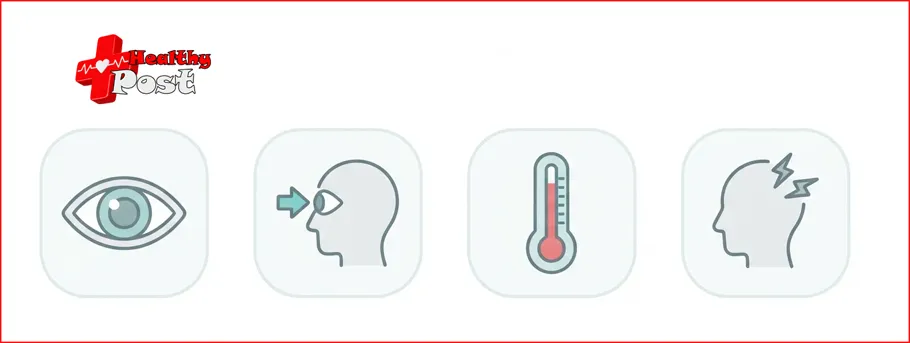
- Fever, sometimes up to 38–39°C.
- Chills, tiredness or general weakness.
- Headache or loss of appetite.
Fever is a signal to be seen the same day, because it suggests the infection is more than a purely local problem.
Eyelid abscess compared with similar conditions
| Condition | What it typically looks like | How urgent? |
|---|---|---|
| Stye | Small, tender, pimple-like bump at the lash line or inside the lid | Usually settles at home; see a GP if very painful or not improving |
| Chalazion | Firm, often painless lump further back in the lid | Non-urgent unless it affects vision or persists |
| Eyelid abscess | Larger, red, painful swelling that may soften and feel fluid-filled | Needs prompt medical assessment |
| Preseptal cellulitis | Diffuse swelling and redness of the lid; the eye moves normally | Needs same-day assessment and usually antibiotics |
| Orbital cellulitis | Swollen lid plus bulging eye, painful eye movements, double vision or reduced vision, often fever | Emergency |
This is a guide only. Only an examination can tell these conditions apart, and it can be difficult even for doctors in the early hours.
When to seek urgent medical help
Orbital cellulitis is a medical emergency. MedlinePlus advises contacting a healthcare provider about eyelid swelling, especially when there is a fever. Go to an emergency department, or call your local emergency number, if an eyelid infection comes with any of the following:
- Pain when moving the eye, or an eye that cannot move normally
- A bulging or pushed-forward eye
- Double vision or any drop in vision
- High fever, shaking chills, or feeling very unwell
- Severe headache, repeated vomiting, neck stiffness, confusion or unusual drowsiness
- Swelling that spreads quickly across the face
- Symptoms in a baby or young child, in whom infection can progress faster
Even without these signs, see a doctor promptly if a swollen lid is getting steadily worse, contains pus, or has not improved after a couple of days.
How an eyelid abscess is diagnosed
Diagnosis usually rests on a conversation and an examination. The MSD Manual notes that preseptal and orbital cellulitis are diagnosed mainly by eye examination, with CT or MRI used when orbital involvement is possible.
History. The doctor will ask when the swelling started and how fast it has grown. They will also ask about any injury, insect bite, recent cosmetic procedure, cold or sinus infection, dental problem, and any medicines you take or health conditions you have, such as diabetes.
Examination. The doctor will look at the lid, the position and movement of the eyeball, and your vision. They will often use a slit lamp, which is a microscope with a bright light, and feel whether the swelling is firm or fluctuant.
Tests, if needed
- A swab or sample of pus can be sent for culture to identify the bacteria and the antibiotics that work against them.
- Blood tests may be taken if you have a fever or seem unwell. Raised inflammatory markers support infection but do not point specifically to an eyelid abscess.
- A CT scan of the orbits is used when doctors suspect infection has spread behind the orbital septum.
- Ultrasound can sometimes help show whether there is a fluid collection to drain.
If the source seems to be a sinus or tooth, a nose specialist or dentist may also need to be involved.
Treatment of an eyelid abscess
Treatment depends on whether pus has collected and on how far infection has spread. The MSD Manual summarises treatment of these infections as antibiotics, and sometimes surgical drainage.
Antibiotics
Doctors may prescribe oral antibiotics or, for more serious infections, intravenous antibiotics in hospital. Eye drops or ointment may be added when the surface of the eye or the lid margin is involved. The choice of antibiotic varies with local guidance, how severe the infection is, and the possibility of resistant bacteria such as MRSA. This is why a culture result can matter. Do not take left-over antibiotics, and do not delay seeing a doctor to try them first.
Drainage
When an abscess has become soft and fluid-filled, antibiotics alone often struggle to reach the pus. The usual approach is to open it in a minor procedure under local anaesthetic, drain it and, where needed, place a small drain or flush the cavity. If dead tissue is present, it is removed. A controlled incision usually heals more neatly than an abscess that ruptures on its own.
Pain relief and home care
Doctors may suggest simple painkillers such as paracetamol or ibuprofen, if these are suitable for you. Wash your hands before and after touching the area, and avoid eye make-up and contact lenses until the infection has cleared.
Do not squeeze, prick or try to burst an eyelid lump. The NHS warns that bursting a stye or pulling out an eyelash yourself can spread the infection. The same reasoning applies, with higher stakes, to a larger abscess. nhs.uk
Warm compresses are widely recommended for a simple stye, but they are not a substitute for treatment once an abscess is fully formed or if there are signs of spreading infection. If you are unsure which you have, ask a doctor before relying on home measures.
Treating the underlying cause
Recurrent abscesses often point to something that needs managing, such as blepharitis, a skin condition, poorly controlled diabetes, or a sinus or dental infection. Dealing with it lowers the chance of recurrence.
Possible complications
Most eyelid abscesses heal without lasting damage when treated early. Delayed treatment or spreading infection can cause:
- Scarring or lid deformity, which can sometimes affect how the lid closes and lead to dry or irritated eyes.
- Recurrence, especially if the cavity is not fully drained.
- Orbital cellulitis or orbital abscess, where infection spreads behind the septum. MedlinePlus describes orbital cellulitis as dangerous, with the potential for lasting problems. It can threaten vision. medlineplus
- Cavernous sinus thrombosis, a rare clot in a large vein channel behind the eye, which is life-threatening and needs hospital treatment.
- Meningitis, brain abscess or sepsis, which are very rare but serious results of infection spreading beyond the eye region.
The risk of these is the reason to treat a worsening eyelid infection seriously instead of waiting it out.
Recovery and outlook
With timely treatment, most people recover fully. After drainage, swelling and pain usually ease noticeably within days, though the pace depends on how large the abscess was, whether antibiotics were needed, and your general health. Complete the full antibiotic course even once the eye looks better, and go back if swelling returns, pain worsens, or a new symptom such as fever develops. Scarring is more likely when an abscess bursts by itself or when treatment is delayed.
Preventing eyelid abscesses
There is no guaranteed way to prevent them, but sensible habits reduce the risk:
- Wash your face and hands regularly, and avoid touching or rubbing your eyes.
- Remove eye make-up before bed, replace it regularly, and avoid sharing cosmetics or towels.
- Choose qualified practitioners for injections around the eyes.
- Treat blepharitis, styes, conjunctivitis and skin conditions early.
- Manage long-term conditions such as diabetes.
- Treat sinus and dental infections promptly. MedlinePlus notes that prompt treatment of these may help prevent spread to the orbit.
Frequently asked questions
Is an eyelid abscess the same as a stye?
Not quite. A stye is a small, usually superficial abscess at the base of an eyelash or in an eyelid gland, and it often resolves with warm compresses. A larger or deeper abscess, or one with spreading redness, needs medical assessment.
Can an eyelid abscess go away on its own?
A very small one may drain spontaneously, but you cannot count on that. Some abscesses enlarge or spread, and one that bursts by itself is more likely to scar. Because the tissues around the eye lie close to the orbit and brain, an eye doctor should assess any significant swelling.
Is an eyelid abscess contagious?
The bacteria can pass on through contaminated hands, towels and cosmetics, but the condition is not usually “caught” from another person in a straightforward way. Basic hygiene and not sharing towels or make-up are sensible precautions.
Does draining an eyelid abscess hurt?
It is done with local anaesthetic, so the area should be numb. The injection itself may sting briefly. Afterwards, soreness is common but usually mild compared with the pain of the abscess beforehand.
Can I treat an eyelid abscess at home?
You can ease discomfort with good hygiene and over-the-counter pain relief if suitable, but home treatment alone is not appropriate for a true abscess. Do not squeeze it, and seek advice promptly, especially if there is fever, spreading redness or any change in vision.
Final thoughts
An eyelid abscess is usually treatable, and early care generally leads to a full recovery. The warning signs that matter most are changes in vision, pain on moving the eye, a bulging eye, fever or spreading swelling, all of which call for emergency care. If you have a painful, swollen eyelid with a soft centre or pus, see a doctor sooner rather than later, and avoid squeezing it.
This article is for general information and does not replace advice from a doctor or eye specialist.
References
- NHS. Stye
- MedlinePlus (US National Library of Medicine). Orbital cellulitis
- MSD Manual Professional Edition. Preseptal and Orbital Cellulitis