


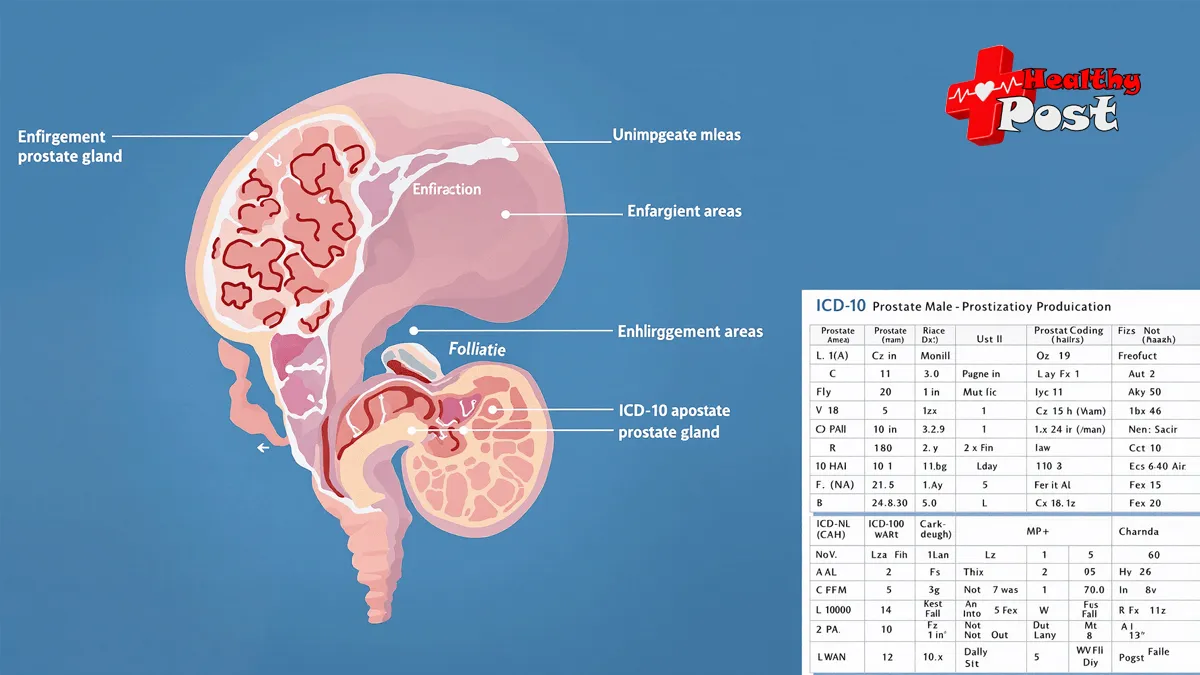
Benign Prostatic Hyperplasia (BPH) affects millions of men worldwide, causing urinary symptoms and impacting quality of life. The BPH ICD 10 classification system helps healthcare providers diagnose and treat this common condition.
BPH happens when the prostate gland grows larger, pressing against the urethra and bladder. This growth can cause problems with urination and other health issues. The condition becomes more common as men age.
The ICD-10 coding system gives doctors a standard way to record BPH cases. These codes help track symptoms, treatments, and outcomes. They make it easier for healthcare teams to work together.
This article explores eight key benefits of understanding the BPH ICD 10 classification system:
- Better diagnosis accuracy
- Clear communication between doctors
- Improved treatment planning
- Enhanced research opportunities
- Smoother billing processes
- Better quality reporting
- Easier patient monitoring
- Public health insights
Let’s dive into each benefit to see how this classification system makes healthcare better for everyone.
1. Accurate Diagnosis Coding with ICD-10 for BPH
ICD-10 coding brings remarkable precision to BPH diagnosis through specific code assignments. The primary code N40.1 identifies BPH with lower urinary tract symptoms.
Different BPH manifestations receive unique codes:
- N40.0: Enlarged prostate without urinary symptoms
- N40.1: Enlarged prostate with lower urinary symptoms
- N40.2: Nodular prostate without urinary symptoms
- N40.3: Nodular prostate with urinary symptoms
This detailed classification helps doctors pinpoint exact BPH conditions. A patient’s symptoms match with specific codes, creating clear medical records.
Precise documentation through ICD-10 codes shapes effective treatment plans. Medical teams can:
- Track symptom progression
- Monitor treatment responses
- Adjust care strategies
- Document complications
“Accurate ICD-10 coding acts as a universal language for healthcare providers treating BPH patients”
The coding system captures vital clinical details:
- Urinary retention
- Bladder outlet obstruction
- Associated complications
- Previous treatments
- Current medications
Healthcare providers use these codes to build detailed patient histories. Each visit adds new information through updated codes. This running record helps doctors make informed decisions about patient care.
ICD-10’s structured approach eliminates confusion in medical records. Doctors can quickly understand a patient’s BPH status by checking the assigned codes. This clarity leads to faster, more accurate treatment decisions.
2. Improved Clinical Communication through Standardized Medical Codes
Standardized ICD-10 codes create a universal language for healthcare providers treating BPH patients. These codes eliminate confusion between different medical specialties and healthcare facilities.
Medical teams can quickly understand a patient’s BPH condition through specific ICD-10 codes:
- N40.0 – Enlarged prostate without lower urinary tract symptoms
- N40.1 – Enlarged prostate with lower urinary tract symptoms
- N40.2 – Nodular prostate without lower urinary tract symptoms
- N40.3 – Nodular prostate with lower urinary tract symptoms
This standardized system helps various healthcare professionals work together seamlessly:
- Primary care physicians can relay precise information to urologists
- Nurses can accurately document patient symptoms
- Specialists can understand referral details instantly
- Emergency departments can access patient history quickly
The uniform terminology reduces medical errors caused by miscommunication. Healthcare providers spend less time clarifying patient details and more time delivering care.
These codes also support effective care coordination across different healthcare settings:
“ICD-10 codes serve as a bridge between different medical specialties, ensuring everyone speaks the same clinical language” – American Urological Association
Remote consultations benefit from this standardized system. Doctors can discuss cases with colleagues worldwide using these universal codes.
The codes help track treatment progress through clear documentation. Each healthcare provider can understand previous interventions and current treatment plans.
This standardized system creates efficient communication channels between:
- Hospitals
- Clinics
- Rehabilitation centers
- Home healthcare services
- Pharmacies
3. Enhanced Treatment Planning with Detailed ICD-10 Classifications for BPH
Detailed ICD-10 classifications serve as a powerful tool in creating personalized treatment plans for BPH patients. These codes map out specific symptoms and severity levels:
Severity Classification Codes:
- N40.0 – Enlarged prostate without lower urinary tract symptoms
- N40.1 – Enlarged prostate with lower urinary tract symptoms
- N40.2 – Nodular prostate without lower urinary tract symptoms
- N40.3 – Nodular prostate with lower urinary tract symptoms
The precision of these codes helps doctors choose the right treatment path. A patient with code N40.0 might need watchful waiting, while N40.3 could require surgical intervention.
Treatment Options Based on Classification:
- Mild Symptoms (N40.0)
- Lifestyle changes
- Regular monitoring
- Moderate Symptoms (N40.1)
- Alpha-blockers
- 5-alpha reductase inhibitors
- Severe Symptoms (N40.3)
- Minimally invasive procedures
- Surgical interventions
These classifications also track symptom changes during treatment. A shift from N40.3 to N40.1 shows treatment success and guides next steps.
Doctors use this coding system to:
- Create custom treatment strategies
- Adjust medications based on response
- Plan timely interventions
- Document treatment progress
ICD-10 codes help healthcare teams make data-driven decisions about BPH care. This system ensures patients receive treatments matching their specific condition stage.
4. Better Data Collection and Research Opportunities Enabled by Consistent Use of ICD-10 Codes in BPH Studies
ICD-10 codes create a standardized system for collecting BPH data across different healthcare settings. This unified approach helps researchers track patterns and trends with precision.
Key Research Benefits:
- Accurate prevalence tracking across different age groups
- Clear identification of risk factors
- Detailed documentation of treatment outcomes
- Population-based studies become more reliable
- Cross-institutional research collaboration becomes easier
Medical researchers can now build comprehensive databases using these standardized codes. The detailed classification system allows them to study specific BPH subtypes and their unique characteristics.
“ICD-10 coding has revolutionized our ability to conduct large-scale BPH research” – American Urological Association
The systematic data collection enables researchers to:
- Track disease progression rates
- Compare treatment effectiveness
- Identify regional variations
- Study comorbidity patterns
- Analyze healthcare utilization
These codes help create detailed patient registries for long-term studies. Researchers can now access reliable data to develop new treatment approaches and improve existing ones.
Research Applications:
- Clinical trials participant selection
- Healthcare resource allocation studies
- Treatment outcome analysis
- Quality of life assessments
- Cost-effectiveness research
The National Institute of Health’s BPH Research Network uses ICD-10 codes to coordinate multi-center studies. This standardization helps create larger sample sizes and more statistically significant results.
Healthcare providers can contribute to research by maintaining accurate coding practices. Their consistent use of ICD-10 codes builds valuable datasets for future studies.
5. Streamlined Billing and Reimbursement Processes for Healthcare Providers Treating Patients with BPH Using Accurate ICD-10 Coding Practices
Accurate ICD-10 coding plays a vital role in the medical billing process for BPH treatments. Healthcare providers must use specific codes to describe patient conditions:
- N40.0 – Enlarged prostate without lower urinary tract symptoms
- N40.1 – Enlarged prostate with lower urinary tract symptoms
- N40.2 – Nodular prostate without lower urinary tract symptoms
- N40.3 – Nodular prostate with lower urinary tract symptoms
Insurance claims accuracy depends on proper code selection based on patient symptoms. A single incorrect digit can trigger claim denials or payment delays.
Medical practices benefit from precise BPH coding through:
- Faster Payment Processing
- Clean claims move quickly through insurance systems
- Reduced need for manual review
- Minimal back-and-forth communication
- Reduced Claim Denials
- Clear documentation supports medical necessity
- Proper code matching with procedures
- Accurate symptom representation
- Improved Revenue Cycle
- Predictable cash flow
- Lower administrative costs
- Better financial planning
Healthcare providers should maintain detailed clinical notes to support their code selections. This practice helps justify medical decisions during insurance audits.
The reimbursement process runs smoothly when providers:
- Document all relevant symptoms
- Link treatments to specific diagnoses
- Update patient records regularly
- Verify insurance coverage requirements
6. Quality Reporting Compliance Benefits from Utilizing ICD-10 Codes in Managing BPH Cases
Healthcare providers must meet strict quality standards when treating patients with BPH. ICD-10 codes help achieve these standards through:
Accurate Quality Metrics Tracking
- Patient outcomes documentation
- Treatment success rates
- Complication monitoring
- Length of hospital stays
- Readmission rates
The proper use of BPH ICD-10 codes enables healthcare systems to:
- Generate detailed quality reports
- Compare performance across departments
- Identify areas needing improvement
- Document adherence to clinical guidelines
Clinical Guidelines Compliance
Key Areas of Focus:
- Diagnostic procedures
- Treatment protocols
- Follow-up care
- Patient education
Healthcare organizations can demonstrate their commitment to quality care through precise ICD-10 coding. This practice helps meet regulatory requirements and maintain accreditation standards.
Benefits for Healthcare Systems:
- Simplified audit processes
- Reduced compliance risks
- Enhanced performance tracking
- Better resource allocation
- Improved patient satisfaction scores
The standardized nature of ICD-10 codes creates a reliable framework for measuring healthcare quality. This system allows providers to:
- Track treatment patterns
- Monitor clinical outcomes
- Assess provider performance
- Compare results across facilities
Quality reporting through ICD-10 codes helps healthcare systems maintain high standards of care. This data-driven approach supports continuous improvement in BPH patient management.
7. Tracking Patient Progress with ICD-10 Classification
The ICD-10 system creates a detailed timeline of each patient’s BPH journey. Healthcare providers can record specific symptoms and changes at every visit.
Key Benefits of Long-term Monitoring:
- Precise documentation of symptom changes
- Clear tracking of treatment responses
- Early detection of disease progression
- Better informed decision-making for treatment adjustments
The classification system helps doctors spot patterns in patient responses to different treatments. A patient might start with mild symptoms (N40.0) and progress to more severe manifestations (N40.1).
“ICD-10 codes act like breadcrumbs, showing us the exact path of a patient’s BPH progression or improvement.” – Dr. Sarah Chen, Urologist
Treatment Effectiveness Evaluation:
- Initial symptoms and severity level
- Response to prescribed medications
- Changes in urinary function
- Impact on quality of life
- Need for surgical intervention
Healthcare teams can quickly review past treatments and their outcomes. This historical data guides future treatment decisions and improves patient care.
The system also helps identify:
- Treatment resistant cases
- Successful therapy approaches
- Common progression patterns
- Risk factors for complications
Regular monitoring through ICD-10 codes creates a standardized record of BPH management. This systematic approach leads to better treatment outcomes and improved patient satisfaction.
FAQs (Frequently Asked Questions)
What is the significance of understanding BPH ICD-10 classification in healthcare?
Understanding BPH ICD-10 classification is crucial as it enables accurate diagnosis, facilitates effective treatment planning, improves clinical communication, and supports quality reporting compliance in managing Benign Prostatic Hyperplasia cases within healthcare systems.
How does ICD-10 coding improve diagnostic accuracy for Benign Prostatic Hyperplasia (BPH)?
ICD-10 coding provides specific codes that enhance diagnostic precision by ensuring detailed and accurate medical documentation of BPH cases, which is essential for effective treatment planning and patient record management.
In what ways do standardized ICD-10 codes enhance clinical communication among healthcare providers treating BPH?
Standardized ICD-10 codes create uniform terminology that facilitates clear and consistent communication among interdisciplinary healthcare teams, improving care coordination and collaborative management of patients with BPH.
How can detailed ICD-10 classifications guide treatment planning for patients with BPH?
Detailed ICD-10 classifications allow clinicians to assess symptom severity and disease progression accurately, enabling personalized care decisions and selection of appropriate medical or surgical interventions tailored to individual patient needs.
What benefits does consistent use of ICD-10 codes offer for research and data collection related to BPH?
Consistent application of ICD-10 codes ensures reliable aggregation of epidemiological data, supports clinical research efforts, and helps in understanding disease patterns and improving therapies for Benign Prostatic Hyperplasia.
Why is accurate ICD-10 coding important for billing and reimbursement processes in BPH treatment?
Accurate ICD-10 coding is vital when submitting insurance claims related to BPH diagnosis and treatment as it ensures timely reimbursement by minimizing errors or claim denials, thereby streamlining the billing process for healthcare providers.