

This article was written by Dr. Rachana Bhoite (Nutrition Science, Dr. Reddy’s Labs), specializing in clinical nutrition science, dietary fats, and metabolic health.
Medical & Dietary Disclaimer: The nutritional information and comparison provided on Healthy Post regarding butter and margarine are for educational and informational purposes only and do not constitute formal medical or dietetic advice. Dietary requirements vary based on individual health history, lipid profiles, and cardiovascular risk factors. Always consult a qualified physician, registered dietitian, or healthcare professional before making significant changes to your dietary fat intake or nutrition plan.

🏥 Medical Review Board Member
Dr. Rachana Bhoite, PhD
Nutrition Science Expert | Dr. Reddy’s Laboratories (Hyderabad, India)
Dr. Rachana Bhoite, PhD, is a distinguished industry veteran with over 22 years of expertise in Foods & Nutrition and clinical research. With a career deeply rooted in medical nutrition and nutraceutical innovation, she has successfully designed and launched numerous scientifically differentiated products across global markets. Dr. Bhoite is dedicated to bridging the gap between complex clinical data and accessible, evidence-based nutrition. Her commitment to rigorous research ensures that every piece of content she reviews meets the highest standards of scientific accuracy and consumer safety.
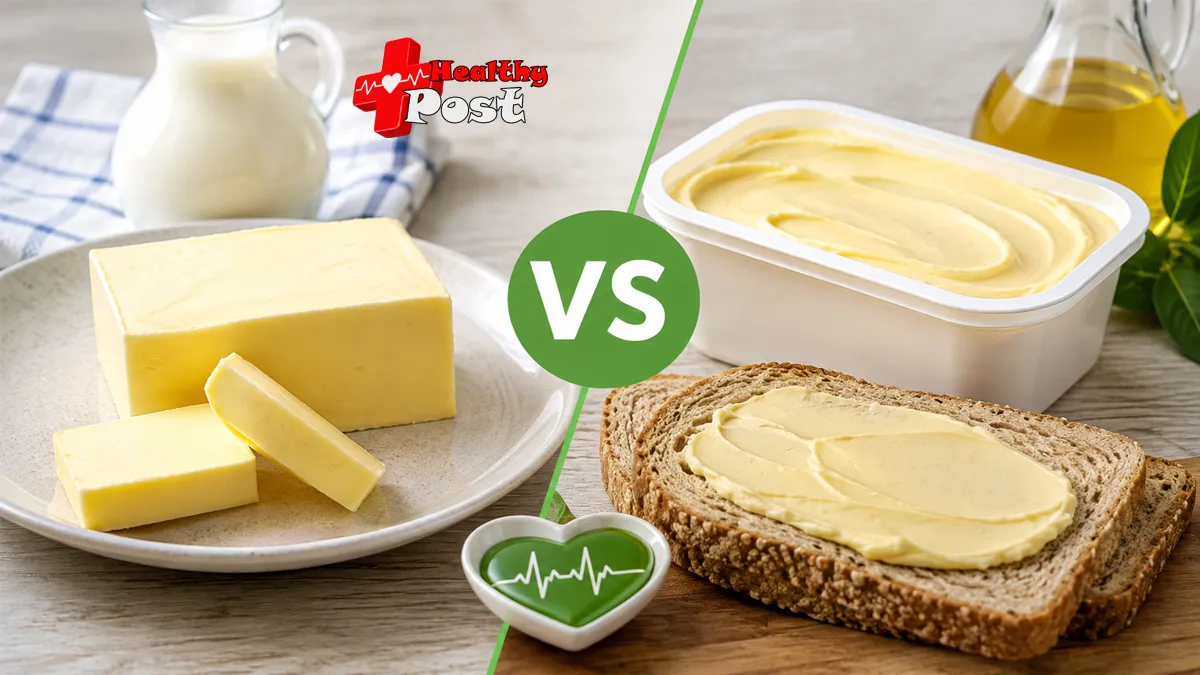
If you have ever stood in the dairy aisle wondering whether butter vs margarine is the better choice, the answer is more nuanced than the old “natural versus processed” debate suggests. For most people who are concerned about LDL cholesterol and cardiovascular health, a soft or liquid spread made mainly from unsaturated plant oils is generally a better everyday choice than butter. The reason is primarily the type of fat each product provides—not simply whether it comes from an animal or a plant.
Butter is naturally rich in saturated fat, while many modern soft margarines are formulated with more monounsaturated and polyunsaturated fats. Replacing saturated fat with unsaturated fat can help lower LDL cholesterol and fits the American Heart Association’s updated 2026 approach to heart-healthy eating.
That does not mean every margarine is healthy or that butter must disappear from your kitchen. The product’s ingredients, saturated-fat content, serving size and your overall dietary pattern all matter.
Butter vs. Margarine at a Glance
| Feature | Butter | Modern plant-based margarine |
|---|---|---|
| Main source | Cream or milk fat | Vegetable or plant oils |
| Saturated fat | Usually high | Varies; often lower in soft spreads |
| Unsaturated fat | Relatively low | Often higher |
| Dietary cholesterol | Contains cholesterol | Generally contains no dietary cholesterol |
| Industrial trans fat | Not the main concern; dairy naturally contains small amounts of trans fat | Modern products should be selected without partially hydrogenated oils |
| Calories | Calorie-dense | Calorie-dense, but varies by formulation |
| Vitamin content | Naturally provides some vitamin A | May be fortified with vitamins A, D or E |
| Texture | Usually firm | Soft, tub, liquid or firm |
| Heart-health profile | Less favorable as a major fat source because of saturated fat | Often more favorable when low in saturated fat and based on unsaturated oils |
The important qualification is that margarine is not one standardized food. A soft tub spread made largely from canola or soybean oil can have a very different nutritional profile from a firm spread containing substantial palm or coconut oil.
What is butter?
Butter is a dairy fat produced from cream or milk. It is predominantly fat and contains a substantial amount of saturated fatty acids. It also naturally contains dietary cholesterol and small amounts of fat-soluble vitamins, including vitamin A.
One tablespoon of butter contains about 7 grams of saturated fat, according to MedlinePlus. On a 2,000-calorie diet, that is a sizeable portion of the general daily saturated-fat limit.
Butter’s nutritional profile does not make it a toxic food. A small amount can fit into an otherwise balanced diet. The concern arises when butter becomes a frequent source of added fat and displaces foods or oils that provide more unsaturated fat.
What is margarine?
Margarine is a category of spreads made primarily from fats and oils, often including vegetable oils such as canola, soybean, sunflower or safflower oil. Some products may also use olive oil or blends of several oils.
The formulation determines how much saturated fat, unsaturated fat, sodium and calories the product contains.
This is why comparing butter vs margarine nutrition by category alone can be misleading. Two margarines sitting beside each other in a supermarket may have noticeably different fat profiles.
Soft tub and liquid margarines are generally preferable to harder stick varieties when heart health is the priority. Mayo Clinic explains that harder margarines tend to contain more saturated fat, while softer or liquid versions are more likely to provide unsaturated fats.
Nutritional Differences Between Butter and Margarine
The most useful comparison is not simply “animal fat versus plant fat.” Instead, look at the balance between saturated and unsaturated fats.
Butter’s main disadvantage for cardiovascular health is its relatively high saturated-fat content. Many modern plant-oil spreads can provide more unsaturated fat and less saturated fat.
That distinction matters because the 2026 American Heart Association dietary guidance specifically recommends choosing unsaturated fats instead of saturated fats as part of an overall heart-healthy dietary pattern. The guidance also emphasizes that the quality of the whole diet matters more than focusing on a single food in isolation.
The American Heart Association’s 2026 dietary guidance provides additional detail on the current evidence behind this approach.
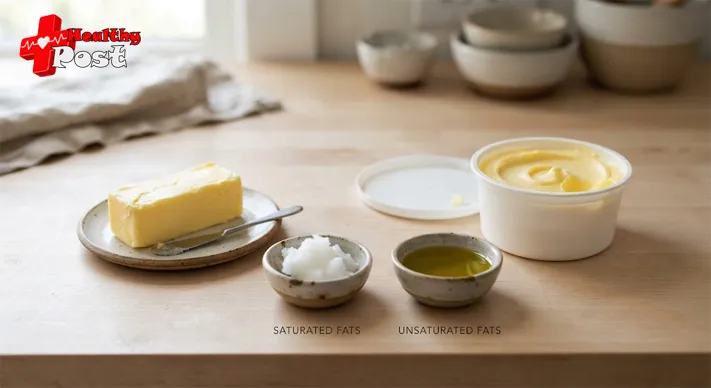
Saturated Fat in Butter vs. Plant-Based Spreads
The saturated fat in butter vs plant-based spreads is one of the clearest nutritional differences.
Butter naturally contains a high proportion of saturated fat. Saturated fat can raise LDL cholesterol, which is one reason health organizations recommend replacing foods high in saturated fat with sources of unsaturated fat.
Many plant-based spreads are formulated around unsaturated vegetable oils. These include oils such as canola, soybean and sunflower oil. However, “plant-based” does not automatically mean low in saturated fat.
Some spreads contain significant amounts of palm, palm kernel or coconut oil, all of which can contribute substantial saturated fat. So the better question is not “Does it say plant-based?” but:
How much saturated fat does it contain, and what oils are used?
A quick label comparison can therefore be more useful than judging a spread by its packaging or marketing claims.
Is Butter or Margarine Better for Cholesterol?
For someone specifically asking is butter or margarine better for cholesterol, the answer generally favors a soft, low-saturated-fat margarine made primarily with unsaturated plant oils.
Butter contains more saturated fat than many soft margarines. Replacing some of the saturated fat in the diet with unsaturated fat can lower LDL cholesterol. Mayo Clinic notes that replacing saturated fat with unsaturated plant oils can reduce total and LDL cholesterol.
The wording matters, though.
It would be inaccurate to say:
“Margarine lowers cholesterol.”
A better explanation is:
A suitable low-saturated-fat margarine may help improve LDL cholesterol when it replaces a higher-saturated-fat food such as butter.
The effect comes from the dietary substitution. Simply adding margarine to an already calorie-dense diet does not create the same benefit.
For broader cholesterol management, food choices such as oats, legumes, nuts, seeds and other high-fiber plant foods can also contribute to a heart-supportive eating pattern. For example, Healthy Post’s discussion of functional foods highlights soluble fiber sources such as oats, barley, beans and psyllium as useful components of cholesterol-conscious eating.
Learn more about functional foods and cholesterol-supportive nutrition
How Butter and Margarine Affect LDL Cholesterol
LDL, or low-density lipoprotein, is often called “bad” cholesterol because elevated levels are associated with a higher risk of atherosclerotic cardiovascular disease.
The relationship between diet and LDL is more complicated than simply counting dietary cholesterol. Saturated fat is an important dietary factor, and replacing it with unsaturated fat is a key recommendation in current cardiovascular nutrition guidance. The AHA’s 2026 statement also says that, for most people, dietary cholesterol is no longer the primary target for cardiovascular disease risk reduction.
This distinction helps explain why butter’s dietary cholesterol content is not the whole story.
If you spread butter on toast every morning and replace it with a soft spread rich in unsaturated fats, the nutritional change is more meaningful than simply choosing a product advertised as “cholesterol-free.”
What About Trans Fat in Margarine?
This is where older advice about margarine needs updating.
Historically, some margarines were made using partially hydrogenated oils, which could produce industrial trans fats. Trans fats are particularly harmful because they can raise LDL cholesterol while lowering HDL cholesterol and increasing cardiovascular risk.
Modern food manufacturing has changed considerably, particularly in the United States, where the FDA determined that partially hydrogenated oils were no longer generally recognized as safe for their intended use.
Still, consumers should check labels rather than assume every product is identical.
When buying margarine:
- Look for little or no trans fat.
- Check the ingredient list for “partially hydrogenated oil.”
- Compare saturated-fat amounts.
- Favor products based primarily on unsaturated vegetable oils.
- Remember that serving size affects the numbers on the label.
MedlinePlus also recommends reading ingredient lists because a label showing zero grams of trans fat does not necessarily mean there is absolutely none in the product; very small amounts can fall below labeling thresholds.
What Is the Healthiest Spread for Heart Health?
There is no single product that deserves the title of the healthiest spread for heart health for every person.
Instead, look for these characteristics:
- Low saturated fat
- Little or no industrial trans fat
- Mostly unsaturated plant oils
- Reasonable sodium content
- A serving size that fits your calorie needs
For a direct butter substitute, a soft tub margarine made primarily with unsaturated vegetable oils is often a sensible choice.
Liquid plant oils such as olive or canola oil can be even more useful for cooking. MedlinePlus recommends liquid vegetable oils instead of butter or solid margarine and specifically suggests choosing soft margarine over harder forms.
Other healthy alternatives to butter include avocado, nuts, seeds and nut or seed spreads. These foods provide different combinations of unsaturated fats, fiber, protein and micronutrients.
The larger dietary pattern matters, too. A heart-supportive diet built around vegetables, fruits, whole grains, legumes, nuts, seeds and appropriate protein sources is more important than finding one “perfect” spread.
How to Choose a Healthier Margarine
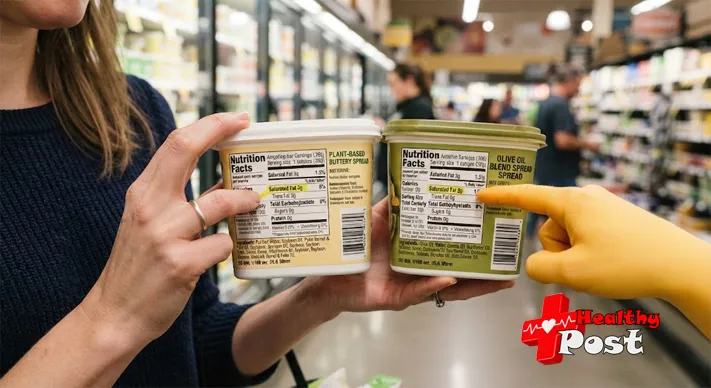
The front of a package can be persuasive, but the Nutrition Facts panel usually tells you more.
1. Check saturated fat
Compare brands and choose a product that is relatively low in saturated fat.
2. Check trans fat and ingredients
Look for little or no trans fat and avoid products containing partially hydrogenated oils.
3. Look at the first ingredient
If a liquid unsaturated vegetable oil is prominent in the ingredient list, that can be a useful sign. However, always consider the complete formulation.
4. Compare sodium
Some spreads contain more sodium than others. If you use the product frequently, small differences can add up.
5. Consider the serving size
Both butter and margarine are calorie-dense. A product can have an appealing nutrition panel while still contributing substantial calories if several servings are used.
6. Prefer soft or liquid varieties
For heart health, softer spreads are generally preferable to firm stick margarines because they tend to contain more unsaturated fat.
Is Butter Ever a Reasonable Choice?
Yes. Heart-healthy eating does not require treating butter as forbidden.
A small amount used for flavor can fit within an otherwise nutritious diet, particularly when most of your dietary fats come from unsaturated sources.
For example, using a modest amount of butter to finish a vegetable dish is different from relying on butter as the main cooking fat at every meal.
The AHA’s current guidance emphasizes dietary patterns rather than isolated foods. A diet rich in vegetables, fruits, whole grains, healthy protein sources and unsaturated fats can accommodate occasional foods higher in saturated fat.
If you already have high LDL cholesterol, cardiovascular disease, diabetes or another condition requiring dietary management, your individual targets may be different. Discuss substantial dietary changes with your doctor or registered dietitian.
Butter vs. Margarine for Cooking, Baking and Toast
The “better” choice can depend on what you are doing.
For toast: A soft plant-oil spread is generally more favorable when your goal is to reduce saturated fat.
For cooking: Liquid unsaturated oils, such as olive or canola oil, are often preferable to butter or solid margarine.
For baking: Butter can provide a distinctive flavor and texture, so it may still have a practical role. If you are adapting a recipe for cardiovascular reasons, the appropriate substitute depends on the recipe rather than simply replacing butter with an equal amount of any margarine.
For occasional flavor: A small amount of butter can be reasonable within an otherwise balanced diet.
Healthy Post’s heart-health guidance similarly emphasizes replacing butter and other saturated-fat sources with unsaturated fats such as olive oil, avocado, nuts and seeds.
Common Butter and Margarine Myths
“Butter is healthier because it is natural.”
Natural does not automatically mean lower cardiovascular risk. Butter is naturally high in saturated fat.
“All margarine is unhealthy.”
Not anymore. Modern margarines differ considerably. A soft spread based mainly on unsaturated vegetable oils can have a more favorable fat profile than butter.
“All margarine contains dangerous trans fat.”
Older formulations created this concern, but modern products have changed substantially. Checking the current ingredient list is more useful than relying on outdated assumptions.
“Plant-based automatically means heart healthy.”
No. Some plant-based spreads contain oils that are high in saturated fat.
“Butter must be completely eliminated.”
Not necessarily. Portion size and the overall dietary pattern matter.
“Cholesterol-free means heart healthy.”
A cholesterol-free label does not tell you everything about a food’s saturated-fat content, calories, sodium or overall nutritional quality.
Frequently Asked Questions
Is margarine healthier than butter?
For most people focused on LDL cholesterol and heart health, a soft margarine that is low in saturated fat and made primarily from unsaturated plant oils is generally a better everyday choice than butter. Not every margarine has the same nutritional profile.
Is butter bad for cholesterol?
Butter can contribute to higher LDL cholesterol because it is rich in saturated fat. That does not mean a small amount must be completely eliminated, but replacing some butter with unsaturated fats is generally a more heart-friendly strategy.
Which has more saturated fat, butter or margarine?
Butter is usually higher in saturated fat than healthier soft margarines, but margarines vary considerably. Check the Nutrition Facts label rather than assuming every margarine is low in saturated fat.
What is the healthiest spread for your heart?
Look for a spread that is low in saturated fat, free of industrial trans fat and based mainly on unsaturated plant oils. Liquid plant oils are also strong choices for cooking.
Is plant-based margarine better than butter?
It can be, particularly when it is made primarily from unsaturated oils and contains little saturated fat. A plant-based label alone is not enough to determine whether a product is heart healthy.
Can I eat butter if I have high cholesterol?
You may not need to eliminate butter completely, but if your LDL is elevated, reducing saturated fat is an important dietary consideration. Your doctor or dietitian can help determine how much fits your individual treatment plan.
Bottom Line
The modern butter vs margarine debate is really a question about fat quality.
If your main priorities are heart health and lowering LDL cholesterol, choose a soft or liquid plant-oil-based spread that is low in saturated fat and contains no industrial trans fat. That approach is consistent with the American Heart Association’s 2026 recommendation to replace saturated fats with unsaturated fats as part of a broader heart-healthy dietary pattern.
Butter can still have a place in your diet, especially in small portions for flavor or occasional baking. But if you use a spread every day, choosing one with a more favorable unsaturated-to-saturated fat profile is generally the better strategy.
The simplest rule is also one of the most useful: read the label, compare the fats, watch the portion, and think about your whole diet rather than judging a food by whether it is called butter or margarine.
Medical Disclaimer: This article provides general nutrition information for educational purposes and does not replace individualized medical advice, diagnosis or treatment. If you have high LDL cholesterol, established cardiovascular disease, diabetes, kidney disease or another condition requiring dietary management, discuss your nutritional goals with a qualified healthcare professional.
References
- American Heart Association — 2026 Dietary Guidance to Improve Cardiovascular Health
- Mayo Clinic — Butter vs. Margarine: Which Is Better for My Heart?
- MedlinePlus — Facts About Saturated Fats