


Written by Author
This article has been written by Dr. Mohammed A. Alghamdi, BDS, MS, CAGS, ABGD, Esthetic and Restorative Dentist & Medical Director at UniDents Clinic (Jeddah, Saudi Arabia).
Medical Disclaimer: The content on Healthy Post is for educational and informational purposes only and does not substitute for professional medical or dental advice. Managing diastema teeth and exploring orthodontic or cosmetic gap closures requires a detailed structural examination, digital X-rays, and customized treatment planning. Always consult a qualified dental surgeon or orthodontist for an accurate assessment of tooth spacing, frenum issues, or localized orthodontic treatments.

🏥 Medical Review Board Member
Dr. Mohanned A. Alghamdi, BDS, MS, CAGS, ABGD
Esthetic and Restorative Dentist & Medical Director | UniDents Clinic (Jeddah, Saudi Arabia)
Dr. Mohanned A. Alghamdi, BDS, MS, CAGS, ABGD, is an accomplished Esthetic and Restorative Dentist and the Medical Director at UniDents Clinic. With a strong academic foundation from Tufts University, Dr. Alghamdi brings extensive clinical expertise and a commitment to professional excellence to his practice. He currently oversees a large multidisciplinary team of dental specialists, ensuring the highest standards of patient care, diagnostic precision, and clinical safety.
Diastema teeth can be charming, frustrating, or confusing, depending on who you ask. For some people, a small gap is a signature feature. For others, it feels like a change that happened slowly and without warning. Either way, understanding the reason behind a tooth gap matters. Some spaces are harmless and purely cosmetic. Others may point to gum disease, missing teeth, or bite problems that need attention.
So, what is diastema exactly? In simple terms, it is the dental name for a gap between two teeth, most often the upper front teeth. Children commonly develop these spaces as their mouths grow. Adults can have them too, either from genetics or from dental changes over time. The key is knowing when a gap is normal, when it is a sign of a problem, and how to fix teeth gaps if treatment is needed.
This guide breaks down the most important facts about diastema teeth, with practical advice, current treatment options, and a clear path for next steps.
1. What Is Diastema, and Why Does It Happen?
If you have ever wondered what is diastema, think of it as spacing between teeth that is wider than usual. It can occur between any teeth, but the most recognized form is a gap between the two upper front teeth. Dentists often call this a midline diastema.
In diastema dental care, the first goal is identifying the cause. A gap is not a diagnosis by itself. It is a clue.
Common causes include:
- Genetics and family traits
- Small teeth compared with jaw size
- A thick or oversized labial frenulum
- Missing teeth
- Thumb sucking or tongue thrusting
- Gum disease
- Jaw growth patterns
A simple example helps. One adult may have had a front-tooth gap since childhood because small teeth run in the family. Another may develop a new gap at age 45 because gum disease weakened the support around the teeth. The same visible gap can have very different meanings.
That is why diastema teeth should always be assessed in context, not judged by appearance alone.
2. Diastema Teeth Are Often Harmless, Especially in Children
One of the most reassuring facts is that many gaps are normal. In children, spacing often appears during the shift from baby teeth to permanent teeth. As larger adult teeth come in, those spaces may close on their own.
Dentists usually watch rather than rush into treatment if:
- The child is still losing baby teeth
- The bite is developing normally
- There are no signs of pain or infection
- The gap is not linked to a structural issue
In adults, a stable gap that has always been there is often harmless too. In some families and cultures, a tooth gap is considered attractive or distinctive. That matters. Not every gap needs to be “fixed.”
The better question is this: does the gap affect oral health, function, or confidence?
If the answer is no, monitoring may be enough.
3. New or Widening Gaps Can Signal an Underlying Problem
A gap that appears suddenly is different from a gap that has always existed. This is where diastema dental evaluation becomes important.
A new or widening gap may be linked to:
- Periodontitis, also called advanced gum disease
- Bone loss around the teeth
- Tooth loss from trauma or decay
- Pressure from tongue thrusting
- Bite changes or shifting teeth
Warning signs to watch for include:
- Red, swollen, or bleeding gums
- Loose teeth
- Bad breath that does not improve
- Pain while chewing
- Tooth sensitivity
- Spaces that seem to be getting larger
According to the Centers for Disease Control and Prevention, gum disease is a major cause of tooth-supporting tissue loss in adults. When the bone and gums weaken, teeth can drift. A widening front gap may be the first visible sign.
This is why asking what is diastema is only step one. The next step is asking why it appeared.
Quick Risk Check: When to See a Dentist Soon
Book a dental visit promptly if:
- Your gap is new
- Your gums bleed often
- A tooth feels loose
- You lost a tooth and did not replace it
- You have jaw pain or speech changes

4. The Cause Determines How to Fix Teeth Gaps
When people search how to fix teeth gaps, they often expect one answer. In reality, treatment depends on the reason for the gap, the size of the space, and the condition of the teeth and gums.
Here is a simple comparison of common options:
| Treatment | Best For | Pros | Limits |
|---|---|---|---|
| Dental bonding | Small gaps, usually under 2 mm | Fast, affordable, minimally invasive | May stain or chip over time |
| Porcelain veneers | Cosmetic reshaping of front teeth | Natural look, durable | Irreversible enamel changes may be needed |
| Braces | Larger gaps, bite issues, multiple spacing problems | Precise tooth movement | Longer treatment time |
| Clear aligners | Mild to moderate spacing in adults | Discreet, removable | Requires discipline and suitable case selection |
| Frenectomy | Thick frenum causing front gap | Targets structural cause | Often combined with orthodontics |
| Dental bridge | Gap due to missing tooth | Restores function and appearance | Involves neighboring teeth |
| Dental implant | Missing tooth with healthy bone support | Strong, long-term solution | Higher cost, surgical procedure |
| Gum disease treatment | Gaps caused by periodontitis | Treats the root problem | Cosmetic closure may still be needed later |
This is where personalized planning matters. A person with healthy teeth and a tiny gap may do well with bonding. Someone with bone loss may first need periodontal treatment before any cosmetic fix is considered.
For patients exploring orthodontic options, the American Association of Orthodontists offers reliable background on braces and aligners.
5. Cosmetic Fixes Work Well, but They Are Not One-Size-Fits-All
Many people with diastema teeth want a treatment that looks natural and feels conservative. Cosmetic dentistry can help, especially when the gap is small and the teeth are healthy.
Dental Bonding
Bonding uses tooth-colored resin to close small spaces. It is shaped directly on the tooth, then hardened with a special light.
Why people choose it:
- Usually completed in one visit
- Less expensive than veneers
- Minimal enamel removal
Example: A patient with a 1.5 mm front gap may leave the same day with a fuller smile and no surgery.
Porcelain Veneers
Veneers are thin ceramic shells attached to the front of the teeth. They can close gaps while also changing shape, color, and symmetry.
They may be ideal if you also want to:
- Brighten discolored teeth
- Correct uneven edges
- Improve overall smile balance
Braces or Clear Aligners
If spacing affects more than one tooth, moving the teeth may be better than simply widening them with bonding or veneers. This is often the most biologically balanced solution.
Clear aligners remain one of the most requested options in 2026 because they are subtle and easier to remove for meals and cleaning.
If you are comparing cosmetic and orthodontic choices, a related article could use anchor text such as bonding vs veneers for front teeth or clear aligners for adult spacing.
6. Some Cases Need Medical or Surgical Treatment First
Not every gap is cosmetic. In many diastema dental cases, the visible space is the result of a deeper issue.
Oversized Labial Frenulum
The frenum is the soft tissue connecting the inside of the upper lip to the gums. If it is thick or positioned too low, it can keep the front teeth apart. In those cases, a frenectomy may help.
A frenectomy is a minor procedure that removes or reshapes that tissue. It is often paired with braces or aligners so the gap can close and stay closed.
Missing Teeth
When a tooth is missing, nearby teeth may drift into the empty space. That creates new gaps and bite changes.
Common solutions include:
- Dental bridge
- Dental implant
- Orthodontic treatment before replacement
Gum Disease Treatment
If gum disease caused the spacing, that problem must come first. Treatments may include:
- Scaling and root planing
- Periodontal maintenance
- Flap surgery in advanced cases
- Bone grafting or guided tissue regeneration
The National Institute of Dental and Craniofacial Research provides trusted information on periodontal disease and oral health conditions.
This is also where newer advances are changing care. Digital Smile Design allows dentists to map tooth movement and cosmetic results before treatment begins. Bone regeneration techniques are also improving outcomes for people with tissue loss.
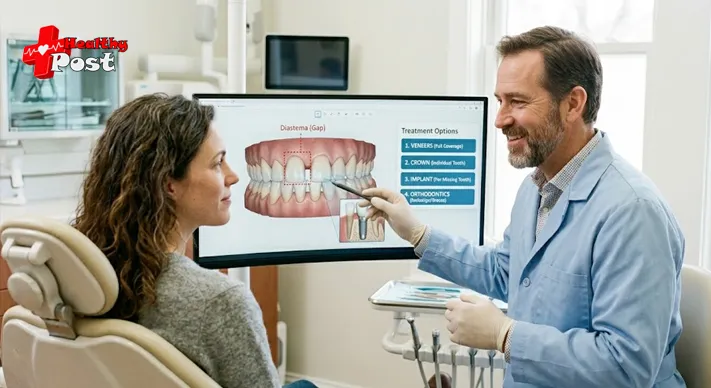
7. Prevention and Follow-Up Matter More Than Most People Think
Even after treatment, gaps can return if the underlying cause is not controlled. That is why prevention is part of the answer to how to fix teeth gaps long term.
Helpful habits include:
- Brush twice daily with fluoride toothpaste
- Floss or clean between teeth every day
- Keep up with regular dental visits
- Treat grinding, clenching, or bite issues
- Avoid tobacco
- Address thumb sucking or tongue thrusting early
- Wear retainers after orthodontic treatment, if prescribed
For adults, the most important habit may be paying attention to change. Teeth usually do not shift without a reason. If your smile looks different, your mouth may be telling you something.
Possible internal linking phrases for related articles:
- signs of early gum disease
- how retainers prevent teeth from shifting
- best options to replace a missing tooth
FAQs About Diastema Teeth
Is diastema dangerous?
Usually, no. Many gaps are harmless. But a new or widening gap can signal gum disease or tooth movement.
What is diastema in simple words?
It is the medical term for a gap between two teeth, often between the upper front teeth.
Can diastema close naturally?
Yes, especially in children as adult teeth erupt. In adults, natural closure is less common and depends on the cause.
How to fix teeth gaps without braces?
Small gaps may be treated with bonding or veneers. The right option depends on tooth health, gap size, and bite alignment.
Can gum disease cause diastema teeth?
Yes. Gum disease can damage bone and gum support, allowing teeth to shift and create spaces.
Do clear aligners work for diastema dental cases?
Often, yes. Clear aligners can be very effective for mild to moderate spacing, especially in adults with healthy gums.
Final Thoughts
Diastema teeth are more than a cosmetic detail. Sometimes they reflect genetics and natural growth. Sometimes they reveal missing teeth, habits, or gum disease that should not be overlooked. That is why understanding what is diastema is only the beginning. The real value comes from knowing the cause and choosing the right treatment for your situation.
If your gap is long-standing and healthy, you may decide to keep it. If it is new, widening, or affecting your confidence, speak with a dentist or orthodontist. There are more options than ever, from bonding and aligners to implants and periodontal care. The best answer to how to fix teeth gaps is always personal, practical, and based on a proper exam.
A well-planned approach can protect your oral health and help your smile feel like your own again. 🦷
References
- Centers for Disease Control and Prevention. Oral Health Basics.
- American Association of Orthodontists. Information on spacing and orthodontic treatment.
- National Institute of Dental and Craniofacial Research. Gum disease and oral health resources.
1 Comment
Pingback: How to Fix a Loose Tooth: Causes, Home Care, and When to See a Dentist