
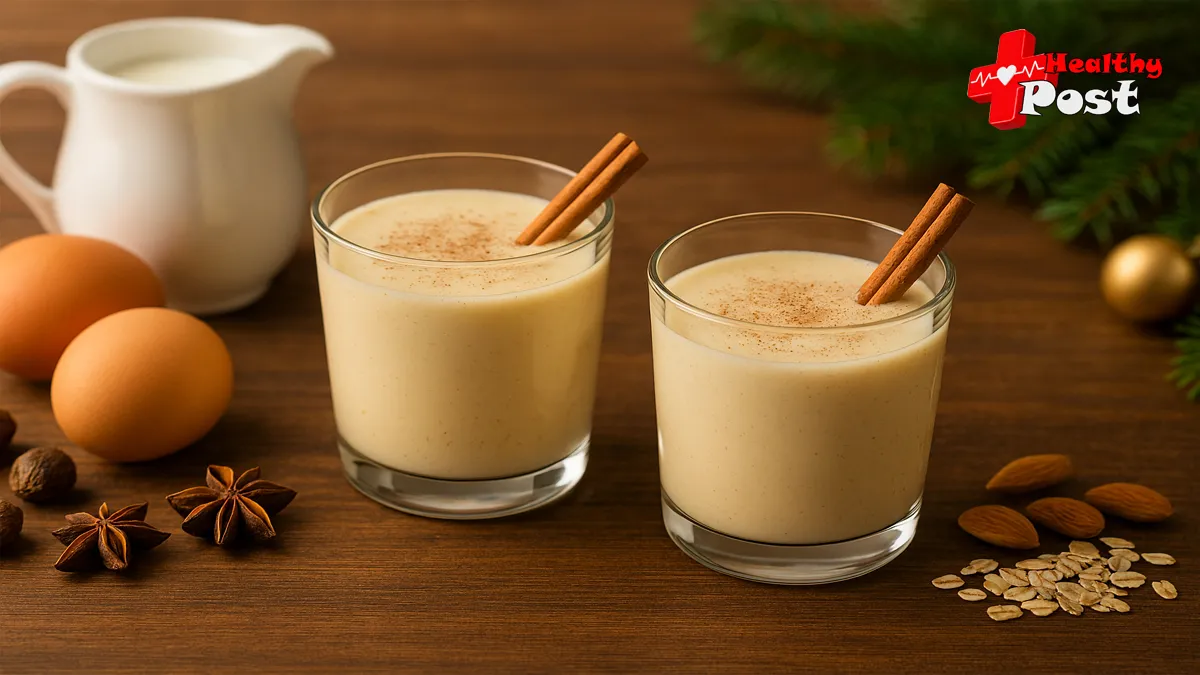
9 Brilliant Egg Nog Cocktail Tips: What Is Egg Nog & How to Make Egg Nog with Less Sugar
Few holiday drinks feel as nostalgic as egg nog. Yet many people worry that one creamy egg nog cocktail will derail their health goals. 🎅
You are not alone if you feel torn. You want tradition and comfort, but also steady energy and balanced blood sugar. The good news is that you do not need to give up nog. You only need a smarter plan.
In this guide, you will learn what is egg nog, how it affects your body, and how to make egg nog with far less sugar. You will also see simple tweaks that keep the flavor and reduce the overload.
Let’s walk through nine practical tips that help you enjoy your holiday glass with confidence. 🥂
1. Start with what egg nog actually is
Before changing a recipe, it helps to understand the basics. So, what is egg nog?
Traditional egg nog is a rich, sweet, dairy-based drink made from:
- Milk and/or cream
- Sugar
- Egg yolks (and sometimes whites)
- Warm spices like nutmeg or cinnamon
- Often a spirit such as rum, brandy, or bourbon
Historically, it was a way to use fresh eggs and milk during winter celebrations. Over time, recipes became sweeter and heavier.
A typical store-bought version often contains:
- High sugar levels
- Saturated fat from cream
- Added flavors or stabilizers
This combination can:
- Spike blood sugar
- Add many extra calories
- Feel heavy on digestion
Knowing this, you can see why one egg nog cocktail can feel “too much.” Yet the same ingredients can be adjusted to support better health.
Real life example:
A reader swapped full cream for 2% milk plus a splash of half-and-half. She still felt cozy and satisfied, but her drink no longer felt like dessert in a glass. 😊
2. Choose a lighter base without losing creaminess
Your base sets the tone for the entire drink. You do not need to use heavy cream to enjoy a silky texture.
Consider these options for a lighter base:
- 2% milk instead of whole milk and cream
- Unsweetened almond milk for a nutty, light option
- Oat milk for a creamier plant-based feel
- Lactose‑free milk if you are sensitive to lactose
You can also mix and match:
- Half dairy milk, half unsweetened almond milk
- Oat milk plus a small splash of cream for richness
This approach cuts calories and saturated fat but keeps a pleasant mouthfeel.
Tip: Chill your lighter base very well. Cold drinks often feel richer and more satisfying, even when leaner.
Real life example:
For a holiday brunch, one host offered two pitchers. One used classic whole milk and cream. The second used oat milk plus a small amount of half‑and‑half. Guests praised the lighter version and many chose it after tasting both.
3. Cut sugar in stages and layer flavor instead
Sugar is the main reason egg nog can feel more like dessert than a drink. Reducing it is key if you want stable energy.
To make progress without shock to your taste buds, lower sugar step by step:
- Use 25–30% less sugar than the recipe suggests first.
- If that feels fine, drop to 50% less next time.
Instead of relying on sugar, layer flavor with:
- Vanilla extract
- Freshly grated nutmeg
- Cinnamon sticks
- A tiny bit of orange or lemon zest
If you still want more sweetness, consider:
- A small amount of maple syrup or honey
- Stevia or monk fruit if you tolerate them
Keep portions modest and taste as you go.
Real life example:
One family cut the sugar in their recipe by half. They added vanilla and extra nutmeg. No one noticed the change until they were told later. They only noticed feeling less sluggish after dessert. 🎄

4. Balance the alcohol in your egg nog cocktail
Alcohol is often part of the tradition. Still, the mix of sugar, fat, and spirits can strain your body. A mindful approach can keep your egg nog cocktail enjoyable and safer.
Consider these strategies:
- Use half the usual amount of rum, brandy, or bourbon.
- Add extra milk or unsweetened plant milk to keep volume.
- Offer a nonalcoholic version for guests who prefer it.
Health reasons to reduce alcohol in nog:
- Less strain on your liver
- Lower risk of heartburn
- Better sleep quality that night
- Fewer empty calories
You can also play with flavor:
- Use spiced rum instead of regular. A small amount tastes more complex.
- Add a little vanilla and nutmeg to deepen flavor without more alcohol.
Real life example:
A couple who loved nog began using half the usual rum. They topped glasses with grated nutmeg and a cinnamon stick. Their guests did not complain and the hosts felt more clear-headed the next morning.
5. Prioritize egg safety and freshness
Eggs are central to traditional nog. They also raise questions about safety.
To stay safe:
- If using raw eggs, choose pasteurized eggs from the store.
- Keep eggs chilled until use.
- Do not leave prepared nog at room temperature for long.
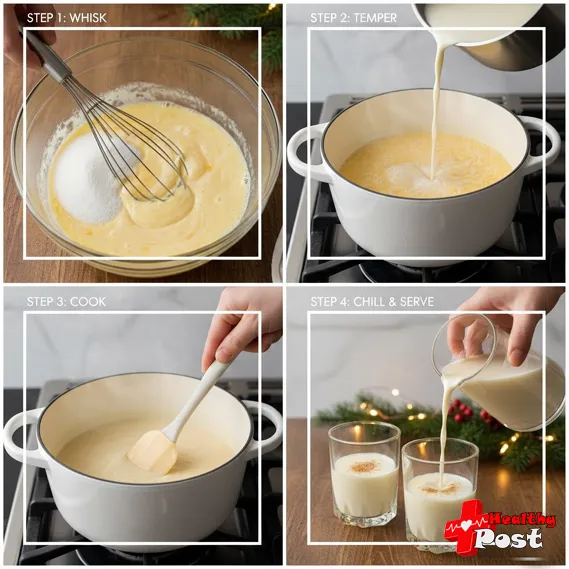
Cooking the egg mixture is another safe method:
- Whisk eggs and sugar.
- Slowly add warm milk while whisking.
- Heat gently until the mix coats the back of a spoon.
- Chill it thoroughly before adding any alcohol.
Real life example:
A parent making nog for teens switched to a cooked, custard-style base. The drink still felt rich. Everyone enjoyed it, and the parent felt better about safety. 🥚
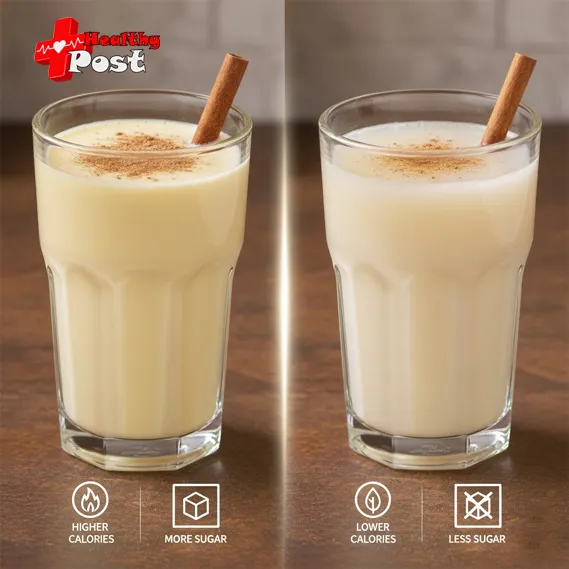
6. Compare traditional vs. lighter egg nog at a glance
It helps to see how small changes add up. The table below shows rough averages for a 1/2‑cup serving. Values vary by recipe and brand, but the trend is clear.
| Version | Calories (approx.) | Sugar (g) | Total Fat (g) | Alcohol | Notes |
|---|---|---|---|---|---|
| Store‑bought full‑fat egg nog | 200–220 | 20–22 | 10–12 | No | Very sweet, thick texture |
| Classic homemade egg nog cocktail | 250–300+ | 20–25 | 15–20 | Yes | Heavy cream and added spirits |
| Lighter, low‑sugar homemade version | 120–160 | 6–10 | 4–7 | Optional | Uses lighter milk and reduced sweeteners |
This comparison shows why lighter versions can fit more easily into a healthy eating plan.
Remember, portion size also matters. A small glass can feel festive and satisfying. You do not need a large mug.
7. Add satisfying textures and toppings, not extra sugar
Many people crave the “treat feeling” more than the sweetness itself. Small, thoughtful toppings can help your nog feel special without a sugar overload.
Ideas that add pleasure with minimal sugar:
- A dusting of cinnamon or nutmeg on top
- A cinnamon stick for stirring
- A light sprinkle of cocoa powder
- Unsweetened whipped cream made with very little sweetener
You can also:
- Serve nog in a smaller, elegant glass
- Add a few ice cubes for a smoother, thinner sip
These touches make the experience feel indulgent while supporting your health goals.
Real life example:
One person focused on presentation rather than sweetness. She used smaller stemmed glasses, dusted the top with nutmeg, and added cinnamon sticks. The drink felt luxurious even though the recipe had much less sugar. ✨
8. Pair your nog with protein and fiber
Egg nog, especially when sweet, can spike blood sugar. Pairing it with protein and fiber can soften that impact.
Try serving a small glass of nog with:
- A handful of nuts
- Whole‑grain crackers and hummus
- A boiled egg or small piece of cheese
- Fresh fruit like apple slices or berries
This combination can:
- Help you feel fuller
- Slow the release of sugar into the blood
- Reduce cravings later in the evening
You can even enjoy your nog after a balanced meal rather than before. A balanced plate with vegetables, lean protein, and whole grains provides a stronger base.
Real life example:
A person with blood sugar concerns began pairing a mini glass of nog with a snack plate of almonds and apple slices. She noticed fewer cravings for more sweets later that night.
9. Learn how to make egg nog with less sugar: a simple recipe
Now that you understand the key ideas, let’s put them into practice. Here is a simple way to make egg nog that feels festive and still respects your health.
Low‑Sugar Lighter Egg Nog Cocktail (Serves 6–8 small glasses)
You can keep this nonalcoholic or turn it into a gentle egg nog cocktail by adding a modest amount of spirits.
Ingredients
- 3 large pasteurized eggs
- 1/3 cup sugar (you can reduce to 1/4 cup if you prefer)
- 2 cups 2% milk
- 1 1/2 cups unsweetened almond milk (or oat milk)
- 1 teaspoon pure vanilla extract
- 1 teaspoon ground nutmeg, plus more for serving
- 1/2 teaspoon ground cinnamon
- Pinch of salt
- Optional: 1/2 to 3/4 cup dark rum or bourbon for the adult version
- Optional sweetener to taste: stevia or monk fruit, if desired
Directions
- Whisk eggs and sugar
In a medium bowl, whisk the eggs and sugar until the mixture looks pale and slightly thick. - Warm the milk mixture
In a saucepan, combine the 2% milk, almond milk, nutmeg, cinnamon, and salt.
Warm gently over medium‑low heat until it is hot but not boiling. - Temper the eggs
Slowly pour a small amount of the warm milk into the egg mixture while whisking.
This step helps prevent scrambling. - Cook the custard base
Pour the egg mixture back into the saucepan.
Cook over low heat, stirring often, until it slightly thickens and coats the back of a spoon.
Do not let it boil. - Chill thoroughly
Remove from heat. Stir in the vanilla.
Cool to room temperature, then refrigerate until cold, at least three hours. - Add alcohol, if using
Just before serving, gently stir in rum or bourbon if you want an alcoholic version. - Serve and garnish
Pour into small glasses.
Top with a little grated nutmeg.
Add a cinnamon stick for a festive touch.
You now know how to make egg nog that feels rich, yet contains less sugar and less saturated fat than many traditional recipes. You can adjust sweetness each year as your taste buds adapt.
10. Plan your nog moments with intention
Health is not only about ingredients. It is also about habits and patterns.
Consider these questions:
- When do you enjoy nog the most?
- How many times per season feels right for you?
- What serving size allows comfort without regret?
You might decide:
- To enjoy a small egg nog cocktail at one or two key events.
- To keep most other days alcohol‑free.
- To serve a nonalcoholic, low‑sugar version for weeknight treats.
When you choose your nog moments on purpose, you stay aligned with your broader health goals. 🎁
FAQs about egg nog, health, and sugar
1. Is egg nog healthy?
Egg nog is rich and can fit into a balanced diet in small portions.
It contains protein and some vitamins from milk and eggs.
However, many versions are high in sugar, fat, and sometimes alcohol.
That is why lighter recipes and smaller servings work better for most people.
2. Can I make egg nog without alcohol?
Yes. Most of the flavor comes from milk, eggs, vanilla, and spices.
You can skip alcohol entirely and still have a cozy holiday drink.
Serve the nonalcoholic version in the same pretty glasses.
Guests can choose whether to add a small splash of spirits to their own glass.
3. Is it safe to drink egg nog made with raw eggs?
Raw eggs can carry a risk of foodborne illness.
To lower this risk, use pasteurized eggs or cook the egg mixture as a custard.
Always keep nog chilled and avoid leaving it on the counter for long periods.
4. Can people with diabetes drink egg nog?
Many people with diabetes can enjoy small servings of a low‑sugar nog.
It helps to:
- Use reduced or alternative sweeteners
- Keep portions modest
- Pair nog with protein and fiber
It is always wise to discuss personal limits with a health professional.
5. How often can I drink egg nog during the holidays?
There is no single rule. It depends on your health, goals, and portion sizes.
Many people feel comfortable enjoying nog a few times during the season.
Lighter recipes make that pattern easier to manage.
6. Does warming egg nog change its nutrition?
Heating egg nog slightly to cook the eggs does not change nutrition very much.
You might lose a small amount of heat‑sensitive vitamins, but safety improves.
The bigger health impact comes from ingredients and portion sizes, not temperature.
Conclusion: Enjoy a healthier egg nog cocktail this season
You now know what is egg nog, how it is traditionally made, and how those ingredients affect your body. You also learned how to make egg nog with less sugar, lighter fats, and a more thoughtful approach to alcohol.
By:
- Choosing a lighter base
- Reducing sugar in stages
- Using spices and presentation for pleasure
- Managing alcohol and portion sizes
you can keep the tradition and trim the strain on your health.
A healthier egg nog cocktail does not remove the joy of the season. It helps you enjoy that joy with more comfort, more energy, and more peace of mind. 🕯️
When you mix your next batch, start with one or two of these tips. Over time, your new version may become the tradition everyone looks forward to.
