



Regarding microtia, many parents think that their children’s ears are completely deaf? This understanding is wrong. To understand this problem, you must first understand where hearing comes from? Congenital microtia is caused by abnormal development of the first and second branchial arches during the embryonic period. The auricle is severely underdeveloped, without normal auricle landmarks. Only contractures, deformed small cartilage masses and ectopic earlobes are seen in the ear area.
It is often accompanied by atresia or absence of the external auditory canal. About 50% of cases of microtia have obvious accompanying deformities. Such as hemifacial atrophy, hypoplasia of the maxillary and mandibular bones, and zygomatic bones. In terms of embryonic development, the middle ear and the external ear Mainly from the first and second branchial arch tissue. While the inner ear is derived from the ectoderm. Due to different tissue sources, patients with microtia mainly have dysplasia of the outer ear and middle ear. The inner ear is often not involved. Therefore, bone conduction can be used to maintain a certain level of hearing. Bone conduction transmits sound waves to the inner ear through the oscillation of the skull. The inner ear converts the sound waves into nerve impulses and senses position changes to produce hearing. Which accounts for about 40% of hearing. “
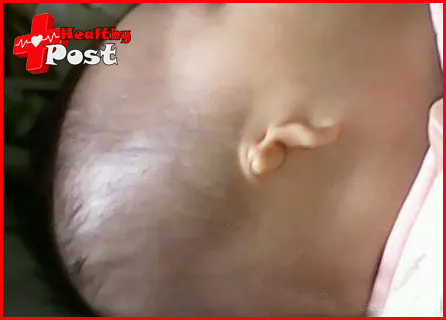
Congenital microtia
When patients with congenital microtia seek medical treatment, their parents or themselves are most concern about two issues. One is appearance problems, and the other is hearing problems. As parents have different levels of knowledge and the level of detail in their observations of their children. The focus of their concerns is also different. Some parents believe that their children’s affected ears have no hearing at all, and they put solving hearing problems first. Most parents find that the affected side of the child has some hearing, and they prefer to obtain a nearly normal auricle shape through surgery to reduce the psychological damage caused by the appearance defects of the child. Of course, the vast majority of parents of patients or the patients themselves hope to achieve a good appearance and restore normal hearing.
The external auditory canal of most patients with congenital microtia is completely atretic, and some have a shallow depression with a blind end at the distal end. So most parents think that just making a hole in the skin is enough, but this is far from the truth. “Most congenital microtia are unilateral, and most of them are on the right side. Those with deformity on both sides account for 10% of the total number of patients. Therefore, the hearing loss caused by unilateral congenital microtia is about 60% of that on the affected side. There is still 40% residual hearing, while the hearing of the unaffected side is normal, except for the slight difference in judging the direction of sounds, which does not have much impact on daily life and pronunciation. “People with unilateral microtia generally only need auricle reconstruction to improve their appearance.
Bilateral microtia
That’s it. However, for patients with bilateral microtia, life and work are often affected by bilateral hearing damage. Priority should be given to ear reconstruction and hearing reconstruction. If both auricle reconstruction and hearing reconstruction are to be performed, it is best to have a plastic surgeon and a plastic surgeon. The otolaryngologists jointly determine the position of the auricle and perform auricle reconstruction surgery first. In recent years, the development of implantable bone conduction hearing aid devices has also provided a good option to solve this problem.
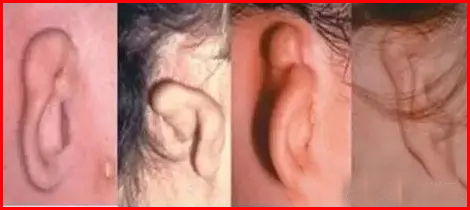
First, let’s understand the pathological characteristics of the auditory organs of patients with congenital microtia. The sensory part of the human auditory organ, that is, the inner ear, and the sound-transmitting parts, that is, the outer ear and the middle ear, are different in embryonic origin. The lesions in patients with congenital microtia syndrome mainly involve the structures originating from the first and second branchial arches, manifesting as various forms of abnormal auricle morphology and atresia of the external auditory canal or narrowing of the concha cavity and external auditory canal, complete loss of the tympanic membrane, and different structures of the ossicular chain. Degree of stunted development. The inner ear is rarely affected.
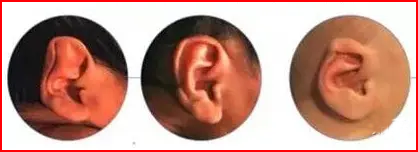
deformities
Sound waves
Let’s take a look at how sound waves are transmit to the brain to produce hearing. Sound waves can be transmit to the inner ear through air conduction and bone conduction. Air conduction is the process by which sound waves are transmit to the inner ear through the outer ear and middle ear. It is also the main route for sound waves to reach the inner ear. The outer ear has two main effects on incoming sound waves. One is the sound pressure gain of the outer ear, that is, the concha cavity, the external auditory canal and the tympanic membrane together form a composite sound cavity, so that the sound pressure of different frequencies reaching the tympanic membrane is gain.
The second is the role of the outer ear in sound source localization. The function of the middle ear is to act as an impedance conversion device to match sound waves when they are transmit from the air with lower impedance to the fluid in the inner ear with higher impedance, thereby improving the transmission efficiency of sound energy. This impedance transformation of the middle ear mainly involves three factors.
The first is that the area of the tympanic membrane is larger than the area of the stapes floor above the oval window of the cochlea. So that the sound pressure collect by the entire tympanic membrane is concentrate on a smaller area, making the oval The sound pressure at the window increases. The second is the leverage of the ossicular chain. Third, the curvature factor of the conical eardrum. Which has a certain degree of elasticity, also plays a role in impedance matching to a certain extent.
Microtia syndrome
Most patients with congenital microtia syndrome present with complete or mostly missing auricles, complete atresia of the concha cavity and external auditory canal, or significant narrowing and deformation. Middle ear malformations include disappearance of the external auditory canal opening, abnormal ossicle shape, dysplasia or even fusion, and non-pneumatization of the mastoid process. Inner ear development is rarely affect. Combined with the auditory physiology of the outer ear and the middle ear, it can be inferred that the affected ear is poor at judging the direction of sound, the sound pressure gain effect of the outer ear is almost lost, and the impedance transformation effect of the middle ear is impaired. However, please note that it is not a loss.
The degree of damage varies depending on the degree of middle ear development. In fact, the pure-tone audiometry we conducted on some patients with congenital microtia showed that their bone conduction hearing thresholds were normal, while their air conduction hearing thresholds were 50-70 dB. In general, the hearing of the affected ear is about 40% of that of the normal ear. Fortunately, most of these patients have unilateral disease and have a completely normal hearing organ on one side, so they can still cope with daily life. However, there are still obstacles in the judgment of sound sources and the perception of sounds at certain frequencies. In terms of analysis of sound quality, the gap is more obvious. Especially it may be difficult to enjoy the stereo effect. And if the unfortunate patient is affect on both sides, the hearing impairment will be obvious.
The solution to hearing problems, if you find microtia, you should go to the relevant hospital. Consult soon as possible to formulate a treatment plan and carry out treatment.
1 Comment
Pingback: The Benefits of an Ear Wax Removal Kit