

Medical Author & Expert Verification
This clinical health guide was entirely authored, fact-checked, and verified by Dr. Neha Sood, Otolaryngologist | Cochlear Implant & Phonosurgeon. All medical recommendations adhere strictly to current global otolaryngology guidelines.
Medical Disclaimer: The information provided on HealthyPost is intended for educational and informational purposes only. It does not constitute formal medical advice, diagnosis, or treatment. Always consult with a qualified healthcare provider or ENT specialist regarding any persistent changes in your hearing, ear drainage, or local discomfort.

🏥 Medical Review Board Member & Author
Dr. Neha Sood
Otolaryngologist | Cochlear Implant & Phonosurgeon | BLK-Max Super Speciality Hospital & Sir Ganga Ram Hospital (New Delhi)
Dr. Neha Sood is a highly accomplished Otolaryngologist, Cochlear Implant Surgeon, and Phonosurgeon based in New Delhi, India. With prestigious clinical affiliations at BLK-Max Super Speciality Hospital and Sir Ganga Ram Hospital, she specializes in advanced hearing restoration, voice disorders, and comprehensive ENT care. Dr. Sood is dedicated to translating complex surgical insights and otolaryngological breakthroughs into clear, evidence-based guidance to ensure the highest standards of patient education and medical accuracy.
If you’ve been wondering why does my ear feel wet but no wax is visible, you’re not imagining it. In our medical editorial work, we often hear patients describe a strange damp sensation, a sloshing fluid feeling, or the sense that the ear feels like water is in it but isn’t. Sometimes there is no pain. No obvious blockage. No visible discharge on a tissue. Yet the ear still feels off.
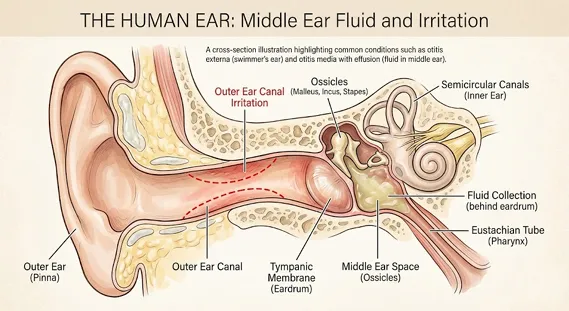
That sensation can come from several places. The outer ear canal may be mildly irritated and weeping a small amount of moisture. Or the problem may sit deeper, in the middle ear space, also called the tympanic cavity, where pressure changes or fluid behind the eardrum can create a false sense of wetness. Allergies, recent viral illness, Eustachian tube dysfunction, and early infection are common causes. Less often, jaw tension or a small eardrum injury can mimic moisture when there is little or no wax present.
This guide explains what may be happening, how to dry out ear canal moisture safely, and when symptoms deserve prompt medical care. If you also deal with hearing changes, Dizziness and tinnitus can be a useful related topic to explore with your clinician.
1. The “wet ear” feeling is often real, even when you can’t see wax
Many people expect ear symptoms to be obvious. Wax. Pain. Drainage. Redness. But the ear is more complicated than that.
A wet sensation may happen when:
- tiny amounts of moisture sit in the outer canal
- pressure builds behind the eardrum
- the auditory tube, the clinical term for the Eustachian tube, stops ventilating the middle ear well
- irritated skin releases a small amount of clear fluid
- nearby nerves from the jaw or throat create a referred sensation
This is why an ear feels like water is in it but isn’t can be such a frustrating symptom. The brain interprets pressure, movement, and mild inflammation as “wetness,” even when there is no earwax plug.
Most studies and clinical guidance agree on one point: ear fullness, popping and crackling sounds, and a clogged ear sensation do not always mean wax buildup. They often reflect pressure or fluid changes deeper in the ear.
2. Eustachian tube dysfunction is one of the most common causes
What it is
The Eustachian tube links the middle ear space to the back of the nose and throat. Its job is simple but vital: equalize pressure and help fluid drain. When that tube becomes swollen or blocked, pressure shifts inside the ear.
This is called Eustachian tube dysfunction, or ETD.
How it feels
Patients often describe:
- sensation of fullness
- muffled hearing
- popping and crackling sounds when swallowing
- a sloshing fluid feeling
- pressure that comes and goes
- an ear that feels wet without visible wax
This is one of the main reasons someone asks, “why does my ear feel wet but no wax?” The canal may be dry, but the middle ear can still feel abnormal because the pressure system is off.
Common triggers
ETD often follows:
- a cold or sinus infection
- air travel
- diving
- seasonal allergies
- allergic rhinitis
- prolonged nasal congestion
Recent ENT guidance has also noted more post-viral ear symptoms lasting several weeks. In some adults, fluid behind the eardrum no pain may persist for 6 to 12 weeks after a respiratory infection has otherwise improved.
3. Fluid behind the eardrum can cause symptoms with no pain
This is a big one, and it is often overlooked.
Serous otitis media means non-infected fluid has collected behind the eardrum. It sits in the middle ear space rather than the outer canal. Because there may be no infection, there may also be no pain.
What makes it confusing
A person may have:
- fluid behind eardrum no pain
- muffled hearing
- pressure
- mild imbalance
- a subtle wet or moving sensation
- intermittent clicking with swallowing
That makes this condition easy to dismiss. But persistent fluid can affect hearing clarity and, if prolonged, may contribute to chronic middle ear changes.
A practical example
In our review of common adult ENT complaints, we often see people who say, “My cold ended weeks ago, but my ear still feels blocked and wet.” In many of these cases, the issue is not wax. It is lingering fluid in the tympanic cavity.
If nasal congestion is part of the picture, reviewing What is adenoid, Symptoms, diagnosis and treatment may also help some readers understand how upper airway structures affect ear pressure, especially in children.
4. Allergies can create clear liquid and pressure without infection
Allergies do not just affect the nose and eyes. They can affect the ears too.
When allergic rhinitis flares, histamine causes swelling in the lining of the nose, throat, and auditory tube. That swelling may block normal drainage and ventilation. The result can be pressure, fullness, and in some cases a small amount of clear liquid from ear tissue irritation.
Signs that point toward allergy-related ear symptoms
- symptoms worsen during pollen season
- sneezing, itchy eyes, or nasal drip happen at the same time
- both ears may feel affected
- there is little or no fever
- there may be no pain
Some people search for clear liquid from ear ear allergy, and that pattern can be real. An ear allergy may contribute to a damp sensation or even a small amount of clear fluid draining from ear skin if the outer canal is irritated from rubbing, scratching, or dermatitis.
This is one reason adults are seeking ENT care more often during longer pollen seasons. Environmental shifts have made allergy-related ear complaints more common, especially in people with recurring sinus symptoms.
For evidence-based background, the NHS ear infections guidance and CDC healthy swimming materials help explain when symptoms are likely irritation versus infection.
5. Early swimmer’s ear may start with moisture before pain appears
Swimmer’s ear, also called otitis externa, is an infection or inflammation of the outer ear canal. But it does not always begin with severe pain.
In the early phase, the skin can become irritated and leaky. That may lead to clear fluid draining from ear tissue before redness and tenderness fully develop.
Early clues
- recent swimming or heavy sweating
- use of earbuds or hearing aids for long periods
- scratching the canal with a fingernail or cotton swab
- mild itch
- damp feeling
- slight odor
- discomfort when touching the outer ear later on
If the moisture changes from clear to yellow, green, cloudy, or foul-smelling, infection becomes more likely. Sharp pain or tenderness when pulling the earlobe is another warning sign.
6. Sometimes the sensation is neurological, not physical
This is where many articles stop too soon.
Not every wet-ear sensation comes from actual fluid. Nearby nerves can misfire or cross-signal. The brain then interprets this as pressure, dampness, or movement.
TMJ and jaw tension
The jaw joint sits close to the ear. TMJ dysfunction can irritate nearby muscles and nerves, creating:
- a clogged ear sensation
- intermittent fullness
- crackling
- ear discomfort without infection
- a phantom “wet” feeling
A patient may say the ear feels like water is in it but isn’t, especially after clenching, chewing gum constantly, or waking with jaw soreness.
Ménière’s disease and inner ear disorders
Less commonly, inner ear conditions can create fullness, hearing changes, tinnitus, or vertigo. These cases usually come with more than just dampness. There may be spinning, ringing, or fluctuating hearing.
If that sounds familiar, Dizziness and tinnitus becomes especially relevant.
7. A tiny eardrum injury or perforation can leak clear fluid
A small tear in the eardrum may cause moisture, reduced hearing, or odd pressure sensations. Causes can include:
- forceful cotton swab use
- sudden pressure change
- infection
- loud blast injury
This may produce clear liquid from ear or slightly blood-tinged drainage. It deserves medical assessment, especially if hearing drops suddenly or dizziness appears.
8. How to tell whether the problem is in front of or behind the eardrum
A simple mental checklist can help.
| Symptom pattern | Outer ear canal problem more likely | Middle ear problem more likely |
|---|---|---|
| Wetness near ear opening | Yes | Less common |
| Itching | Common | Less common |
| Pain when pulling earlobe | Common | Uncommon |
| Muffled hearing | Possible | Common |
| Popping and crackling sounds | Less common | Common |
| Recent cold or allergy flare | Sometimes | Very common |
| Sloshing fluid feeling | Possible | Common |
| Fluid behind eardrum no pain | No | Very possible |
This kind of quick sorting does not replace an exam, but it helps explain why does my ear feel wet but no wax may have several different answers.
9. How to dry out ear canal moisture safely
If you suspect mild outer canal moisture, you may wonder how to dry out ear canal symptoms at home.
Safe steps that may help
- Tilt your head to the side and gently pull the earlobe.
- Let gravity help drainage.
- Use a hairdryer on the lowest, coolest setting from at least 12 inches away.
- Consider over-the-counter drying drops if your eardrum is intact and you do not have tubes.
- A warm compress may help with comfort and may encourage drainage indirectly.
What not to do
- Do not use cotton swabs.
- Do not insert fingers, keys, bobby pins, or tools.
- Do not pour random oils into the ear.
- Do not use drying drops if you may have a perforated eardrum, ear tubes, or severe pain.
For some people, gentle symptom management plus time is enough. For others, treatment should target the cause, not just the moisture.
When allergy or congestion is the driver
If allergic rhinitis or ETD seems likely, clinicians may recommend:
- saline nasal rinses
- antihistamines
- nasal steroid sprays
- short-term use of nasal decongestant sprays in selected cases
Use decongestants carefully and according to label directions. Overuse can worsen congestion.
If you are also trying to understand debris versus moisture, Earwax color tells you Is there any disease may help you separate wax changes from true ear drainage.
10. When you should see a doctor
Get medical care sooner if you have:
- severe ear pain
- fever
- sudden hearing loss
- dizziness or spinning
- thick, yellow, green, bloody, or foul-smelling drainage
- symptoms lasting more than a few weeks
- repeated episodes
- clear drainage after head injury
Most studies agree that persistent unilateral symptoms, hearing decline, or ongoing clear fluid draining from ear should be examined. In adults, a clinician may look for ETD, dermatitis, infection, sinus disease, or a less common structural issue.
A doctor may use an otoscope to inspect the canal and eardrum. If middle ear fluid is suspected, tympanometry or a hearing test may help confirm it. Chronic cases sometimes need referral to an ENT specialist.
In selected cases, treatment may include prescription drops, allergy management, or procedures such as myringotomy or pressure equalization tubes if fluid behind the eardrum becomes prolonged and symptomatic.
If home care is part of your plan, be cautious with devices marketed for cleaning. Benefits Ear Wax Removal Kit may be worth discussing with a clinician first, because not every wet or clogged feeling is caused by wax.
FAQs
Why does my ear feel wet but no wax is coming out?
Often, the sensation comes from pressure changes, mild irritation, or fluid behind the eardrum rather than earwax. ETD, allergies, and early outer ear inflammation are common causes.
Can fluid behind eardrum happen with no pain?
Yes. Fluid behind eardrum no pain is common, especially after colds, viral infections, or allergy flares. Hearing may feel muffled even when there is little discomfort.
What does clear fluid draining from ear usually mean?
It can mean mild canal irritation, dermatitis, early swimmer’s ear, or less commonly a small eardrum perforation. If drainage is persistent, bloody, foul-smelling, or linked to head injury, seek urgent care.
How to dry out ear canal safely at home?
Tilt the head, let moisture drain, and use a cool hairdryer from a safe distance. Avoid cotton swabs. Do not use drying drops if you may have a torn eardrum or ear tubes.
Can allergies make the ear feel wet?
Yes. Clear liquid from ear ear allergy searches reflect a real pattern. Allergic rhinitis may swell the auditory tube and create pressure, fullness, and occasionally moisture from irritated canal skin.
Why does my ear feel like water is in it but isn’t?
That feeling often comes from ETD, middle ear pressure, TMJ-related nerve referral, or subtle fluid movement behind the eardrum. The sensation is real, even if no water is trapped in the outer canal.
Conclusion
If you keep asking why does my ear feel wet but no wax is there, the answer is often something other than earwax blockage. The most common explanations include Eustachian tube dysfunction, fluid behind the eardrum, allergic rhinitis, early swimmer’s ear, or even TMJ-related nerve signals. Some cases involve true moisture. Others involve pressure that mimics moisture.
The key is to pay attention to the pattern. No pain does not always mean no problem. Persistent sensation of fullness, muffled hearing, popping and crackling sounds, or repeated clear fluid draining from ear deserve a proper look. Safe self-care may help mild outer canal moisture, but ongoing symptoms should be assessed by a clinician.
If you’re sorting through related ear concerns, Earwax color tells you Is there any disease, Dizziness and tinnitus, and What is adenoid, Symptoms, diagnosis and treatment are useful follow-up topics. And if you are considering home cleaning tools, review Benefits Ear Wax Removal Kit with caution and context.
2 Comments
Pingback: What Can Be Mistaken for Trigeminal Neuralgia? Common Conditions Causing Facial Pain
Pingback: 7 Amazing Ear Cap Benefits for Ear Disease That Surprise You