


Written by Author
This article has been written by Dr. Neha Sood, Otolaryngologist | Cochlear Implant & Phonosurgeon (New Delhi, India).
Medical Disclaimer: The content on Healthy Post is for educational and informational purposes only. It is not intended to be a substitute for professional medical advice, diagnosis, or treatment. Always seek the advice of your physician, otolaryngologist, or other qualified health provider with any questions you may have regarding a medical condition.

🏥 Medical Review Board Member & Author
Dr. Neha Sood
Otolaryngologist | Cochlear Implant & Phonosurgeon | BLK-Max Super Speciality Hospital & Sir Ganga Ram Hospital (New Delhi)
Dr. Neha Sood is a highly accomplished Otolaryngologist, Cochlear Implant Surgeon, and Phonosurgeon based in New Delhi, India. With prestigious clinical affiliations at BLK-Max Super Speciality Hospital and Sir Ganga Ram Hospital, she specializes in advanced hearing restoration, voice disorders, and comprehensive ENT care. Dr. Sood is dedicated to translating complex surgical insights and otolaryngological breakthroughs into clear, evidence-based guidance to ensure the highest standards of patient education and medical accuracy.
If you are wondering what can be mistaken for trigeminal neuralgia, you are not alone. In our medical editorial work, we often see patients describe severe facial pain that seems to point in one obvious direction, only for the final diagnosis to reveal something else entirely. That is part of what makes facial pain so difficult. The same cheek, jaw, tooth, temple, or eye pain can come from nerves, joints, teeth, sinuses, or even a past viral infection.
Trigeminal neuralgia is known for brief, intense, electric shock-like pain along the trigeminal nerve, which supplies sensation to much of the face. But several other disorders can produce pain that feels alarmingly similar. Some patients first visit a dentist. Others see an ENT specialist, neurologist, or primary care clinician. Many spend months searching for answers.
That is why a careful trigeminal neuralgia differential diagnosis matters. A rushed assumption can lead to the wrong medication, unnecessary dental work, or delayed treatment of the true problem. In this guide, we will break down the most common conditions misdiagnosed as trigeminal neuralgia, explain how they differ, and show what clues often help clinicians tell them apart.
If you have also explored related ear and facial discomfort topics such as Why Does My Ear Feel Wet But No Wax, Ear Piercing Pain Chart, or Ear Cap Benefits, you may already know how easily pain in the head and face can overlap across different conditions.
Why trigeminal neuralgia gets confused with other facial pain disorders
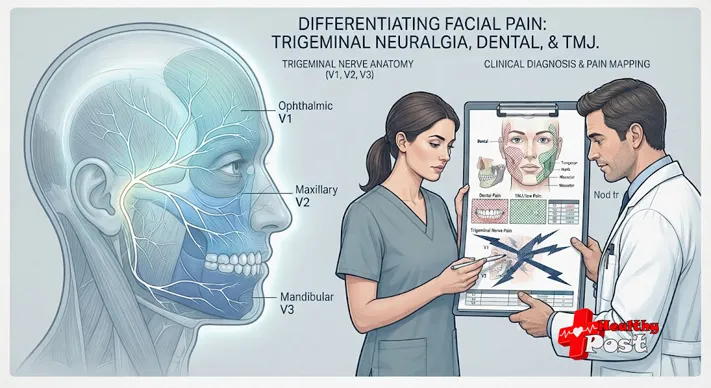
The trigeminal nerve has three major branches. One serves the forehead and eye area. One covers the cheek and upper jaw. One supplies the lower jaw. Because of that broad reach, pain from many nearby structures can mimic nerve pain.
Most studies agree that diagnosis depends heavily on the pattern of pain, the triggers, the duration of attacks, and the presence of associated signs. Imaging and examination help, but the story the patient tells is often the starting point.
Classic trigeminal neuralgia usually has these features:
- Sudden, severe, stabbing or electric shock-like pain
- Attacks lasting seconds to about two minutes
- Usually one-sided facial pain
- Triggers such as brushing teeth, shaving, talking, chewing, or a light breeze
- Pain-free periods between attacks, especially early on
Now compare that with other facial nerve pain conditions. Some create a constant ache. Some cause pressure, not shocks. Some bring swelling, rash, fever, jaw clicking, or eye watering. Those differences matter.
1. TMJ disorders are one of the most common look-alikes
TMJ vs trigeminal neuralgia symptoms
One of the most frequent questions we hear is about TMJ vs trigeminal neuralgia symptoms. The two can overlap enough to confuse patients, especially when pain sits near the jaw, ear, or temple.
Temporomandibular joint disorders, often called TMJ or TMJD, affect the jaw joint and surrounding muscles. The pain may worsen while chewing, yawning, clenching, or speaking for long periods. Many patients also report tension headaches or ear discomfort.
Clues that favor TMJ disorder include:
- Jaw clicking, popping, or grinding
- Limited mouth opening
- Pain linked to chewing or jaw movement
- Jaw locking
- Tenderness in the joint or chewing muscles
Trigeminal neuralgia, by contrast, rarely causes those mechanical jaw symptoms. Its pain is more likely to be lightning-fast, sharp, and triggered by light touch rather than joint motion alone.
A practical example: a patient may say, “It hurts every time I chew steak, and my jaw clicks.” That raises suspicion for TMJ. Another patient may say, “A gust of cold air on my cheek sets off a stabbing jolt.” That sounds more like trigeminal neuralgia.
TMJ is one of the leading conditions that mimic facial neuralgia, and it is often missed when the word “nerve pain” enters the conversation too early.
2. Dental pain can strongly resemble trigeminal nerve pain
Dental disease is another major source of facial pain similar to trigeminal neuralgia. The upper and lower branches of the trigeminal nerve supply the teeth and gums, so it is easy to see why confusion happens.
Common dental causes include:
- Tooth abscess
- Cracked tooth
- Deep cavity
- Gum infection
- Pulpitis, or inflammation inside the tooth
Dental pain usually behaves differently from trigeminal neuralgia. It often feels throbbing, deep, and persistent. It may worsen with hot or cold foods, biting pressure, or lying down. A visible cavity, swelling, or abnormal dental X-ray can help confirm the source.
In clinical review, we sometimes see patients who had a root canal or extraction because the pain seemed dental, yet the pain continued. That can happen when the underlying problem is actually neuralgic. The reverse also happens. A person assumes they have trigeminal neuralgia, but a careful dental exam finds an infected molar.
This overlap is one reason misdiagnosed facial nerve disorders can lead to frustration and delayed care. If the pain is localized to a tooth, especially with tenderness to tapping or clear dental findings, a tooth-related cause becomes more likely.
3. Atypical facial pain may be continuous rather than electric
Symptoms of atypical facial pain
Persistent idiopathic facial pain, sometimes referred to as atypical facial pain, is one of the more challenging diagnoses in facial pain medicine. It does not always fit neat textbook rules.
Unlike classic trigeminal neuralgia, this pain is often:
- Continuous or long-lasting
- Burning, aching, heavy, or throbbing
- Hard to localize precisely
- Sometimes present on both sides
- Less clearly triggered by touch
These symptoms of atypical facial pain can leave patients feeling dismissed, especially when scans and tests appear normal. But the pain is real. It simply follows a different pattern from classic neuralgia.
This category may overlap with chronic pain syndromes, prior trauma, or stress-related amplification of pain pathways. That does not mean the pain is “all in the head.” It means the nervous system may be processing pain differently.
When asking what can be mistaken for trigeminal neuralgia, this is a key answer. Atypical facial pain often lacks the short, electric bursts that define classic TN. It is usually more steady, more diffuse, and less tied to touch-trigger zones.
4. Postherpetic neuralgia can follow shingles on the face
Postherpetic neuralgia is nerve pain that persists after a shingles outbreak. If shingles affects the face, especially the forehead or eye region, the pain may involve the trigeminal nerve distribution.
This condition is often associated with:
- A history of shingles rash
- Burning or raw pain
- Skin hypersensitivity
- Pain that lingers for weeks or months
- Discomfort when clothing, air, or touch brushes the skin
The difference is that postherpetic neuralgia is usually more persistent than classic TN. Instead of isolated shock-like bursts, patients often describe ongoing burning and sensitivity.
The CDC shingles symptoms page is useful here because it highlights the typical rash history that can point clinicians in the right direction. In the right context, that history becomes a major clue.
This is one of the more important cranial nerve pain conditions to rule out, especially in older adults or anyone with a recent shingles episode.
5. Sinusitis can create pressure that feels like nerve pain
Sinus infections and sinus inflammation can cause cheek pain, forehead pressure, and upper tooth discomfort. Because these areas overlap with trigeminal nerve branches, sinus disease can seem like a nerve problem at first.
Signs that suggest sinusitis include:
- Nasal congestion
- Thick nasal discharge
- Fever
- Facial tenderness over the sinuses
- Pain that worsens when bending forward
- Pressure rather than electric shocks
A person with maxillary sinusitis may feel pain in the cheeks and upper teeth. That can sound alarming. But in many cases, the pain quality is more pressure-like and less like sudden electrical stabs.
The NHS trigeminal neuralgia guidance notes that other causes of facial pain should be considered before confirming a diagnosis. Sinus symptoms are part of that broader clinical picture.
6. Cluster headache, SUNCT, and SUNA can mimic severe neuralgia
Not all facial pain comes from the trigeminal nerve alone. Some headache syndromes produce intense one-sided pain around the eye and temple and can be mistaken for neuralgia.
Cluster headache
Cluster headache causes severe pain, often around one eye, and may come with:
- Eye watering
- Nasal stuffiness
- Eyelid drooping
- Restlessness during attacks
- Repeated attacks at similar times of day
The pain is severe, but the pattern differs from trigeminal neuralgia. Cluster headache attacks usually last longer, often 15 minutes to 3 hours, and include strong autonomic symptoms.
SUNCT and SUNA
These rare headache disorders cause short attacks of severe pain, often near the eye, along with redness or tearing. They can resemble TN because the attacks are brief and intense. But the eye symptoms can be much more prominent.
These are less common, yet they belong in the discussion of sharp shooting pain in face causes, especially when the pain centers around the orbit rather than the jaw or cheek.
7. Glossopharyngeal neuralgia affects a different nerve but can feel similar
Glossopharyngeal neuralgia is less common than trigeminal neuralgia, but it can produce sharp, stabbing pain that seems similar at first.
The pain usually appears in the:
- Throat
- Tonsil area
- Base of the tongue
- Deep ear
Typical triggers include swallowing, coughing, talking, or yawning. That trigger pattern helps separate it from TN. While trigeminal neuralgia tends to involve the face, glossopharyngeal neuralgia centers more on the throat and ear.
For patients also reading about Why Does My Ear Feel Wet But No Wax, this distinction matters. Not every ear-area pain symptom starts in the ear itself. Some come from nearby nerves.
Quick comparison table: what sets these conditions apart?
| Condition | Typical Pain Pattern | Common Triggers | Key Clues That Help Differentiate |
|---|---|---|---|
| Trigeminal neuralgia | Brief, electric shock-like, one-sided | Light touch, brushing teeth, breeze, talking | Sudden attacks with pain-free gaps |
| TMJ disorder | Aching jaw, temple, ear pain | Chewing, clenching, yawning | Jaw clicking, locking, muscle tenderness |
| Dental pain | Throbbing or deep constant pain | Biting, temperature changes | Tooth decay, abscess, abnormal dental exam |
| Atypical facial pain | Persistent burning or aching | Often unclear | Diffuse, continuous, less classic trigger pattern |
| Postherpetic neuralgia | Burning, persistent, sensitive skin | Touch, clothing, air | History of shingles rash |
| Sinusitis | Pressure, fullness, facial tenderness | Bending forward, congestion | Nasal symptoms, sinus tenderness, fever |
| Cluster headache | Severe eye-centered pain | Often cyclical rather than touch-triggered | Tearing, nasal stuffiness, agitation |
| Glossopharyngeal neuralgia | Stabbing throat or deep ear pain | Swallowing, talking, coughing | Pain focuses on throat, tongue, ear |
How doctors usually sort out the diagnosis
When we assess what can be mistaken for trigeminal neuralgia, the goal is not just naming pain. It is excluding dangerous, treatable, or misleading causes.
Evaluation may include:
- Detailed history of the pain pattern
- Neurological examination
- Dental examination
- MRI of the brain and trigeminal nerve pathway
- Imaging of the sinuses or jaw if indicated
The NICE neuropathic pain guidance supports a structured approach to nerve-related pain assessment and treatment. Most experts agree that imaging is especially important when symptoms are unusual, when the patient is younger, or when there are neurological warning signs.
Red flags that deserve prompt medical review include:
- Facial numbness
- Weakness
- Vision changes
- Hearing changes
- Fever or facial swelling
- New rash
- Persistent pain that is rapidly worsening
If chronic jaw symptoms are part of the picture, broader chronic jaw and facial pain causes may need evaluation as well. That includes muscle tension disorders, arthritis, and referred pain from nearby structures. In some patients, even topics like Ear Cap Benefits or Ear Piercing Pain Chart come up during history-taking because they reflect local irritation, pressure, or sensitivity that can complicate the story.

FAQs
Can a tooth problem feel exactly like trigeminal neuralgia?
Sometimes it can feel very close. But dental pain is usually more constant, more localized to a tooth, and often supported by exam or X-ray findings.
Is TMJ or trigeminal neuralgia more likely if my jaw clicks?
Jaw clicking strongly points toward TMJ dysfunction. It is not a classic feature of trigeminal neuralgia.
What are the main symptoms of atypical facial pain?
The main symptoms of atypical facial pain are ongoing aching, burning, or pressure-like discomfort that does not follow the brief electric-shock pattern of classic TN.
Can sinus infections cause facial pain similar to trigeminal neuralgia?
Yes. Sinus disease can cause cheek, forehead, and upper tooth pain. It usually comes with congestion, pressure, and tenderness rather than lightning-bolt shocks.
Should I get an MRI for facial nerve pain?
An MRI is often considered when trigeminal neuralgia is suspected, especially if symptoms are unusual or new. A clinician can advise whether imaging fits your case.
Where can I learn more about overlapping ear and facial pain symptoms?
If your symptoms involve the ear or jaw area, related topics like Why Does My Ear Feel Wet But No Wax, Ear Cap Benefits, and Ear Piercing Pain Chart may help you understand nearby structures that sometimes confuse the picture.
Conclusion
So, what can be mistaken for trigeminal neuralgia? Quite a lot. TMJ disorders, dental disease, atypical facial pain, postherpetic neuralgia, sinusitis, cluster headache, and glossopharyngeal neuralgia are among the most common culprits. Each can produce distressing facial pain. Each can blur the lines. But each also leaves clues.
The key is pattern recognition. Brief electric shocks triggered by light touch suggest trigeminal neuralgia. Constant aching points elsewhere. A shingles history matters. Jaw clicking matters. Nasal symptoms matter. Dental findings matter.
If you are living with unexplained facial pain, do not assume. A thorough evaluation can help identify what can be mistaken for trigeminal neuralgia and steer you toward treatment that actually matches the cause. This article is for informational purposes only and is not a substitute for personal medical advice, diagnosis, or treatment from a qualified clinician.
1 Comment
Pingback: Why Does My Tooth Hurt When I Bite Down? 7 Common Causes