


This article has been written by Dr. Kamlesh Verma (Surgical Oncology, Max Hospital ↗), specializing in advanced surgical oncology, operative techniques, neurosurgical instrumentation, and clinical patient education.
Medical Disclaimer: The information provided regarding surgical instruments such as the skull punch, neurosurgical procedures, and operative techniques is strictly for educational and informational purposes only. Surgical methodologies, anatomical evaluations, and medical interventions require specialized clinical training and personalized patient assessment. Always consult a qualified neurosurgeon, surgical specialist, or licensed healthcare provider for medical advice, diagnoses, or treatment planning.

🏥 Medical Review Board Member
Dr. Kamlesh Verma, MS, M.Ch
Director – Surgical Oncology | Max Super Speciality Hospital, Lucknow
Dr. Kamlesh Verma is a highly experienced Surgical Oncologist and Director of Surgical Oncology at Max Super Speciality Hospital, Lucknow. Trained at premier institutions including the Tata Memorial Centre in Mumbai and King George’s Medical University (KGMU), Dr. Verma specializes in advanced minimally invasive, robotic, and complex cancer surgeries. He is deeply committed to evidence-based oncology care, ensuring that every cancer-related publication he reviews meets the highest standards of medical accuracy, safety, and clinical integrity.
A Skull Punch is a specialized neurosurgical instrument designed to create a controlled opening or cut in cranial bone. Unlike a general-purpose bone cutter, it is specifically associated with procedures involving the skull, including selected craniotomy and cranial reconstruction applications. The exact purpose depends on the instrument’s design and the surgical procedure in which it is used.
The term can be confusing because “skull punch” does not describe just one universal instrument. Some models are intended primarily to create holes for cranial fixation, while particular designs are used to cut skull bone during craniotomy. Understanding that distinction makes it easier to see where this skull punch medical instrument fits among the many tools used in neurosurgery.
What Is a Skull Punch?
A skull punch is a manually operated cranial bone punch used to cut or perforate skull bone in a controlled manner. It belongs to the broader group of specialized neurosurgical bone instruments used when surgeons need to manipulate the rigid bone surrounding the brain.
The U.S. Food and Drug Administration (FDA) specifically recognizes “punch, skull” as a neurological device under product code GXJ and regulation 21 CFR 882.4750. The federal definition describes a skull punch as a device used to punch holes through the skull to allow fixation of cranioplasty plates or bone flaps by wire or other means.
That regulatory definition is useful, but it does not mean every commercially available skull punch has exactly the same function. For example, the Aesculap Dahlgren Skull Punch is listed in the U.S. National Library of Medicine’s AccessGUDID database as a reusable bone-coring punch.
In practical terms, a skull punch can be thought of as a specialized skull bone cutting instrument whose design allows a surgeon to create a controlled cranial opening or remove a defined portion of bone.
What Is a Skull Punch Used For?
The primary role of a skull punch is controlled manipulation of cranial bone.
Depending on the specific model and procedure, it may be used for:
- Creating a hole through cranial bone
- Preparing bone for fixation
- Supporting selected craniotomy procedures
- Cutting a controlled portion of skull bone
- Creating openings associated with specialized cranial procedures
- Preparing or modifying bone for cranial reconstruction
One important distinction is that the FDA’s formal definition focuses on creating holes for fixation of cranioplasty plates or bone flaps. However, specific commercially registered instruments can have a broader intended purpose. For example, a current medical-device registration for the Aesculap Dahlgren Skull Punch states that it is used to cut skull bone for performing a craniotomy.
So, it is more accurate to describe a skull punch as a specialized cranial bone-cutting instrument rather than assigning one function to every design.
Why Controlled Bone Removal Matters
The skull protects the brain, so creating an opening requires precision and careful control. A neurosurgical team needs an instrument appropriate to the location, size and purpose of the required bone opening.
A skull punch is therefore not simply a stronger version of an ordinary forceps or bone cutter. Its geometry, cutting mechanism and intended application are designed around cranial surgery.
Skull Punch in Neurosurgery
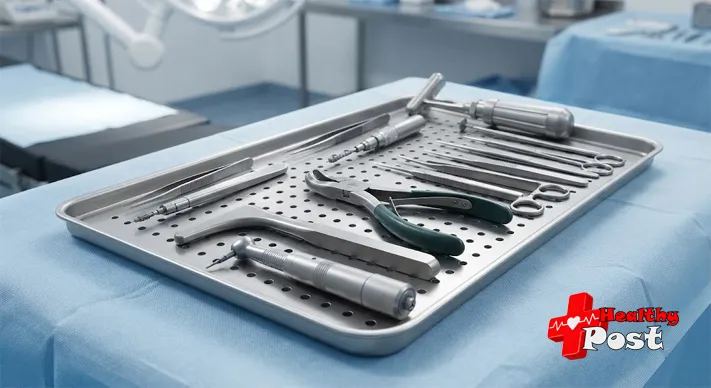
The skull punch in neurosurgery is one component of a much larger collection of neurosurgery instruments.
Cranial procedures may involve combinations of:
- Cranial drills and burs
- Craniotomes
- Trephines
- Bone punches
- Rongeurs
- Bone saws
- Retractors
- Specialized skull-base instruments
- Instruments used for cranial fixation
The choice depends on the surgical objective. A surgeon may need to create a small opening, establish access for a larger bone flap, remove a particular portion of bone, or prepare the skull for reconstruction.
This is why it would be misleading to describe the skull punch as the standard instrument for every cranial operation.
FDA product classification for skull punch
Skull Punch and Craniotomy
A craniotomy is a surgical procedure in which part of the skull is temporarily removed to provide access to structures inside the skull. The bone flap may subsequently be replaced.
Different craniotomy surgical instruments can be used to establish the required opening. Powered drills, burrs, craniotomes and other bone-cutting devices can play different roles depending on the procedure.
Some skull punches are specifically intended for cranial bone cutting during craniotomy. The current Malaysian medical-device registration for the Aesculap Dahlgren Skull Punch, for example, describes the instrument as being used to cut skull bone for performing a craniotomy.
This is an important distinction: the existence of a skull punch in a craniotomy set does not mean that every craniotomy uses a skull punch.
Skull Punch and Cranioplasty
Another important application involves cranioplasty, a procedure used to repair or reconstruct a defect in the skull.
When a bone flap or cranioplasty plate needs to be secured, fixation requires appropriately positioned holes or other attachment points. The FDA’s regulatory definition specifically describes the skull punch in connection with holes used to fix cranioplasty plates or bone flaps.
This makes the instrument relevant to cranial reconstruction as well as bone access.
In this context, it can be considered part of the broader group of cranioplasty fixation instruments. However, the punch itself is not the implant or fixation plate; its role is to create or prepare the bone opening required for the particular fixation method.
The distinction is useful because people sometimes assume that every skull punch is intended primarily to remove a large section of skull. In some applications, the objective is much more specific: creating a controlled opening that facilitates reconstruction or fixation.
Cranial Skull Punch and Burr Holes
The term cranial skull punch may also appear in discussions of burr holes.
A burr hole is a relatively small opening created through the skull for a particular neurosurgical purpose. Different techniques and instruments can be used to create such openings.
Published pediatric neurosurgical literature describes a specialized instrument called a “skull punch” developed for making a burr hole during osteoplastic craniotomy in neonates and infants. The report, published in Child’s Nervous System in 1989, describes the instrument specifically in relation to this application.
This historical example is helpful because it shows why the phrase “skull punch” should not be interpreted as a single standardized device with one universal design.
Instrument design can be adapted to particular anatomical and surgical requirements, and terminology used in clinical literature may sometimes be more specific than the general regulatory category.
How Does a Skull Punch Work?
The basic principle is mechanical rather than powered drilling. A manual skull punch uses a specialized working mechanism to cut or punch cranial bone.
The exact mechanism varies among designs, but the general concept is straightforward: the instrument is positioned at the intended cranial site and its mechanical action produces a controlled cut or opening in the bone.
The surgeon’s choice of instrument depends on factors such as:
- The location of the required opening
- The intended size and shape of the bone opening
- The surgical objective
- The patient’s anatomy
- The specific instrument design
- Whether the bone is being removed, perforated or prepared for fixation
The details of surgical positioning, force application and bone removal are part of professional surgical technique and are not something that should be attempted outside a controlled medical environment.
Skull Punch vs. Cranial Drill
A skull punch surgical instrument and a cranial drill can both be associated with cranial bone procedures, but they are not interchangeable terms.
| Feature | Skull Punch | Cranial Drill |
|---|---|---|
| Basic action | Mechanical punching or cutting | Rotary drilling or cutting |
| Typical design | Manual specialized instrument | Often powered system |
| Main role | Controlled cranial bone punching/cutting | Drilling, shaping or removing bone |
| Power source | Usually manual | Electrical or pneumatic systems may be used |
| Regulatory category | Skull punch | Cranial drills, burrs and related devices are separately classified |
| Use | Specific cranial bone applications | Broader range of cranial bone preparation |
The FDA’s regulations explicitly distinguish skull punches from powered compound cranial drills, burrs and trephines.
That distinction matters when researching neurosurgical instruments because product names can sometimes sound interchangeable even when their mechanisms are quite different.
Skull Punch vs. Rongeur
A skull punch can also be confused with a rongeur, but the two instruments have different classifications and intended functions.
A manual rongeur is defined in U.S. regulations as a manually operated instrument used for cutting or biting bone during surgery involving the skull or spinal column.
A skull punch, by contrast, is specifically classified as a device for punching holes through the skull for particular cranial applications.
Both may appear in a neurosurgical instrument set, and some designs can look superficially similar, but their intended functions are not identical.
Is a Skull Punch a Medical Device?
Yes. A skull punch is recognized as a medical device.
The FDA currently lists “punch, skull” under product code GXJ, regulation 21 CFR 882.4750, within the neurological device classification system. It is classified as a Class I device under that U.S. regulatory framework.
The classification describes the regulatory category; it does not mean that using the instrument is simple or risk-free. Cranial surgery remains a highly specialized medical procedure requiring appropriate training, facilities and clinical judgment.
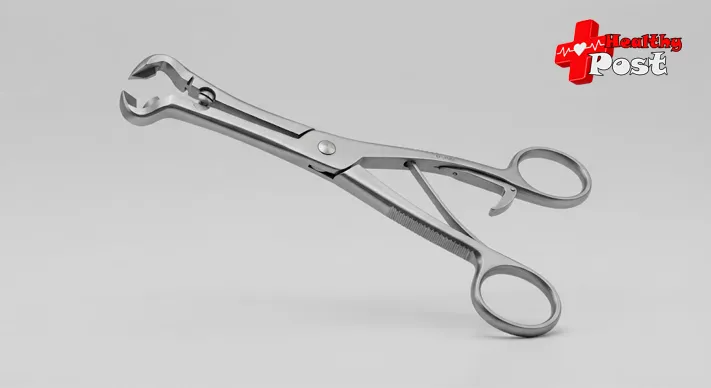
What Does a Skull Punch Look Like?
There is no single appearance shared by every skull punch.
A typical manual design may have:
- An elongated surgical handle
- A specialized working end
- A mechanical cutting or punching mechanism
- A configuration intended for controlled cranial-bone manipulation
One documented example is the Aesculap Dahlgren Skull Punch, model FF113R. AccessGUDID lists it as approximately 210 mm (8¼ inches) long, non-sterile and reusable, with a GMDN term of “bone-coring punch, reusable.”
The dimensions and appearance of one manufacturer’s instrument should not, however, be assumed to represent every skull punch.
Are Skull Punches Reusable?
Some skull punches are manufactured as reusable instruments.
For example, the Aesculap Dahlgren Skull Punch listed in AccessGUDID is identified as non-sterile and reusable.
Reusable surgical instruments must be processed according to the manufacturer’s validated instructions and the healthcare facility’s infection-prevention procedures. Cleaning, inspection, sterilization and maintenance are essential parts of safe reuse.
The word “reusable” therefore does not mean that an instrument can simply be used again without professional reprocessing.
Who Uses a Skull Punch?
A skull punch is intended for use by appropriately trained healthcare professionals in a suitable surgical environment.
It is not a consumer medical device and is not intended for home use. Manipulating cranial bone requires specialized anatomical knowledge, sterile technique, appropriate surgical planning and the ability to manage complications.
The instrument selected for a procedure depends on the patient’s anatomy and the surgeon’s objective. In a real operating room, a skull punch is only one component of a much larger set of cranial surgery instruments.
Safety Considerations
Because a skull punch is designed to cut or punch cranial bone, inappropriate use can cause serious injury.
Potential concerns associated with cranial bone procedures can include injury to underlying tissues, bleeding, infection, damage to the dura or nearby structures, excessive or inadequate bone removal, and problems with subsequent fixation.
The actual risk depends on the operation, anatomy, instrument and clinical circumstances.
For that reason, a skull punch should never be used outside an appropriately equipped medical setting or by an untrained person. This article explains the instrument’s purpose and medical context; it is not a surgical-training guide.
Frequently Asked Questions
1. What is a skull punch used for?
A skull punch is a specialized instrument used to punch or cut cranial bone in selected neurosurgical applications. U.S. regulations specifically describe its use for creating holes that facilitate fixation of cranioplasty plates or bone flaps.
2. Is a skull punch the same as a cranial drill?
No. A skull punch uses a mechanical punching or cutting mechanism, while a cranial drill generally uses a rotating cutting tool. The FDA treats skull punches and powered cranial drills, burrs and trephines as separate device categories.
3. Can a skull punch be used during craniotomy?
Some skull-punch designs are specifically intended to cut skull bone during craniotomy. The Aesculap Dahlgren Skull Punch, for example, is identified in a current medical-device registration for this purpose.
4. Can a skull punch create a burr hole?
Certain specialized designs have been developed for this purpose. A published pediatric neurosurgical report described a skull punch designed to make a burr hole for osteoplastic craniotomy in neonates and infants.
5. Is a skull punch reusable?
Some models are reusable. The Aesculap Dahlgren Skull Punch listed in AccessGUDID is identified as a non-sterile, reusable device. Reusable instruments require professional cleaning, sterilization and inspection according to applicable instructions.
6. Can patients use a skull punch themselves?
No. It is a specialized surgical instrument intended for trained medical professionals. It should only be used in an appropriate clinical environment as part of a medically indicated procedure.
Conclusion
A skull punch is a specialized neurosurgical bone instrument used to create controlled openings or cuts in cranial bone. Its formal U.S. regulatory definition focuses on punching holes through the skull to facilitate fixation of cranioplasty plates or bone flaps, while particular commercial designs may also be intended for cutting skull bone during craniotomy.
The phrase cranial skull punch can therefore refer to instruments with somewhat different designs and applications. It should not automatically be treated as another name for a cranial drill, burr, trephine or rongeur.
The most useful way to understand the instrument is in context: a skull punch is one specialized tool within a much larger group of neurosurgery instruments, selected according to the surgical objective, anatomy and device design. Some models are reusable, and documented examples such as the Aesculap Dahlgren Skull Punch are classified as reusable bone-coring punches.
Because these instruments work on cranial bone, their use belongs strictly to trained surgical professionals. For patients and general readers, understanding what the instrument is designed to do can provide useful context without turning an educational article into a surgical procedure guide.
References
- U.S. FDA — Product Classification: Skull Punch (GXJ, 21 CFR 882.4750)
- Electronic Code of Federal Regulations — 21 CFR § 882.4750, Skull Punch
- PubMed — “Skull punch” for craniotomy in neonates and infants
Orthopedic Bone Screws: 7 Powerful Facts About Titanium Bone Screws and Plates