

This article, titled “Kachi Ghani Oil: Benefits, Uses, Nutrition & What to Know”, has been written by Dr. Rachana Bhoite (Nutrition Science, Dr. Reddy’s Labs ↗). The information provided in this article is for educational and informational purposes only and is not intended as medical advice, diagnosis, or treatment. Always seek the advice of your physician or other qualified health provider with any questions you may have regarding a medical condition or dietary changes.

🏥 Medical Review Board Member
Dr. Rachana Bhoite, PhD
Nutrition Science Expert | Dr. Reddy’s Laboratories (Hyderabad, India)
Dr. Rachana Bhoite, PhD, is a distinguished industry veteran with over 22 years of expertise in Foods & Nutrition and clinical research. With a career deeply rooted in medical nutrition and nutraceutical innovation, she has successfully designed and launched numerous scientifically differentiated products across global markets. Dr. Bhoite is dedicated to bridging the gap between complex clinical data and accessible, evidence-based nutrition. Her commitment to rigorous research ensures that every piece of content she reviews meets the highest standards of scientific accuracy and consumer safety.
Kachi Ghani oil is a traditional mustard seed oil known for its strong aroma, pungent taste and long history in South Asian cooking. You may also see it described as Kachi Ghani mustard oil or, in some contexts, cold pressed mustard oil. But while this oil has an interesting nutritional profile, claims about its health benefits often go much further than the available evidence supports.
So, is Kachi Ghani oil healthy? The answer depends on the specific product, how much you use, its fatty-acid composition, local food-safety standards and your overall diet. It provides dietary fat, including unsaturated fatty acids, but mustard oil can also contain substantial erucic acid, which deserves particular attention when discussing safety.
Here is what the current evidence and food-safety information tell us about its nutrition, uses, potential benefits and limitations.
What Is Kachi Ghani Oil?
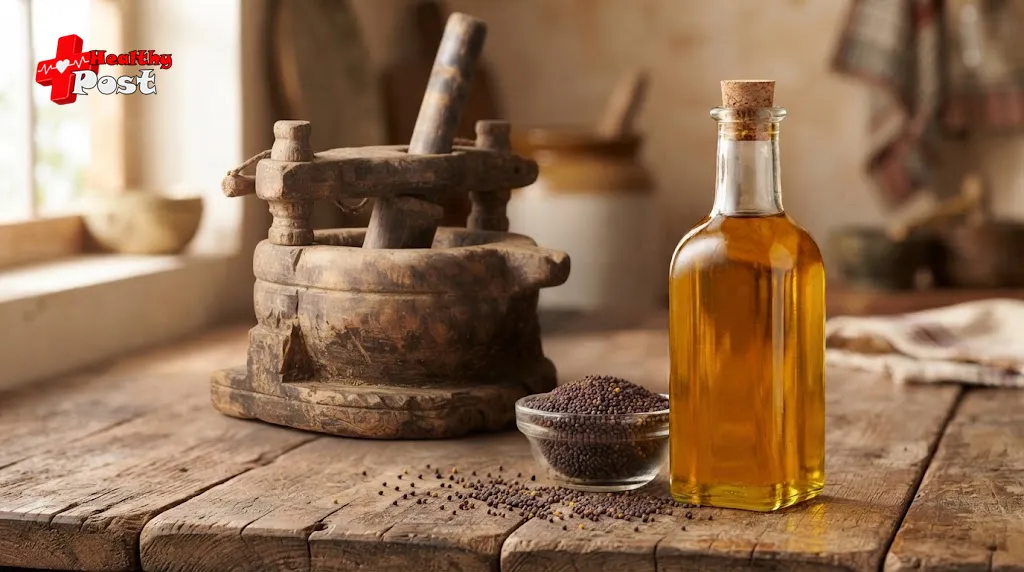
Kachi Ghani oil generally refers to mustard oil produced by mechanically pressing mustard seeds, traditionally using equipment such as a ghani or kolhu. The process is associated with retaining the characteristic aroma and pungent flavor of mustard.
In India, the Food Safety and Standards Authority of India (FSSAI) specifies that mustard oil may be labelled “Kachi Ghani” or “Cold Pressed” when it meets the applicable requirement for naturally occurring allyl isothiocyanate.
Allyl isothiocyanate is one of the compounds responsible for mustard’s characteristic sharp smell and taste. It is produced through biochemical reactions involving compounds naturally present in mustard seeds.
The term Kachi Ghani therefore describes a processing and labeling concept; it should not automatically be interpreted as proof that the oil is nutritionally superior or that every health claim associated with it is established.
How Is Kachi Ghani Mustard Oil Made?
Traditional Kachi Ghani mustard oil is obtained by pressing mustard seeds to release their oil. Mechanical pressing differs from processes used to produce more highly refined oils, which may involve additional purification and processing steps.
This helps explain why Kachi Ghani mustard oil often has a noticeably stronger flavor and aroma than refined mustard oil.
The terms “Kachi Ghani” and “cold pressed” are closely associated in Indian food standards, but consumers should not assume that every product marketed as cold pressed worldwide has been produced under identical temperature or manufacturing conditions. Processing terminology and regulatory requirements can vary between countries.
The most useful approach is to read the product label rather than assuming that a processing term guarantees a particular nutritional outcome.
Kachi Ghani Oil Nutrition
The main nutritional contribution of Kachi Ghani oil is fat and energy. Like other edible oils, it is calorie-dense, so the amount used matters even when the oil contains a favorable mixture of fatty acids.
Mustard oil can contain several types of fatty acids, including:
- Monounsaturated fatty acids
- Polyunsaturated fatty acids
- Saturated fatty acids
- Oleic acid
- Linoleic acid
- Alpha-linolenic acid (ALA)
- Erucic acid
The proportions are not identical in every bottle. They can vary according to mustard species, cultivar, growing conditions and processing methods. Reviews of mustard oils show substantial variation in fatty-acid composition, which is why giving one universal percentage for all Kachi Ghani oils can be misleading.
What is ALA?
Alpha-linolenic acid, or ALA, is an omega-3 polyunsaturated fatty acid found in some plant oils, including mustard oil. ALA is an essential fatty acid, meaning the body cannot produce enough of it on its own and it must come from the diet.
That does not mean mustard oil should be treated as equivalent to marine sources of omega-3 fats. ALA and the long-chain omega-3 fatty acids found in fish are different compounds, and the body converts ALA to EPA and DHA only to a limited extent.
Kachi Ghani oil also should not be viewed as a major source of protein, fiber or a broad spectrum of vitamins. Its principal nutritional role is as a source of dietary fat.
Kachi Ghani Oil Benefits: What Does Science Say?
Searches for kachi ghani oil benefits often produce long lists claiming that mustard oil improves heart health, digestion, immunity, skin, hair and even protects against serious diseases.
Those claims need to be separated carefully.
There are legitimate nutritional characteristics worth discussing, but that is different from proving that consuming the oil prevents or treats a disease.
1. It provides unsaturated fatty acids
Mustard oil contains significant amounts of unsaturated fats. In general dietary guidance, replacing some sources of saturated fat with unsaturated fats can be part of a heart-conscious eating pattern.
However, that principle should not be turned into a claim that Kachi Ghani oil itself prevents heart disease.
Your overall dietary pattern matters much more than one cooking oil. Portion size, total saturated-fat intake, vegetables, whole grains, legumes, nuts, physical activity and other factors all contribute to cardiovascular health.
For additional context on how dietary fats fit into a broader heart-health pattern, see HealthyPost’s guidance on a heart-healthy diet.
2. It can provide ALA
Some mustard oils contain meaningful amounts of alpha-linolenic acid. Because the amount varies between varieties, however, it is better to describe this as a characteristic of some mustard oils rather than promising a fixed omega-3 content in every Kachi Ghani product.
3. It contains naturally occurring plant compounds
Mustard seeds contain glucosinolates and other plant compounds. When mustard tissue is crushed, enzymatic reactions can produce compounds including isothiocyanates, which contribute to mustard’s pungency.
These compounds are scientifically interesting and have been investigated in laboratory and experimental research.
That does not establish that eating Kachi Ghani oil prevents cancer, treats inflammation or cures another disease. Laboratory findings and human clinical outcomes are not interchangeable.
4. Its strong flavor can be useful in cooking
This is one of the clearest practical advantages.
A small amount of strongly flavored mustard oil can noticeably change the taste of a dish. It is traditionally used in various South Asian preparations, including fish, vegetables, curries, pickles and marinades.
The culinary value is well established even though therapeutic claims require a much higher standard of evidence.
Kachi Ghani Mustard Oil Benefits vs. Exaggerated Claims
A useful way to understand the evidence is to separate what the oil contains from what it has been proven to do.
| Claim or characteristic | What the evidence supports |
|---|---|
| Contains unsaturated fats | Established nutritional characteristic |
| Can contain ALA | Established, but the amount varies |
| Contains naturally occurring mustard compounds | Established |
| Has a distinctive flavor | Well established culinary characteristic |
| Traditionally used for cooking | Well established |
| Prevents heart disease | Not established for Kachi Ghani oil specifically |
| Treats arthritis | Not established |
| Stops hair loss | Insufficient clinical evidence |
| Cures skin disease | Not established |
| Prevents cancer | Not established |
This distinction is particularly important for health content. A nutritional property does not automatically become a medical benefit.
Kachi Ghani Oil vs. Refined Mustard Oil
The difference between these oils is primarily related to processing, appearance, aroma, flavor and the resulting composition of minor compounds.
| Feature | Kachi Ghani mustard oil | Refined mustard oil |
|---|---|---|
| Main production approach | Mechanical pressing | Additional refining after extraction |
| Flavor | Strong, pungent | Usually milder |
| Aroma | Characteristic mustard aroma | Generally less pronounced |
| Processing | Less extensively refined | More extensively processed |
| Culinary use | Traditional South Asian cooking | Cooking where a milder profile is preferred |
Less processing does not automatically mean “healthier.” Refining can alter certain minor compounds and sensory characteristics, but healthfulness cannot be determined simply by calling an oil refined or unrefined.
The same principle applies when comparing other dietary fats: the whole nutritional profile and the amount consumed matter. HealthyPost’s discussion of butter and margarine nutrition provides a useful example of why fat quality should be considered rather than relying only on food labels or categories.
Kachi Ghani Oil Uses
The traditional Kachi Ghani mustard oil uses are largely culinary.
Cooking
It can be used in:
- Curries and vegetable dishes
- Fish preparations
- Pickles
- Marinades
- Tempering and seasoning
- Regional South Asian recipes
Its pungency can be particularly noticeable in uncooked or lightly cooked preparations.
Traditional food preparation
Mustard oil has a long culinary history in parts of South Asia. Its distinctive flavor is part of the identity of many regional dishes, so its use cannot be understood only through a nutrition label.
Traditional topical use
Mustard oil is also traditionally applied to the hair, scalp and skin and is sometimes used for massage.
However, traditional use should not be confused with proven medical treatment. Evidence is insufficient to establish mustard oil as a treatment for hair loss, inflammatory skin disorders or joint disease.
If you have a scalp problem, persistent hair loss or a skin condition, identifying the underlying cause is more useful than assuming that an oil will treat it. HealthyPost also has existing information on managing oily hair and scalp, although that article should not be interpreted as evidence that mustard oil treats hair loss.
Is Kachi Ghani Mustard Oil Safe?
Safety is more complicated than simply describing the oil as either “healthy” or “unhealthy.”
The most important issue is erucic acid in mustard oil.
Understanding erucic acid
Erucic acid is a long-chain monounsaturated fatty acid naturally found in many Brassicaceae plants, including mustard. Traditional mustard oils can contain relatively high levels, although the exact amount depends on the mustard variety and product.
Animal research has raised concerns about high exposure to erucic acid, particularly because high levels have been associated with cardiac lesions in experimental animals. The U.S. Food and Drug Administration currently maintains an import alert concerning expressed mustard oil and states that such oil may contain approximately 20–40% erucic acid.
At the same time, the scientific picture should not be oversimplified. A review of erucic acid research notes that cardiac adverse effects seen in animal studies have not been conclusively confirmed in humans and that important uncertainties remain.
This is why the most responsible conclusion is not “mustard oil is dangerous” or “mustard oil is completely safe.”
The specific fatty-acid composition of the product, the amount consumed, the applicable food regulations and the individual’s circumstances all matter.
Food-safety rules also differ between jurisdictions. EFSA has assessed erucic acid exposure and identified high exposure as a particular concern for children, while noting that average exposure for most consumers was below its level of concern in its assessment.
If you regularly use mustard oil, especially for children or someone with a medically restricted diet, check the product label and the food-safety requirements applicable in your country.
Mustard allergy
Mustard itself is a recognized food allergen. Mustard seed proteins can trigger allergic reactions in susceptible people.
Anyone with a known mustard allergy should follow their clinician’s or allergist’s advice about mustard-containing products. If someone develops symptoms of a serious allergic reaction after eating a food, urgent medical attention may be required.
Who Should Be Particularly Careful?
There is no single recommendation that fits every person.
Extra caution is reasonable for:
- People with a known mustard allergy
- Children who may have high dietary exposure
- People following medically prescribed diets
- Anyone who has been advised to restrict particular types of dietary fat
- People considering a major dietary change because of cardiovascular or metabolic disease
If you have a diagnosed medical condition, treat mustard oil as a food rather than a medicine. It should not replace prescribed treatment.
How to Choose Kachi Ghani Mustard Oil
When buying a bottle, look beyond words such as “natural,” “traditional” or “cold pressed.”
Practical checks include:
- Choose a reputable manufacturer.
- Look for clear ingredient information.
- Check manufacturing and expiry dates.
- Prefer properly sealed food-grade packaging.
- Follow the storage instructions on the label.
- Check relevant food-safety certification where applicable.
- If the product is blended with other oils, make sure the label clearly identifies the ingredients.
- Consider the food regulations that apply in your country.
For products sold in India, FSSAI standards provide specific requirements for mustard oil and the use of the Kachi Ghani or Cold Pressed designation.
The word “Kachi Ghani” alone should not be treated as a guarantee of superior health effects.
How to Store Kachi Ghani Oil
Good storage helps preserve the quality of an edible oil.
Keep the bottle:
- Tightly closed when not in use
- Away from direct sunlight
- In a cool, dry place
- Away from prolonged heat
- According to the manufacturer’s storage instructions
If an oil develops a clearly rancid or unusual odor or taste, it is better not to use it.
Frequently Asked Questions
Is Kachi Ghani oil the same as cold pressed mustard oil?
The terms are closely related and are used for traditionally pressed mustard oil in some markets. In India, FSSAI permits the Kachi Ghani or Cold Pressed designation when the specified standard is met. Manufacturing terminology can differ in other countries.
What are the main Kachi Ghani oil benefits?
Its main nutritional characteristics include dietary fat and a mixture of fatty acids, including unsaturated fats and, depending on the product, alpha-linolenic acid. These nutritional properties do not prove that the oil prevents or treats specific diseases.
Is Kachi Ghani mustard oil good for heart health?
It contains unsaturated fats, but that does not establish a disease-prevention benefit for Kachi Ghani oil itself. Heart health depends on the overall dietary pattern, including the balance of saturated and unsaturated fats and total calorie intake.
Does Kachi Ghani oil contain erucic acid?
Many traditional mustard oils can contain significant amounts of erucic acid, but the level varies according to the mustard variety and product. This is one reason product composition and local food-safety standards matter.
Is Kachi Ghani oil good for hair growth?
Mustard oil is traditionally used on hair and scalp, but there is not strong clinical evidence establishing it as a treatment for hair loss or a proven hair-growth therapy.
Can Kachi Ghani oil be used for cooking?
Yes, it is traditionally used for cooking in several South Asian cuisines. The appropriate choice depends on the specific product, local food-safety requirements, dietary needs and the amount consumed.
Final Takeaway
Kachi Ghani oil is best understood as a traditional mustard seed oil with a distinctive flavor and a varied fatty-acid profile, rather than as a miracle health product.
It can provide unsaturated fats and, depending on the mustard variety, alpha-linolenic acid and other naturally occurring plant compounds. At the same time, erucic acid is an important consideration, particularly because its concentration can vary considerably and food-safety rules differ between countries.
The practical approach is straightforward: choose a clearly labelled food-grade product, use it in reasonable amounts, store it properly and consider it as one component of your overall diet.
Most importantly, separate nutrition from medical claims. Kachi Ghani mustard oil has a legitimate culinary and nutritional role, but claims that it cures disease, prevents cancer, stops hair loss or provides guaranteed heart protection go beyond what current evidence establishes.
References
- Food Safety and Standards Authority of India (FSSAI) — Standards for Mustard Oil and Kachi Ghani/Cold Pressed Labelling. FSSAI food standards document
- U.S. Food and Drug Administration — Import Alert 26-04: Detention Without Physical Examination of Expressed Mustard Oil. Updated April 15, 2026. FDA mustard oil import alert
- European Food Safety Authority — Erucic acid: a possible health risk for highly exposed children. EFSA erucic acid assessment