


Written by: Dr. Priyanka Agarwal • Dermatologist, Dakai Skin Clinic ↗
Medical Disclaimer: The information provided in this article is for educational and informational purposes only and does not constitute medical advice, diagnosis, or treatment. Always seek the advice of a qualified physician or dermatologist regarding any medical condition, skin health concern, or before starting any new skin care or treatment regimen. Never disregard professional medical advice or delay seeking it because of something you have read on this website.

Dr. Priyanka Agarwal
Dermatologist | Dakai Skin Clinic
Dr. Priyanka Agarwal is an experienced Dermatologist dedicated to providing advanced medical and aesthetic skin care solutions. Practicing at Dakai Skin Clinic, Dr. Agarwal combines evidence-based dermatological care with a patient-centered approach, ensuring optimal skin health, advanced clinical treatments, and the highest standards of safety and diagnostic precision.
If you are wondering how long does it take for eyelashes to grow back, the short answer is this: most lashes return within 6 to 12 weeks when the follicle is still healthy. But that timeline can stretch longer after lash extensions, repeated plucking, inflammation, chemotherapy, or deeper eyelash follicle damage. In our medical editorial work, we often see how upsetting sudden lash loss can feel. Eyelashes are small, but their loss is visible, emotional, and sometimes medically important. This guide breaks down the real regrowth timeline, the eyelash growth cycle stages, the most common triggers, and what may actually help.
Lash loss is not always a beauty issue. Sometimes it is simply part of normal vs abnormal lash shedding. Sometimes it points to irritation, infection, thyroid disease, or one of the lesser-known causes of madarosis, the medical term for eyelash loss. The key is knowing what is normal, what is not, and when patience is enough.
1. The Quick Answer: Typical Eyelash Regrowth Timeline
Most studies agree that eyelashes regrow more slowly than scalp hair because their active growth window is shorter. A healthy lash usually follows a set cycle, so even when one falls out, another is often already developing underneath.
Here is a practical timeline patients ask about most often:
| Situation | What Happens to the Follicle | Typical Regrowth Timeline | Notes |
|---|---|---|---|
| Natural shedding | Follicle stays intact | Ongoing replacement | Losing 1-5 lashes per day can be normal |
| Trimming or singeing | Shaft damaged, follicle intact | About 6 weeks | May look uneven before full length returns |
| Pulling or plucking | Growth cycle interrupted | 8-12 weeks | Repeated trauma can slow return |
| Lash extensions or strong glue | Traction and irritation possible | 12-16 weeks | Common in eyelash extension recovery |
| Blepharitis or dermatitis | Inflammation affects lash line | Varies; weeks to months | Treat the cause first |
| Chemotherapy | Growth suppressed systemically | New growth often starts 3-6 weeks after treatment ends | Full recovery may take months |
| Scarring burns or severe trauma | Follicle may be destroyed | Sometimes permanent | Needs specialist evaluation |
So, how long does it take for eyelashes to grow back after a simple mistake with mascara or a curler? Often just a few weeks. After repeated traction, harsh adhesives, or medical treatment, expect longer.
If you are already dealing with other appearance-related concerns, people often ask similar aftercare questions around What Not to Do After Botox or irritation from Acne Treatment products. The principle is similar: the skin around the eye is delicate, and small habits matter.
2. Understanding the Eyelash Growth Cycle Stages
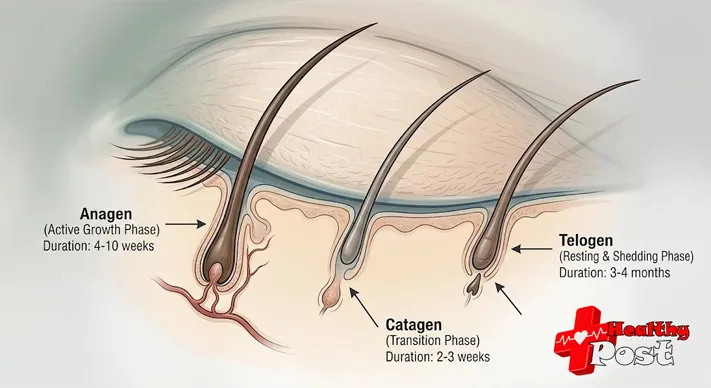
To understand how long does it take for eyelashes to grow back, you need to know the three eyelash growth cycle stages. Lashes do not all grow at once. Each one is on its own timetable.
Anagen phase: active growth
This is the growing stage. It usually lasts 4 to 10 weeks. During this period, lashes grow roughly 0.12 to 0.14 mm per day. That is why lashes never grow as long as scalp hair. Their growth phase is simply too short.
Catagen phase: transition
This phase lasts about 2 to 3 weeks. Growth stops. The follicle shrinks and prepares for rest. If a lash is pulled out during this stage, the replacement process may slow because the cycle is interrupted.
Telogen phase: resting and shedding
This is the rest period and can last 3 to 4 months. The mature lash stays in place until it naturally falls out and a new lash begins to emerge.
This staggered process explains normal vs abnormal lash shedding. A few lashes in the sink are usually not a crisis. Patchy gaps, one-sided thinning, redness, crusting, or sudden fallout are different.
3. Normal vs Abnormal Lash Shedding: What Should Concern You?
Patients frequently ask whether their lash loss is normal. A useful rule: losing 1 to 5 lashes a day can fall within normal vs abnormal lash shedding. You may not notice it unless you wear mascara or cleanse your face carefully under bright light.
More concerning signs include:
- Sudden clumps of lash loss
- Bare patches along the lash line
- Red, itchy, swollen eyelids
- Burning after cosmetics or glue
- Flakes or cylindrical dandruff at the lash base
- Hair loss from brows or scalp at the same time
In clinic-style review, these features often point away from simple shedding and toward inflammation, allergy, traction, or systemic disease.
A quick real-life example
A patient may stop lash extensions after months of fullness and suddenly feel “bald.” In many cases, there is not true permanent loss. Instead, the natural lashes are shorter, thinner, and in different eyelash growth cycle phases, so the contrast feels dramatic. That is why eyelash extension recovery can seem slow even when follicles remain alive.
4. Reasons for Sudden Eyelash Loss
There are many reasons for sudden eyelash loss, and not all are cosmetic.
Cosmetic stress and mechanical trauma
This is one of the most common categories.
- Heavy lash extensions
- Repeated use of heated curlers
- Aggressive rubbing
- Waterproof mascara that is hard to remove
- Sleeping in eye makeup
- Frequent plucking or pulling
These habits may not destroy the follicle immediately, but they can weaken lashes, increase breakage, and delay regrowth.
Blepharitis and eyelid inflammation
blepharitis is a common cause of irritated lids and lash fallout. When the eyelid margin stays inflamed, lashes may shed early. In Blepharitis eyelash loss, you may also see crusting, stinging, or greasy flakes.
Demodex mites deserve special mention. Small numbers can be normal, but overgrowth may contribute to lid inflammation and cylindrical dandruff around the lash roots.
Allergy and contact dermatitis
Some patients react to adhesives, preservatives, or pigments in cosmetics. The result may be swollen lids, itching, burning, and secondary shedding.
Autoimmune and systemic causes
This is where medical review matters.
- Alopecia areata eyelashes
- Thyroid dysfunction
- Lupus
- Nutritional deficiency
- Telogen effluvium after severe illness
- Trichotillomania, a hair-pulling disorder
When brows and lashes thin together, or when scalp shedding is also present, broader testing may be needed.
Chemotherapy and medical treatments
Cancer survivors often ask how long does it take for eyelashes to grow back after chemotherapy. New growth often starts 3 to 6 weeks after treatment ends, but full restoration can take several months. Texture and color may temporarily change. Some notice finer lashes at first. Others get curlier regrowth.
For medication-based lash enhancement, Latisse contains bimatoprost, a prostaglandin analog approved by the FDA to improve lash growth.
5. How to Make Eyelashes Grow Faster, Safely
The honest answer to how to make eyelashes grow faster is that you cannot force biology overnight. But you can reduce breakage, support the follicle, and avoid habits that reset the cycle.
1. Stop the trigger first
This matters more than any serum. Remove the stressor, whether that is glue, rubbing, inflammation, or nutritional strain.
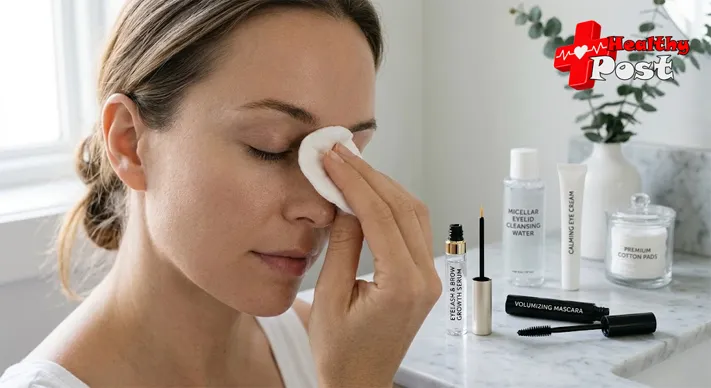
2. Use gentle eyelid hygiene
If blepharitis or irritation is part of the picture, daily cleansing helps. The American Academy of Ophthalmology offers patient guidance on lid hygiene and eyelid inflammation.
Try this simple routine:
- Remove makeup gently with micellar water or a clinician-approved cleanser
- Avoid scrubbing the lash line
- Wash hands before touching your eyes
- Replace old eye makeup regularly
3. Consider evidence-based growth treatment
Prostaglandin lash serums such as prescription bimatoprost may prolong the anagen phase and improve length, thickness, and darkness. They can help, but they are not risk-free.
Possible side effects include:
- Lid irritation
- Darkening of the skin around the eye
- Dry eye symptoms
- Rare iris pigment change
- Periorbital fat loss, which may create a sunken-eye look
That is why these products are best discussed with a clinician, especially if you already have eye disease.
4. Nourish the hair you are trying to regrow
If you are searching how to make eyelashes grow faster, nutrition is one of the few truly foundational levers. Hair production depends on protein, iron, zinc, and vitamins.
Focus on:
- Eggs
- Leafy greens
- Beans and lentils
- Fatty fish
- Nuts and seeds
If hair loss is diffuse, ferritin or thyroid testing may be appropriate.
5. Be careful with DIY remedies
Many people ask about castor oil for lashes. It may reduce dryness and make lashes look shinier, which can lower breakage. But peer-reviewed evidence does not show that it accelerates the follicle’s biological growth rate. Coconut oil has a similar limitation. Near the eye, “natural” does not always mean safe.
If you are prone to irritation, or if you are already managing skin sensitivity from Are Skin Tag Removal Kits Safe questions or facial procedures, home mixtures around the eye are especially worth avoiding.
6. A 4-Week Eyelash Extension Recovery Plan
This is one of the most useful approaches for eyelash extension recovery.
Week 1: Stop traction
Remove extensions safely if they are still attached. Do not pick. Pause curlers, waterproof mascara, and false lashes.
Week 2: Calm the eyelid
If the lids are irritated, focus on cleansing and reducing inflammation. Watch for swelling, crusting, or itching that suggests allergy or blepharitis.
Week 3: Support growth conditions
Restart only minimal eye makeup. Consider a conditioning serum that focuses on flexibility and breakage reduction rather than dramatic growth claims.
Week 4: Reassess honestly
Look for baby lashes along the line, improved density, and less fallout. If you still have patchy bald spots, lid redness, or one-sided loss, seek medical review.
This timeline also helps answer how long does it take for eyelashes to grow back after salon-related damage. Improvement often starts before full length returns.
7. When to See a Doctor
Home care is reasonable for mild shedding. It is not enough for every case.
Seek professional evaluation if you have:
- Lash loss lasting longer than 3 months
- Scarring, burns, or trauma
- Red, painful, swollen eyelids
- Flaking that does not improve
- Loss of lashes and eyebrows together
- Thyroid symptoms, fatigue, or sudden wider hair loss
- Compulsive pulling urges
An optometrist, ophthalmologist, dermatologist, or endocrinologist may all play a role depending on the pattern. This article is informational and cannot replace personal medical advice, especially when infection, autoimmune disease, or treatment-related loss is possible.
Frequently Asked Questions
How long does it take for eyelashes to grow back after being pulled out?
Usually 8 to 12 weeks if the follicle remains healthy. Repeated plucking can slow regrowth and increase the risk of eyelash follicle damage.
Can eyelashes grow back after extensions?
Yes, in many cases. Eyelash extension recovery often takes 12 to 16 weeks because traction and adhesive irritation can interrupt the normal cycle.
What are the main reasons for sudden eyelash loss?
Common reasons for sudden eyelash loss include lash extensions, aggressive makeup removal, blepharitis, allergy, thyroid disease, alopecia, chemotherapy, and trichotillomania.
Is castor oil for lashes proven to work?
Not strongly. Castor oil for lashes may help reduce dryness and breakage, but there is no solid evidence that it speeds the follicle’s growth cycle.
When is lash shedding abnormal?
A few lashes a day can be normal. Normal vs abnormal lash shedding becomes a concern when there are bald patches, one-sided loss, redness, burning, or simultaneous brow loss.
Can I use a lash serum after chemotherapy?
Often yes, but timing matters. After cancer treatment, the eyelid area may be more sensitive. Ask your oncology or eye-care team before using Prostaglandin lash serums or cosmetic adhesives.
Conclusion
So, how long does it take for eyelashes to grow back? In the simplest cases, about 6 to 12 weeks. After plucking, extension damage, inflammation, or chemotherapy, recovery may take longer. The biggest predictors are the health of the follicle and the cause of the loss. If you understand the eyelash growth cycle stages, recognize the difference between normal vs abnormal lash shedding, and use safe strategies for how to make eyelashes grow faster, you give your lashes the best chance to recover.
If the pattern seems unusual, painful, or persistent, do not just wait it out. Lash loss can be a cosmetic frustration, but it can also be a clinical clue. And as with concerns people often have around Acne Treatment, What Not to Do After Botox, or Are Skin Tag Removal Kits Safe, the most helpful next step is often the safest one: get the right diagnosis before trying another fix.
References
- NHS: blepharitis
- American Academy of Ophthalmology: blepharitis
- U.S. FDA prescribing information for Latisse