


Medical Accuracy Verified
This article has been written and clinically verified by Dr. Priyanka Agarwal, a specialist in Dermatology.
Medical Disclaimer: The content on Healthy Post is for educational and informational purposes only. Understanding what not to do after botox—such as avoiding strenuous exercise, direct heat, lying flat, or rubbing the injection sites—is critical to prevent unintended toxin migration to adjacent muscle groups. While basic recovery protocols are standard, individual healing times and muscle responses can vary. Always consult your specific injector, cosmetic dermatologist, or plastic surgeon for personalized post-treatment care instructions and follow-up assessments.

Dr. Priyanka Agarwal
Dermatologist | Dakai Skin Clinic
Dr. Priyanka Agarwal is an experienced Dermatologist dedicated to providing advanced medical and aesthetic skin care solutions. Practicing at Dakai Skin Clinic, Dr. Agarwal combines evidence-based dermatological care with a patient-centered approach, ensuring optimal skin health, advanced clinical treatments, and the highest standards of safety and diagnostic precision.
If you’re searching for what not to do after botox, you’re probably trying to protect your results, avoid side effects, and make sure your treatment settles exactly where it should. That instinct is smart. In our clinical editorial work, we often see that the first 24 hours after Botox matter almost as much as the injection technique itself. Small habits—rubbing your face, lying flat too soon, doing a hard workout, or exposing treated skin to heat—may increase the chance of irritation or, in some cases, contribute to unintended muscle diffusion.
Botox, or botulinum toxin type A, works by temporarily interrupting nerve signals that trigger muscle movement. That process is precise. The goal is controlled, localized relaxation—not spread into nearby muscles. So while aftercare is not complicated, it does require a little discipline.
This guide explains what not to do after botox, why those precautions matter, and how to navigate common questions like how long after botox can you lay down, can you exercise after botox, and can you wear makeup after botox. We’ll keep it practical, medically grounded, and easy to follow.
Before we get into the “don’ts,” it helps to remember that Botox aftercare advice can vary slightly by injector, treatment area, and medical history. If your clinician gave you specific instructions, follow those first.
Core structure and key themes to cover
Most leading pages organize the topic around a short list of post-Botox restrictions:
- Do not rub, massage, or press on the treated area right away
- Avoid lying flat for several hours after treatment
- Skip strenuous exercise the same day
- Avoid heat exposure such as saunas, hot yoga, steam rooms, and intense sun
- Limit alcohol immediately before and after treatment if bruising is a concern
- Delay facials, deep exfoliation, and deep-tissue dermal manipulation
- Be cautious with makeup application if it requires rubbing
- Watch for unusual symptoms and know when to call your injector
Why these restrictions matter
The strongest consensus point is that early aftercare aims to support precise neuromodulator uptake in the intended muscle. Botox causes transient muscle paralysis by blocking acetylcholine release at the neuromuscular junction. In practical terms, that means the product needs time to bind where it was placed. While patients sometimes hear dramatic warnings about “migration,” reputable sources frame the issue more carefully: broad migration is uncommon when treatment is performed correctly, but pressure, vigorous activity, or heat may increase local circulation or disturb freshly treated areas.
Specific mechanisms often discussed include:
- Increased localized circulation after exercise or heat exposure
- Thermal vasodilation from hot environments
- Mechanical facial pressure from massage, sleeping face-down, tight goggles, or certain beauty tools
- Injection site manipulation from rubbing, facials, or aggressive skincare
Questions users ask most often
A strong article should answer these clearly:
- How long after botox can you lay down?
Most expert sources advise staying upright for about 4 hours. This appears repeatedly across clinic guidance and aligns with standard injector recommendations. - Can you exercise after botox?
Most clinics recommend waiting until the next day, with many advising 24 hours before strenuous exercise. Gentle walking is usually acceptable unless your provider says otherwise. - Can you wear makeup after botox?
This is more nuanced. Some clinicians allow light makeup later the same day if applied gently and with clean tools. Others recommend waiting 12 to 24 hours, especially if there is pinpoint bleeding, swelling, or bruising risk.
Fresh information and authority-building angles
To strengthen topical relevance and E-E-A-T, align the article with established medical authorities:
- The FDA identifies Botox as a prescription biologic with approved and off-label cosmetic and medical uses.
- The NHS and major academic dermatology resources emphasize professional administration, side-effect awareness, and proper follow-up.
- PubMed literature supports the importance of technique, dose, anatomy, and post-procedure counseling in reducing adverse effects.
A useful content gap to expand on: many articles list restrictions but do not explain the physiology in patient-friendly terms. This article can improve on that by linking each “don’t” to a simple reason. For example, exercise is not “bad” in itself; the concern is temporary increases in heart rate, blood flow, sweating, and facial movement immediately after injection.
Recommended headings for the final article
- Introduction: why aftercare matters
- Don’t rub or massage the injection sites
- Don’t lie down too soon after treatment
- Don’t do strenuous exercise right away
- Don’t expose your face to excess heat
- Don’t book facials or facial massage too soon
- Don’t apply makeup aggressively
- Don’t ignore warning signs
- Quick-reference table: what to avoid and for how long
- FAQs
- Conclusion with practical next steps
Unique angles to add for information gain
- Explain how post-Botox advice differs for forehead, crow’s feet, masseter, and migraine-related injections
- Briefly compare cosmetic Botox with therapeutic uses to clarify that aftercare is similar, but treatment goals differ
- Include practical “safe alternatives” such as lukewarm showers, gentle cleansing, and sleeping on the back
- Mention related educational topics readers may also need, such as Aimovig vs Botox, What is masseter botox before and after, Proven Diplopia Treatments, and Stunning Brow Lift Before and After Results
In short, the article should synthesize expert consensus into a clear clinical guide: avoid pressure, heat, vigorous activity, and early facial manipulation; stay upright for several hours; resume normal routines gradually; and contact your injector if symptoms seem unusual or persistent.
1. Don’t Rub, Massage, or Press on the Injection Sites
This is one of the biggest rules in what not to do after botox.
Why? Because early injection site manipulation may irritate the area and may increase the chance of product shifting away from the intended muscle. Botox is injected with precision. Rubbing, gua sha, facial rollers, or vigorous cleansing can create unnecessary mechanical facial pressure.
For the first day, avoid:
- Facial massage
- Tight headbands pressing on the forehead
- Gua sha or jade rollers
- Microcurrent devices
- Aggressive cleansing or exfoliation
- Resting your face hard into a massage table or pillow
A common real-life example: a patient gets forehead Botox at lunch and then books a same-day facial. That may sound harmless, but added pressure and deep-tissue dermal manipulation are not ideal right after treatment.
2. Don’t Lie Flat Too Soon
If you’ve asked how long after botox can you lay down, the standard answer is usually about 4 hours. Staying upright during that window is a common aftercare recommendation across dermatology and cosmetic surgery practices.
The reason is not that lying down automatically ruins your Botox. It usually doesn’t. But clinicians recommend avoiding the risk, however small, of shifting pressure over freshly treated areas.
Best practices:
- Stay upright for at least 4 hours
- Avoid naps right after treatment
- Don’t lie face-down
- Skip headstands or yoga inversions
If you had treatment around the forehead or brow, this step matters even more because nearby muscles influence eyelid and brow position. In our review of patient concerns, confusion about this point is common. So keep it simple: get your treatment, remain upright, and save the nap for later.
3. Don’t Do Strenuous Exercise Right Away
One of the most searched questions is can you exercise after botox. The safest practical answer: avoid strenuous exercise until the next day, or for 24 hours unless your injector advises otherwise.
Why hold off? Hard workouts can raise heart rate, increase sweating, and promote increased localized circulation. Some clinicians worry this may contribute to swelling, bruising, or less predictable settling in the first several hours.
Preventing Product Migration: How Exercise Triggers Unintended Muscle Diffusion
The phrase unintended muscle diffusion refers to Botox affecting a nearby muscle rather than only the intended one. This is uncommon with proper dosing and technique, but early post-treatment stress on the area is still worth avoiding.
Skip for 24 hours:
- HIIT
- Running
- Hot yoga
- Heavy lifting
- Spin classes
- Contact sports
Usually okay:
- Light walking
- Routine daily activity
- Gentle errands
If you receive Botox for medical reasons, such as migraines or jaw tension, your provider may tailor aftercare depending on the injection sites. Readers comparing treatments may also find Aimovig vs Botox helpful when considering migraine management pathways.
4. Don’t Use Excess Heat on Treated Areas
Heat is often overlooked in lists about what not to do after botox, but it matters. High temperatures can increase redness, swelling, and blood flow through thermal vasodilation.
Avoid for at least 24 hours:
- Saunas
- Steam rooms
- Hot tubs
- Very hot showers
- Hot yoga
- Prolonged direct sun exposure
This doesn’t mean you need to hide indoors. It means be sensible. Choose lukewarm water. Wear a hat outdoors. Skip the steam room after your appointment.
Heat can make small post-injection reactions feel more dramatic. If you already bruise easily, this precaution becomes even more relevant.
5. Don’t Schedule Facials, Peels, or Skin Treatments Too Soon
Your skin may look normal immediately after Botox, but the tissue has still been injected. It needs a little quiet time.
Delay treatments such as:
- Chemical peels
- Microneedling
- Microdermabrasion
- Radiofrequency facials
- Lymphatic massage
- Strong exfoliating acids
- Laser treatments unless your clinician approves timing
These services can create friction, heat, or inflammation. In some cases, they also make it harder to know whether tenderness is from Botox or from the skin treatment layered on top.
If you are also exploring facial contouring options, related topics like What is masseter botox before and after and Stunning Brow Lift Before and After Results may help you time procedures more intelligently.
6. Don’t Apply Makeup Aggressively
Patients often ask, can you wear makeup after botox. The nuanced answer is: possibly later the same day, but only if you apply it gently and your injector agrees.
What matters is not just the makeup itself. It’s the rubbing.
If you wear makeup after Botox:
- Use clean hands or clean brushes
- Dab, don’t drag
- Avoid pressing hard over injection points
- Skip heavy blending or contouring massage
- Avoid makeup if you have pinpoint bleeding or obvious irritation
If you can go makeup-free until the next morning, that’s often the lowest-risk choice.
7. Don’t Drink Excess Alcohol Around Treatment Time
Alcohol is not always listed as a strict “never,” but many clinicians recommend limiting it before and after treatment because it may worsen bruising and flushing.
This is especially useful advice if you:
- Bruise easily
- Take blood-thinning medications as prescribed by a physician
- Had multiple injection points
- Are treating visible facial areas like crow’s feet or forehead lines
8. Don’t Ignore Unusual Symptoms
Most Botox side effects are mild and temporary. Small bumps, mild swelling, pinpoint bruising, or a headache can occur. But certain symptoms should prompt follow-up.
Contact your injector or seek medical care if you notice:
- Drooping eyelid or brow that worsens
- Vision changes
- Trouble swallowing
- Trouble speaking
- Shortness of breath
- Marked facial asymmetry
- Severe pain or signs of infection
These problems are not common, but they matter. Readers worried about eye-related complications may also want to review Proven Diplopia Treatments for broader context around double vision causes and management.
Quick Reference Table: What to Avoid After Botox
| Activity or Exposure | Why Avoid It | Typical Wait Time |
|---|---|---|
| Rubbing or massaging face | May increase injection site irritation and pressure | 24 hours |
| Lying flat | May add avoidable pressure soon after injections | 4 hours |
| Strenuous exercise | May increase bruising, swelling, and circulation | 24 hours |
| Sauna, steam, hot yoga | Heat causes thermal vasodilation | 24 hours |
| Facials or facial massage | Adds mechanical facial pressure | Several days to 1–2 weeks, depending on treatment |
| Aggressive makeup application | Can irritate injection points | Later same day only if gentle; often better after 12–24 hours |
| Alcohol excess | May worsen bruising and flushing | Around treatment day |
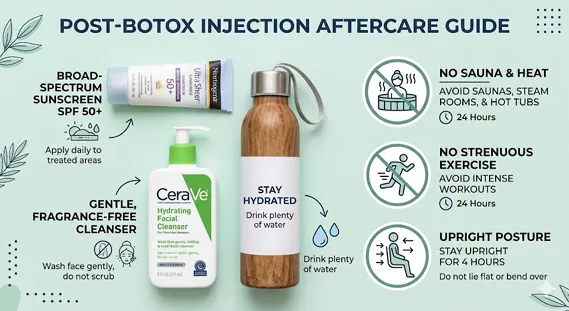
A Smarter Way to Think About Botox Aftercare
The best Botox aftercare rule is not fear. It’s precision.
Botox is a targeted treatment. The first day should support that targeting. Think of it like letting fresh ink dry or allowing grout to set. You do not need to panic over every facial expression or every step you take. But you do want to reduce avoidable friction, heat, and pressure while neuromodulator uptake begins.
Most studies and expert guidance agree on the broad themes:
- Stay upright for several hours
- Avoid strenuous exercise for about a day
- Avoid heat and facial pressure
- Follow your injector’s instructions if they differ based on anatomy or indication
For a medically grounded overview of aftercare, see botox aftercare, review FDA safety information at Botox Cosmetic, and consult broader evidence resources through PubMed.
FAQs
How long after botox can you lay down?
Most clinicians recommend waiting 4 hours before lying down. Staying upright helps minimize unnecessary pressure during the early settling period.
Can you exercise after botox?
Light walking is usually fine. Strenuous exercise is generally best delayed for 24 hours.
Can you wear makeup after botox?
Often yes, but only gently and not immediately if the skin is irritated. Dabbing is better than rubbing. When in doubt, wait until the next day.
What happens if I accidentally touch my face?
A brief light touch is unlikely to cause a problem. Repeated rubbing, massage, or pressure is the bigger concern.
How soon will I see Botox results?
Some patients notice changes within 3 to 5 days, but full effect often appears around 10 to 14 days.
Can heat really affect Botox?
Heat may increase redness, swelling, and circulation. That’s why saunas, steam rooms, and hot yoga are commonly avoided for the first day.
Conclusion
Knowing what not to do after botox can make the recovery period feel much less stressful. The essentials are straightforward: don’t rub the area, don’t lie down too soon, don’t push through a hard workout, and don’t expose treated skin to excess heat or pressure. These steps may help support precise placement of botulinum toxin type A and reduce the chance of irritation or unintended muscle diffusion.
In clinical practice, the patients who do best are rarely the ones who do something fancy after treatment. They simply keep things calm for a day. If you’re unsure about your specific instructions, especially after forehead, brow, or masseter injections, check with your treating clinician. And if you’re planning future aesthetic treatments, resources like What is masseter botox before and after, Stunning Brow Lift Before and After Results, and Aimovig vs Botox can help you make more informed decisions.
References
- Cleveland Clinic. Botox Aftercare.
- U.S. Food and Drug Administration (FDA). Botox Cosmetic safety and prescribing information.
- PubMed. Clinical literature on botulinum toxin type A technique, adverse effects, and patient counseling.
2 Comments
Pingback: Turkey Neck: 7 Powerful Ways to Get Rid of It Without Regret
Pingback: How Long Does It Take for Eyelashes to Grow Back? Complete Growth Guide