

This article has been written by Dr. Priyanka Agarwal (Dermatologist, Dakai Skin Clinic ↗), specializing in clinical dermatology, cutaneous viral infections, plantar warts, and preventive skin health protocols.
Medical Disclaimer: The information provided regarding swimming pool warts (verruca vulgaris), human papillomavirus (HPV) transmission mechanisms, and preventive hygiene measures is for educational and informational purposes only. While public pool areas facilitate viral spread through softened skin and minor abrasions, warts require proper dermatological evaluation for diagnosis and treatment. Always consult a board-certified dermatologist or qualified healthcare provider regarding persistent skin growths, removal options, or specialized dermatological care.

Dr. Priyanka Agarwal
Dermatologist | Dakai Skin Clinic
Dr. Priyanka Agarwal is an experienced Dermatologist dedicated to providing advanced medical and aesthetic skin care solutions. Practicing at Dakai Skin Clinic, Dr. Agarwal combines evidence-based dermatological care with a patient-centered approach, ensuring optimal skin health, advanced clinical treatments, and the highest standards of safety and diagnostic precision.
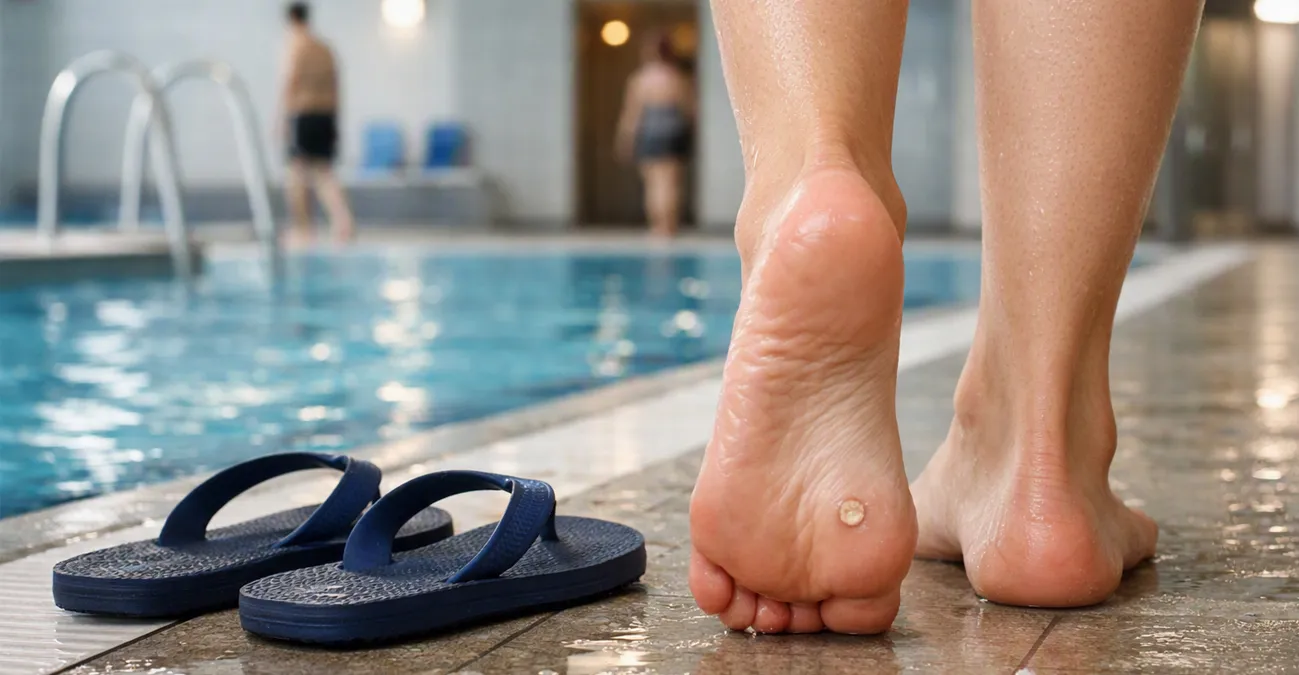
Swimming pool warts can be an unpleasant surprise after spending time in communal swimming areas, especially when a rough spot appears on the sole of the foot and looks like a simple corn or callus. The important point is that Swimming Pool Warts are not necessarily picked up from the pool water itself. Warts are caused by certain types of human papillomavirus (HPV), and exposure can occur through infected skin, contaminated surfaces, or objects in places such as pool decks, locker rooms, and communal showers.
Warm, damp environments and frequent barefoot walking can make these areas relevant to wart transmission. Small cuts, scrapes, cracks, or other tiny breaks in the skin can also give the virus an opportunity to enter.
That does not mean you need to stop swimming. A few practical habits—particularly wearing footwear in communal wet areas, protecting damaged skin, keeping personal items separate, and avoiding picking at suspicious lesions—can reduce the chances of spreading or acquiring warts.
What are swimming pool warts?
There is no separate medical diagnosis called a “swimming pool wart.” The phrase generally refers to ordinary viral warts that someone may encounter in connection with swimming facilities.
Warts are non-cancerous skin growths caused by certain types of HPV. The virus can enter through a small break in the skin, and the resulting wart may not become noticeable immediately. Some warts become visible only weeks or months after infection, which means it is often impossible to identify exactly where transmission occurred.
The risk is therefore not simply about getting into a swimming pool. Contact with poolside surfaces, locker-room floors, communal showers, or contaminated personal items may also be relevant.
The American Academy of Dermatology specifically recommends wearing flip-flops or pool shoes around pool decks, locker rooms, and public showers because these precautions can reduce the likelihood of developing warts on the feet.
How do warts spread around swimming pools?
Wart transmission usually involves contact between infected skin and another person’s skin or a contaminated object or surface. A person does not necessarily need a large visible wound for transmission to occur.
The outer layer of the skin normally provides a protective barrier. Minor trauma can weaken that barrier. Barefoot walking on wet surfaces can also expose the feet to repeated friction and moisture.
Several situations can therefore increase opportunities for exposure:
- Walking barefoot around pool decks or changing rooms
- Using communal showers without footwear
- Having cracked or damaged skin on the feet
- Sharing towels, footwear, or other personal items
- Picking or scratching an existing wart
- Repeated friction or pressure on areas of the feet
The NHS notes that warts and verrucas can spread through contaminated surfaces or close skin contact and that transmission is more likely when skin is wet or damaged.
Is the pool water itself responsible?
Not necessarily.
It is easy to assume that the water is the main source because the problem is associated with swimming, but that conclusion is too simplistic. The surrounding environment may provide more relevant opportunities for contact.
This distinction matters because it changes the practical advice. You do not need to treat every swimming pool as inherently unsafe. Instead, focus on the parts of the swimming environment where barefoot contact, shared equipment, and direct or indirect skin contact occur.
Proper pool maintenance remains important for overall swimming-pool hygiene, but ordinary wart prevention is not simply a matter of avoiding chlorinated water.
Different types of warts you may notice
Not every wart looks the same. Knowing the basic differences can help you recognize why a growth on the foot may be confused with another common skin problem.
Plantar warts
Plantar warts develop on the soles of the feet. Because the sole is exposed to pressure while standing and walking, these warts can grow inward and become uncomfortable.
They may appear rough or thickened and can contain tiny dark dots. Those dots are small blood vessels rather than pieces of dirt.
Pain is another useful clue. Some plantar warts hurt when you walk or when pressure is applied to them. In some cases, several plantar warts can merge into a larger group called mosaic warts.
Common warts
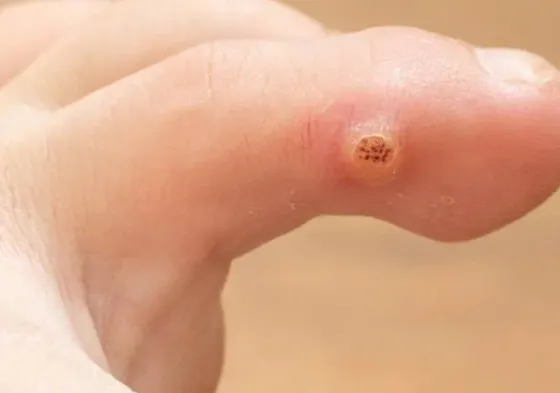
Common warts are often rough and firm and commonly appear on the hands, fingers, or around the nails. They can spread through direct contact or when infected skin is transferred to another area.
A person with a wart on a finger may unknowingly spread the virus by repeatedly touching or scratching it.
Flat warts
Flat warts tend to be smaller and smoother than classic common warts. They can occur in groups and are frequently seen on the face, hands, or other exposed areas.
Their appearance is quite different from the thick, rough surface associated with many plantar warts.
What about molluscum contagiosum?
Molluscum contagiosum is sometimes casually described as a type of “wart,” particularly when discussing children, but it is not the same infection.
Molluscum is caused by a poxvirus rather than the HPV types responsible for ordinary skin warts. It can spread through skin contact and contaminated objects. The CDC notes that, in swimming environments, transmission is more likely to involve shared objects or activities around swimming rather than the water itself.
This distinction is useful because prevention advice can overlap—such as avoiding shared towels and covering lesions—but the infections themselves are different.
Plantar wart, corn, or callus: how can you tell?
A hard area on the sole of your foot is not automatically a wart. Corns, calluses, and plantar warts can look similar, especially when the skin has become thick.
| Feature | Plantar wart | Corn | Callus |
|---|---|---|---|
| Typical location | Sole of the foot | Pressure or friction points | Broader areas exposed to friction |
| Surface | Often rough or irregular | Usually hard and well-defined | Usually broad and thickened |
| Tiny dark dots | May be visible | Not typical | Not typical |
| Pain | Can hurt with pressure or squeezing | Often painful with direct pressure | Often less painful |
| Skin lines | May be interrupted | Usually continue through the area | Generally remain visible |
These are only general clues, not a substitute for diagnosis.
The American Academy of Dermatology points out that some skin conditions can resemble warts. If you are unsure what a growth is, repeatedly treating it with wart-removal products without knowing the diagnosis may irritate or damage the skin.
A persistent “corn” that does not respond as expected, becomes painful, or begins appearing in several places deserves professional assessment.
6 ways to prevent swimming pool warts
Complete prevention is not possible because wart-causing HPV is common and exposure can occur in many everyday settings. However, sensible precautions can reduce opportunities for transmission.
1. Wear pool shoes instead of walking barefoot
This is one of the simplest habits for people who regularly use swimming facilities.
Wear flip-flops, sandals, or dedicated pool shoes around:
- Pool decks
- Communal showers
- Locker rooms
- Changing areas
The American Academy of Dermatology recommends footwear in moist communal areas because it reduces direct contact between your feet and potentially contaminated surfaces.
Think of it as creating a physical barrier between vulnerable skin and the environment.
2. Protect cuts, cracks, and damaged skin
Small breaks in the skin can provide an entry point for infection. Cracked heels, blisters, abrasions, and cuts therefore deserve attention before spending time in communal wet areas.
Clean minor injuries appropriately and keep them covered when necessary.
If you have a significant open wound, it is sensible to avoid swimming until it has sufficiently healed, particularly if the wound could become contaminated.
Keeping the skin from becoming excessively dry and cracked can also help maintain its normal protective barrier.
3. Wash and dry your feet carefully after swimming
After leaving the pool, wash your feet and dry them thoroughly.
Pay particular attention to the spaces between the toes, where moisture can remain after bathing. Dry socks and footwear are also preferable to putting damp feet straight into enclosed shoes.
Washing alone cannot guarantee that you will avoid warts, but regular hygiene can help remove contaminants and is a useful part of overall wart prevention.
4. Do not share towels, footwear, or personal items
Shared personal items can create another route for transmission.
If someone in your household has a wart, give each person their own:
- Towels
- Socks
- Footwear
- Washcloths
- Nail-care tools
The same principle applies to swimming equipment that directly contacts lesions. Clean and dry shared equipment according to the facility’s recommendations.
Avoiding unnecessary sharing is especially useful when a family member already has visible warts.
5. Do not pick, scratch, cut, or shave over a wart
Picking at a wart can damage the skin and potentially help the virus spread to nearby areas.
It can also cause bleeding and increase the chance of bacterial infection.
If you already have a wart, wash your hands after touching or treating it. Avoid using the same nail file, pumice stone, or similar tool on other parts of your body.
The American Academy of Dermatology recommends avoiding picking and scratching and washing the hands after touching or treating a wart.
If you are looking for information about a specific wart-removal product, HealthyPost also has a guide discussing Duofilm and wart removal. The product-specific advice should always be checked against the product label and, when appropriate, guidance from a healthcare professional.
6. Manage existing warts rather than ignoring them
Preventing transmission is easier when an existing wart is properly managed.
If you have a wart, avoid exposing it unnecessarily to other people’s skin. Covering a lesion when appropriate can reduce direct contact, and good hand hygiene remains important.
The NHS advises covering warts or verrucas with a plaster when swimming and avoiding scratching or picking them.
Treatment may also be appropriate. Some small warts can be managed with over-the-counter treatments such as salicylic acid, while persistent or troublesome lesions may require professional treatment.
The right approach depends on the type and location of the lesion, so do not assume every hard spot should be treated as a wart.
What should you do if someone in your household has warts?
Household transmission deserves attention because repeated contact can make it easier for the virus to move between people or from one part of the body to another.
If a family member has a wart:
- Do not share towels or washcloths.
- Avoid sharing socks and footwear.
- Keep personal nail-care tools separate.
- Wash hands after touching or treating the wart.
- Discourage children from picking or scratching lesions.
- Keep bathrooms clean and allow damp areas to dry.
- Cover lesions when appropriate.
These measures do not guarantee that another family member will remain uninfected, but they reduce unnecessary opportunities for contact.
When should a wart be checked by a doctor?
Many ordinary warts are harmless and eventually disappear, sometimes without treatment. However, not every wart-like growth is actually a wart.
Professional assessment is particularly appropriate when:
- You are not sure whether the lesion is a wart.
- It is changing, bleeding, or becoming increasingly painful.
- New lesions continue appearing.
- There are many warts.
- A lesion interferes with walking.
- It is located on the face or around the eyes.
- It occurs around or under a nail.
- Self-treatment has failed.
- The skin becomes very red, swollen, or produces pus.
People with diabetes, poor circulation, neuropathy, or a weakened immune system should be particularly cautious about treating foot lesions themselves. The American Academy of Dermatology recommends professional guidance for people in these situations.
A dermatologist can usually diagnose a wart by examining it. If the appearance is unusual or the diagnosis is uncertain, additional evaluation may sometimes be necessary.
Do you need to stop swimming if you have a wart?
Not necessarily, but the answer depends on the lesion and the circumstances.
A small, appropriately covered wart is different from an open, bleeding, or significantly damaged lesion. If the skin is broken, painful, or showing signs of infection, avoiding the pool until it has been assessed or healed may be the safer choice.
If you do swim with a wart, follow the facility’s rules and take sensible precautions. Cover the lesion appropriately, avoid picking it, use personal footwear around wet communal areas, and do not share towels or personal equipment.
The goal of how to prevent swimming pool warts is not to make people afraid of swimming. It is to reduce avoidable exposure while maintaining sensible skin and pool hygiene.
Frequently Asked Questions
Can you get plantar warts from a swimming pool?
You can encounter wart-causing HPV in environments associated with swimming, particularly communal wet areas where people walk barefoot. However, it is too simplistic to say that plantar warts come directly from pool water. Pool decks, locker rooms, showers, direct contact, and contaminated objects may all be relevant.
How long does it take for a wart to appear after exposure?
There is no reliable countdown. Warts can take weeks or months to become noticeable after infection. Because of this delay, it is often impossible to identify the exact place where transmission occurred.
Are swimming pool warts caused by chlorine?
There is not a basis for treating chlorine as a guaranteed protection against ordinary skin-wart transmission. Wart-causing HPV can be transmitted through contact with infected skin and contaminated surfaces or objects. Practical precautions around communal areas therefore remain useful even at treated pools.
Can I swim if I have a plantar wart?
A person with a plantar wart may be able to swim, but the lesion should be appropriately covered and the facility’s rules followed. Avoid swimming if the area is an open wound or otherwise damaged, and avoid spreading the infection through shared towels or equipment.
Are black dots inside a plantar wart dangerous?
Tiny dark dots can occur in plantar warts and often represent small blood vessels. Their presence alone does not mean the lesion is dangerous. However, if you are uncertain about the diagnosis or the lesion changes, bleeds, or becomes unusually painful, have it assessed.
Can a wart disappear without treatment?
Yes. Many warts eventually disappear on their own, although this can take months or even years. Treatment may be considered when a wart is painful, persistent, spreading, or causing practical problems.
Conclusion
Swimming does not have to become something you avoid simply because you are concerned about warts. The more useful approach is to understand where exposure may occur and reduce the opportunities for transmission.
Swimming pool warts are not a special type of wart caused by swimming. They are ordinary viral warts that may be associated with exposure in communal swimming environments. Barefoot walking on pool decks and changing-room floors, damaged skin, shared personal items, and contact with existing lesions can all contribute to transmission opportunities.
The most practical wart prevention tips are straightforward: wear pool footwear, protect cuts and cracks, wash and dry your feet, keep personal items separate, avoid picking lesions, and deal appropriately with existing warts.
Finally, do not assume every hard spot on the sole is a plantar wart. Corns, calluses, and other skin conditions can look similar. If a lesion persists, spreads, becomes painful, bleeds, or does not respond to appropriate care, professional evaluation can provide a clearer diagnosis and prevent unnecessary self-treatment.
References
- American Academy of Dermatology — 8 Dermatologists’ Tips for Preventing Warts
- NHS — Warts and Verrucas
- CDC — Preventing Molluscum Contagiosum in Schools, Daycares, and Pools