Plantar fasciitis is a common cause of heel pain. It affects millions of people every year.
This condition happens when the plantar fascia becomes inflamed or damaged. The plantar fascia is a thick tissue band under the foot. It connects your heel bone to your toes and supports the arch.
Pain from plantar fasciitis can be sharp and worsen after long periods of rest. It is often worse in the morning or after long hours of standing. This condition can impact walking, working, and daily life.
Accurate diagnosis is important for proper treatment and faster recovery. It also helps in proper billing and insurance claims. Doctors use a system called ICD 10 to label health conditions.
The ICD 10 for plantar fasciitis helps healthcare providers document the condition. It also ensures medical claims go through smoothly. This code is essential for insurance companies and billing systems.
Incorrect coding can delay payment or cause claim rejection. That’s why knowing the right code is critical for both doctors and patients.
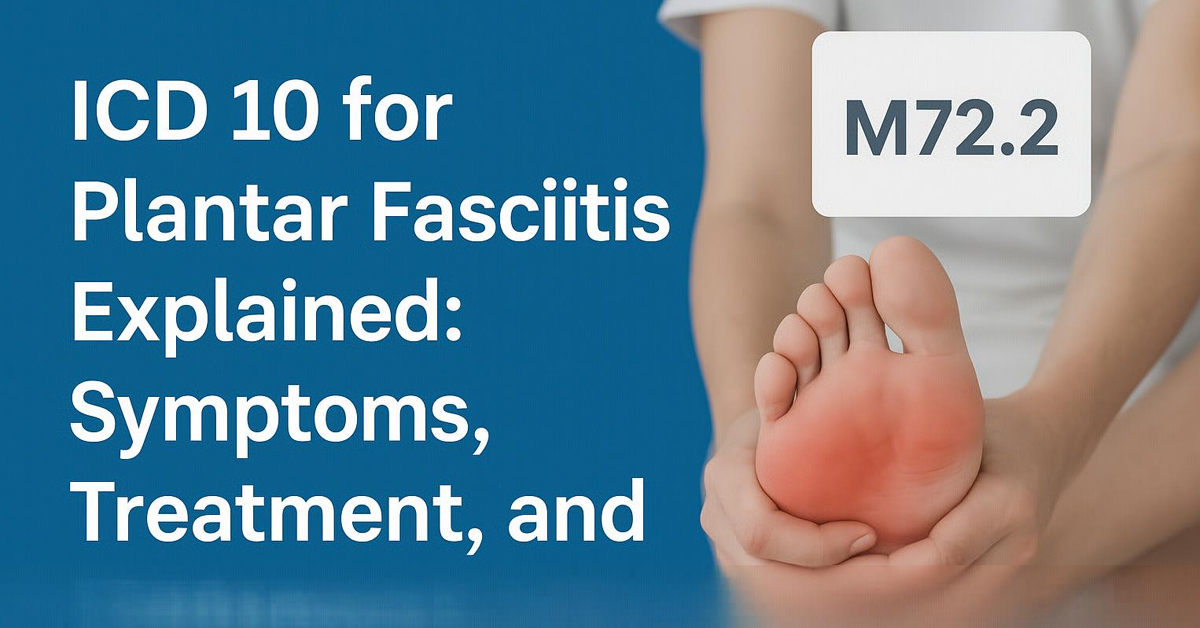
The ICD 10 code for plantar fasciitis is M72.2. This code identifies the condition in medical records and billing.
Below is a quick view of the ICD 10 code for plantar fasciitis:
| Condition | ICD 10 Code |
|---|---|
| Plantar Fasciitis | M72.2 |
This article explains the symptoms, treatment options, and how to use the ICD 10 code. You will also learn how it helps with insurance and billing.
Understanding the icd 10 for plantar fasciitis ensures smooth communication between patients, doctors, and insurers.
Let’s dive deeper into this topic to make your medical journey easier and stress-free.
What is Plantar Fasciitis?
Plantar fasciitis is a foot condition that causes pain in the heel and bottom of the foot.
It happens when the plantar fascia becomes inflamed or strained. The plantar fascia is a thick band of tissue. It supports the arch of your foot and connects the heel bone to the toes.
Causes of Plantar Fasciitis
Plantar fasciitis is often caused by too much pressure or stress on the foot.
This can lead to small tears in the plantar fascia. Over time, these tears cause pain and swelling.
Common causes include long hours of standing, wearing unsupportive shoes, and intense physical activity.
Impact on Daily Life
Plantar fasciitis can make daily tasks difficult.
It causes stabbing pain, especially in the morning or after sitting for a long time.
People may struggle to walk, climb stairs, or stand for extended periods.
The pain often gets worse after exercise, not during it.
Common Risk Factors
Certain factors increase the risk of developing plantar fasciitis:
| Risk Factor | Details |
|---|---|
| Age | Most common between ages 40 and 60 |
| Weight | Extra weight puts more pressure on the foot |
| Activity Level | Runners and athletes face higher risk |
| Foot Mechanics | Flat feet or high arches cause more stress |
| Job Type | Jobs requiring long hours of standing |
| Improper Footwear | Wearing shoes with poor support |
Understanding these risks can help with early prevention and proper care.
Recognizing the signs early helps reduce long-term damage and discomfort.

Symptoms of Plantar Fasciitis
Plantar fasciitis starts with mild discomfort in the heel or foot arch.
This pain is usually sharp and felt during the first steps in the morning.
It may also occur after sitting for long periods and then standing up.
Early Signs of Plantar Fasciitis
- Sharp heel pain when waking up
- Stiffness in the foot after rest
- Mild swelling around the heel
- Pain after standing or walking for a long time
At this stage, pain often goes away after a few minutes of movement.
But ignoring the signs can make the condition worse.
Symptom Progression Over Time
If left untreated, the pain becomes more frequent and intense.
You may start to feel discomfort during daily tasks and light exercise.
The foot may ache even while resting.
You might also feel tightness in the Achilles tendon or calf muscles.
When to Seek Urgent Medical Attention
In severe cases, the pain becomes constant and unbearable.
The heel may swell, and walking can become very difficult.
You may also feel burning or tingling, which could mean nerve involvement.
Seek medical help right away if you notice:
- Constant heel pain that worsens over time
- Swelling, redness, or warmth in the heel
- Numbness or tingling in the foot
- Inability to walk or bear weight
Quick treatment helps prevent further damage and speeds up recovery.
Identifying the icd 10 for plantar fasciitis early ensures proper care and accurate medical records.
Diagnosis and ICD 10 for Plantar Fasciitis
Doctors diagnose plantar fasciitis based on symptoms and a physical exam.
They ask about pain, daily activities, and medical history.
The doctor will press on your heel to check for tenderness.
They may also ask you to stand or walk to see how the pain responds.
How Plantar Fasciitis Is Diagnosed
- Physical exam of the foot and heel
- Review of pain patterns and activity level
- Checking foot structure and flexibility
- Imaging tests like X-rays or MRI (if needed) to rule out other issues
X-rays can help rule out bone spurs or fractures.
MRI scans are rarely needed but may be used in complex cases.
Importance of ICD 10 for Plantar Fasciitis
The icd 10 for plantar fasciitis is essential for accurate medical records.
It helps doctors, insurance companies, and billing staff classify the condition.
Proper coding speeds up insurance claims and ensures correct treatment.
Incorrect coding can delay payments or lead to claim denials.
ICD-10 Code and Description
The official ICD-10 code for plantar fasciitis is M72.2.
This code falls under the category of “Fibroblastic disorders.”
| Condition | ICD-10 Code | Description |
|---|---|---|
| Plantar Fasciitis | M72.2 | Plantar fibromatosis |
This code is used in all electronic health records and insurance claims.
Using the correct icd 10 for plantar fasciitis code ensures smooth communication and billing.
Treatment Options for Plantar Fasciitis
- Discuss home remedies and lifestyle changes.
- Explain medical treatments like physical therapy and medications.
- Mention advanced treatments like shockwave therapy and surgery.
ICD 10 for Plantar Fasciitis in Medical Billing
- Explain how ICD-10 codes help in medical billing.
- Discuss common errors in coding plantar fasciitis.
- Provide tips for ensuring correct documentation.
How to Prevent Plantar Fasciitis?
- Suggest effective stretching exercises.
- Recommend proper footwear for foot support.
- Highlight lifestyle adjustments for prevention.
ICD 10 for Plantar Fasciitis: Key Takeaways
Using the correct icd 10 for plantar fasciitis code is vital for accurate medical billing.
It ensures smooth insurance processing and proper patient care.
The correct ICD-10 code for plantar fasciitis is M72.2.
Accurate coding helps doctors track your condition and offer the best treatment.
It also avoids delays or denials in insurance claims.
Healthcare systems rely on these codes to manage patient records effectively.
Importance of Proper Treatment and Prevention
Early treatment can reduce pain and stop the condition from getting worse.
Common treatments include rest, ice, stretching, and wearing supportive shoes.
In some cases, physical therapy or orthotics may be needed.
Maintaining a healthy weight and avoiding overuse are key to prevention.
When to See a Healthcare Provider
Always consult a doctor if you feel heel pain that does not improve.
Only a professional can confirm the diagnosis and recommend the right care.
They will also use the proper icd 10 for plantar fasciitis for your medical records.
Taking early action and using the correct code helps ensure fast recovery and proper support.
Conclusion
- Recap the key points discussed.
- Highlight the role of ICD 10 for plantar fasciitis in healthcare.
- Provide a call to action for patients and medical professionals.