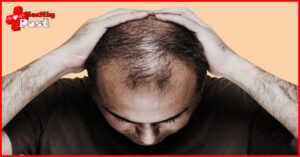

10 Proven Solutions for a Receding Hairline That Actually Work
Seeing a receding hairline in the mirror can feel unsettling. You may notice your temples creeping back, your widow’s peak deepening, or your forehead looking taller in photos. It can affect confidence, social life, and even how you feel at work.
You are not alone. Hairline changes are extremely common in both men and women. The important thing is this: you are not powerless. There are real, science-backed options that help slow, hide, or even reverse hairline thinning. 💛
Below are 10 proven solutions, from medical treatments to smart styling. Use them as a menu. You do not need to do everything at once. Pick what fits your health, budget, and comfort level, then build from there.
1. Understand Why Your Hairline Is Changing 🧠
Before you decide on treatment, you need a clear reason why your hairline is receding. Different causes require different solutions.
The most common cause: androgenetic alopecia
For many people, a receding hairline is due to androgenetic alopecia. You may also hear it called:
- Male pattern hair loss
- Female pattern hair loss
In this condition, hair follicles become sensitive to a hormone called DHT (dihydrotestosterone). Over time, hairs grow back thinner, shorter, and lighter. Eventually, some follicles stop producing visible hair.
Typical signs:
- Gradual recession at the temples
- Thinning at the crown
- In women, wider part line and diffuse thinning
Other possible triggers
Not every receding hairline is genetic. Other causes include:
- Tight hairstyles pulling on the hairline (traction alopecia)
- Hormonal shifts (pregnancy, menopause, thyroid issues)
- Nutrient deficiencies (iron, vitamin D, protein)
- Severe stress or illness
- Autoimmune conditions like alopecia areata
- Scalp conditions (psoriasis, seborrheic dermatitis)
💡 Action step:
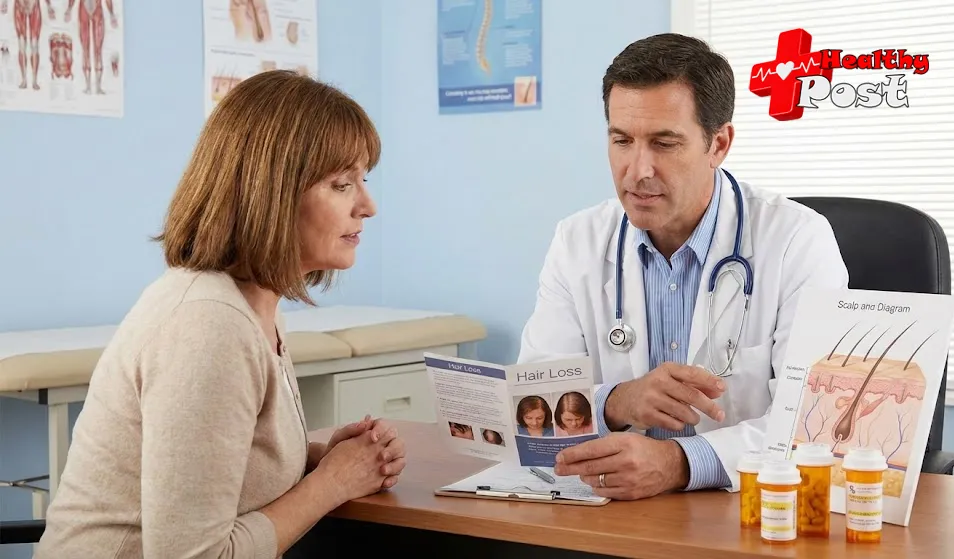
Schedule a visit with a dermatologist or trichologist. Ask for a scalp exam and blood tests if needed. An early, accurate diagnosis often leads to better results.
2. Use Clinically Proven Topical Treatments (Minoxidil) 💧
Minoxidil is one of the most studied treatments for a receding hairline. It is available over the counter in foam or liquid form.
How it helps
Minoxidil can:
- Extend the growth phase of hair
- Increase blood flow to hair follicles
- Support thicker, stronger regrowth
It does not cure the underlying cause, but it can slow loss and improve density.
How to use it safely
- Common strengths: 2% and 5%
- Applied directly to a dry scalp, usually twice daily
- Works for both men and women
- Results often appear after 3–6 months
Some people notice mild irritation or flaking. Foam formulas are often gentler for sensitive scalps.
👉 Tip: Apply along the hairline and thinning areas, not just the crown. Be consistent. Missing doses regularly reduces results.
For more detailed safety guidance, the American Academy of Dermatology offers clear recommendations on hair loss treatments.
3. Consider Prescription Medications (For Men and Women) 💊
For many people, topical products are not enough. Prescription medications can address hormonal drivers of a receding hairline.
For men: finasteride and dutasteride
Finasteride (oral or sometimes topical) works by reducing DHT levels. Lower DHT can:
- Slow or halt further hairline recession
- Increase hair thickness in some areas
Dutasteride works in a similar way but blocks more DHT. It is sometimes used off-label for hair loss.
Important considerations:
- These medications are prescription-only.
- Potential side effects include sexual side effects and mood changes.
- They are not recommended for use in women who are or may become pregnant.
Discuss risks and benefits openly with your doctor. Ask about starting with the lowest effective dose.
For receding hairline women
Women can also have androgen-related hair loss, especially around menopause. Treatment options may include:
- Topical minoxidil
- Hormonal treatments like spironolactone
- Addressing underlying hormonal conditions, like PCOS
Spironolactone reduces the effect of androgens on hair follicles. It is often combined with topical treatments. Women taking it usually need regular blood tests and effective contraception.
4. Support Hair Growth with Nutrition and Lifestyle 🥦
Medical treatments do a lot, but your daily habits still matter. Hair is a fast-growing tissue and needs steady support.
Key nutrients for healthy hair
You do not need expensive “miracle” supplements. Focus first on real food sources of:
- Protein: eggs, fish, beans, lean meats, tofu
- Iron: red meat, lentils, spinach, fortified cereals
- Zinc: pumpkin seeds, nuts, shellfish
- Vitamin D: sunlight, fortified milk, fatty fish
- Omega-3 fats: salmon, sardines, flaxseeds, walnuts
If you suspect a deficiency, ask your doctor for blood tests. Avoid taking high-dose supplements without guidance, as some can worsen shedding.
Manage stress and sleep
High stress and poor sleep can push more hairs into a resting, shedding phase.
Helpful basics:
- Aim for 7–9 hours of sleep
- Use relaxation practices: breathwork, yoga, or short walks
- Limit smoking and heavy alcohol use
You will not “cure” a receding hairline with lifestyle alone. Still, these changes can help preserve what you have and improve overall wellbeing. 🌿
5. Try Low-Level Laser Therapy (LLLT) 🔴
Low-level laser therapy uses red or near-infrared light to stimulate hair follicles. It is available as:
- Helmets
- Caps
- Combs or bands
What research shows
Studies suggest LLLT can:
- Increase hair density in some users
- Thicken existing hairs
- Work best when combined with other treatments
It is painless and usually used several times a week. Results can take several months. Devices can be costly, so check whether there is solid evidence behind a product before buying.
A review from Mayo Clinic hair loss outlines how doctors evaluate hair loss and may mention devices like these in context.
6. Explore Medical Procedures: PRP and Microneedling 💉
When topical and oral options are not enough, in-office procedures may help.
Platelet-Rich Plasma (PRP)
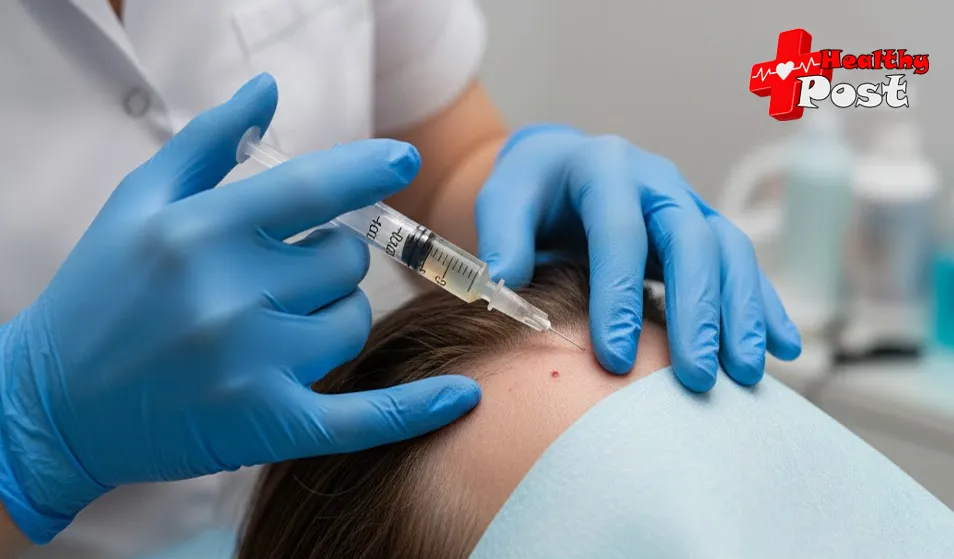
PRP uses your own blood. A clinician spins it in a centrifuge to concentrate platelets. These platelets are rich in growth factors.
Then, they inject the PRP into thinning areas of your scalp.
Potential benefits:
- Improved hair thickness
- Reduced shedding
- Visible improvements in 3–6 sessions for some patients
Microneedling
Microneedling involves tiny needles creating controlled micro-injuries in the scalp. This can:
- Stimulate healing and growth factors
- Improve absorption of topical treatments like minoxidil
It can be done with:
- In-office devices (deeper, more controlled)
- At-home rollers or pens (must be used carefully and cleanly)
Always work with trained professionals. Infections or scarring from improper treatment can worsen the situation.
7. Consider Hair Transplant Surgery (When You Are Ready) ✂️➡️🌱
For some, the most direct way to restore a receding hairline is surgery. Hair transplant techniques have advanced significantly in recent years.
How modern hair transplants work
Two main methods:
- FUT (Follicular Unit Transplantation)
- A strip of scalp is removed from the back.
- Hairs are dissected and transplanted to the hairline.
- FUE (Follicular Unit Extraction)
- Individual follicles are removed from the donor area.
- Small grafts are placed into tiny incisions at the front.
Results are permanent in the sense that transplanted hairs are usually resistant to DHT. However, other non-transplanted hairs can still thin over time.
Who is a good candidate?
- Stable pattern of hair loss
- Adequate donor hair at the back and sides
- Realistic expectations about density and coverage
- Willingness to continue medical therapy to protect remaining hair
Hair transplants are procedures with costs and recovery time. Always choose a board-certified surgeon with strong before-and-after evidence.
8. Choose Smart Haircuts for a Receding Hairline ✂️😎
While treatments work in the background, the right style can make an enormous difference today. A well-chosen receding hairline haircut shifts focus from what you have lost to what you still have.
For men
Some flattering haircuts for receding hairline include:
- Short textured crop:
- Short on the sides
- Slight length and texture on top
- Softens the hairline
- Buzz cut receding hairline:
- Very short all over
- Blends hairline into the rest of the scalp
- Can give a sharp, confident look
- Fade or undercut:
- Short sides, longer top
- Draws eyes upward and away from temples
For women with a receding hairline
Receding hairline women often feel overlooked in style advice, but there are many options:
- Soft bangs or face-framing layers
- Side parts instead of rigid middle parts
- Gentle waves that add volume at the front
- Strategic highlights to create dimension
Avoid very tight ponytails, braids, or extensions at the front. These can worsen traction and speed up thinning.
Styling tips that make hair look fuller
- Use lightweight volumizing mousse at the roots
- Avoid heavy oils or waxes near the hairline
- Try a slightly messy texture instead of flat, straight hair
Consider visiting a stylist who has experience with thinning hair. Show them your hairline in bright light and talk openly about your concerns.
9. Upgrade Your Scalp and Haircare Routine 🧴
A healthy scalp supports healthier hair. Think of your scalp as “soil” and your follicles as “seeds.” You want the environment to be calm and well-nourished.
Gentle cleansing
- Wash regularly to remove oil, sweat, and product buildup
- Use mild, sulfate-free shampoos when possible
- Massage gently with fingertips, not nails
Targeted scalp treatments
Some ingredients that may support a healthier hairline:
- Ketoconazole (often in medicated shampoos)
- Caffeine-based tonics
- Peptide serums designed for scalp health
They are not magic cures but can be helpful additions, especially if you have scalp inflammation or dandruff.
Protect from damage
- Limit high-heat styling at the roots
- Avoid harsh chemical treatments, especially near thinning areas
- Use sun protection for your scalp (sprays, powders, or hats)
These steps help you keep the hair you still have looking its best. They work well alongside medical therapies.
10. Protect Your Mindset and Self-Image ❤️
Hair is tied deeply to identity. A receding hairline can stir grief, fear, or shame. These feelings are valid. Addressing your emotional response is as important as treating your scalp.
Reframe how you see yourself
- Remember: hair loss is extremely common.
- It does not define your worth, personality, or attractiveness.
- Many people with thin or shaved hair feel confident and stylish.
Some people find it empowering to adopt a new, intentional look. For example, choosing a very short cut instead of trying to hide thin areas.
Seek support
- Talk with loved ones about how you feel
- Consider online support groups for hair loss
- Work with a therapist if appearance anxiety affects daily life
Mental health support is not a last resort. It is part of a holistic approach.
Quick Comparison of Key Hairline Solutions
| Solution Type | Main Goal | Time to See Results | Typical Cost Level | Works for Men/Women? |
|---|---|---|---|---|
| Minoxidil (topical) | Slow loss, thicken regrowth | 3–6 months | ––$ | Both |
| Finasteride / Dutasteride | Reduce DHT, slow genetic loss | 3–12 months | $$ (Rx) | Mainly men (some off-label) |
| Spironolactone (women) | Block androgens | 3–12 months | $$ (Rx) | Women |
| LLLT devices | Stimulate follicles | 4–6 months | $$$ | Both |
| PRP injections | Improve hair thickness | 3–6 sessions | $$$$ | Both |
| Hair transplant | Restore hairline coverage | 9–18 months | $$$$ | Both |
| Haircuts / styling | Improve appearance immediately | Instant | ––$ | Both |
| Scalp care, nutrition | Support overall hair health | Ongoing | ––$ | Both |
FAQs About a Receding Hairline
1. Can a receding hairline grow back completely?
Sometimes, yes, especially if treatment starts early. If follicles are still alive but miniaturized, they can thicken again. If follicles have scarred or fully shut down, regrowth is less likely, but surrounding areas may still improve.
2. At what age does a receding hairline usually start?
For men with genetic hair loss, it can start in their late teens or twenties. For women, hairline thinning often appears later, around their 30s, 40s, or after menopause. However, every person is different.
3. Is shaving my head bad for a receding hairline?
Shaving your head does not damage follicles. It only cuts the visible hair shaft. Many people choose a short cut or full shave to embrace their changing hairline and simplify care.
4. Do hair growth shampoos really work?
Most regular shampoos cannot regrow hair on their own. However, formulas with ingredients like ketoconazole or caffeine can support scalp health and complement medical treatments. Think of them as helpers, not stand-alone cures.
5. Is a receding hairline always permanent?
Not always. If the cause is temporary—like stress, illness, or traction—removing the trigger may allow some regrowth. With genetic hair loss, the process is long term, but it can often be slowed and partially reversed with consistent treatment.
6. Should I see a dermatologist or can I treat this myself?
You can start with gentle lifestyle and styling changes on your own. For clear diagnosis and medical treatments, a dermatologist is the best choice. Early evaluation protects you from wasting time and money on ineffective products.
Bringing It All Together: Taking Control of Your Receding Hairline 🌱
A receding hairline can feel overwhelming, but you have more options than you might think. From proven medical therapies like minoxidil and finasteride to LLLT, PRP, and transplants, there are real, evidence-based ways to slow or improve hairline loss.
At the same time, smart styling, a thoughtful receding hairline haircut, gentle scalp care, and mindset support help you feel better right now. Confidence does not have to wait for new growth.
Next steps you can take today:
- Book an appointment with a dermatologist or hair specialist
- Choose one or two realistic treatments to start consistently
- Talk with a skilled stylist about haircuts for receding hairline options
- Support your health with good nutrition, stress care, and sleep
Your relationship with your hair is personal. You deserve clear information, compassionate care, and solutions that fit you. Step by step, you can move from worry to a plan—and from a plan to real, visible change. 💬✨