


Medical Authorship & Clinical Verification
This article was written and clinically verified by Dr. Chiara Del Prete, Urologist. The information provided is for educational purposes only and does not constitute professional medical advice, diagnosis, or treatment.
Medical Disclaimer: Individual clinical scenarios vary significantly. Always consult your primary care physician or a qualified urologist regarding any specific medical condition or worsening symptoms. Never disregard professional medical advice or delay seeking it because of something you have read here.

🏥 Medical Review Board Member
Dr. Chiara Del Prete, MD
Urologist | Clinical Reviewer
Dr. Chiara Del Prete is a registered medical doctor and specialist in Urology (Dirigente Medico in Urologia) based in Italy, with clinical affiliations including AST Pesaro Urbino and Ospedale San Salvatore di Pesaro. She completed specialized training in advanced urological and robotic-assisted surgical techniques, earning a certificate of excellence from the ERUS curriculum. Dr. Del Prete actively contributes to peer-reviewed medical literature and clinical research focusing on urological oncology, stone disease, and reconstructive urology, ensuring all content maintains the highest standards of medical accuracy and clinical integrity.
If you are reading this, you are likely dealing with the unmistakable, gripping flank pain of a kidney stone. In our clinical practice, patients often arrive at the clinic anxious and in discomfort, asking exactly [how to pass a 4mm kidney stone fast].
At 4 millimeters, a stone is roughly the size of a small peppercorn. While it certainly causes significant discomfort as it travels through your urinary tract, stones of this size are highly likely to pass naturally without surgical intervention. Our goal is to help you navigate this painful process efficiently safely.
Please note that the following insights are drawn from urological guidelines for informational purposes. They do not replace personalized advice from your primary care physician or urologist. Always consult a healthcare professional for a formal diagnosis.
Understanding Kidney Stone Size: The 4mm Kidney Stone Success Rate
When evaluating a patient in the clinic, the first two factors we look at are the size of the stone and its location. Fortunately, stones measuring 4mm or smaller fall into a highly favorable category.
The 4mm kidney stone success rate for spontaneous passage is typically between 60% and 80%. This means the vast majority of patients will successfully pass the stone at home. Location plays a critical role in this success rate. If the stone is located high up in the kidney or upper ureter, it has a longer journey and a slightly lower chance of passing quickly. However, once the stone reaches the distal ureter (the lower part of the tube near the bladder), the success rate jumps closer to 79%. Gravity and the natural widening of the lower ureter work in your favor here.
Timeline: How Long Does a 4mm Kidney Stone Take to Pass?
Patience is incredibly difficult when you are in pain. Patients frequently ask, how long does a 4mm kidney stone take to pass?
On average, a 4mm stone takes between one to four weeks to exit the body. Some clinical observations show that a 4mm stone takes an average of 31 days to pass entirely.
The timeline fluctuates based on how well you manage your symptoms, your hydration levels, and your unique anatomy. A stone can sometimes pause its journey, causing intermittent pain rather than constant agony. The pain typically peaks when the stone moves and scrapes against the narrow walls of the ureter or causes urine to back up into the kidney.

5 Actionable Steps on [How to Pass a 4mm Kidney Stone Fast]
When reviewing patient histories, we notice that those who take a proactive approach tend to have shorter, less complicated recovery times. Here are the clinical strategies we recommend to encourage a stone to pass swiftly.
1. Hyper-Hydration is Your Best Tool
Water acts as a mechanical flush for your urinary tract. Drinking ample fluids increases urine volume, creating pressure behind the stone to push it downward. Aim to drink 2.5 to 3 liters of water per day. You should drink enough water that your urine appears nearly clear. Adding fresh lemon juice provides citrate, which may help prevent further stone growth.
2. Medical Expulsive Therapy (MET)
If you visit a urologist or emergency department, you will likely be prescribed medication. This approach is known as Medical Expulsive Therapy (MET). Doctors frequently prescribe alpha-blockers, such as tamsulosin (Flomax). These medications relax the smooth muscles of the ureter, particularly the distal ureter, allowing the stone to pass more quickly and with less friction. According to the American Urological Association’s medical management of kidney stones guidelines, MET significantly improves passage rates for stones in the lower ureter.
3. Targeted Dietary Adjustments
Dietary changes may not immediately flush out a current stone, but they prevent it from growing larger while you wait for it to pass. Most kidney stones are formed from Calcium Oxalate / Uric Acid. Reducing your sodium intake is vital, as high sodium increases calcium in your urine.
Many patients mistakenly stop eating calcium to prevent stones. This is a dietary error. Dietary calcium actually binds with oxalates in the stomach, preventing them from reaching your kidneys. If you are unsure about supplementation, you may wonder, Can kidney stones patients take calcium supplements? Generally, dietary calcium from food is preferred over supplements, as supplements taken without food can sometimes increase stone risk.
4. Safe Pain Management
Pain management keeps you comfortable enough to stay active. Nonsteroidal anti-inflammatory drugs (NSAIDs) like ibuprofen or naproxen are typically the first line of defense. They not only reduce pain but also decrease inflammation in the ureter, giving the stone more room to move. Acetaminophen can be used if NSAIDs are contraindicated, though it lacks the anti-inflammatory benefits.
5. Gentle Physical Activity
Staying sedentary can stall a stone’s progress. Gentle, low-impact movements like brisk walking, light yoga, or slow cycling utilize gravity to help coax the stone down the urinary tract. Avoid heavy lifting or high-impact workouts, which may exacerbate your discomfort or trigger nausea.
Fact vs. Fiction: What Helps Dissolve Kidney Stones Fast?
Desperation often leads patients to search for what helps dissolve kidney stones fast. It is critical to differentiate between medical facts and internet myths.
You cannot dissolve a calcium oxalate stone. Calcium oxalate stones account for nearly 80% of all kidney stones. They are dense and crystallized; no amount of lemon juice, apple cider vinegar, or herbal tea will physically melt them. They must be passed or surgically removed.
However, uric acid stones (which account for about 5–10% of stones) can sometimes be dissolved. Alkalizing the urine using prescription potassium citrate or high doses of natural citrate (like pure lemon juice) changes the pH of the urine. This environment helps slowly break down uric acid stones.
Comparing Stone Types and Management
| Stone Type | Prevalence | Can It Be Dissolved? | Primary Immediate Management |
|---|---|---|---|
| Calcium Oxalate | ~80% | No | Hydration, alpha-blockers, NSAIDs |
| Uric Acid | ~5-10% | Yes (sometimes) | Alkalization (citrate), hydration |
| Struvite | ~10% | No | Antibiotics, surgical intervention |
| Cystine | ~1% | Rarely | High fluid intake, specific medications |
Red Flags: Managing a 4mm Kidney Stone Stuck in Ureter
Even with excellent hydration and medication, a stone can sometimes halt its progress. Having a 4mm kidney stone stuck in ureter can lead to complications if left unmonitored.
When a stone blocks the flow of urine, it causes the kidney to swell (hydronephrosis). If urine sits stagnant behind the stone, it becomes a breeding ground for bacteria.
You must seek immediate emergency medical care if you experience any of the following symptoms:
- A high fever or chills.
- Severe nausea and vomiting that prevents you from keeping fluids down.
- Visible, heavy blood in your urine (a small amount of microscopic blood is normal, but dark red urine requires attention).
- Inability to pass any urine at all.
Sometimes, kidney stone pain radiates to the abdomen and alters bowel habits. Patients frequently ask, Can Kidney Stones Cause Diarrhea? While the stone itself does not cause diarrhea, the intense pain triggers the nervous system, which can result in nausea, vomiting, and temporary gastrointestinal upset.
If your stone has not passed after four to six weeks, your urologist will likely order an Ultrasound / CT Scan to pinpoint its exact location. If you have underlying health conditions, you might also wonder, What medical tests can detect kidney disease? Routine blood tests (like GFR and creatinine) alongside imaging help doctors ensure your kidneys are functioning optimally despite the blockage.
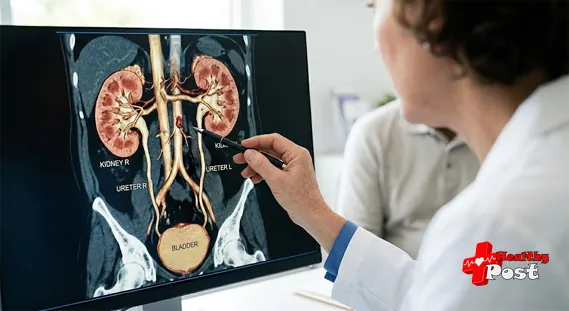
Medical Interventions for a Stuck Stone
If your 4mm stone refuses to pass, minimally invasive procedures are highly effective. The most common treatments include:
- Shock Wave Lithotripsy (SWL): Uses targeted sound waves from outside the body to break the stone into dust-like fragments.
- Ureteroscopy (URS): A tiny, flexible scope is passed through the bladder into the ureter. The doctor either removes the stone with a tiny basket or uses a laser to shatter it.
- Stent Placement: Sometimes, a temporary hollow tube (stent) is placed in the ureter to keep it open, allowing urine to bypass the stone until swelling decreases.
According to the National Institute of Diabetes and Digestive and Kidney Diseases (NIDDK), learning about the treatment for kidney stones can help alleviate the fear associated with these routine, safe procedures.
Frequently Asked Questions (FAQs)
How do I know if I passed my 4mm kidney stone?
The most obvious sign is a sudden and complete cessation of pain. Many patients also physically see the stone in the toilet bowl. We highly recommend using a urine strainer so you can catch the stone and bring it to your doctor for laboratory analysis. Referencing a Kidney Stones Chart for Better Health can help you track your symptoms and understand stone compositions once analyzed.
Is walking good for passing kidney stones?
Yes. Walking is an excellent, low-impact way to promote stone movement. Gravity and light physical movement help maneuver the stone through the urinary tract. Avoid intense running, which may jar the body and cause intense pain spasms.
Does sleeping on a certain side help pass a kidney stone?
There is limited clinical evidence that sleeping on one specific side speeds up passage. However, sleeping on the side opposite the pain may relieve pressure on the affected kidney, allowing you to rest more comfortably.
Can I learn [how to pass a 4mm kidney stone fast] in just 24 hours?
While hydration and alpha-blockers speed up the process, passing a stone in 24 hours is rarely guaranteed. The journey through the ureter takes time. Consistency with fluids and medication is your best strategy.
Are hot baths helpful for kidney stone pain?
Absolutely. Applying a heating pad to your flank or soaking in a warm bath helps relax the muscles around the ureter and soothes the nervous system, providing excellent temporary pain relief.
Conclusion
Passing a kidney stone is an undeniably painful ordeal, but understanding your body’s mechanics can reduce your anxiety. Because stones of this size are small, the success rate for passing them naturally remains incredibly high.
If you want to know [how to pass a 4mm kidney stone fast], remember the clinical pillars: drink two to three liters of water daily, ask your doctor about alpha-blockers to relax the ureter, manage your pain with anti-inflammatories, and stay gently active. Keep a close eye on your symptoms, and do not hesitate to seek medical imaging if your pain escalates or persists beyond a few weeks. With time, hydration, and proper medical guidance, relief is well within reach.
1 Comment
Pingback: Groin Pain: 7 Common Causes, Warning Signs, and When to See a Doctor -