

⚠️ Medical & Dental Disclaimer
The article “How to Fix a Loose Tooth: Causes, Home Care, and When to See a Dentist”, written by Dr. Mohanned A. Alghamdi, BDS, MS, CAGS, ABGD, is provided for educational and informational purposes only and should not be construed as professional dental or medical advice. Temporary home care measures are not a substitute for professional evaluation. If you are experiencing persistent tooth mobility, severe pain, bleeding gums, or dental trauma, please consult a qualified dentist immediately for proper diagnosis and treatment.

🏥 Medical Review Board Member
Dr. Mohanned A. Alghamdi, BDS, MS, CAGS, ABGD
Esthetic and Restorative Dentist & Medical Director | UniDents Clinic (Jeddah, Saudi Arabia)
Dr. Mohanned A. Alghamdi, BDS, MS, CAGS, ABGD, is an accomplished Esthetic and Restorative Dentist and the Medical Director at UniDents Clinic. With a strong academic foundation from Tufts University, Dr. Alghamdi brings extensive clinical expertise and a commitment to professional excellence to his practice. He currently oversees a large multidisciplinary team of dental specialists, ensuring the highest standards of patient care, diagnostic precision, and clinical safety.
If you’re searching for how to fix a loose tooth, take a breath first. A loose adult tooth can feel alarming. Many people notice it while brushing, biting into toast, or running a tongue across the gumline. In our clinical editorial work, we treat this as a warning sign, not something to “watch and wait” on. Unlike baby teeth, a loose permanent tooth in adults usually points to an underlying issue such as gum disease, injury, or pressure from grinding.
The most important thing to know is simple: home care may help protect the tooth and reduce irritation, but it usually does not solve the root problem. Fast action matters. The sooner a dentist evaluates the tooth, the better the chance of saving it.
This guide explains the most common loose permanent tooth in adults causes, what you can safely do at home, and when loose tooth symptoms need urgent dental care. If you’ve also been dealing with spacing concerns or changes in your bite, topics like What Is Diastema and How to Fix Teeth Gaps and Tooth Enamel Erosion Causes may help you understand the bigger picture behind changing tooth support.
1. Why a loose tooth in an adult is different from a child’s tooth
Children are supposed to lose teeth. Adults are not.
A permanent tooth is held in place by a support system called the periodontium. That includes:
- Gum tissue
- Periodontal ligaments
- The tooth root
- Jawbone around the root
When a tooth starts moving, something in that support system has weakened. In most cases, the cause is not the tooth itself. It is the gum, bone, ligament, or bite force around it.
So, what to do when an adult tooth feels loose? Treat it as time-sensitive. Avoid testing it with your fingers or tongue. Do not chew on it. Book a dental visit promptly, especially if the looseness appeared suddenly.
2. The most common causes of loose teeth in adults
2.1 Gum disease is the leading cause
The top reason adults develop a loose tooth is periodontal disease. This begins with plaque and tartar buildup near the gumline. Over time, bacteria trigger inflammation. If untreated, that inflammation can destroy the fibers and bone that hold the tooth in place.
Common signs of advanced periodontal disease include:
- Bleeding when brushing or flossing
- Red, swollen, or tender gums
- Gum recession
- Persistent bad breath
- Pus near the gumline
- Teeth that shift or feel loose
Most studies and clinical guidelines agree that early treatment improves the odds of stabilizing the tooth. If you suspect this may be the issue, gum disease loose tooth treatment guidance from the NHS offers a reliable overview.
2.2 Trauma or injury
A fall, sports hit, car accident, or even biting down hard on something unexpected can loosen a tooth. Sometimes the damage is obvious. Sometimes it’s subtle, especially if the root or ligament has been bruised.
This is especially important in cases involving how to fix a loose tooth in front, because front teeth are more exposed during impact and often carry a high cosmetic and emotional burden.
See a dentist the same day if the tooth became loose after trauma.
2.3 Teeth grinding and clenching
Bruxism puts repeated force on the teeth and supporting ligaments. Over months or years, that pressure can create mobility, tiny cracks, gum recession, or soreness in the jaw.
Clues that grinding may be involved:
- Morning jaw tightness
- Flattened or worn teeth
- Headaches on waking
- Tooth sensitivity
- A partner hearing grinding at night
In these cases, a night guard may help protect the tooth, but the dentist still needs to assess whether the bite needs adjustment or the tooth needs stabilization.
2.4 Bone loss and osteoporosis
Bone density matters in the jaw just as it does in the hips or spine. Reduced bone support from osteoporosis or long-standing periodontal disease can make teeth less stable. Nutrition alone won’t reverse severe bone loss, but calcium, vitamin D, and overall medical care are part of the bigger picture.
2.5 Hormonal changes and medical factors
Pregnancy can sometimes increase gum inflammation, which may temporarily make teeth feel different or slightly mobile. Certain health conditions and medications can also affect gum health, bone health, or saliva flow, raising the risk of dental problems.
3. How to fix a loose tooth at home: what helps and what does not
Let’s be direct. If you are wondering how to fix a loose tooth at home, the honest answer is that you usually cannot fully fix it yourself. What you can do is reduce stress on the tooth and lower irritation until you get professional care.
Safe, temporary home care includes:
- Warm saltwater rinses: Mix 1/2 teaspoon of salt in a cup of warm water. Swish gently 2–3 times a day.
- Soft foods: Choose yogurt, soup, eggs, oatmeal, mashed vegetables, smoothies, and soft rice.
- Chew on the opposite side: Give the loose tooth a break.
- Gentle brushing: Use a soft-bristled toothbrush and light pressure.
- Careful flossing: If floss catches around the loose tooth, stop and ask your dentist for advice.
- Cold compress outside the cheek: Helpful if there is swelling after injury.
- Night guard use: If you already have one for bruxism, wear it as directed.
Some people try oil pulling, aloe vera, or turmeric paste. These may help soothe inflamed gums for some individuals, but evidence is limited, and they should not replace dental care.
Home remedies for loose teeth risks
There are also things you should not do:
- Do not wiggle the tooth repeatedly
- Do not bite into hard foods to “test” it
- Do not glue or splint it yourself
- Do not place aspirin directly on the gums
- Do not delay care if there is pain, swelling, pus, or trauma
This is where many people lose valuable time. A tooth that might have been stabilized early can become harder to save if the infection or damage progresses.

4. How dentists actually treat a loose tooth
If you want to know how to fix a loose tooth as an adult, professional treatment is the real answer. The exact plan depends on the cause.
4.1 Deep cleaning for gum disease
If plaque and tartar are driving inflammation, the dentist or hygienist may recommend scaling and root planing. This is a deep cleaning below the gumline that removes bacteria and rough buildup from the root surfaces. In many cases, this helps the gums heal and may reduce tooth mobility.
The CDC’s overview of signs of gum disease is useful for understanding why early treatment matters.
4.2 Dental splinting for mobile teeth
One of the most effective short-term stabilization methods is dental splinting for mobile teeth. A dentist bonds the loose tooth to nearby stable teeth so it can rest and heal with less movement. This is commonly used after trauma and sometimes during periodontal treatment.
4.3 Bite adjustment
If one tooth is taking too much force when you bite, the dentist may reshape small areas of enamel or adjust the way the teeth meet. This can reduce repeated pressure that keeps the tooth mobile.
4.4 Night guards for grinding
If clenching or grinding is part of the problem, a custom night guard may help reduce strain and prevent further damage.
4.5 Gum surgery or bone grafting
For advanced periodontal disease or significant bone loss, a periodontist may recommend:
- Flap surgery
- Gum grafting
- Bone grafting
- Regenerative procedures
These are more advanced options, but they can be important in saving a tooth that still has a reasonable prognosis.
4.6 Root canal or extraction
If trauma damaged the nerve, a root canal may be needed. If the tooth cannot be saved, extraction may be the safest choice, followed by replacement with a bridge, denture, or dental implant.
If you are also learning to spot damage early, What Does a Cavity Look Like and Remove a Calculus Bridge are useful companion topics because cavities and tartar buildup can worsen the conditions that make teeth unstable.
5. Can a loose adult tooth tighten back up?
This is one of the most common questions we hear: can a loose adult tooth tighten back up?
Sometimes, yes. But only under the right conditions.
A mildly loose tooth may become firmer if:
- The cause is identified early
- Gum infection is treated
- Bite pressure is reduced
- Trauma is stabilized quickly
- The surrounding bone and ligament are still healthy enough to recover
A severely loose tooth is less likely to recover fully, especially if there is major bone loss or deep infection. That is why speed matters so much.
Think of it like a fence post. If the surrounding soil is only slightly disturbed, it may be steadied. If the ground has eroded away, the post cannot simply “tighten on its own.”
6. Quick comparison: cause, home care, treatment, urgency
| Cause | What you can do at home | Professional treatment for loose teeth | Urgency |
|---|---|---|---|
| Gum disease | Saltwater rinse, soft brushing, soft foods | Scaling, root planing, surgery, splinting | High |
| Trauma | Avoid touching tooth, cold compress, soft diet | Splinting, X-rays, root canal if needed | Same day |
| Grinding/clenching | Night guard, stress reduction, soft foods | Bite adjustment, custom guard, splinting | Moderate |
| Bone loss | Supportive nutrition, gentle hygiene | Bone grafting, periodontal care, implant planning | High |
| Hormonal changes | Supportive gum care, gentle rinsing | Monitoring, cleaning, targeted gum treatment | Lower but still evaluate |
7. When to seek urgent or emergency dental help
Some cases should not wait.
Seek immediate dental care if:
- The tooth feels very loose or close to falling out
- Looseness began after an accident or sports injury
- There is significant pain, swelling, or pus
- The bite suddenly feels “off”
- The tooth changed color after trauma
- Mobility worsens noticeably over 24–48 hours
- You have fever or facial swelling
For trauma-related dental emergencies, the American Dental Association provides helpful patient guidance on dental emergencies.
If the issue involves a visible change in your front teeth, especially in appearance or spacing, concerns around how to fix a loose tooth in front are not just cosmetic. Front tooth looseness can signal ligament damage or bone loss and deserves fast assessment.
8. A practical example from clinical editorial experience
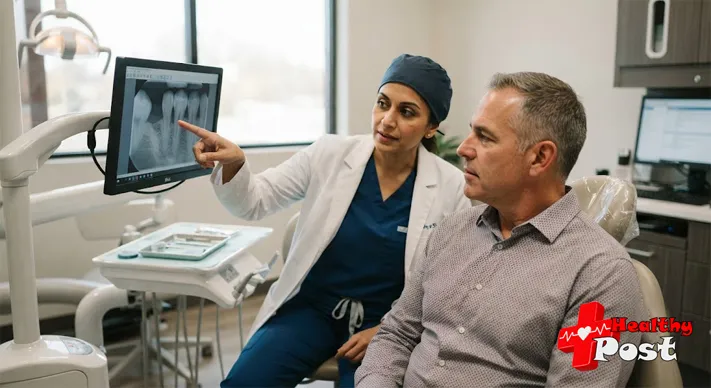
In our review of common patient histories, one pattern repeats: people often wait because the tooth is not very painful. One patient in her 40s noticed mild movement in a lower front tooth while flossing. She assumed aggressive brushing was the only cause. Two months later, the tooth had shifted, the gums had receded, and imaging showed advanced periodontal bone loss.
Another patient came in the same day after a sports injury loosened an upper front tooth. That tooth was splinted promptly. The tooth remained functional.
The difference was not luck. It was timing.
9. Frequently asked questions
Can I save a loose adult tooth at home?
Home care may help protect the area, but it usually cannot fix the underlying cause. If you are searching how to fix a loose tooth at home, think of home care as first aid, not a full treatment.
What to do for a loose permanent tooth right away?
Eat soft foods, avoid touching the tooth, rinse gently with warm saltwater, and arrange a dental appointment as soon as possible. If trauma caused the looseness, seek same-day care.
Is a loose tooth always caused by gum disease?
No. While periodontal disease is the most common reason, trauma, teeth grinding, bone loss, and hormonal changes can also play a role.
How do I know if this is serious?
Pain, swelling, pus, gum recession, bleeding, rapid movement, and changes after injury are all concerning. These may indicate infection or structural damage.
Can stress cause a loose tooth?
Stress itself does not usually loosen a tooth directly, but stress-related grinding or clenching can contribute over time.
Could enamel loss make a tooth feel loose?
Not directly, but enamel wear often travels with grinding or acid damage, which can change bite forces and make symptoms more noticeable. If that sounds familiar, Tooth Enamel Erosion Causes is worth reviewing, along with How to protect your teeth from childhood to adulthood for prevention habits.
10. Final thoughts: act early, protect the tooth, get expert help
If you notice mobility in a permanent tooth, do not assume it will settle on its own. The best approach to how to fix a loose tooth is a combination of calm home protection and prompt dental assessment. That means soft foods, gentle cleaning, and no unnecessary pressure on the tooth while you arrange care.
For anyone asking what to do for a loose permanent tooth, the answer is consistent: treat it as urgent. Early care can make the difference between a tooth that stabilizes and one that continues to weaken. And if you are already paying closer attention to your oral health, related topics like What Does a Cavity Look Like, Remove a Calculus Bridge, and How to protect your teeth from childhood to adulthood can help you spot trouble earlier next time.
From a medical editorial perspective, the consensus is clear. Loose adult teeth most often signal disease, trauma, or excessive force. Home remedies may reduce symptoms. They do not replace diagnosis. If the tooth feels loose today, make the call today. 🦷
References
- NHS. gum disease loose tooth treatment
- CDC. signs of gum disease
- American Dental Association MouthHealthy. dental emergencies