

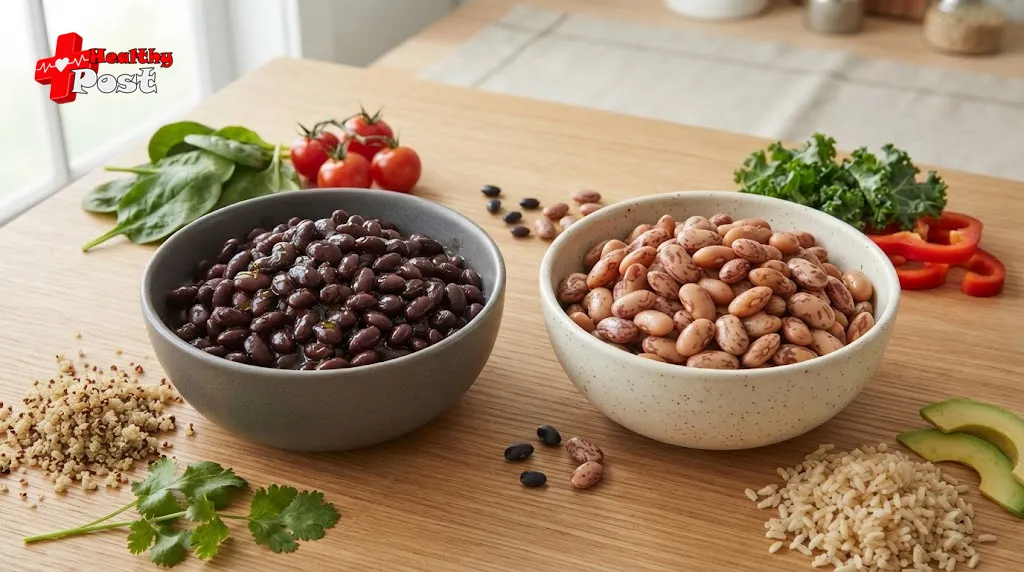
This article has been written by Dr. Rachana Bhoite (Nutrition Science, Dr. Reddy’s Labs), specializing in nutritional science, dietary metabolism, and clinical food analysis.
Medical Disclaimer: The nutritional information provided on Health Post regarding black beans and pinto beans is for educational and informational purposes only. Dietary requirements and macronutrient needs vary by individual health status. Always consult a qualified nutritionist, dietitian, or healthcare professional before making major changes to your daily diet or nutrition plan.

🏥 Medical Review Board Member
Dr. Rachana Bhoite, PhD
Nutrition Science Expert | Dr. Reddy’s Laboratories (Hyderabad, India)
Dr. Rachana Bhoite, PhD, is a distinguished industry veteran with over 22 years of expertise in Foods & Nutrition and clinical research. With a career deeply rooted in medical nutrition and nutraceutical innovation, she has successfully designed and launched numerous scientifically differentiated products across global markets. Dr. Bhoite is dedicated to bridging the gap between complex clinical data and accessible, evidence-based nutrition. Her commitment to rigorous research ensures that every piece of content she reviews meets the highest standards of scientific accuracy and consumer safety.
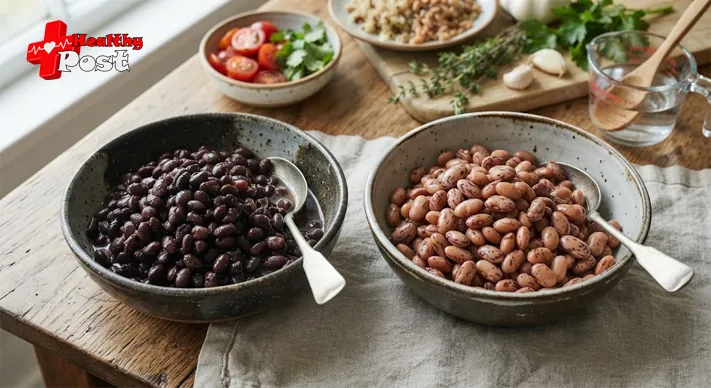
If you’re comparing black beans vs pinto beans nutrition, the answer is less about finding one universally superior bean and more about understanding their small nutritional differences. Both are nutrient-dense legumes that provide plant protein, fiber, complex carbohydrates, iron, folate, magnesium, potassium, and other micronutrients. In a typical serving, their protein and fiber content is remarkably similar, while black beans have an edge in magnesium and pinto beans provide somewhat more potassium, calcium, and folate.
For the comparison below, the main reference point is 1 cup of cooked, boiled beans without added salt. Nutrition values can vary with bean variety, cooking method, serving weight, and the specific USDA FoodData Central record used, so the numbers should be viewed as approximate rather than absolute.
Black Beans vs. Pinto Beans Nutrition at a Glance
| Nutrient | Black beans, 1 cup cooked | Pinto beans, 1 cup cooked |
|---|---|---|
| Calories | ~227 kcal | ~245 kcal |
| Protein | ~15.2 g | ~15.4 g |
| Carbohydrates | ~41 g | ~44.8 g |
| Fiber | ~15 g | ~15.4 g |
| Fat | ~0.9–1 g | ~1–1.2 g |
| Calcium | ~46 mg | ~79 mg |
| Iron | ~3.6 mg | ~3.6 mg |
| Magnesium | ~120 mg | ~86 mg |
| Phosphorus | ~241 mg | ~251 mg |
| Potassium | ~611 mg | ~746 mg |
| Folate | ~256 mcg | ~294 mcg |
| Zinc | ~1.9 mg | ~1.7 mg |
| Selenium | ~2 mcg | ~11 mcg |
The differences are noticeable in some micronutrients, but they are not large enough to turn one bean into a clearly superior food overall. Current USDA-derived records also show that, per 100 grams, black beans provide about 8.9 grams of protein and 8.7 grams of fiber, while pinto beans provide about 9.0 grams of each.
That similarity is important because it means the choice can reasonably come down to your nutritional priorities, preferred texture, recipe, and overall eating pattern.
Black Beans vs. Pinto Beans Protein and Fiber
If your main question is black beans vs pinto beans protein and fiber, there is very little separating them.
A cup of cooked black beans supplies roughly 15.2 grams of protein and 15 grams of fiber. Pinto beans provide about 15.4 grams of protein and 15.4 grams of fiber in the comparison above.
So, nutritionally:
- Protein: nearly tied, with pinto beans having a very small numerical advantage.
- Fiber: nearly tied, with pinto beans slightly higher in these commonly cited records.
- Calories: black beans are somewhat lower per cup.
- Protein relative to calories: black beans have a slight advantage because they provide similar protein for fewer calories.
This makes both beans useful additions to meals where you want more plant protein and fiber without relying entirely on meat or highly processed protein foods.
Legumes as a group are valuable because they provide protein alongside complex carbohydrates and dietary fiber. They also contain resistant starch, a type of carbohydrate that is not completely digested in the small intestine and can be fermented by gut bacteria.
For a broader explanation of how foods can contribute both nutrients, see this discussion of fiber versus protein.
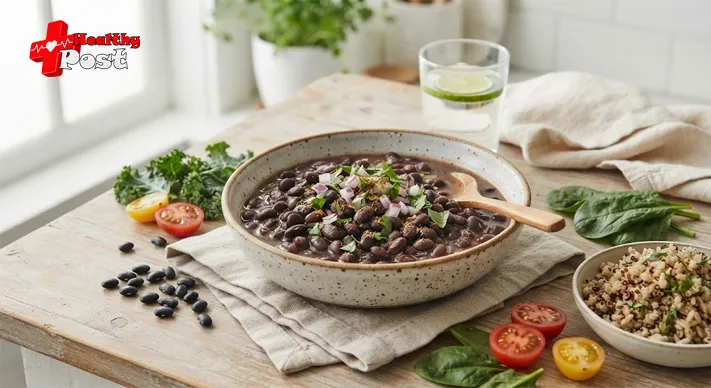
Black Beans Nutrition Facts Profile
The black beans nutrition facts profile is impressive for a relatively inexpensive staple food.
A cup of cooked black beans provides approximately:
- 227 calories
- 15.2 g protein
- 15 g dietary fiber
- 41 g carbohydrates
- 0.9–1 g fat
- 3.6 mg iron
- 120 mg magnesium
- 241 mg phosphorus
- 611 mg potassium
- 256 mcg folate
- about 1.9 mg zinc
Black beans are particularly notable for their magnesium content. Magnesium is involved in hundreds of biochemical reactions, including normal muscle and nerve function, protein synthesis, energy production, and blood glucose regulation. The NIH Office of Dietary Supplements identifies legumes among the foods that can contribute meaningful amounts of dietary magnesium.
NIH Office of Dietary Supplements: Magnesium Fact Sheet
Black beans also contain naturally occurring polyphenols and dark pigments associated with compounds such as anthocyanins. Their color is therefore more than a visual characteristic, although it would be misleading to conclude that darker beans are automatically healthier.
Pinto Beans Nutritional Benefits
The pinto beans nutritional benefits come from the same basic strengths: plant protein, fiber, complex carbohydrates, vitamins, and minerals.
One cooked cup provides approximately:
- 245 calories
- 15.4 g protein
- 15.4 g fiber
- 44.8 g carbohydrates
- about 1–1.2 g fat
- 79 mg calcium
- 3.6 mg iron
- 86 mg magnesium
- 251 mg phosphorus
- 746 mg potassium
- 294 mcg folate
- about 11 mcg selenium
Pinto beans stand out in this comparison for their potassium, calcium, folate, and selenium content.
Potassium is an essential mineral involved in fluid balance, nerve transmission, and muscle contraction. Calcium contributes to bone structure and also supports normal muscle and nerve function. Folate is important for DNA synthesis and cell division.
These nutrients do not make pinto beans universally better. Rather, they illustrate why eating a variety of legumes can be useful: different foods contribute slightly different nutritional profiles.
Are Black Beans Healthier Than Pinto Beans?
So, are black beans healthier than pinto beans? There isn’t a universal yes-or-no answer.
If you compare the two using cooked beans without added salt, both are highly nutritious. Black beans have fewer calories and carbohydrates per cup and substantially more magnesium. Pinto beans have slightly more protein and fiber in these records and provide more potassium, calcium, folate, and selenium.
You might therefore prefer black beans when:
- You want a slightly lower-calorie bean.
- Magnesium intake is a particular priority.
- You enjoy their firmer texture and earthy flavor.
- You want them for salads, grain bowls, tacos, soups, or dips.
Pinto beans may appeal more when:
- You want slightly more potassium, calcium, or folate.
- You prefer a softer, creamier texture.
- You’re making burritos, chili, refried beans, soups, or stews.
The overall nutritional gap remains small. A diet containing both is more varied than one that treats the choice as an either-or decision.
Black Beans vs. Pinto Beans: Vitamins and Minerals
The biggest differences between these beans appear in their micronutrient profiles.
Magnesium: black beans have the edge
Black beans provide approximately 120 mg of magnesium per cooked cup, compared with about 86 mg in pinto beans in the USDA-based comparison.
That makes black beans a useful food source of magnesium. Still, one food should not be viewed as a treatment for magnesium deficiency. Dietary needs vary by age and sex, and genuine deficiency can have multiple causes.
If you’re interested in the role of magnesium in nutrition, HealthPage also discusses magnesium-rich foods and dietary intake.
Potassium: pinto beans have the edge
Pinto beans provide approximately 746 mg of potassium per cooked cup, compared with about 611 mg in black beans.
The National Heart, Lung, and Blood Institute includes beans and peas within the DASH eating pattern, which emphasizes foods rich in potassium, calcium, magnesium, fiber, and protein while limiting excess sodium and saturated fat.
Calcium and folate: pinto beans are higher
Pinto beans provide about 79 mg calcium and 294 mcg folate per cooked cup in this comparison, versus roughly 46 mg calcium and 256 mcg folate for black beans.
These differences are useful when planning an overall diet, but they should be interpreted alongside the rest of what you eat during the day.
Iron: essentially tied
Both beans provide approximately 3.6 mg of iron per cooked cup in the comparison.
Plant-based iron is non-heme iron, which is absorbed differently from the heme iron found in animal foods. Eating beans with vitamin-C-rich foods such as tomatoes, bell peppers, citrus fruit, or broccoli can be a practical way to build a more nutrient-conscious meal.
Which Bean Is Better for Heart Health?
Both black and pinto beans can fit comfortably into a heart-supportive eating pattern.
Their advantages come from the overall package: fiber, plant protein, minerals, and relatively little fat, particularly saturated fat, when prepared simply.
The context matters, though. Plain cooked beans are very different from beans prepared with large amounts of processed meat, lard, cheese, butter, or salt.
The DASH eating plan from the NHLBI specifically includes dry beans and peas and emphasizes a dietary pattern rich in potassium, calcium, magnesium, fiber, and protein while limiting sodium and saturated fat.
A practical takeaway is simple: the healthiest bean is often the one that helps you build a healthier overall meal.
For example, black beans with brown rice, vegetables, salsa, and avocado create a very different nutritional profile from black beans cooked with a large amount of processed meat and salt.
For more meal-planning context, see HealthyPost’s guide to a heart-supportive eating pattern.
Black Beans vs. Pinto Beans for Blood Sugar
Neither bean should be treated as a magic food for blood-sugar control.
Both contain fiber and slowly digested carbohydrates, including resistant starch. Harvard’s Nutrition Source describes legumes as low-glycemic foods and explains that their fiber and resistant starch can influence digestion and glucose release. However, evidence about legumes specifically preventing type 2 diabetes is not completely uniform, so it is better to discuss potential benefits rather than promise a particular clinical outcome.
For everyday eating, both can be useful alternatives to refined carbohydrate foods.
A meal such as beans with vegetables and a modest portion of whole grains is generally more nutrient-dense than relying on refined grains alone.
If you have diabetes or take glucose-lowering medication, however, individual carbohydrate needs and medication effects should be considered with your healthcare professional.
Black Beans vs. Pinto Beans for Weight Loss
Both can work well in a calorie-conscious eating pattern.
The combination of protein and fiber can make meals more satisfying, while the beans themselves contain relatively little fat.
In the one-cup comparison:
- Black beans: ~227 calories
- Pinto beans: ~245 calories
The difference is only around 18 calories. That is small enough that it shouldn’t be the deciding factor for most people.
Portion size and preparation can matter much more. A large serving topped with cheese, sour cream, oil, or a high-calorie sauce can contain substantially more energy than the beans alone.
This is why black beans vs pinto beans for weight loss is best viewed as a meal-planning question rather than a competition between two foods.
Which Bean Has More Antioxidants?
Black beans deserve attention because their dark skin contains pigments from the polyphenol family, including anthocyanin-related compounds.
Polyphenols are plant compounds that have been studied for antioxidant activity. But antioxidant content should not be reduced to a simple “dark bean equals healthier bean” rule.
Pinto beans and other legumes also contain numerous plant compounds, and the health value of beans comes from the combination of fiber, protein, resistant starch, micronutrients, and phytochemicals.
In other words, black beans may offer a distinctive polyphenol profile, but that does not erase the nutritional strengths of pinto beans.
What About Canned Black and Pinto Beans?
Canned beans can still be a nutritious and convenient choice. The main issue is often sodium, not the beans themselves.
When buying canned beans:
- Look for no-salt-added or lower-sodium options when available.
- Compare the sodium amounts on the Nutrition Facts label.
- Drain and rinse canned beans if appropriate for the recipe.
- Remember that restaurant-style or refried beans may contain additional salt, fats, or other ingredients.
The USDA-style values used for the main comparison represent beans cooked without added salt. A seasoned or prepared product can therefore have a substantially different nutrition profile.
Can Black or Pinto Beans Cause Gas?
Yes. Both can cause gas or bloating, particularly if you suddenly increase your intake.
Beans contain fermentable carbohydrates and fiber that interact with gut bacteria. Harvard explains that resistant starch and oligosaccharides in legumes can be fermented in the colon, producing gas. Gradually increasing your intake and properly soaking and cooking dried beans may improve tolerance for some people.
If you’re not used to eating many high-fiber foods, start with a smaller serving and increase gradually. Adequate fluid intake can also help when increasing dietary fiber.
Easy Ways to Use Both Beans
There’s no nutritional reason to limit yourself to one variety.
Try black beans in:
- Burrito or grain bowls
- Black bean soup
- Bean and vegetable salads
- Tacos
- Salsa-based dishes
Pinto beans work particularly well in:
- Chili
- Burritos
- Bean soups
- Stews
- Refried-bean dishes
You can also alternate them throughout the week. That approach gives you nutritional variety without needing to calculate tiny differences in protein or fiber at every meal.
Frequently Asked Questions
Are black beans healthier than pinto beans?
Neither is universally healthier. Black beans provide fewer calories and more magnesium in the comparison used here, while pinto beans provide slightly more protein and fiber plus more potassium, calcium, folate, and selenium.
Which has more protein, black beans or pinto beans?
They are nearly tied. A cup of cooked black beans provides about 15.2 grams of protein, compared with approximately 15.4 grams in pinto beans.
Which has more fiber?
Pinto beans have a very small advantage in commonly cited USDA-based values, at roughly 15.4 grams per cooked cup compared with about 15 grams for black beans. The difference is small enough that both should be considered excellent sources of fiber.
Are black beans better for blood sugar?
Neither should be considered a special treatment for blood-sugar problems. Both provide fiber and slowly digested carbohydrates and can fit into balanced meals. Portion size, the other foods in the meal, and an individual’s health needs also matter.
Which beans are better for weight loss?
Both can fit into a weight-management diet. Black beans are slightly lower in calories per cup, but the difference is modest. Protein, fiber, portion size, and the ingredients added during preparation are more important considerations.
Should I choose canned or dried beans?
Both can be nutritious. Dried beans give you more control over preparation and sodium, while canned beans are convenient. If buying canned varieties, checking the sodium label and choosing lower-sodium options can be helpful.
Final Takeaway
The clearest conclusion from black beans vs pinto beans nutrition is that both are excellent foods, and the nutritional differences are mostly matters of degree rather than dramatic advantages.
Black beans provide a little less energy per cup and stand out for magnesium. Pinto beans provide slightly more protein and fiber in the USDA-based comparison and contain more potassium, calcium, folate, and selenium.
For protein and fiber, the two are essentially neck-and-neck.
That makes the most practical choice straightforward: eat the bean you enjoy and use both when you want more variety. Black beans can bring a firmer texture and distinctive dark color to meals, while pinto beans offer a softer, creamier texture that works particularly well in soups, chili, and burritos.
Rather than asking which bean wins, look at the meal as a whole. Beans paired with vegetables, whole grains, healthy fats, and appropriately seasoned ingredients can make a nutritious and satisfying foundation for many different eating patterns.
Quick comparison
- More magnesium: Black beans
- More potassium: Pinto beans
- More calcium: Pinto beans
- More folate: Pinto beans
- More protein: Nearly tied
- More fiber: Nearly tied
- Fewer calories: Black beans
- Overall nutritional quality: Both are nutrient-dense choices
References
- USDA FoodData Central — nutrition data for cooked black beans and pinto beans without added salt. Current USDA-derived records report approximately 8.9 g protein and 8.7 g fiber per 100 g for cooked black beans and approximately 9.0 g protein and 9.0 g fiber for cooked pinto beans.
USDA FoodData Central - Harvard T.H. Chan School of Public Health, The Nutrition Source — Legumes and Pulses and Ask the Expert: Legumes and Resistant Starch, covering protein, fiber, resistant starch, digestion, glycemic effects, and the broader nutritional role of legumes.
Harvard T.H. Chan School of Public Health — The Nutrition Source - National Heart, Lung, and Blood Institute (NIH) — DASH Eating Plan, updated February 25, 2026, describing beans and peas within a dietary pattern emphasizing potassium, calcium, magnesium, fiber, and protein while limiting excess sodium and saturated fat.
NHLBI — DASH Eating Plan