

⚖️ Clinical Review & Disclaimer
This article has been authored and clinically reviewed for anatomical and medical accuracy by Dr. Neha Sood, Otolaryngologist | Cochlear Implant & Phonosurgeon. The information provided, including the ear piercing pain chart, anatomical analysis of nerve endings, and healing guidelines, is strictly for educational and informational purposes. It does not constitute professional medical advice, diagnosis, or surgical/clinical treatment plans.
Body modification involves intentional tissue trauma. Always seek the advice of a qualified healthcare provider or an otolaryngologist if you experience signs of severe complications following a piercing, such as localized cartilage infection (perichondritis), severe keloid scarring, prolonged bleeding, or allergic reactions to metals. Never delay or disregard professional clinical intervention due to content read on this website.

🏥 Medical Review Board Member & Author
Dr. Neha Sood
Otolaryngologist | Cochlear Implant & Phonosurgeon | BLK-Max Super Speciality Hospital & Sir Ganga Ram Hospital (New Delhi)
Dr. Neha Sood is a highly accomplished Otolaryngologist, Cochlear Implant Surgeon, and Phonosurgeon based in New Delhi, India. With prestigious clinical affiliations at BLK-Max Super Speciality Hospital and Sir Ganga Ram Hospital, she specializes in advanced hearing restoration, voice disorders, and comprehensive ENT care. Dr. Sood is dedicated to translating complex surgical insights and otolaryngological breakthroughs into clear, evidence-based guidance to ensure the highest standards of patient education and medical accuracy.
Ear piercing is popular across all ages. But the pain level can vary with each type. An ear piercing pain chart helps you understand which piercing might hurt more than others. It is a useful guide before you choose your piercing spot.
What Is an Ear Piercing Pain Chart?
An ear piercing pain chart shows the pain level for each ear piercing location. It helps compare areas like lobes, cartilage, and inner ear. Pain levels are ranked from low to high. This chart can guide your decision on where to get pierced.
| Piercing Type | Pain Level (1–10) |
|---|---|
| Earlobe | 2 |
| Helix | 5 |
| Tragus | 6 |
| Industrial | 8 |
| Daith | 6 |
| Rook | 7 |
| Conch | 7 |
| Snug | 8 |
Why Do Pain Levels Differ for Each Piercing?
Each part of the ear has different skin and cartilage thickness. An ear piercing pain chart reflects this. Thicker or more sensitive areas usually hurt more. Soft spots like the lobe hurt less. Hard cartilage areas cause more discomfort during and after piercing.
Factors Affecting Piercing Pain
Pain varies from person to person. The ear piercing pain chart gives general ideas, not exact answers. Other factors include:
- Your pain tolerance
- The experience of the piercer
- Aftercare and healing process
- Type of jewelry used
Knowing this can help you feel more prepared. Always go to a licensed professional for safe and clean procedures.
Understanding Ear Piercing Pain
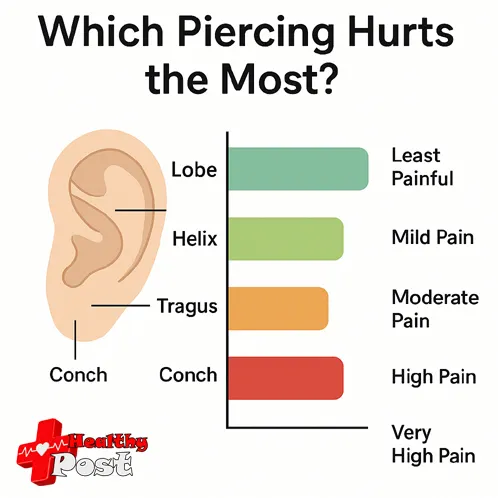
Pain is a big concern when choosing a new piercing. The ear piercing pain chart helps explain why some piercings hurt more. Pain depends on location, nerve endings, and healing time. Let’s break it down.
How Pain Varies by Piercing Location
Different parts of the ear have different tissues. The chart shows that lobe piercings hurt the least. Cartilage piercings like the helix or industrial are more painful. That’s because cartilage is harder to pierce and slower to heal.
Role of Nerve Endings in Pain Sensitivity
Some ear areas have more nerve endings. The ear piercing pain chart reflects this. Spots like the tragus or snug are more sensitive. More nerves mean more pain when the needle goes through. Everyone feels pain differently, but nerve-rich areas usually hurt more.
Healing Time and Pain Correlation
Healing time also affects how much pain you feel. The ear piercing pain chart helps connect healing speed and pain. Lobe piercings may heal in 6–8 weeks. Cartilage piercings can take 6–12 months. Longer healing often means longer discomfort, especially if the area gets infected or irritated.
Understanding this helps you make smart choices. Always follow aftercare tips to reduce pain and speed up healing.
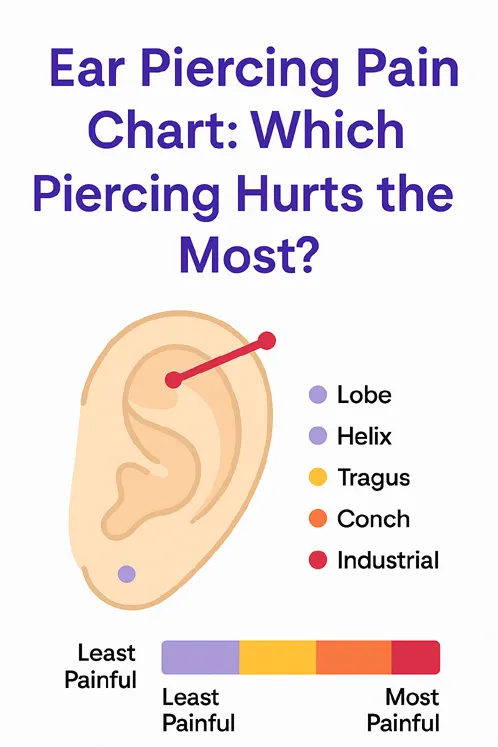
Ear Piercing Pain Chart: Pain Level Comparison
Choosing the right ear piercing can be tough. The piercing pain chart helps compare pain levels and healing time. Below is a simple guide to each common type of piercing and what to expect.
1. Lobe Piercing (Least Painful)
Lobe piercings are the most common and least painful. The tissue is soft, with fewer nerve endings.
- Why lobe piercings hurt less:
The earlobe has no cartilage, making it easier to pierce. - Healing process and aftercare:
Heals in 6–8 weeks. Clean with saline twice daily. Avoid touching or twisting the jewelry.
2. Helix Piercing (Mild Pain)
The helix is the upper outer part of the ear. It involves piercing through cartilage.
- Pain level and healing duration:
Mild pain during piercing. Heals in 3–6 months. - Common issues and care tips:
Swelling and irritation are common. Avoid sleeping on that side and keep it clean.
3. Tragus Piercing (Moderate Pain)
Located at the small flap in front of the ear canal. The piercing pain chart ranks this as moderate pain.
- Why tragus piercings hurt more than the lobe:
The tragus is thick and nerve-sensitive. You may feel pressure during piercing. - Best practices for healing:
Heals in 3–6 months. Avoid earbuds and be gentle during cleaning.
4. Conch Piercing (High Pain)
This piercing goes through the middle cartilage of the ear.
- Pain level due to cartilage density:
The conch has thick cartilage, which increases pain. - Managing discomfort and swelling:
Swelling is normal. Use cold compresses and avoid sleeping on that ear.
5. Industrial Piercing (Very High Pain)
This involves two holes connected by a single barbell. It’s one of the most painful types on the ear piercing pain chart.
- Why industrial piercings are painful:
Pierces thick cartilage in two spots. This doubles pain and healing time. - Proper care and healing time:
Heals in 6–12 months. Clean both holes regularly. Avoid snagging on hair or clothing.
Factors That Affect Piercing Pain
Even with an ear piercing pain chart, pain can still vary from person to person. Several key factors influence how much pain you feel during and after a piercing.
Individual Pain Tolerance
Everyone has a different pain threshold. The piercing pain chart gives a general guide, but it’s not exact for all. What feels like mild pain to one person may feel intense to another. Age, stress levels, and mood can also affect how you experience pain.
Piercer’s Technique and Tools Used
The skill of the piercer matters a lot. An experienced professional uses clean, sharp needles and quick techniques. This makes the process faster and less painful. The ear piercing pain chart assumes safe and expert handling. Using a piercing gun can increase pain and tissue damage, especially in cartilage.
Aftercare and Infection Risks
Proper aftercare reduces pain and speeds healing. If care is poor, pain can last longer due to infection or irritation. The piercing pain chart does not reflect pain from complications. Clean your piercing twice daily with saline. Avoid touching it with dirty hands, and never twist the jewelry.
Knowing these factors helps you better prepare and manage expectations. Always choose a licensed, trusted piercer to minimize risks and pain.
Tips to Reduce Piercing Pain
Worried about pain? Don’t worry — you can take steps to make the process easier. While the pain chart shows general pain levels, these tips can help reduce discomfort before, during, and after the piercing.
Choosing the Right Piercer
A skilled piercer makes a big difference. The ear piercing pain chart assumes professional care. Look for someone with good reviews, clean tools, and a licensed studio. A pro piercer will work fast and gently, causing less pain and reducing the risk of issues.
Using Numbing Solutions
Some studios offer numbing creams or sprays. The ear piercing pain chart doesn’t include numbing effects, but these can ease the sting. Ask your piercer if it’s safe and recommended for your chosen spot. Never use over-the-counter numbing creams without expert advice.
Best Aftercare Practices
Good aftercare prevents infection and keeps pain low. The ear piercing pain chart pain can increase if aftercare is poor.
- Clean with saline twice daily
- Avoid touching or twisting the jewelry
- Don’t sleep on the piercing side
- Avoid swimming or harsh products near the piercing
Stick to these steps to help your piercing heal faster and with less pain. Always follow your piercer’s instructions for the best results.
Conclusion: Ear Piercing Pain Chart Recap
Understanding the piercing pain chart helps you prepare for your next piercing. Pain levels vary by type:
- Lobe piercing – Least painful, quick healing
- Helix and tragus – Mild to moderate pain, longer healing
- Conch and industrial – High pain due to thick cartilage
Each area has a different feel, and your experience may vary.
Proper aftercare is just as important as the piercing itself. Clean your piercing daily, avoid touching it, and follow your piercer’s advice. This helps reduce pain, prevent infection, and speed up healing.
Don’t let fear hold you back. Use the ear piercing pain chart to choose a spot that suits your comfort level. With the right care and a trusted piercer, you can enjoy your new look with confidence and minimal pain.
Frequently Asked Questions (FAQs)
Which ear piercing hurts the most? Anatomically, the industrial piercing and the rook piercing are widely considered the most painful. Because these placements pass through thick, dense areas of auricular cartilage, they require more force to pierce and involve more sensitive nerve endings than standard fleshy lobe piercings.
What are the least painful ear piercings to get? The standard ear lobe piercing is by far the least painful. The ear lobe consists of soft, vascular tissue with fewer dense nerve clusters, resulting in a mild pinch that rates around a 1 or 2 on a 1-to-10 pain scale.
How long does the cartilage piercing healing process take? While the sharp pain of the needle lasts only a few seconds, the complete healing process for cartilage piercings takes anywhere from 4 to 12 months. Cartilage has a limited blood supply compared to the ear lobe, meaning it requires strict aftercare to heal fully without complications.
Is an industrial piercing pain level higher than a daith piercing? Yes, most people report that the industrial piercing pain level is higher. This is because an industrial piercing is actually two separate cartilage punctures connected by a single metal barbell, doubling the immediate tissue trauma and increasing the pressure on the ear during the initial healing phase.
Why does cartilage hurt more than ear lobe vs cartilage pain comparisons? The difference comes down to ear anatomy. Ear lobes are fleshy and filled with blood vessels, which heal rapidly. Cartilage is a dense, avascular structural tissue. Piercing cartilage requires a needle to physically force its way through a rigid layer, causing dull, throbbing pain that persists much longer than a lobe piercing.
How can I reduce piercing pain safely? To safely minimize pain, always choose a professional piercer who uses a clean, single-use needle rather than a piercing gun, as guns cause blunt-force tissue trauma. Additionally, focus on deep, controlled breathing during the procedure, stay well-hydrated, and have a light snack before your appointment to keep your blood sugar stable.
When should I see an ENT doctor for a piercing complication? You should consult an ear, nose, and throat (ENT) specialist or healthcare provider if you notice signs of an infection in the cartilage (such as severe swelling, spreading redness, heat, or yellowish discharge), prolonged throbbing pain that intensifies after several days, or the formation of a hard, raised bump (keloid) around the piercing site.
1 Comment
Pingback: What Can Be Mistaken for Trigeminal Neuralgia? Common Conditions Causing Facial Pain